KARACHI, Sep 17 (APP):Sindh Chief Minister Syed Murad Ali Shah on Thursday presided over a meeting of the provincial cabinet that approved an enhanced support package for wheat growers, launched a digital and blockchain-based system for electronic transfer of land titles and approved construction of a 13-storey, 445-bed Bilquis & Abdul Sattar Edhi Medical Tower at the National Institute of Child Health (NICH), Karachi. The cabinet meeting, held at CM …
Sindh Cabinet approves wheat support package, Edhi Medical Tower, digital land transfer system
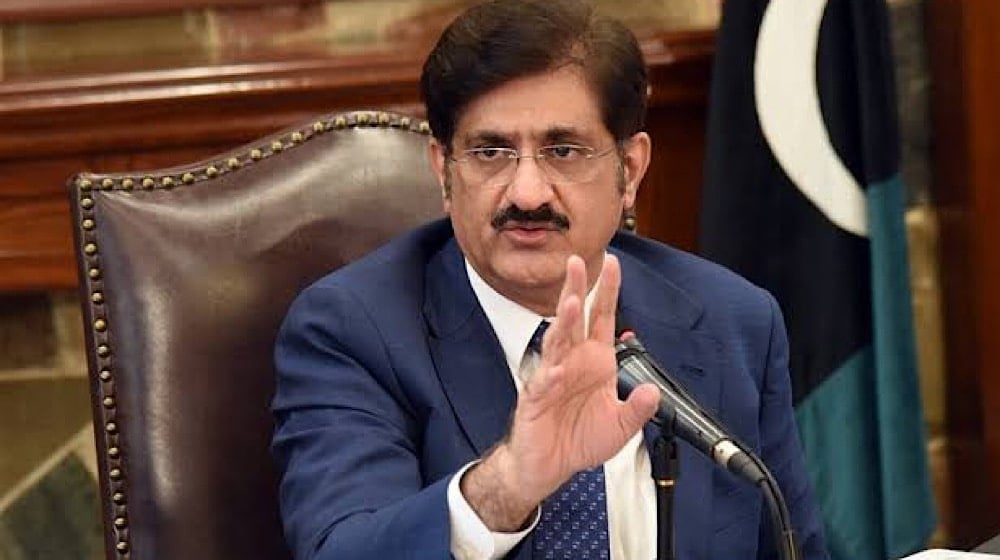
KARACHI, Sep 17 (APP):Sindh Chief Minister Syed Murad Ali Shah on Thursday presided over a meeting of the provincial cabinet that approved an enhanced support package for wheat growers, launched a digital and blockchain-based system for electronic transfer of land titles and approved construction of a 13-storey, 445-bed Bilquis & Abdul Sattar Edhi Medical Tower at the National Institute of Child Health (NICH), Karachi.
The cabinet meeting, held at CM House and attended by provincial ministers, advisers, special assistants, Chief Secretary Asif Hyder Shah and senior officials, considered 23 agenda items and took decisions relating to agriculture, healthcare, land administration, taxation, local government, labour, sports, higher education and youth development.
The cabinet approved an enhanced support package for wheat growers owning up to 25 acres on the recommendations of a ministerial sub-committee headed by Agriculture Minister Muhammad Khan Bux Mahar. The sub-committee reviewed the expected increase in DAP fertiliser prices, subsidy options, wheat procurement incentives, the support price and improvements in the digital verification system for beneficiaries.
Under the approved mechanism, eligible growers will receive a flat subsidy for purchasing DAP fertiliser or an approved substitute, while farmers supplying wheat to the Food Department will receive an additional subsidy linked to the quantity supplied. The cabinet increased the additional subsidy for wheat supplied to the Food Department from Rs1,000 to Rs2,000 per maund. “The package is expected to benefit around 550,000 wheat growers across Sindh,” the chief minister said.
The cabinet was informed that 56,741 farmers had supplied wheat to the Food Department during the last procurement season, covering 413,507 acres and delivering more than 2.04 million maunds of wheat.
The approved subsidy package is estimated at around Rs14.9 billion, while the enhanced incentive for wheat supplied to the Food Department could take the overall allocation to approximately Rs16 billion, subject to final verification and disbursement.
The CM directed fresh registration of wheat growers owning up to 25 acres under the Sindh Wheat Growers Support Programme. Existing beneficiaries will be revalidated through the Revenue Department, while new applicants will be registered through an upgraded digital platform aimed at eliminating duplicate and ineligible entries.
The Agriculture Department was directed to improve the existing digital application, while subsidy payments will be transferred directly through Sindh Bank into beneficiaries’ Benazir Hari Card accounts.
The cabinet deferred a decision on the wheat support price for 2026-27 to allow completion of consultations and financial assessments.
The chief minister directed the relevant departments to ensure transparent, technology-driven and farmer-friendly implementation of the package. The cabinet approved construction of the 13-storey, 445-bed Bilquis & Abdul Sattar Edhi Medical Tower at NICH under a public-private partnership with the Abdul Sattar Edhi Foundation.
The $17 million project will be financed through a $10 million contribution from the Edhi Foundation and a $7 million Sindh government Grant-in-Aid, to be released in two equal instalments during FY2026-27 and FY2027-28, the chief minister said.
The cabinet also approved a Project Supervisory Committee headed by Faisal Edhi to oversee implementation, financial transparency and utilisation of government funds.
The cabinet approved the launch of a Digitalisation and e-Transfer of Title System in three pilot dehs—Matiari and Palijani in Matiari district and Deh Bagerji in Sukkur district.
Developed by Sukkur IBA University in collaboration with the Board of Revenue, the IT-based system has been prepared for implementation following 100 per cent digitisation of the manual land records of the three pilot dehs.
The system will provide a secure, faceless and one-window mechanism for electronic transfer of land titles, replacing the existing process of document registration followed by mutation.
It has been integrated with the Federal Board of Revenue, NADRA and the Sindh e-Stamping system to enable verification and processing through a connected digital platform.
Under the new arrangement, landowners will have free access to their land records through a secure online portal and will be able to sell, purchase, gift or otherwise transfer their property electronically without a separate sale certificate.
A single physical visit will be required for biometric verification, after which the transaction can be completed through the digital system.
People’s Service Centres, already functioning in all districts, will facilitate landowners in accessing the system and completing biometric verification and other required procedures. Additional centres may be established at the taluka level where necessary.
A Property Card for each property will also be generated and provided to the respective landowner as a secure record of property rights.
The cabinet approved three legal instruments to facilitate implementation of the pilot, including notifications relating to the Transfer of Property Act, 1882, the Sindh Registration Act, 1908 and the Sindh e-Conveyance Rules, 2026.
The CM said the initiative was aimed at reducing fraud, disputes and procedural delays, improving record security and strengthening transparency and accountability in property transactions.
The cabinet approved the draft Sindh Criminal Prosecution Service (Constitution, Functions and Powers) (Amendment) Bill, 2026, introducing a structured promotion mechanism for senior prosecutorial positions.
Direct recruitment to the posts of Deputy District Public Prosecutor (BS-18), District Public Prosecutor (BS-19), Deputy Prosecutor General (BS-18) and Additional Prosecutor General (BS-19) will be abolished, with these positions to be filled through promotion.
Assistant District Public Prosecutor and Assistant Prosecutor General, both BS-17 posts, will remain entry-level positions to be filled through 100 per cent direct recruitment through the Sindh Public Service Commission.
The amendment will also allow the Law Minister to engage qualified prosecutors on a temporary contractual basis for cases involving exceptional complexity or public importance, without disturbing the regular cadre.
The cabinet formally approved the Sindh Sports Policy aimed at creating an inclusive and competitive sports environment under the vision of “Sports for All”.
The policy provides for talent identification, equal opportunities, revival of physical education in educational institutions and development of sports infrastructure, including divisional sports cities, district-level sports complexes, taluka multipurpose facilities, sports hostels, academies and specialised sports science and anti-doping facilities.
The Sindh Sports Board will oversee the administrative structure down to the taluka level. The policy also provides for a code of conduct, job quotas, stipends for deserving athletes and welfare measures through public-private partnerships.
The cabinet approved Sindh’s comments on the Revised National Adolescent & Youth Policy, recommending greater representation for rural, coastal and climate-vulnerable youth in proposed provincial and district youth councils, non-partisan frameworks for student unions and a provincial Green Skills Framework.
It also approved amendments to the Sindh Institute of Teacher Education (SITE) Act, 2025, allowing controlled and time-bound delegation of statutory powers to private partners under the Sindh Public-Private Partnership Act, 2010, subject to approval of the chief minister and regulatory oversight.
The cabinet approved the Qalandar Shahbaz University of Modern Sciences (Amendment) Bill, 2026, relocating the university’s statutory location from Tando Muhammad Khan to Karachi, streamlining its governance structure and expanding its academic scope to emerging disciplines including Artificial Intelligence, Data Analytics, Robotics and Sustainable Sciences.
The cabinet ratified an Infrastructure Cess exemption of Rs555.13 million granted to the Sindh Institute of Urology and Transplantation (SIUT) on imports of medical equipment.
The exemption covered 154 consignments cleared between May and September 2026, with a cumulative assessed value of approximately Rs30.07 billion.
The cabinet decided that restoration of Advance Tax on Motor Vehicles and Capital Value Tax collection would remain subject to realisation of the outstanding refund due from the Federal Board of Revenue and resolution of related financial and legal issues.
The provincial government called for release of the remaining Rs10 billion refund, a binding commitment on outstanding claims and a mutually agreed, constitutionally compliant mechanism for any future tax collection arrangement.
In compliance with High Court orders, the cabinet approved transfer of administration of the Prevention of Defacement of Property Act, 2013 from the Home Department to the Local Government & Housing Town Planning Department.
The department was directed to review the law to remove overlaps with the Sindh Local Government Act, 2013 while retaining its wider definitions and cost-recovery provisions. A Cabinet Committee will oversee implementation and legal alignment.
The cabinet approved a 99-year lease of 20,000 square feet in Deh Sonwalhar, Taluka Kotri, near the District Headquarters Complex in Jamshoro, in favour of the Intelligence Bureau for construction of its office.
The cabinet approved extension of the contract of Dr Sahib Jan Badar, Programme Director of the National Health Support Programme Sindh, until completion of the World Bank-supported programme, citing the need for continuity in leadership to achieve the remaining targets.
The cabinet also approved the appointment of Habibuddin Junaidi, Syed Zulfiqar Ali Shah and Nasir Aziz Mansoor as workers’ representatives on the Workers Welfare Board, Sindh, following nominations received from 12 registered labour federations.
The cabinet reviewed province-wide implementation of the federally funded PM Fuel Relief Scheme 2026, which replaces the earlier People’s Fuel Subsidy Programme.
Under the scheme, eligible two- and three-wheeler users will receive relief of Rs100 per litre, up to five litres per week and 20 litres per month. Private cars up to 800cc will be eligible for the same relief on up to 10 litres every 10 days, with a monthly limit of 30 litres.
Registration is being facilitated through SMS to 9771, followed by voucher redemption through the Fuel Pass App.
The cabinet was informed that Sindh has a potential eligible base of around 6.76 million vehicles, comprising 5.51 million motorcycles, 338,344 three-wheelers and 909,436 small cars, with potential federal relief of around Rs14.43 billion per month for the province.
The Sindh government agreed to support public awareness of the scheme and urged the federal government to ensure bilingual local-language signage and publish complete lists of participating fuel stations.