
Sindh Chief Minister Syed Murad Ali Shah directed the Energy Department to further accelerate the distribution and installation of Solar Home System (SHS) kits across the province, reaffirming his government’s commitment to providing clean, affordable and sustainable energy to low-income households.
CM reviews SHS project, directs expediting distribution to 275,000 poor households
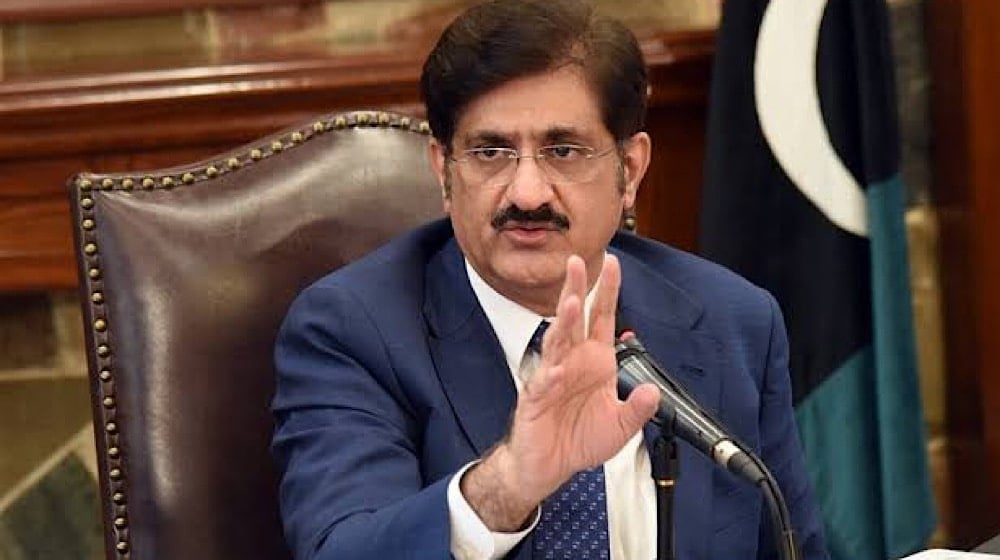
KARACHI, Jul 17 (APP): Sindh Chief Minister Syed Murad Ali Shah directed the Energy Department to further accelerate the distribution and installation of Solar Home System (SHS) kits across the province, reaffirming his government’s commitment to providing clean, affordable and sustainable energy to low-income households.
Presiding over a review meeting at the CM House on Friday on the progress of the Rs18.206 billion Solar Home System Project, the chief minister said that the initiative, launched on the directives of Pakistan Peoples Party Chairman, aims to provide free solar-powered electricity solutions to 275,000 deserving households across Sindh, including both off-grid and protected on-grid consumers.
The meeting was attended by Senior Minister Sharjeel Inam Memon, Principal Secretary to the Chief Minister Agha Wasif, Secretary Energy Shuhab Ansari, Project Director Dadlo Zuhrani and other senior officials.
The chief minister was given a detailed briefing on project implementation, beneficiary selection, district-wise distribution, installation progress and the expected socio-economic benefits of the programme.
The Energy Department is implementing the “Solar Home System for Poor Families (Off-Grid/On-Grid)” project through the Annual Development Programme (ADP) at a total cost of Rs18.206 billion. Under the project, each beneficiary household receives a complete Solar Home System package comprising a 180-watt solar panel, central control unit (CCU) with a 30Ah Lithium Iron Phosphate (LiFePO4) battery, charge controller and mobile charging facility, a 25-watt DC pedestal fan and three 5-watt LED lights
The project will benefit 275,000 households, including 132,000 families in off-grid areas and 143,000 protected electricity consumers in on-grid areas across all districts of Sindh.
The chief minister was informed that the pace of implementation has significantly increased, with more than 15,000 Solar Home System kits distributed and installed across various districts of Sindh.
Large-scale installations have been completed in rural villages, desert settlements, katcha areas and remote communities in districts including Karachi (East, Central, South, Malir, West, Malir, Korangi and Kiamari), Sanghar, Tharparkar, Umerkot, Ghotki, Shaheed Benazirabad, Naushahro Feroze, Khairpur, Dadu, Mirpurkhas, Jamshoro, Badin, Thatta, Sujawal, Kambar- Shahdadkot, Jacobabad, Tando Mohammad Khan Tando Allahayar, Matiari, Jacobabad, Sukkur, Kashmore, Khairpur
The meeting was informed that the project, which commenced in April 2025, is scheduled for completion by June 2027.
The CM said that for the on-grid component, beneficiaries are selected from protected electricity consumers using 0–100 units per month, while the off-grid component targets poor households residing in remote, desert, Kohistan and katcha areas.
Priority is being given to families registered with the Benazir Income Support Programme (BISP) having a poverty score between 0 and 20.
The National Energy & Transport Corporation Limited (NETC) is supplying the solar kits, while the Sindh Rural Support Organisation (SRSO) is responsible for installation and after-sales services, including a two-year maintenance warranty.
Expressing satisfaction over the progress achieved so far, Murad Ali Shah directed the Energy Department to ensure transparency, efficiency and equitable distribution of the solar kits so that the benefits reach the most deserving families.
He stressed that priority must continue to be given to poor households in remote and underserved regions where access to conventional electricity remains limited.
The chief minister instructed the Energy Department to closely monitor installation activities, maintain quality standards and ensure that beneficiaries receive timely technical support and maintenance services.
He also directed the Energy Department to further accelerate implementation so that project targets are achieved well within the stipulated timeframe.
The CM said that the Solar Home System Project is aligned with several United Nations Sustainable Development Goals (SDGs), particularly those relating to affordable and clean energy, poverty reduction, climate action and sustainable communities.
The solar systems are expected to particularly benefit women and girls by extending productive working and study hours, supporting home-based economic activities and improving overall household welfare.
Concluding the meeting, Murad Ali Shah reiterated the Sindh government’s commitment to promoting renewable energy solutions and ensuring that the benefits of development reach every segment of society, particularly vulnerable and low-income communities.

