Sindh Chief Minister, Syed Murad Ali Shah on Friday directed the School Education Department to ensure that all newly upgraded schools under the Sindh Secondary Education Improvement Project (SSEIP) become operational from April 2, 2027, and ordered the launch of an aggressive province-wide enrollment campaign to bring out-of-school children back into classrooms.
CM orders opening of SSEIP schools from April 2, 2027, directs province-wide enrollment drive
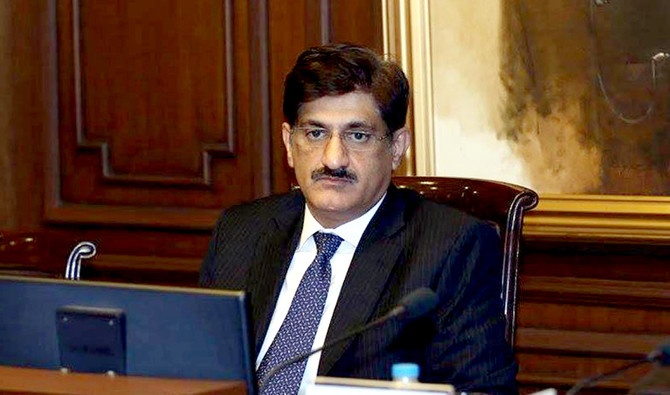
KARACHI, Oct 02 (APP): Sindh Chief Minister, Syed Murad Ali Shah on Friday directed the School Education Department to ensure that all newly upgraded schools under the Sindh Secondary Education Improvement Project (SSEIP) become operational from April 2, 2027, and ordered the launch of an aggressive province-wide enrollment campaign to bring out-of-school children back into classrooms.
Presiding over a high-level review meeting at the CM House, the chief minister said that infrastructure development alone was not enough and that every upgraded school must be fully functional with teachers, students and learning facilities from day one. “Our objective is not merely to construct schools but to ensure that children are enrolled, attend regularly and receive quality education close to their homes,” he said.
The meeting was attended by Education Minister Syed Sardar Shah, Special Assistant to CM Syed Qasim Naveed, Chief Secretary Asif Hyder Shah, PSCM Agha Wasif, Secretary School Education Zahid Abbasi, Chairman P&D Najam Shah, DG PPP Unit Asad Zamin, PD SSEIP Rizwan Soomro and other senior officials.
The chief minister was briefed on the progress of SSEIP and SELECT schools, enrollment campaigns, teacher deployment plans and the proposed engagement of Education Management Organisations (EMOs).
Minister Education Sardar Shah told the chief minister that a pilot enrollment drive conducted from September 21 to 30 in five newly upgraded secondary schools of Thatta district resulted in the registration of 702 students in Classes VI to X within just nine days. Of these, 409 were girls, while 102 out-of-school and dropout children were brought back to school.
He reported that community mobilisation teams visited 116 feeder schools, reached 17 mohallas and 23 villages, and conducted door-to-door awareness campaigns involving parents, teachers and local elders.
The chief minister appreciated the encouraging results and directed the Education Department to replicate the model across the province.
He stressed that special attention should be given to girls’ education and to children who have dropped out of school.
PD Rizwan Soomro told the meeting that the province-wide SSEIP and SELECT programme covers 1,133 schools, including 838 schools under SSEIP and 295 schools under SELECT. According to the implementation schedule, 552 schools are expected to be completed by December 2026, increasing to 801 by March 2027, while all 1,133 schools are planned to be completed by December 2027.
Reviewing construction timelines, Murad Shah directed officials to ensure that all schools scheduled for completion by March 2027 are furnished, staffed and ready for students by April 2, 2027. He also ordered the timely posting of teachers and provision of all essential facilities before the commencement of academic activities.
Secretary School Education Zahid Abbasi informed the meeting that the five pilot schools currently have a combined enrollment of 1,406 students and that additional teacher allocations have been proposed to strengthen academic delivery.
Discussing the future management of upgraded institutions, the chief minister reviewed proposals relating to Education Management Organisations and directed the Education Department and PPP Unit to finalise a transparent and sustainable framework that would improve learning outcomes while ensuring accountability.
Concluding the meeting, Murad Shah reiterated that education remained the Sindh government’s foremost priority and directed all stakeholders to work in close coordination to maximise enrollment, reduce dropout rates and ensure that every newly upgraded school serves as a centre of quality learning for local communities.