Tree plantation drive was held on Thursday at the International Centre for Chemical and Biological Sciences (ICCBS), University of Karachi, as part of its longstanding efforts to create an urban forest and promote a clean, green and healthy environment.
A day-long plantation drive held at ICCBS University of Karachi
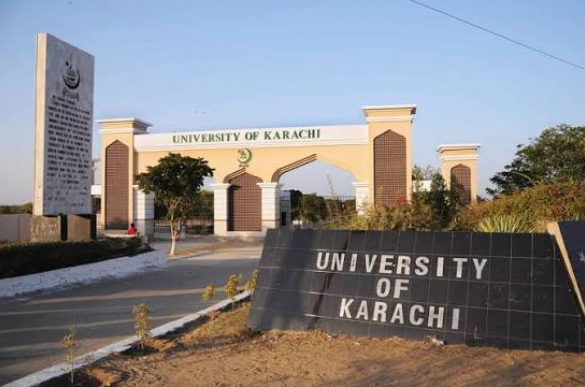
KARACHI, Oct 08 (APP): Tree plantation drive was held on Thursday at the International Centre for Chemical and Biological Sciences (ICCBS), University of Karachi, as part of its longstanding efforts to create an urban forest and promote a clean, green and healthy environment.
More than 400 saplings of different varieties, including almond, Jamun and Neem, were planted on the premises of the International Centre to develop an urban forest and create an environment conducive to human well-being.
Prof. Dr. Atta-ur-Rahman, Professor Emeritus and former Federal Minister for Science and Technology and Prof. Dr. Muhammad Raza Shah, Director of ICCBS, launched the plantation drive. A large number of faculty members, research officers, and students participated in the activity. Prof. Dr. Atta-ur-Rahman and Prof. Dr. Muhammad Raza Shah planted saplings on the ICCBS campus, while faculty members, research officers and students also took part in the plantation.
Talking to the participants, Prof. Dr. Atta-ur-Rahman underscored the need for plantation drives and said that such activities were pivotal to addressing the challenges posed by climate change and extreme weather events, which constitute a serious threat to life on Earth. He noted that trees were an important natural means of mitigating global warming, which poses a potential threat to the planet.
Prof. Dr. Muhammad Raza Shah said that Karachi had become one of the cities severely affected by climate change. He noted that the creation of an urban forest at ICCBS was an environment-friendly initiative.
He also underscored the significance of urban forests in addressing the effects of climate change in Karachi and said that trees absorb pollutants and carbon dioxide and release oxygen, thereby helping to improve urban air quality. Trees also provide shade and cool their surroundings through evaporation, helping to reduce the urban heat-island effect.
He said that environmental challenges such as extreme heat could be addressed, to some extent, by promoting urban forestry in the metropolis. He appreciated the efforts of Dr. Imran Malik and his team for organizing an effective plantation drive at ICCBS.