Punjab Governor Sardar Saleem Haider Khan on Friday said a comprehensive policy to promote local manufacturing of solar systems in Pakistan could create millions of jobs, provide affordable and environment-friendly energy and help the country earn valuable foreign exchange.
Solar manufacturing can create millions of jobs: Punjab governor
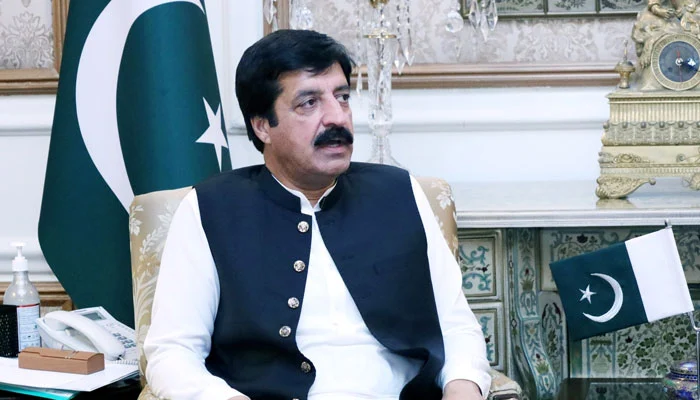
LAHORE, Sep 25 (APP): Punjab Governor Sardar Saleem Haider Khan on Friday said a comprehensive policy to promote local manufacturing of solar systems in Pakistan could create millions of jobs, provide affordable and environment-friendly energy and help the country earn valuable foreign exchange.
He was addressing the 3rd International Solar Power Conclave and Solar Technology Excellence Awards 2026, organised by Energy Update in collaboration with the Pakistan Solar Association, Renewable Energy Association of Pakistan and Pakistan Alternative Energy Association at a local hotel here.
The governor said it was unfortunate that large-scale local manufacturing of solar systems had not yet been developed in Pakistan due to the absence of a comprehensive government policy. He said establishing a local solar manufacturing industry could generate millions of employment opportunities while providing clean, green and relatively low-cost energy.
Sardar Saleem Haider Khan said the importance of solar energy was increasing with the rising cost of electricity, adding that Pakistan had abundant sunlight that could be utilised to reduce the burden of electricity bills on consumers and protect the environment.
He urged the solar business community to take practical steps towards local manufacturing instead of waiting for a government policy. He said the solar industry had played an important role in introducing the technology in Pakistan despite limited government support in the past, and a similar approach could help lay the foundation for local manufacturing.
He said local production of solar systems would not only help meet the country’s growing energy requirements but also enable Pakistan to export solar products and earn valuable foreign exchange.
Referring to the rapidly increasing use of solar panels, the governor said a large number of households in urban areas had installed solar panels on rooftops, reflecting growing public interest in solar energy. He also referred to steps taken by provincial governments to promote solar energy, saying the Sindh government had distributed a large number of solar panels free of cost among livestock farmers and flood-affected people.
He said disruptions in energy supplies caused by the recent regional conflict had affected LNG supplies and contributed to increased load-shedding, adding that the growing availability of solar energy could reduce domestic consumers’ dependence on expensive grid electricity in the future.
Punjab Energy Minister Faisal Ayub said Pakistan had faced severe electricity shortages and load-shedding during 2009-10, which, according to him, were addressed through power generation projects established by the Pakistan Muslim League-Nawaz government between 2013 and 2018.
He said the country was now facing the challenge of expensive electricity rather than a shortage of power. Although electricity remained a federal subject, the Punjab government would support the solar energy sector to help address the issue of high electricity costs, he added.
The minister said the provincial government would approach the federal energy minister to promote the solar energy sector and would also involve representatives of the Pakistan Solar Association in consultations for formulation of a policy aimed at accelerating the adoption of solar energy in Pakistan.
He invited energy experts to submit proposals for the promotion of the solar sector, saying the government would welcome their recommendations. He warned that failure to support the solar industry at the present stage could have negative implications for national interests.
Pakistan Solar Association President Adil Mahmood said solar energy was currently contributing around 40,000 megawatts to Pakistan’s energy requirements. He claimed that without this contribution, the country could have faced five to seven hours of daily load-shedding.
He highlighted the difficulties faced by the solar industry due to taxes on solar panels and other measures, and called for the abolition of duties and sales tax on batteries. He also proposed establishing local lithium battery manufacturing plants so that Pakistan could eventually export batteries.
Energy Update Managing Editor Naeem Qureshi said the organisation was celebrating its 20th anniversary after its establishment in 2006 and had so far organised around 180 seminars, training workshops, policy dialogues and international conferences to promote renewable energy.
He said solar energy had faced challenges during the early phase of the renewable energy sector in Pakistan when conventional electricity was relatively inexpensive, but the situation had changed with the rising cost of electricity.
He said solar energy use in Pakistan had crossed 40,000 megawatts, claiming that it had helped the country save around $6 billion. He added that Pakistan had become one of the major countries importing solar systems from China at competitive rates.
Naeem Qureshi said the environment-friendly energy sector had also created around two million jobs in Pakistan. He pointed out that Sindh’s wind corridor had an estimated electricity generation potential of around 50,000 megawatts, while approximately 1,800 to 2,300 megawatts were currently being generated through wind power.
During the first panel discussion, LUMS Energy Institute Director Dr Naveed Arshad, National Grid Company Managing Director Altaf Hussain, Growatt Pakistan Technical Head Zohaib-ul-Haq and TBEA Central and South Asia Regional Head Mian Fahad discussed energy storage systems and the changing renewable energy landscape in Pakistan.
In his remarks, Inverex Solar Energy CEO Muhammad Zakir Ali also highlighted developments in the solar energy sector.
The speakers said Pakistan had joined a unique group of countries where solar energy’s share had reached around 25 percent. They said the rapid growth of solar energy in the country had largely been driven by market conditions and consumer needs rather than a comprehensive government policy.
Dr Naveed Arshad described battery storage as an important new direction for the energy sector, saying that by 2035 Pakistan’s energy transition could expand beyond the existing distributed energy model to distributed energy storage systems, microgrids, vertical power plants, artificial intelligence and data analytics, energy conservation and efficient energy use.
The second panel discussion examined investment opportunities in photovoltaic systems and solar batteries. It was moderated by Dr Jawaria Shakeel, Director Sustainability, Assur International.
The panellists included Dewan International’s Hussain Dewan, C&I Energy Storage Pakistan Director Joseph Cho, Power Highway Chief Executive Muhammad Farhan, Pakistan Solar Association Senior Vice President Hasnat Khan and AESL’s Maroof Ahmed Zuberi.
Dr Jawaria Shakeel advised industry stakeholders to consider appropriate timing and available capacity while transitioning towards solar energy.
Muhammad Farhan, citing Bangladesh’s example, said domestic consumers with 5 to 10-kilowatt solar installations could also supply surplus electricity to their neighbours in Pakistan. He also stressed the need for insurance coverage for solar equipment.
At the conclusion of the event, Punjab Governor Sardar Saleem Haider Khan distributed the 3rd Solar Technology Excellence Awards 2026 among individuals and organisations for their outstanding contributions to the renewable energy and solar sectors.
Around 30 prominent companies associated with the renewable energy sector were also honoured in recognition of their services and performance.