Director General (DG) Press Information Department (PID) Lahore Shafqat Abbas Khan has said that the country is moving towards economic stability under the leadership of Prime Minister Muhammad Shehbaz Sharif while responsible and fact-based journalism has become more important than ever in safeguarding national unity and public trust in the digital age.
Responsible journalism imperative for national unity: DG PID Lahore
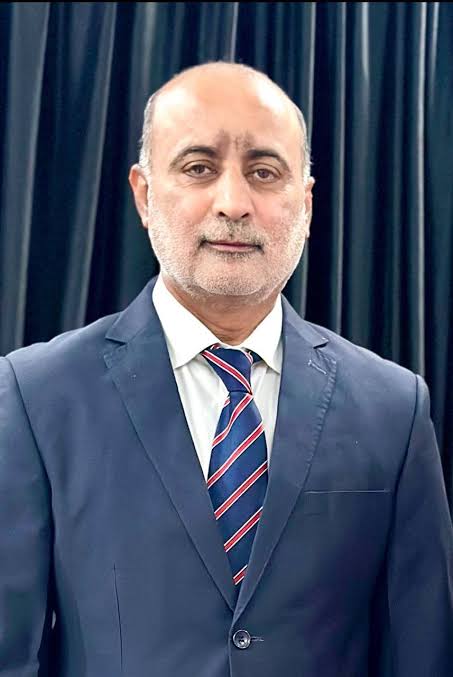
FAISALABAD, Jul 10 (APP): Director General (DG) Press Information Department (PID) Lahore Shafqat Abbas Khan has said that the country is moving towards economic stability under the leadership of Prime Minister Muhammad Shehbaz Sharif while responsible and fact-based journalism has become more important than ever in safeguarding national unity and public trust in the digital age.
Addressing a meeting organized by the Faisalabad Editors Council here on Friday, he highlighted the growing signs of economic recovery and indispensable role of credible media in strengthening public confidence and said that the government’s economic reform agenda had begun yielding positive results, reflecting a clear improvement in key economic indicators and restoring confidence among investors and international stakeholders.
He said that the rapid spread of misinformation through social media and digital platforms had increased the responsibility of media organizations to uphold professional standards, ensure verification of information and promote balanced reporting.
He said that Pakistan’s media had historically played a significant role in raising public awareness, strengthening democratic institutions and encouraging constructive public discourse.
However, he stressed that the challenges posed by misinformation required an even greater commitment to responsible journalism.
He said that verified information, balanced reporting and constructive criticism were imperative for reinforcing national institutions and maintaining public confidence.
Referring to the government’s economic measures, he said that Prime Minister Shehbaz Sharif had taken effective decisions to stabilize the economy and encouraging outcomes were now becoming visible.
He pointed to a significant decline in inflation, growth in foreign exchange reserves, restoration of investor confidence and record performance of the Pakistan Stock Exchange as indicators that the national economy was moving in the right direction.
He said that International Monetary Fund (IMF), international financial institutions and global rating agencies had also acknowledged Pakistan’s economic direction and reform efforts positively.
As a result, international investor’s confidence had improved and prospects for foreign investment had expanded considerably, he added.
Describing Faisalabad as the country’s industrial hub, Shafqat Abbas Khan said that industrial growth would lead to higher exports, creation of employment opportunities and increased business activity.
He said that the government was actively pursuing policies aimed at providing an industry-friendly environment, promoting investment and encouraging private-sector participation to strengthen the foundations of the national economy.
He said that the government was also focusing on infrastructure development, improved connectivity, public services and national development projects to accelerate economic growth.
Various initiatives were underway in the agriculture sector, including promotion of modern technologies, provision of quality seeds, better water management and enhancement of agricultural exports to ensure food security and sustainable economic development, he added.
Speaking about the law & order situation, he said that Pak armed forces and law-enforcement agencies had strengthened counter-terrorism operations and border management which resulted in an improved security environment in addition to creating favorable conditions for investment and economic activity.
On foreign policy, he said that Pakistan had achieved notable diplomatic successes under the balanced foreign policy pursued by Prime Minister Shehbaz Sharif.
Shafqat Abbas Khan also appreciated the role of regional media and editors’ councils in effectively communicating the national narrative to the public and strengthening trust between the government and citizens.
He said that regional media outlets served as an important bridge between policymakers and the public, and played a role in highlighting grassroots realities.
Earlier, Secretary General Faisalabad Editors Council Syed Muhammad Munir Jilani welcomed the DG PID Lahore and termed the federal government’s initiative to engage directly with regional media a positive development.
Such interactions would not only enhance mutual trust between the government and media but would also strengthen effective communication on issues of national importance, he added.
He emphasized that regional newspapers had consistently remained at the forefront of highlighting public concerns and ground realities, making their meaningful inclusion in policy-making and information strategies a necessity.
During meeting, editors of various regional newspapers also shared their views and welcomed the visit of the Director General PID Lahore to Faisalabad.
They described direct interaction and consultation with regional media as a commendable initiative that would contribute to shape the national narrative, conveying ground realities to policymakers, promoting mutual trust and strengthening national cohesion.
Later, Shafqat Abbas Khan thanked media representatives for their valuable suggestions and observations, describing them as important for national development.
Faisalabad Editors Council also presented a commemorative shield to the Director General PID Lahore in recognition of his visit and engagement with the media community.