Prominent religious scholars, spiritual leaders and scholars from various schools of thought across Pakistan on Monday reaffirmed their firm resolve against extremism, sectarianism and terrorism and pledged full support for national security institutions.
Religious leaders reaffirm resolve against extremism, backs security institutions
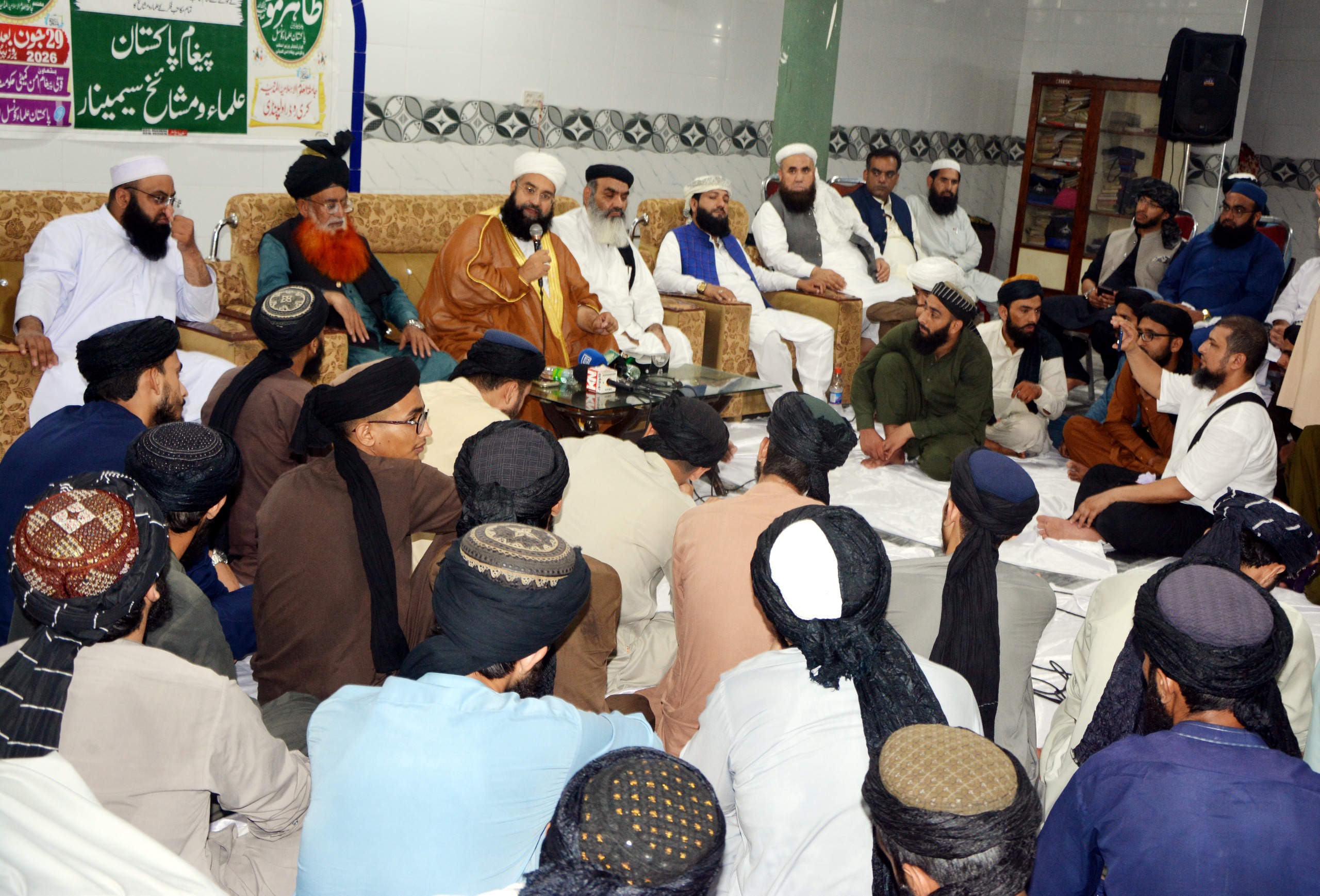
RAWALPINDI, Jun 29 (APP): Prominent religious scholars, spiritual leaders and scholars from various schools of thought across Pakistan on Monday reaffirmed their firm resolve against extremism, sectarianism and terrorism and pledged full support for national security institutions.
The commitment was expressed at the “Paigham-e-Pakistan Ulema and Mashaikh Seminar” held at Jamia Masjid Marhaba, where speakers credited the peaceful observance of Muharram to effective implementation of the Paigham-e-Pakistan code of conduct.
The scholars paid rich tribute to the Pakistan Army, Rangers, police, law enforcement and intelligence agencies, as well as provincial governments, district administrations and volunteers for maintaining law and order during Muharram despite a sensitive security environment.
They also appreciated the role of the Paigham-e-Aman Committee in strengthening coordination among scholars, speakers and organizers of religious gatherings and ensuring compliance with the agreed code of conduct.
Addressing the seminar, Prime Minister’s Coordinator on the Paigham-e-Aman Committee and Chairman Pakistan Ulema Council, Hafiz Muhammad Tahir Mahmood Ashrafi thanked participants for their role in promoting peace.
He highlighted that hostile elements had attempted to incite sectarian tensions during Muharram, but responsible leadership by religious scholars, institutional efforts and public awareness ensured peace across the country.
He said that Pakistan is a shared homeland for followers of different schools of thought and religions, where respect for beliefs is a constitutional, legal and religious obligation. He added that no individual or group has the right to spread hatred or insult others’ beliefs.
He further said the Paigham-e-Pakistan code reflected true Islamic teachings of moderation, dialogue, justice, tolerance and peaceful coexistence, stressing that disputes must be resolved through the constitutional and law rather than violence.
He emphasised that only qualified scholars should issue religious rulings (fatwas), noting that irresponsible practices had declined due to the committee’s efforts, helping reduce sectarian tensions.
Ashrafi appreciated the Pakistan Electronic Media Regulatory Authority (PEMRA) for taking timely action over controversial television content during Muharram, urging media organisations to strengthen editorial oversight to avoid such incidents in future.
He said that mistakes, if corrected, should be acknowledged, but repeated violations must be dealt with strictly under the law.
Referring to regional security, he said that Pakistan’s security institutions had professionally countered challenges and foiled attempts to create unrest.
He appreciated the efforts of Prime Minister Shehbaz Sharif and the military leadership in promoting unity and stability, adding that national security depended on internal peace.
In a joint declaration, the scholars pledged to continue united efforts against extremism, hate speech and sectarian violence, stating that Pakistan’s progress depended on rule of law, strong institutions, tolerance and unity.
They condemned a recent terrorist attack on a Rangers camp in Karachi, calling it a cowardly attempt to destabilise the country and alleging involvement of foreign-backed elements.
The participants reiterated their commitment to safeguarding Pakistan’s sovereignty and security, describing defence of the country as a collective national and religious duty.