LAHORE, Oct 17 (APP):Punjab Chief Minister Maryam Nawaz Sharif has said that public service requires courage, timely decision-making, professional competence and an unwavering commitment to merit, stressing that every decision taken by a chief minister can transform the lives of millions of people. Addressing participants of the Common Training Programme from the Sindh government, here on Saturday, she said that holding the office of chief minister was a challenging responsibility …
Public service demands courage, timely decisions and accountability:CM
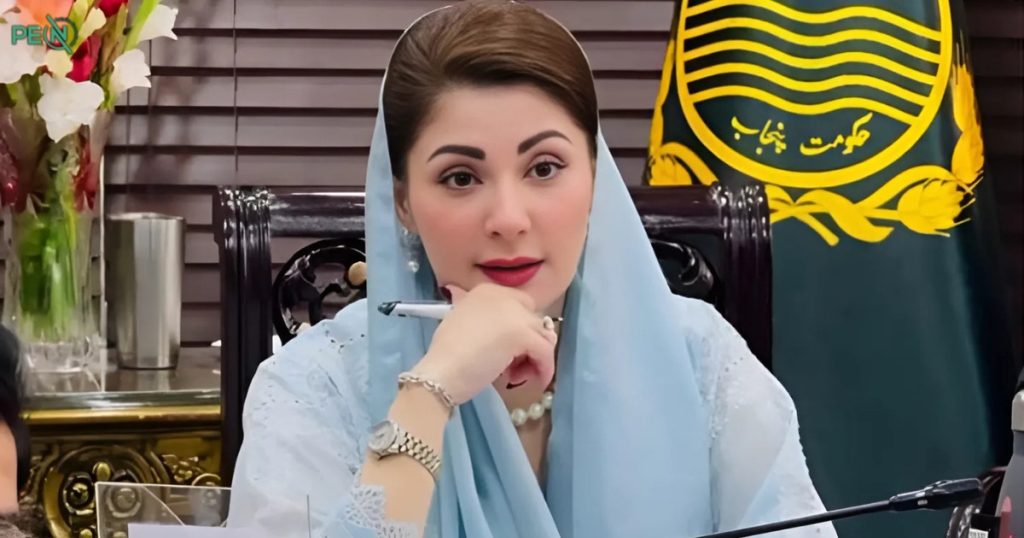
LAHORE, Oct 17 (APP):Punjab Chief Minister Maryam Nawaz Sharif has said that public service requires courage, timely decision-making, professional competence and an unwavering commitment to merit, stressing that every decision taken by a chief minister can transform the lives of millions of people.
Addressing participants of the Common Training Programme from the Sindh government, here on Saturday, she said that holding the office of chief minister was a challenging responsibility that demanded continuous hard work, effective governance and prompt responses to emerging challenges. “Being chief minister does not mean dressing up, arriving at the office, having tea and returning home in the evening. There is a great deal of work to be done, and there is no time to waste,” she said, adding that she kept a clock in front of her to ensure punctuality and effective utilization of time.
CM Maryam Nawaz said that she considered it a responsibility to deliver tangible benefits to the people every day. If no project or decision was introduced for public welfare on a particular day, she felt that the day had been wasted, she added. She said the country had invested in its people by providing them with education, recognition and opportunities, and it was now their responsibility to give back through dedicated service. “I proudly say that I was made in Pakistan, educated in Pakistan and live in Pakistan,” she remarked.
Emphasising the importance of decisive leadership, she said that public officials had to take calculated risks and demonstrate courage to achieve results. Opportunities did not come repeatedly, and hard work could make even difficult tasks possible, she added.
The CM said that professionalism required keeping personal emotions and considerations separate from official responsibilities. Decisions had to be made at the right time and in the best interest of the public, she said, adding that a person who did not know what decision was required had no right to hold the relevant office.
Sharing her political journey, Maryam Nawaz said she had never held a public office before becoming chief minister. She said she had worked hard to reach her present position and had faced significant challenges within her political party. She observed that women had been underrepresented on the Pakistan Muslim League-Nawaz platform in the past, whereas women now constituted approximately half of the participants at party events. She encouraged women to strengthen their professional capabilities and believe that they could achieve what others could. She described her father as a guiding light and a vast source of experience, saying that there were many examples to learn from within the family as well. She added that continuous learning was essential throughout life.
The CM said she did not allow political pressure to override merit and personally interviewed officers for important appointments. She added that postings of deputy commissioners and district police officers in Punjab were not made on recommendations, adding that appointing an individual through favouritism was unfair to deserving candidates. She said she assessed candidates through professional and psychological questions during interviews, including their body language, to evaluate their suitability for official responsibilities.
The CM said that the government had to build public trust by demonstrating that public money was being spent responsibly. Referring to the Apni Chhat, Apna Ghar housing programme, she said the initiative had received international recognition in Muscat, where it was awarded the UN-Habitat Scroll of Honour for being among the fastest and most sustainable low-cost housing schemes. She said more than 200,000 housing loans had been provided within 18 months, while 125,000 houses had been completed under the programme. She added that she had personally pushed for a reduction in the repayment period’s burden by securing a nine-year instalment plan.
The CM said safeguards had been incorporated into the housing scheme to prevent fraud and protect public money. The programme had achieved a recovery rate of 99.9 per cent, with no defaults, she claimed, adding that more than 100 schemes were operating in Punjab without any defaulters. She said public confidence in government programmes represented a new social contract between the state and citizens, adding that people had never disappointed the government when they were trusted.
Emphasising the state’s responsibility towards vulnerable communities, Maryam Nawaz said that people in need should not have to knock on government doors to seek assistance. Instead, the state should proactively reach them, as making needy people stand in queues for assistance was humiliating. She said the Punjab government had arranged food distribution facilities for millions of people during Ramazan with the support of philanthropists. The government was also expanding doorstep healthcare through 1,000 Clinics on Wheels and 32 field hospitals, she added.
She said Lady Health Inspectors were collecting household-level data to improve service delivery, while medicines, including supplies for cardiac patients, hepatitis patients and insulin-dependent individuals, were being delivered to people’s homes to meet their needs for two months.
The CM said she personally monitored daily price data for essential commodities, including flour, potatoes and onions, through dashboards to ensure effective price control. She added that the government had introduced mobile police station facilities, particularly for women, and panic buttons were available in ride-hailing vehicles, rickshaws, schools and colleges to facilitate emergency assistance. Victims of cyberbullying and harassment could also seek government support without disclosing their identities, she said.
Maryam Nawaz said more than four million people had obtained services, including birth certificates, through the Dastak application. An ambulance service had also been introduced to facilitate the transportation of deceased persons from hospitals, providing relief to bereaved families.
Referring to flood relief operations, she said around five million people had been affected by floods in Punjab and the government had treated affected families like honoured guests. She said Safe City cameras were operational across Punjab, enabling authorities to detect criminal activity within seconds. The Crime Control Department had also contributed to a reported 70 per cent reduction in crime in the province, she added.
The CM said 700 buses were serving people across the province without passing on the impact of higher fuel prices to passengers. Women, students and senior citizens were travelling free on electric buses, while students across Punjab were benefiting from free green bus services. She said the government planned to distribute electric scooters to 100,000 girls in November to facilitate their mobility. She added that police responded promptly to harassment complaints on the Orange Line train, with officers reaching the next station when passengers contacted the emergency helpline.
CM Maryam Nawaz said the government was also monitoring brick kilns and industrial chimneys through live systems to control emissions, while a Forest Protection Force was working to safeguard the province’s forests. She claimed that the province had made progress in controlling smog through monitoring and enforcement measures. She said public safety, healthcare and access to essential services remained among the government’s major responsibilities. If patients had to travel three hours to another city for treatment, it reflected a failure to provide adequate healthcare facilities locally, she added.
The CM said she personally followed up on projects to ensure their completion and maintained that the needs of Punjab’s 130 to 140 million people left no room for complacency or the luxury of treating only a few issues as priorities. She also praised the discipline, cleanliness and beautification of Punjab, saying journalists visiting from Karachi had appreciated these improvements. She acknowledged that public criticism accompanied visible performance but said she was not deterred by it.
The CM urged the participants to recognize the responsibility entrusted to public servants and work with dedication, courage and integrity to improve people’s lives. She said Punjab’s size and population placed an even greater responsibility on its government to deliver effective public services.