
Premature infants in Pakistan are losing their sight at rates significantly higher than global averages due to gaps in screening for retinopathy of prematurity (ROP), a preventable eye condition, according to data compiled by the Al-Shifa Trust(AST) Eye Hospital.
Premature babies face rising blindness risk in Pakistan amid screening gaps, says Al-Shifa Trust
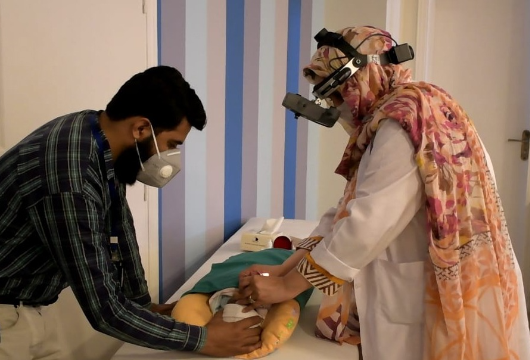
RAWALPINDI, Apr 06 (APP):Premature infants in Pakistan are losing their sight at rates significantly higher than global averages due to gaps in screening for retinopathy of prematurity (ROP), a preventable eye condition, according to data compiled by the Al-Shifa Trust(AST) Eye Hospital.
ROP occurs when abnormal blood vessels develop in the retina of premature babies and can lead to permanent blindness if not detected and treated early. However, access to timely screening remains limited, with only a small number of hospitals offering consistent services nationwide.
Pakistan recorded an estimated 921,600 preterm births in 2020, placing it among the countries with the highest burden globally. With a preterm birth rate of 14.4 per cent, the country ranks fourth in total preterm births and third in neonatal deaths.
Clinical studies indicate that 32.2 per cent of eligible premature infants in Pakistan develop ROP, compared with 12 to 18 per cent in high-income countries. A 2025 study published in BMC Ophthalmology attributed the higher burden to improved survival of premature infants without a corresponding expansion in screening and treatment capacity.
Shortages in infrastructure and trained personnel remain a major constraint. In Peshawar, only two of seven neonatal intensive care units (NICUs) with ophthalmology services had staff capable of conducting ROP screening, while surveyed NICUs in Balochistan lacked essential equipment. At Lahore General Hospital, only 46.7 per cent of 3,521 eligible infants were screened between 2015 and 2021.
Untreated ROP can have severe consequences. One study found that 76.4 per cent of affected children became completely blind, while 23.6 per cent developed severe visual impairment.
Professor Dr Sumaira Altaf, Senior Consultant and Head of Paediatric Ophthalmology at Al-Shifa Trust Eye Hospital, said the institution had been providing free ROP screening since 2010. She said a five-year study at the hospital showed that 1,610 premature infants required more than 8,000 visits, resulting in the diagnosis of 543 cases and urgent treatment for over 250 infants.
She added that the hospital had introduced a dedicated ROP coordinator to track at-risk newborns and ensure follow-up screening, a system not widely available in many healthcare facilities.
The trust has also conducted training workshops for ophthalmologists, enabling at least four hospitals in Rawalpindi and Islamabad to offer ROP services through Al-Shifa-trained specialists, while the screening network has expanded to hospitals in Azad Jammu and Kashmir.
A January 2026 analysis of Global Burden of Disease data identified Pakistan as having the highest prevalence of vision loss linked to ROP globally, a trend experts warn is likely to persist without urgent policy intervention.
Infants born at or before 35 weeks of gestation, or weighing two kilograms or less, are at the highest risk and require screening within four weeks of birth. Each year, around 7,200 infants born before 32 weeks of gestation are at risk of developing the condition.