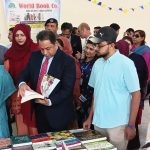
Pakistan and Canada have significant opportunities to further strengthen agricultural and trade cooperation, modernise dairy and poultry production, and improve food security through research-based technologies and knowledge sharing.
Pakistan, Canada to strengthen cooperation in agriculture, food security

FAISALABAD, Oct 14 (APP): Pakistan and Canada have significant opportunities to further strengthen agricultural and trade cooperation, modernise dairy and poultry production, and improve food security through research-based technologies and knowledge sharing.
A spokesman for the University of Agriculture Faisalabad (UAF) said here on Wednesday that the need for enhanced bilateral collaboration came under discussion during a meeting between University of Agriculture Faisalabad (UAF) Vice Chancellor Prof Dr Zulfiqar Ali and a high-level delegation from the High Commission of Canada in Pakistan, comprising Political, Economic and Commercial Counsellor Daniel Arsenault and Trade Commissioner Zohaib Khan.
The discussions focused on climate-smart agriculture, modernization of the dairy sector, innovation in the poultry industry, agro-food processing and improving supply chain efficiency to reduce post-harvest losses and ensure the availability of safe and quality food.
Speaking on the occasion, Daniel Arsenault lauded the strategic role of UAF in addressing agricultural challenges, particularly food security and safety.
He stressed the importance of strengthening cooperation between industry and researchers to ensure that scientific discoveries and laboratory findings are translated into practical solutions and commercially viable technologies for farmers and businesses.
Referring to bilateral trade, Arsenault said that Canada was a major supplier of canola seed to Pakistan and welcomed Pakistan’s lifting of the restriction on genetically modified (GM) canola import.
He said that the decision, following engagement between the two governments, had paved the way for the resumption of Canadian canola exports to Pakistan.
He said that canola was among Canada’s major agricultural exports to Pakistan, adding that Canadian research and expertise could contribute to improving agricultural productivity and supporting the country’s food and nutrition needs.
Mr Arsenault said that the delegation was also engaging with Pakistani importers to explore opportunities for supplying Canadian pulses and lentils, which could help diversify food supplies and strengthen food security.
Highlighting the potential for cooperation in the dairy sector, he said that Pakistan could benefit from Canadian expertise in modern dairy farming, including through institutions such as the University of Guelph.
He noted that incorporating canola into animal feed could increase daily milk production by up to one liter under appropriate feeding conditions, offering potential benefits to small-scale dairy farmers.
He said that both countries could work together to improve farm productivity, strengthen agricultural value chains and expand opportunities in domestic and international markets.
UAF Vice Chancellor Prof Dr Zulfiqar Ali said that Pakistan needed to move towards a modern, research-driven and climate-resilient agricultural system to meet the growing demand for food, improve farmers’ incomes and ensure food safety.
“Agriculture is central to Pakistan’s food security and economic stability, but rising production costs, climate change and pressure on natural resources require us to adopt innovative and sustainable farming practices. Cooperation with Canada can help us turn scientific research into practical solutions that benefit farmers, strengthen the dairy and poultry sectors, and improve the quality and competitiveness of our agri-food products”, he added.
Prof Dr Zulfiqar Ali said that UAF was committed to promoting international research partnerships, technology transfer and industry-academia collaboration to address emerging agricultural challenges.
He stressed that cooperation should focus on developing locally adaptable technologies, improving the skills of farmers and researchers, and creating opportunities for students and scientists to benefit from international expertise.
He said that closer collaboration between Pakistani and Canadian universities, research institutions and private-sector stakeholders could help develop sustainable agricultural practices, improve productivity and reduce food losses across the supply chain.
The meeting underscored the potential for stronger Pakistan-Canada engagement in agricultural research, trade, education and technology transfer, with a shared focus on sustainable food production and long-term food security.