Federal Minister for Board of Investment Qaiser Ahmed Sheikh said on Sunday that a new wave of trade, investment and technology partnerships between Pakistan and China had the potential to transform the country’s economic landscape, accelerate industrial growth and position Pakistan as a major investment destination in the region.
New Pakistan-China investment agreements can transform economic future: Qaiser Sheikh
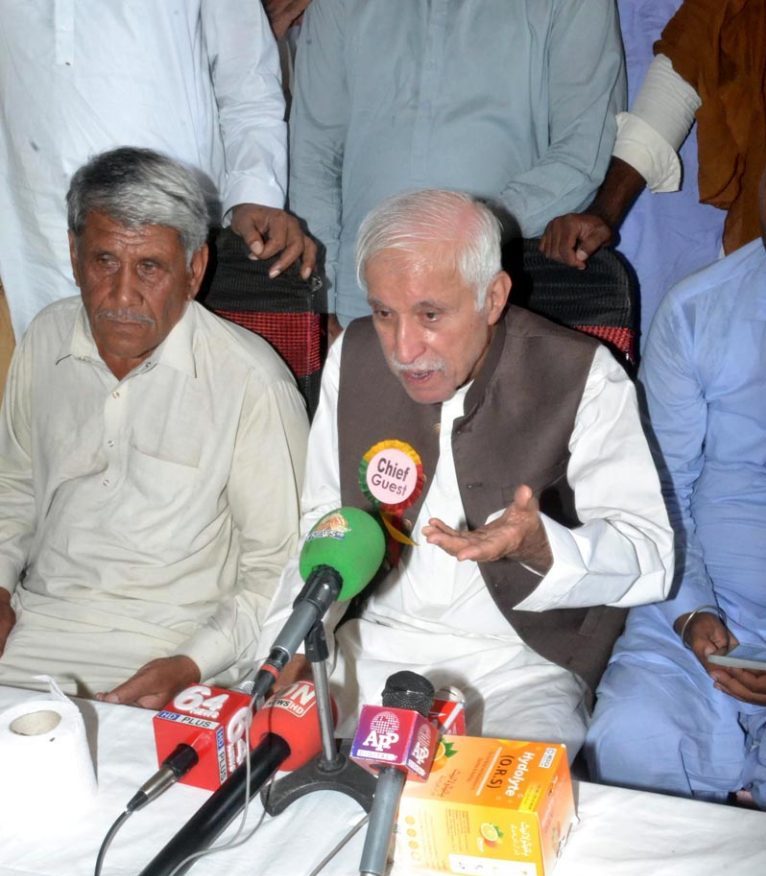
FAISALABAD/CHINIOT, Jun 07 (APP):Federal Minister for Board of Investment Qaiser Ahmed Sheikh said on Sunday that a new wave of trade, investment and technology partnerships between Pakistan and China had the potential to transform the country’s economic landscape, accelerate industrial growth and position Pakistan as a major investment destination in the region.
Talking to the media during his visit to a free medical camp, organised with the support of Anjuman-e-Islamia Chiniot, the minister said that recent high-level engagements between Pakistani and Chinese business communities had opened a new chapter in bilateral economic relations, resulting in multiple agreements, Memorandums of Understanding (MoUs) and joint ventures in diverse sectors.
He said that the initiatives were being pursued in line with the special directives of Prime Minister Shehbaz Sharif and the government’s broader economic vision for attracting foreign investment, promoting industrial development and creating employment opportunities.
He said that Board of Investment in collaboration with Special Investment Facilitation Council (SIFC) had arranged extensive business-to-business meetings in China between Pakistani and Chinese investors and entrepreneurs.
He termed the outcomes of these engagements highly encouraging and said that they would contribute significantly to strengthening economic cooperation between the two countries.
Qaiser Sheikh said that Pakistani delegation comprised more than 200 businessmen, industrialists, agricultural experts, technology professionals and representatives of various sectors from across the country.
During visit, the delegation toured major industrial, commercial and technology hubs in China and held detailed discussions with Chinese investors and business organizations, he added.
He said that Prime Minister Shehbaz Sharif had directed the delegation to closely study China’s advanced agricultural technologies, smart farming systems, industrial automation, artificial intelligence-based production processes and modern machinery to explore opportunities for introducing these innovations in Pakistan.
He said that agriculture and industry remained backbone of Pakistan’s economy and adoption of modern Chinese technologies could substantially enhance productivity, industrial output, exports and employment generation.
Highlighting the achievements of the visit, Qaiser Sheikh said that several Memorandums of Understanding (MoUs) had been signed while consensus had also been reached on moving forward with a number of joint ventures.
The promising opportunities had emerged in investment, industrial cooperation, technology transfer, agricultural development, renewable energy and manufacturing sectors, he added.
He disclosed that an important agreement had also been reached in the fertilizer sector to introduce modern Chinese coal-related technology in Pakistan. The initiative would help improve fertilizer production, reduce manufacturing costs and enhance efficiency of the agricultural sector, ultimately benefiting the farmers, he added.
He described Pakistan-China relations as an exemplary partnership based on mutual trust, respect and shared development goals.
He said that diplomatic ties spanning more than 75 years had continued to grow stronger while China-Pakistan Economic Corridor (CPEC) remained the most prominent symbol of bilateral cooperation.
Referring to the second phase of CPEC, he said that special emphasis was being placed on special economic zones, industrial expansion, technology transfer, export promotion and job creation. These initiatives would inject fresh momentum into industrial activity and attract greater foreign investment, he added.
Discussing the government’s economic agenda, Qaiser Sheikh said that the administration was implementing comprehensive reforms to revive the economy, improve the business environment and promote investment.
He expressed hope that the upcoming federal budget would include measures to facilitate businesses, encourage investment and reduce financial pressure on ordinary citizens.
He also highlighted Pakistan’s recent diplomatic achievements, saying the country had earned international recognition through its constructive foreign policy focused on peace, stability, regional cooperation and dialogue.
Speaking on investment opportunities, he said that a large number of overseas Pakistanis were eager to invest in their homeland and the government was taking practical steps to strengthen investor confidence.
He said that Board of Investment was actively pursuing regulatory reforms, removing unnecessary bureaucratic hurdles and promoting a business-friendly environment to facilitate both local and foreign investors.
Earlier, during his visit to free medical camp, the federal minister reviewed healthcare facilities provided to the patients and appreciated the efforts of doctors, paramedics and volunteers.
He said that lack of basic healthcare services in rural and underdeveloped areas remained a major challenge and free medical camps were helping bridge that gap by providing essential treatment and raising public health awareness.
He said that the camp offered free medical examinations, diagnostic tests, medicines, specialist consultations and referral services for patients requiring advanced treatment. Hundreds of people benefited from the facility while leading doctors from Chiniot voluntarily rendered their services, he added.
He said that approximately 500 to 600 patients received free healthcare services at the camp.
He praised the organizers and healthcare professionals for their commitment to serving underprivileged segments of society and said that such initiatives strengthened social solidarity and collective responsibility.
Qaiser Sheikh further said that the government in collaboration with social welfare organizations would continue expanding public welfare projects in health, education and social development sectors.
He also informed that Eid gifts had been distributed among deserving and needy individuals on the occasion of Eid-ul-Azha to ensure that economically disadvantaged families could also share in the festivities.
Genuine social progress could only be achieved when all segments of the society were given equal opportunities to benefit from development, public services and prosperity, he added.