Governor Khyber-Pakhtunkhwa Faisal Karim Kundi on Wednesday said the Makkah Joint Defence Agreement among Pakistan, Saudi Arabia and Turkiye was an important development towards strengthening unity among Muslim countries, collective security, defence cooperation and regional peace and stability in the prevailing global situation.
Makkah defence pact reflects growing unity, defence cooperation among Muslim countries: Faisal Karim Kundi
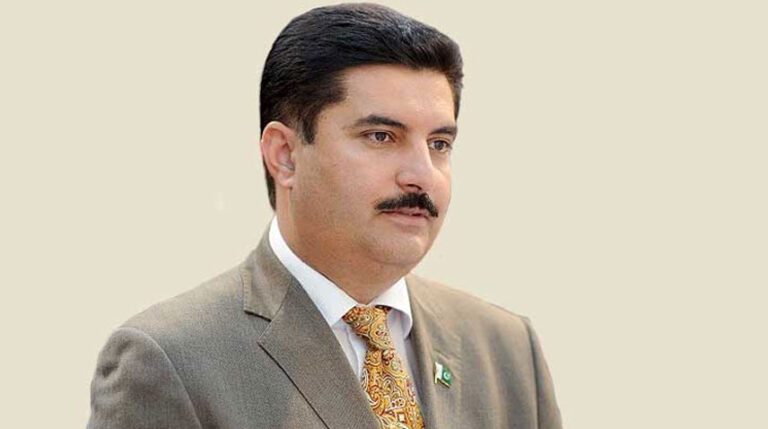
LAHORE, Aug 26 (APP): Governor Khyber-Pakhtunkhwa Faisal Karim Kundi on Wednesday said the Makkah Joint Defence Agreement among Pakistan, Saudi Arabia and Turkiye was an important development towards strengthening unity among Muslim countries, collective security, defence cooperation and regional peace and stability in the prevailing global situation.
Addressing a ceremony on “Makkah Joint Defence Agreement, Protection of Haramain Sharifain and Current National Situation” at the central secretariat of Jamiat Ahle Hadith Pakistan, Quran-o-Sunnah Islamic Centre here, he said Pakistan-Saudi Arabia relations were rooted in faith, religious affinity, brotherhood and centuries-old historical ties. The people of both countries shared deep affection, respect and attachment with each other.
The governor said Haramain Sharifain were the spiritual centre of the Muslim Ummah and their protection was a collective responsibility of all Muslims. He said the present global situation demanded that Islamic countries rise above their differences and promote unity, solidarity, mutual trust and cooperation.
Faisal Karim Kundi said Pakistan’s strong defence capabilities were not only a guarantee of its national defence and security but could also contribute to the protection and sovereignty of brotherly Muslim countries and regional peace. Pakistan, he added, had always preferred the principles of peace, sovereignty, mutual respect and peaceful coexistence and regarded cooperation with brotherly Islamic countries as an important component of its foreign policy.
He said the Makkah agreement could further strengthen defence cooperation and mutual confidence among Islamic countries, stressing that the basic objective of such agreements should be promotion of peace, stability, sovereignty and collective security rather than confrontation with any country.
The governor called for further strengthening Pakistan’s defence, diplomatic, economic and trade relations with Saudi Arabia and other brotherly Muslim countries. He also stressed greater cooperation in education, science and technology, economy and other fields. He said efforts should be made, with mutual consultation, consensus and the consent of the countries concerned, to bring Syria, Bangladesh and other Muslim countries into broader frameworks of defence cooperation. He emphasized that unity among Muslim countries should serve collective interests, peace and sovereignty rather than confrontation.
Faisal Karim Kundi said the Muslim world was facing political instability, economic difficulties, terrorism, extremism and other security challenges, making collective action and a common strategy increasingly important.
President Jamiat Ahle Hadith Pakistan Allama Dr Hafiz Hisham Elahi Zaheer, speaking on the occasion, termed the Makkah Joint Defence Agreement a positive step for the protection of Haramain Sharifain and collective defence of the Muslim world. He called for stronger defence, economic, educational, trade and technological cooperation among Islamic countries.
He said Pakistan and Saudi Arabia had always stood by each other in difficult times and their historic brotherly relations should be further strengthened. He also supported efforts to expand collective defence cooperation, with the participation of Syria, Bangladesh and other Islamic countries through mutual consultation.
Other speakers also welcomed the agreement and stressed greater unity, consultation and cooperation among Muslim countries. They said defence cooperation between Pakistan, Saudi Arabia and Turkiye could contribute positively to regional peace and stability.
The ceremony was attended by religious scholars, prominent religious and social figures and people from various walks of life.