The 62nd meeting of the Academic Council of the Islamia University of Bahawalpur (IUB) was held at Baghdad-ul-Jadeed Campus under the chairmanship of Vice Chancellor Prof. Dr. Muhammad Kamran.
IUB Academic Council reviews academic policies, approves LLB programme
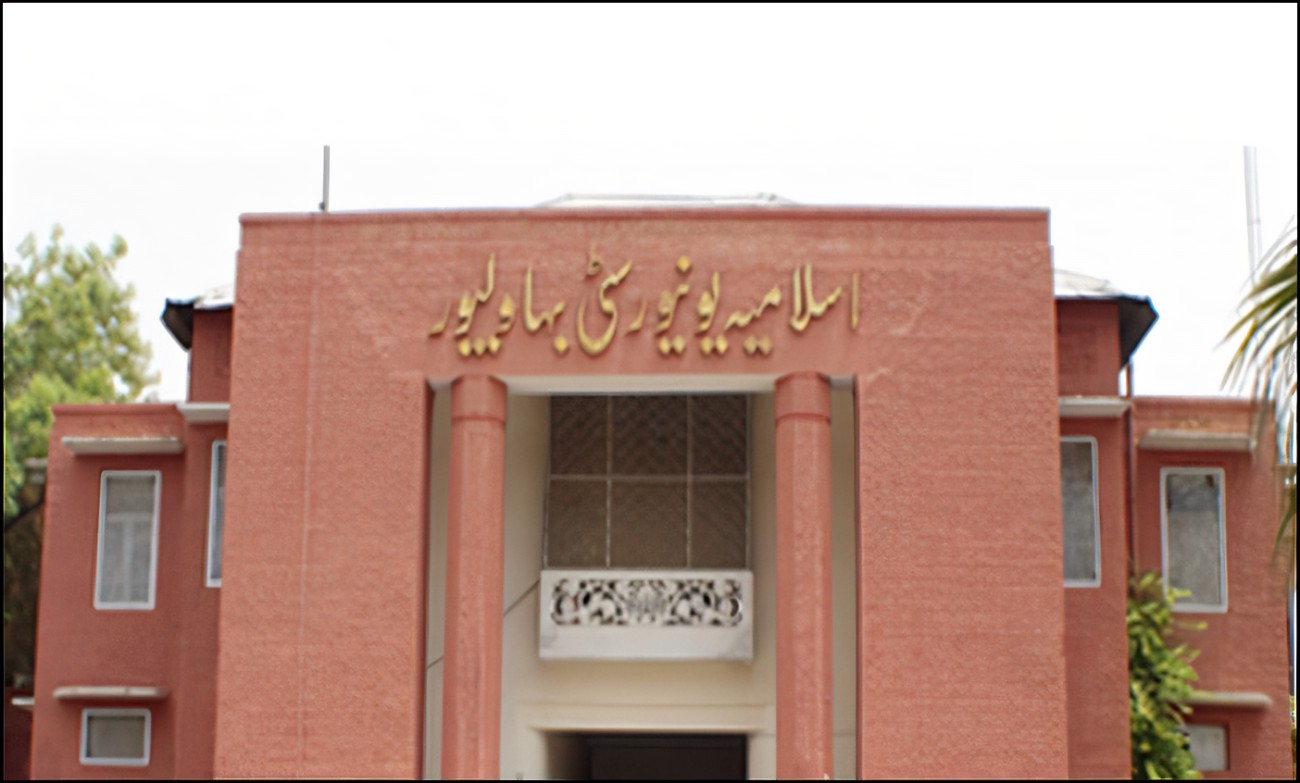
BAHAWALPUR, Aug 28 (APP): The 62nd meeting of the Academic Council of the Islamia University of Bahawalpur (IUB) was held at Baghdad-ul-Jadeed Campus under the chairmanship of Vice Chancellor Prof. Dr. Muhammad Kamran.
Director Academics Prof. Dr. Jawad Iqbal presented the implementation report on decisions taken during the previous meeting. The Council reviewed a wide range of academic, curricular, administrative and policy matters concerning the university and its affiliated colleges.
The meeting approved the four-year LL.B. programme and its curriculum under the semester system for the university and its affiliated colleges. It also approved the nomination of members of newly constituted committees for affiliated colleges.
The Council considered matters presented by the Advanced Studies and Research section, recommendations of the Curriculum Coordination Committee of affiliated colleges regarding various academic programmes, and teaching and administrative matters submitted by the Directorate of Academics. Various academic policy matters concerning re-enrolment, repeat courses, course improvement, grace marks, time-barred cases, admissions and merit, as well as other student-related issues, were also reviewed.
The Council considered proposals for new and revised curricula, degree programmes, admission criteria and programme structures submitted by various departments, including International Relations, Anthropology, Information Management, Media and Communication Studies, Applied Psychology, Social Work, Pharmacy, Pharmaceutical Chemistry, Pharmacology, Sir Sadiq Muhammad Khan Postgraduate Medical College, Information and Communication Engineering and Sir Sadiq Institute of Technology.
Proposals from departments including Plant Breeding, Soil Science, Artificial Intelligence, Data Science, Information Technology, Statistics, Mathematics, Physics and Geography were also considered. These included curriculum revisions, introduction of new degree programmes, admission criteria and other academic matters. The Council also reviewed proposals related to emerging and technology-oriented fields, particularly Artificial Intelligence, with a view to keeping academic programmes aligned with changing educational and market requirements.
The meeting considered proposals concerning the inclusion of Understanding of the Holy Quran and other compulsory courses, AI-related courses, alignment of curricula with revised Higher Education Commission (HEC) policies, Outcome-Based Education requirements, Programme Learning Outcomes and degree programme structures. Proposals for BS, Associate Degree Programme (ADP), MS/MPhil and PhD programmes, including revised curricula and the introduction of new degree programmes in various disciplines, were also placed before the Council. The Academic Council further reviewed matters relating to the appointment and management of visiting faculty, study leave, selection of teaching assistants, amendments to regulations governing affiliated colleges, student academic cases and other administrative issues.
The Council reiterated its commitment to improving academic quality, aligning curricula with national and international educational standards, introducing modern and market-oriented degree programmes and providing students with quality education and enhanced academic opportunities. The meeting was attended by relevant deans, heads of departments, academic officers and other members of the Academic Council.