The Asia & Oceania Post-Doctoral Academia (AOPDA) has issued a global public health warning about deteriorating sewage infrastructure, describing unlined open drains and leaking sewer networks as a ticking “Toxic Time Bomb” accelerating antimicrobial resistance (AMR) through polluted air and contaminated groundwater.
Failing sewers fuel global superbug crisis, threaten public health: AOPDA
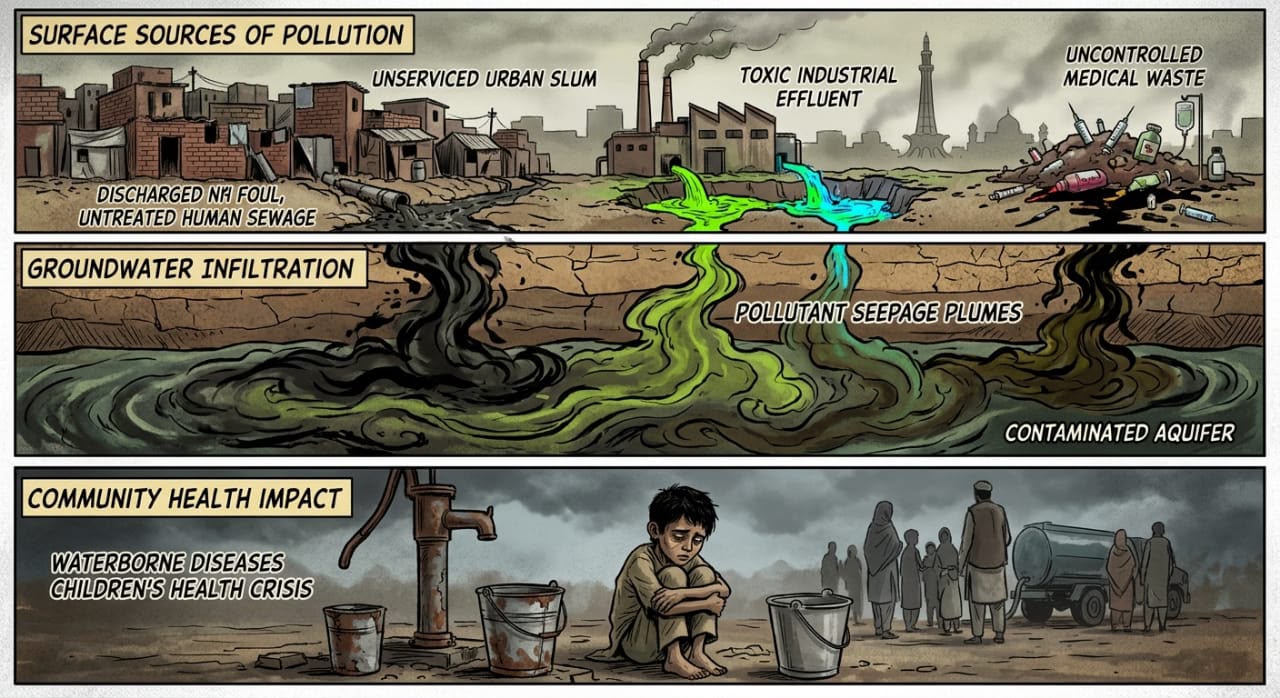
LAHORE, Nov 18 (APP): The Asia & Oceania Post-Doctoral Academia (AOPDA) has issued a global public health warning about deteriorating sewage infrastructure, describing unlined open drains and leaking sewer networks as a ticking “Toxic Time Bomb” accelerating antimicrobial resistance (AMR) through polluted air and contaminated groundwater.
Issued on Wednesday in connection with World AMR Awareness Week 2026 (November 18–24), being observed under the theme “One Health, One Action: Prevent AMR Now”, the warning identifies untreated wastewater as a largely overlooked environmental driver of the global superbug crisis, particularly across rapidly urbanising regions of Asia, Africa and Latin America, where more than 80 per cent of wastewater is reportedly discharged without adequate treatment.
Building upon two decades of interdisciplinary research by Prof. Dr. Aurangzeb Hafi, Principal Investigator of AOPDA, the assessment identifies ecologically incompatible sewage infrastructure as a major component of what he terms a “Lethal Tetragonal Pollution System”, simultaneously contaminating water, air, soil and the human body.
The warning assumes particular significance as bacterial AMR contributes to an estimated 4.71 million deaths annually worldwide and could directly claim more than 39 million lives by 2050, with nearly 90 per cent of the projected burden falling on low- and middle-income countries.
According to Prof. Hafi’s research on the Sewage-Hydrotoxicity-Health Nexus, open sewage channels and deteriorating sewer networks facilitate resistance through two interconnected pathways: atmospheric contamination and subsurface groundwater pollution.
Unprotected drains accumulate clinical waste, industrial heavy metals, microplastics, pesticides and disinfectants, creating conditions conducive to the persistence and spread of resistant microorganisms. Open sewage channels release hydrogen sulphide, ammonia and fine particulate matter, including PM2.5 bioaerosols that may carry drug-resistant bacteria and fungal spores. During winter, sewage-derived ammonia interacts with vehicular emissions, contributing to smog formation and increased exposure to airborne pollutants.
The second pathway involves leaking underground sewers, through which untreated effluent, pathogens and heavy metals infiltrate aquifers. Testing cited in Prof. Hafi’s assessment reportedly detected Shiga toxin-producing Escherichia coli (STEC) in more than 97 per cent of Lahore groundwater samples collected at depths of 100 to 120 feet. Heavy metals can also sustain antibiotic resistance through genetic co-selection, potentially prolonging microbial contamination.
The assessment highlights serious intergenerational consequences, particularly for children and pregnant women. It cites estimates that 2.1 billion people lack safely managed drinking water and 2.5 billion lack basic sanitation. Contaminated water and environmental pollutants can contribute to Environmental Enteric Dysfunction (EED), impaired nutrient absorption and childhood stunting, while exposure to pathogens and heavy metals poses additional risks to maternal and fetal health.
Calling for a Global Hydro-Detoxification Initiative, Prof. Hafi urged governments, international organisations and urban development authorities to integrate environmental engineering into AMR prevention.
The recommended measures include enclosing open urban sewage canals and establishing vegetative bio-buffers, deploying trenchless Cured-In-Place Pipe (CIPP) technology to seal leaking sewer networks, and expanding the World Health Organisation’s Global Antimicrobial Resistance and Use Surveillance System (GLASS) to monitor sewage aerosols, PM2.5 filters and groundwater for resistance genes.
AOPDA emphasised that the global fight against superbugs must extend beyond hospitals and antibiotic stewardship to include safe sanitation, groundwater protection and environmental surveillance as essential pillars of the One Health approach.