Punjab Chief Minister Maryam Nawaz Sharif has proposed establishing a joint working group with China’s Guizhou Province to promote cooperation in digital technology, artificial intelligence (AI) and smart agriculture.
CM proposes Punjab-Guizhou joint working group for AI, digital cooperation, smart agriculture
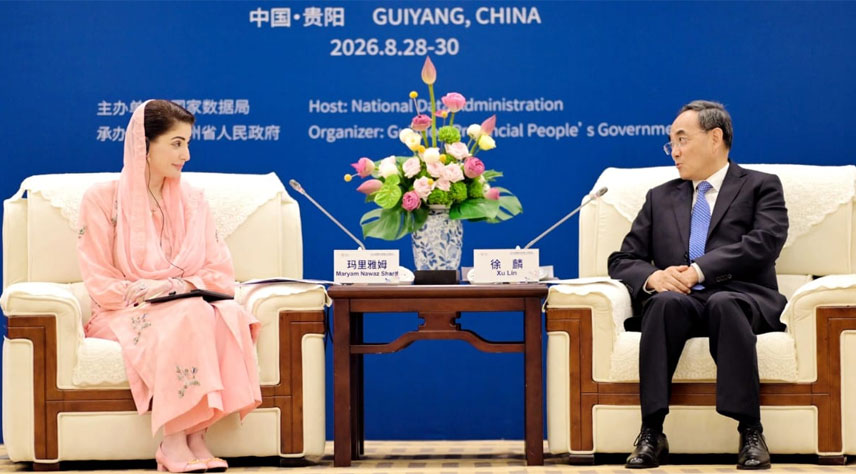
LAHORE, Aug 29 (APP): Punjab Chief Minister Maryam Nawaz Sharif has proposed establishing a joint working group with China’s Guizhou Province to promote cooperation in digital technology, artificial intelligence (AI) and smart agriculture.
The CM said that Punjab was ready and keen to attract foreign investment and build practical partnerships with China.
Addressing the Party Secretary of Guizhou He Zhongyou and a Chinese delegation during a meeting at the International Big Data Expo in Guiyang, the chief minister proposed holding a business and investment conference focused on technology transfer and local manufacturing, said a handout issued
here on Saturday.
She also offered cooperation in AI-based medical diagnosis and invited the Guizhou delegation to visit Lahore to meet relevant provincial departments, universities, chambers of commerce and prospective business partners.
CM Maryam Nawaz said China was changing the direction of the world through its digital revolution, while Guizhou’s development in digital technology was particularly remarkable and worth emulating. She said Punjab wanted to learn from China’s experiences and successes in industrial development, digitalization and rural development, particularly its efforts to lift millions of people out of poverty.
She said Punjab and Guizhou had strong commonalities despite differences in the size of their economies, with both having large populations, abundant human resources and significant potential in agriculture, manufacturing and services. Punjab, she added, was Pakistan’s largest agricultural market, economic hub and food basket, producing around 70 percent of the country’s agricultural output.
The CM said Punjab was undergoing rapid transformation and had completed construction, rehabilitation and expansion works on around 50,000 roads during the past two and a half years. The province had also developed electric mobility infrastructure, with Chinese-made environmentally friendly electric buses already operating in Punjab. She said the province had learned from China’s experience in combating smog and was working to expand forest cover and improve environmental protection.
CM Maryam Nawaz said Punjab was also advancing rapidly in artificial intelligence and had established an Office of Artificial Intelligence for effective use of technology. She expressed interest in learning from the medical services and technological innovations of Chinese companies, including Huawei and Alibaba, and said cooperation in AI-assisted medical diagnosis could also be explored. She said a 1,000-bed cancer hospital was being established in Punjab as a centre of hope for patients.
She proposed that the joint working group could prepare a comprehensive project within 12 months to advance the agenda of development, cooperation and mutual support. “Punjab is ready for development and partnership,” she said, adding that Guizhou possessed technology, commitment and a philosophy of shared human well-being, while Punjab had a large young population, market potential and a strong commitment to urban development.
The CM said Punjab’s workforce was predominantly young, with 65 percent of its population under 30, offering vast opportunities for investment and manufacturing. She said cooperation with Guizhou could move beyond traditional economic models towards higher productivity, value-added goods, technology and private-sector partnerships.
Highlighting the importance of Pakistan-China relations, Maryam Nawaz said the two countries were celebrating the 75th anniversary of their exemplary diplomatic relations this year. She said the friendship was not merely a relationship between two governments or countries but was rooted in trust, mutual respect, affection, cooperation and support between the peoples of the two nations.
She said successive generations of Pakistani leadership had nurtured the relationship, particularly her father Muhammad Nawaz Sharif, who had always accorded the highest importance to Pakistan-China ties, while Prime Minister Muhammad Shehbaz Sharif had worked tirelessly to promote bilateral relations and economic partnership. She said she felt fortunate to have the opportunity to further strengthen the friendship.
The chief minister expressed admiration for Chinese President Xi Jinping’s vision, determination and pursuit of development, saying his philosophy of shared prosperity, common human goals, security, stability and sovereignty of nations was worthy of emulation.
Maryam Nawaz said she considered her visit to Guizhou and meeting Chinese officials a matter of good fortune. She expressed the hope that her visit would open a new practical chapter in relations between Punjab and Guizhou and prayed for further progress for China and a better future for the Chinese people. She also assured that the safety, security and facilitation of Chinese citizens residing in Punjab remained the provincial government’s top priority.
The CM said she would be pleased if the Guizhou team visited Lahore and explored areas of cooperation with Punjab’s institutions and private sector. She expressed confidence that the strengths and capabilities of Guizhou and Punjab were highly complementary and could be translated into tangible projects, investment, technology transfer and employment opportunities.
Maryam Nawaz also introduced members of her team, noting that most of her provincial ministers were young and under 50. She particularly appreciated Senior Minister and Minister for Planning and Environment Marriyum Aurangzeb’s efforts in combating air pollution and identified Information and Culture Minister Azma Zahid Bukhari, Irrigation Minister Kazim Pirzada, Education Minister Rana Sikandar Hayat, Agriculture and Livestock Minister Ashiq Hussain Kirmani and Provincial Adviser Ali Mustafa Dar, who heads the Office of Artificial Intelligence in Punjab.