Punjab Chief Minister Maryam Nawaz Sharif on Tuesday said that laptops and merit-based scholarships were rewards for students’ hard work and academic achievements, not government favours, reaffirming her commitment to expanding educational opportunities for talented and deserving youth.
CM Maryam expands laptop scheme to 112,000 students, calls it hardwork reward
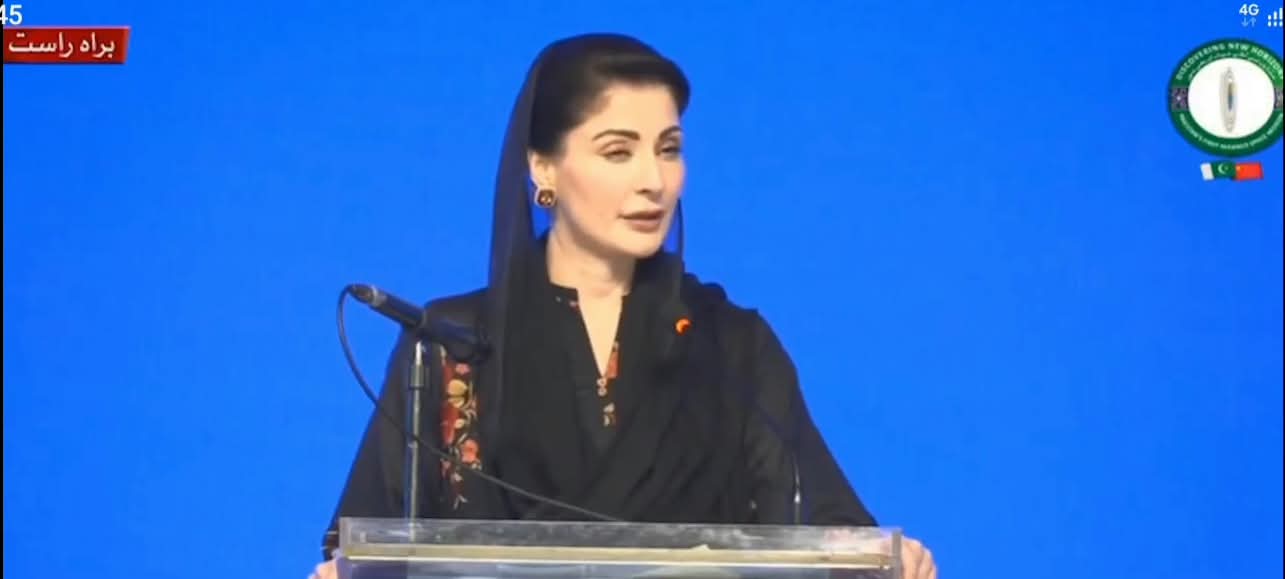
RAWALPINDI, Nov 24 (APP): Punjab Chief Minister Maryam Nawaz Sharif on Tuesday said that laptops and merit-based scholarships were rewards for students’ hard work and academic achievements, not government favours, reaffirming her commitment to expanding educational opportunities for talented and deserving youth.
Addressing the 12th laptop and merit scholarship distribution ceremony at Pir Mehr Ali Shah Arid Agriculture University Rawalpindi (PMAS-AAUR) as the chief guest, she congratulated the students and acknowledged the sacrifices of their parents and the efforts of the young achievers.
She said every child had the right to education and no student should be deprived of it merely because their parents could not afford the fees. The Honhaar Scholarship Programme, she added, was designed to support such deserving families.
The chief minister said every student had a story of struggle, with many overcoming financial difficulties and other challenges to continue their education. She expressed confidence in the country’s future, saying the talented youth of Rawalpindi had strengthened her belief that Pakistan was in capable hands.
She said 30,000 students received scholarships in the first phase of the Honhaar Scholarship Programme, after which the number was increased to 50,000. Another 20,000 students benefited in the second phase, while scholarships were awarded to 53,488 deserving and talented students in the third phase.
The programme also covered matriculation and intermediate board position holders, while scholarships had been allocated for students from other provinces and regions.
Maryam Nawaz announced that the initial target of the laptop scheme would be increased from 40,000 to 112,000 to broaden access to modern technology and digital education.
At the Rawalpindi ceremony, 3,562 students enrolled in federally chartered universities in Islamabad were given 13th-generation Intel Core i7 laptops, while 451 students received scholarships worth a total of Rs.41.48 million under the Honhaar Scholarship Programme.
The chief minister said investment in the education and development of young people was an investment in the country’s future.
Referring to her government’s performance, she said it had completed 1,000 days in office and that her team had started working from the first day. She stressed that development initiatives required public cooperation and cited the Suthra Punjab Programme as an example of efforts to improve sanitation across the province.
She said 1,100 electric buses were operating in Punjab, including 80 in Rawalpindi, with fares fixed at Rs.20.
“The government aimed to expand the fleet to 5,000 electric buses across the province over the next two years”, she added.
She also referred to plans to construct 500,000 houses under the Apni Chhat Apna Ghar Programme, build 50,000 kilometres of roads and establish a modern cardiology hospital in Sahiwal.
Criticising the previous provincial government, she said the development approach of her administration was different, and that work had begun from the first day of its tenure.
The chief minister also directed district administration to initiate construction of dedicated girls hostel in the Arid University in next two months.
She urged female students to download women safety application on their smart phones and use it needfully.
“No room for playing with lives of innocent girls or boys”, she said adding that culture has been changed in Punjab province.
“No culture of might is right, nepotism and drugs in Punjab”, she said.
Maryam further urged the students to say no to drugs.
Vice Chancellor Pir Mehr Ali Shah Arid Agriculture University Professor Dr Qamar-uz-Zaman hosted the ceremony, which was attended by university faculty members, administrative officers and students.