Federal Minister for Planning, Development and Special Initiatives Prof. Ahsan Iqbal said on Saturday that the chemical industry could play a pivotal role in Pakistan’s economic growth, export promotion, industrial innovation and job creation.
Chemical sector holds immense potential for industrial development and job creation: Ahsan Iqbal
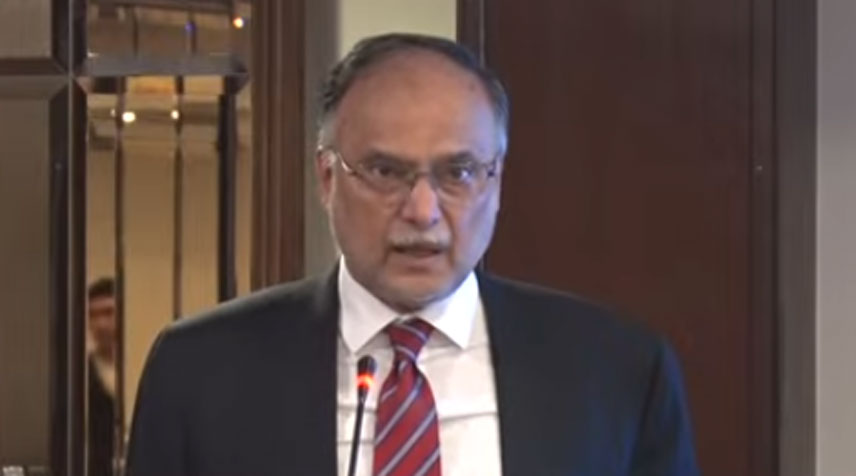
LAHORE, Jun 06 (APP): Federal Minister for Planning, Development and Special Initiatives Prof. Ahsan Iqbal said on Saturday that the chemical industry could play a pivotal role in Pakistan’s economic growth, export promotion, industrial innovation and job creation.
Addressing the Pakistan Chemical Expo 2026 as chief guest at the Expo Centre Lahore, he stressed that the country must adopt a development model based on knowledge, research, technology and industry to transform itself into a strong export-oriented economy.
The planning minister said the chemical industry was globally regarded as the “mother of all industries” as it served as the foundation for sectors including agriculture, textiles, pharmaceuticals, construction, automobiles, electronics and energy. “If steel is the framework of industrial development, the chemical industry is the blood flowing through its body,” he said.
The minister said the global chemical industry had grown beyond six trillion dollars, adding that countries such as China, Germany, South Korea, Singapore, Malaysia and Vietnam had built their industrial strength on robust chemical and petrochemical sectors. He emphasized that Pakistan must invest in research, innovation, skilled human resources and modern industrial infrastructure to follow a similar path of development.
Ahsan Iqbal said Pakistan imported chemicals, polymers and industrial raw materials worth billions of dollars annually, many of which could be produced locally. He said that every imported chemical represented a potential factory, investment opportunity, job and export prospect within the country.
Referring to the government’s “Uraan Pakistan” programme, he said the chemical industry could significantly contribute to achieving national targets related to exports, the digital economy, environment, energy and social empowerment. He stressed that Pakistan would need to promote value-added exports rather than raw materials if it aimed to achieve its target of $100 billion in exports by 2035.
The minister said artificial intelligence, robotics, automation and digital technologies had become essential components of modern industrial development, urging Pakistani industries to align themselves with the requirements of the Fourth Industrial Revolution. He also highlighted the importance of green chemistry, recycling, bio-based materials and environmentally sustainable industrial practices for the future economy.
Identifying petrochemicals, specialty chemicals, pharmaceutical ingredients, agrochemicals, mineral processing and green materials as sectors offering exceptional opportunities, he said shifting global supply chains presented Pakistan with a historic opportunity for industrial expansion. He called for stronger collaboration among industry, government, universities and research institutions, adding that global competitiveness could not be achieved without research and development, skilled manpower, modern technology, international standards and specialized industrial clusters.
Ahsan Iqbal said Pakistan’s future development story would be written on the foundations of production rather than consumption, exports rather than imports, and innovation, investment and competitiveness rather than debt. He also emphasized the importance of promoting national confidence and Pakistaniyat, saying that modern conflicts were fought not only on borders but also in the arenas of narratives, information and minds. He urged citizens to reject pessimism, promote hope and confidence, and contribute actively towards making Pakistan a hub of progress, research, industry and prosperity.