PMAS-Arid Agriculture University Rawalpindi strengthened its international academic and industry linkages by organizing a high-level Academia–Industry Roundtable in collaboration with Bayer Crop Science, titled “Agricultural Biotechnology, Innovation Governance and Sustainable Agricultural Transformation in Pakistan.”
Arid University holds academia–industry roundtable
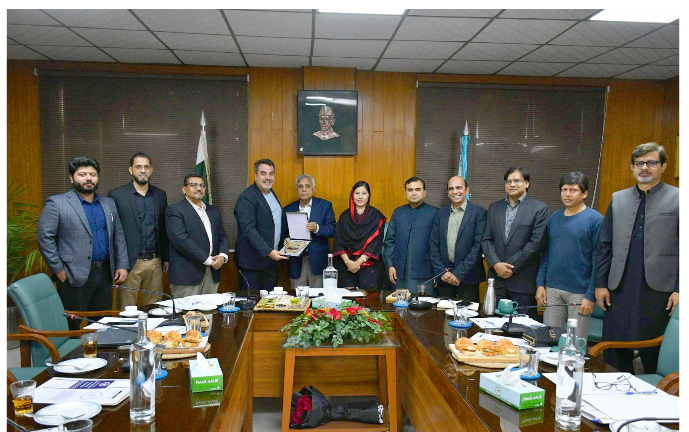
RAWALPINDI, Nov 18 (APP):PMAS-Arid Agriculture University Rawalpindi strengthened its international academic and industry linkages by organizing a high-level Academia–Industry Roundtable in collaboration with Bayer Crop Science, titled “Agricultural Biotechnology, Innovation Governance and Sustainable Agricultural Transformation in Pakistan.”
The event brought together international industry representatives, university leadership, and academic experts to explore opportunities for research collaboration, technological innovation, and sustainable agricultural development.
In his address, Vice Chancellor Prof. Dr. Qamar Uz Zaman highlighted the significance of international academic partnerships and academia–industry collaboration in addressing emerging challenges in the agricultural sector. He also emphasized that universities must play a proactive role in connecting academic research with industry expertise to translate scientific knowledge into practical solutions.
He stated that agricultural biotechnology, artificial intelligence, modern research techniques, and emerging technologies offer tremendous opportunities for transforming Pakistan’s agricultural landscape.David Blanco Jimenez, Director of Bayer South East Asia Pte. Ltd., Singapore, and ASEAN & ANZ Cluster Lead for Law, Patents & Compliance, actively participated in the discussions.
Drawing on his more than 29 years of international experience in the life sciences sector, he shared valuable insights into agricultural biotechnology, gene editing, regulatory frameworks, intellectual property rights, and international collaboration.
Moderated by Dr. Aneela Afzal, Associate Professor, Department of Agricultural Extension, the roundtable provided an interactive platform for constructive dialogue on agricultural biotechnology, emerging technologies, regulatory governance, intellectual property protection, academia–industry collaboration, public awareness, and stakeholder capacity building.
In his concluding remarks, Prof. Dr. M. Azam Khan, Dean, Faculty of Agriculture appreciated the Bayer delegation and university leadership for facilitating this important engagement. He emphasized the need to strengthen academia–industry partnerships to promote innovative research, technology transfer, and sustainable agricultural practices.