Educationists, algorithm specialists, and parents have raised concerns over the unmonitored use of Artificial Intelligence (AI) tools among students, warning that over reliance on automated platforms is eroding core cognitive capabilities, critical thinking and long-term memory retention.
AI over reliance causing cognitive, developmental risks among students; say experts
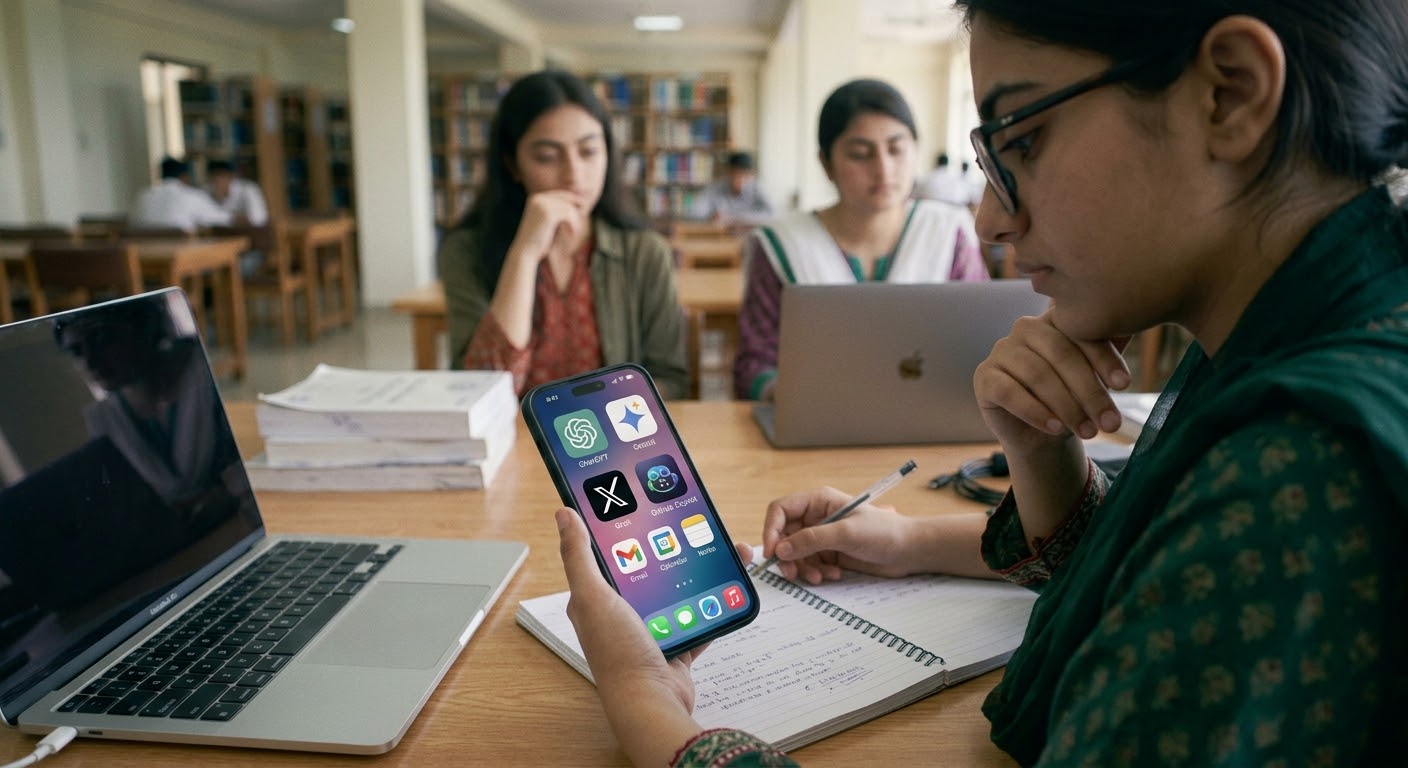
RAWALPINDI, Oct 13 (APP): Educationists, algorithm specialists, and parents have raised concerns over the unmonitored use of Artificial Intelligence (AI) tools among students, warning that over reliance on automated platforms is eroding core cognitive capabilities, critical thinking and long-term memory retention.
Speaking to APP, Principal and veteran educator Amjad Zeb said that excessive dependence on AI for routine academic tasks severely impairs students’ natural thinking processes and problem-solving skills. He noted that relying on algorithms to generate essays and solutions prevents learners from developing independent analytical reasoning.
” They [students] are in effort to take help from AI tools for their assignments which is reducing their own cognition”, he said.
Yasir Rahman, Principal of a private school also observed diminishing habits among students, of reading and writing the lessons.
“Majority students copy-paste the required assignments from any AI tools, this is lessening their creative skills and learning outcomes”, he said.
Referencing the educational policy of Students Learning Outcomes (SLO) based curriculum, Yasir advised students to take limited assistance from AI tools, adding the concept transformation must be students’ own thinning process.
Cyber Security Specialist Dr. Tariq Khan highlighted that algorithmic reliance accelerates memory loss and reduces mental capability, as students no longer engage in deep information retrieval or active recall.
Furthermore, experts point to three additional detrimental impacts: a decline in creative writing skills, reduced attention spans caused by instant gratification, and growing vulnerabilities to digital privacy risks and misinformation.
To a question on mandating AI in the education system, Dr. Tariq said that complete distancing from AI is almost impossible. However, he urged students not to make any AI tool their master, instead to use them as their assistants.
“Matter is not related to use AI tools or not, but the extent and depth of uses decides their pros and cons”, he said.
Parents have also expressed growing apprehension regarding home study habits. Uzma Tahir, a mother of two high school students, confirmed APP that children now struggle with basic handwritten assignments and conceptual recall. Echoing similar concerns, Mrs. Faisal remarked that screen dependence driven by AI platforms has significantly diminished real-world intellectual curiosity and interpersonal communication among teenagers.
However, stakeholders also acknowledged the constructive side of technology when used with proper guidance and ethical boundaries.
Praising its academic utility, Pharm D university student Muhammad Abdullah said that AI acts as an invaluable personalized learning assistant, helping students break down complex medical concepts, analyze difficult scientific formulas, and receive customized practice feedback at their own pace.
Highlighting another major advantage, Dr. Tariq Khan noted that AI platforms significantly accelerate research and bridge language barriers, allowing students to filter massive global data sets instantly and access critical scientific literature that was previously difficult to retrieve.
Educators and technical specialists emphasized that educational policies must establish strict guidelines and digital literacy frameworks to ensure students use AI as a supplementary learning tool rather than a substitute for human intellect.