Federal Minister for Commerce Jam Kamal Khan, along with Oybek Usmanov, Ambassador of Uzbekistan to Pakistan standing in respect during the national anthems of both countries during a ceremony celebrating the 33rd Anniversary of the Independence Day of the Republic of UzbekistanSeptember 7,11:11 PM
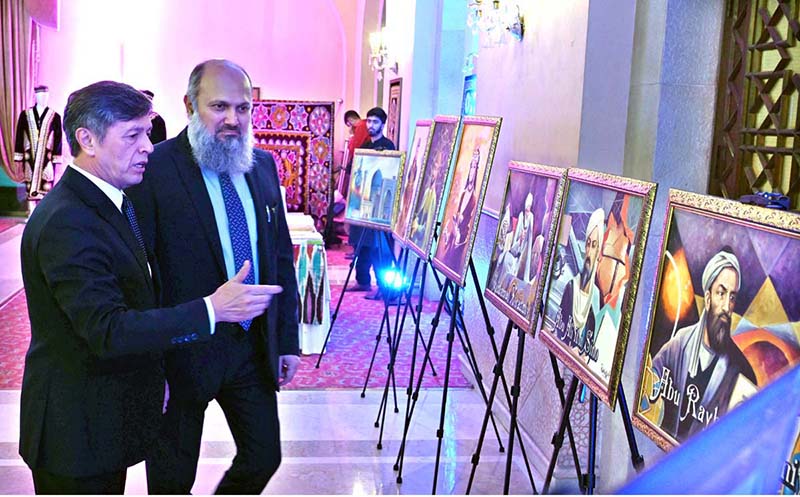
Federal Minister for Commerce Jam Kamal Khan along with Oybek Usmanov, Ambassador of Uzbekistan to Pakistan viewing photos during a ceremony celebrating the 33rd Anniversary of the Independence Day of the Republic of UzbekistanSeptember 7,11:11 PM
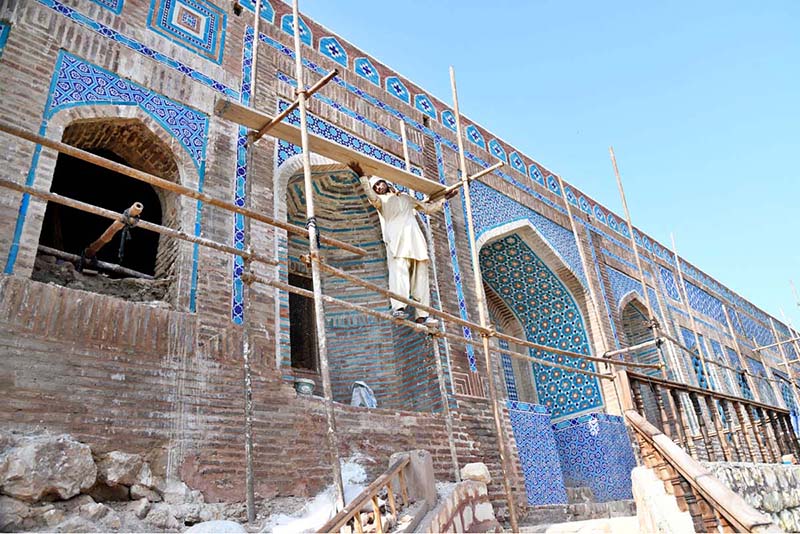
A laborer busy in construction work of Historic legacy of Seven Sisters Graveyard (Satin Jo Asthan Graveyard) Wall, dating back to the Mughal era during the reign of Abul-Qasim Namkin, the esteemed Ameer of Sukkur. In the early 11th Hijra, he arrived in Bakhr, where Mughal King Akbar granted him Jageer. A connoisseur of literature and art, Abul- Qasim Namkin later transformed the hill into a family cemetery, embellishing it with four minarets and corners. Before becoming a graveyard, this location hosted gatherings, meetings and events aptly named “Safae Safa.” Referenced in the book “History of Sukkur” by Sindh’s renowned historian Rahmidad Molai Shidai, the first grave of Abul-Qasim Namkin was established in 1018 Hijra. The architectural style of the tombs reflects Mughal and Tarkhan influences, adorned with intricate engravings. Legend has it that this site holds stories of seven women seeking refuge from tyrants. Upon reaching this sacred place, they found sanctuary in the mountain, disappearing into its depths. Although lacking historical references, some believe it to be the dwelling of seven elders or elderly women. Today, it stands as a captivating historical site nestled between Sukkur and Rohri at Left Bank of Indus River. Constructed on the mountain in the 17th Hijra, from 1018 AH to 1070 AH (equivalent to 1609 AD to 1659 AD), these tombs showcase small minarets and platforms attached to the hill, with covered floors. Predominantly belonging to the family of Mir Abul-Qasim Namkin, other hills nearby also house graves of notable personalities from that eraSeptember 7,6:19 PM
A gypsy boy searching valuables from garbage near Khanna Pul area in the Federal CapitalSeptember 7,6:10 PM
A view of Historic legacy of Seven Sisters Graveyard (Satin Jo Asthan Graveyard) dating back to the Mughal era during the reign of Abul-Qasim Namkin, the esteemed Ameer of Sukkur. In the early 11th Hijra, he arrived in Bakhr, where Mughal King Akbar granted him Jageer. A connoisseur of literature and art, Abul- Qasim Namkin later transformed the hill into a family cemetery, embellishing it with four minarets and corners. Before becoming a graveyard, this location hosted gatherings, meetings, and events, aptly named “Safae Safa.” Referenced in the book “History of Sukkur” by Sindh’s renowned historian Rahmidad Molai Shidai, the first grave of Abul-Qasim Namkin was established in 1018 Hijra. The architectural style of the tombs reflects Mughal and Tarkhan influences, adorned with intricate engravings. Legend has it that this site holds stories of seven women seeking refuge from tyrants. Upon reaching this sacred place, they found sanctuary in the mountain, disappearing into its depths. Although lacking historical references, some believe it to be the dwelling of seven elders or elderly women. Today, it stands as a captivating historical site nestled between Sukkur and Rohri at Left Bank of Indus River.Constructed on the mountain in the 17th Hijra, from 1018 AH to 1070 AH (equivalent to 1609 AD to 1659 AD), these tombs showcase small minarets and platforms attached to the hill, with covered floors. Predominantly belonging to the family of Mir Abul-Qasim Namkin, other hills nearby also house graves of notablepersonalities from that eraSeptember 7,6:07 PM
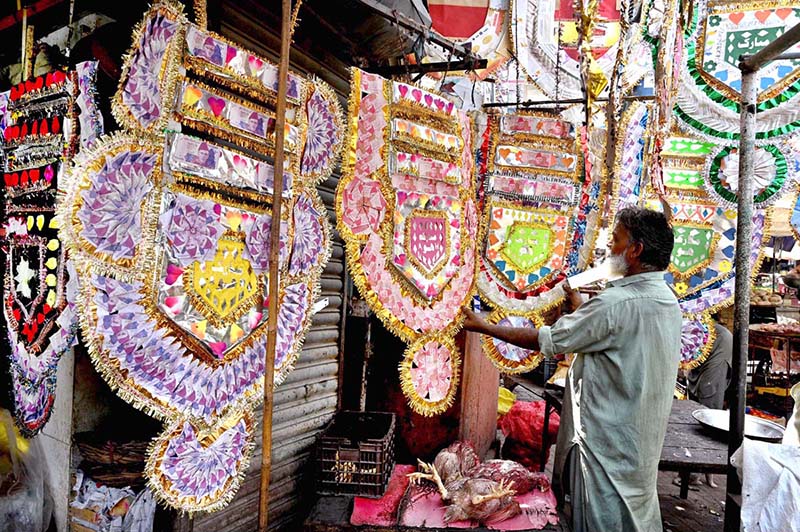
A vendor displaying currency garlands to attract the customers at Faqir Ka Pir BazaarSeptember 7,6:07 PM
A vendor is busy arranging and displaying bananas to attract customers at his roadside setupSeptember 7,6:07 PM