Home Blog Page 9873

Pakistan slams India’s atrocities against Indian Muslims, Christians & Kashmiris, urges end to repression

0
UN

UNITED NATIONS , May 03 (APP): Pakistan Thursday told the UN General Assembly that India was targeting Indian Muslims, Christians, as also Muslims of occupied Kashmir, and called for an end to their harsh suppression.

“Since the BJP-RSS government assumed office in 2014, hate, oppression, and violence against India’s 200 million Muslims – and other minorities, Christians and the ‘lower-caste’ Dalits – have become rampant and systematic, fueled by the ideology of Hindutva,” Ambassador Munir Akram said in a debate on ‘Culture of Peace’.

“Unless Hindutva fascism is opposed, unless the sense of impunity of the BJP-RSS is ended, unless the Indian Muslims are protected against genocide, and unless the Kashmir dispute is peacefully resolved, wider violence and conflict in South Asia is a real and present danger,” the Pakistani envoy said
in his speech that comprehensively dealt with how New Delhi’s policies were posing a threat to peace in the region.

Despite efforts to promote a “Culture of Peace”, he said the world is witnessing the rise of hate, violence and war, with over 300 conflicts are raging across the globe.

“The right of peoples to self-determination is being brutally suppressed, especially in Palestine and in Jammu and Kashmir,” Ambassador Akram said, adding, “We see the spread of discrimination, bigotry, xenophobia and Islamophobia even in mature democracies.”

Highlighting Pakistan’s efforts to combat Islamophobia, he said, “The world cannot but be deeply concerned at the officially sanctioned manifestations of Islamophobia in India.”

India’s Citizenship Law and National Registry list is designed to exclude Muslims from citizenship and to expel them, the Pakistani envoy said. Cow vigilantes, lynch, kill and assault Muslims with official approbation, he said, noting that Muslim men are persecuted for so-called “love jihad” to prevent them marrying Hindu women.

Extremist Hindu groups have expressly called for genocide against Muslims, he told the 193-member Assembly. The organization – Genocide Watch – has
has warned of the possibility of genocide of Muslims in India as well as in Indian Occupied Jammu and Kashmir.

” And just last week,” the ambassador said, “Prime Minster Modi himself fueled the hate and violence against Muslims calling them ‘infiltrators’ who would be taking the wealth of Hindu men in India.”

India’s rich Islamic heritage is being eliminated, with history text books rewritten to eliminate references to India’s Muslims rulers and its glorious period of Islamic rule.

Muslim place names are being replaced by Hindu names, it was pointed out.

The Indian Supreme Court not only failed to punish those who destroyed the historic Babri Mosque but allowed them also to build the “Ram Temple” on the site of the destroyed Mosque. Hindu groups are seeking to transform other mosques, such as the Varanasi mosque into Hindu Temples, with thousands of other mosques and Muslims religious sites across India under threat.

In this regard, Ambassador Akram urged the UN Secretary-General to implement the Plan of Action for the protection of religious sites.

“Hindutva extremism has turbo-charged the repression of the people of occupied Jammu and Kashmir,” he said. After the unilateral and illegal measures taken on 5 August 2019 to annex Jammu, Kashmir and Ladakh, the Pakistani envoy said, India has deployed 900,000 troops to impose what it ominously calls the ‘Final Solution’ for Kashmir.

All the pro-freedom Hurriyet leaders remain incarcerated, he said. Over 13,000 young Kashmir men have been abducted and many of them tortured. Hundreds of innocent Kashmiris are extra-judicially killed each year with impunity in fake “encounters” and “cordon and search” operations.

Pakistan, he said, has circulated to the United Nations a detailed dossier, with concrete evidence, of over 2400 crimes committed by named Indian officials in occupied Jammu and Kashmir.

“he situation in occupied Jammu and Kashmir will never be ‘normal’ until the people of Jammu and Kashmir are allowed to exercise their right to self-determination through a plebiscite held under UN auspices, as called for by several Security Council resolutions and accepted by India, Ambassador Akram said.

“The Jammu and Kashmir dispute is an open wound which can once again trigger a disastrous conflict between Pakistan and India. It needs to be resolved urgently in accordance with the resolutions of the Security Council and the wishes of the Kashmiri people.”

Ambassador Akram told the Assembly about the extremist BJP-RSS government’s resort to belligerence and aggression against Pakistan, pointing out that the Indian Defence Minister had threatened to “take over” Azad Kashmir. Their Army Chief has also threatened to cross the Line of Control.

“India’s armed forces have adopted dangerous doctrines: ‘Cold Start’, to launch a surprise attack against Pakistan, another contemplating and I quote ‘a limited war under the nuclear overhang’.”
,

India, he said, is financing and sponsoring terrorist groups, especially the TTP and the BLA, to conduct attacks in Pakistan across the country’s Western borders in an attempt to disrupt the China-Pakistan Economic Corridor (CPEC),

Pakistan recently informed the Security Council, as well as the Secretary-General and the President of the General Assembly of India’s campaign of targeted assassinations in Pakistan, Ambassador Akram said, emphasizing that this extra-territorial state terrorism is not limited to Pakistan.

“It has been extended to targeted killings of political opponents in Canada and attempted in the United States, and probably other countries. The Washington Post reported that Prime Minister Narendra Modi last week told his cheering supporters: “Today, even India’s enemies know: This is Modi, this is the new India. This New India comes into your home and kills you”.

Waste Management – A persistent challenge for MWMC

0
MWMC

By Suhail Akhtar

MULTAN, May 3 (APP): Despite claimed sincere efforts by Multan Waste Management Company (MWMC), solid waste management remains a persisting challenge for the agency with waste seen scattered in different residential areas of the city.
May it be issues like mounting population pressure and expansion of city, non-serious attitude of citizens or lack of capacity, these waste heaps in open pose challenges to human health and environment.
This tendency leaves thousands of residents at sick due to unhealthy air they breathe and the stinking smell oozing out of openly dumped waste incurring billions of rupees annually in terms of health budget.
“As populations grow and urbanization intensifies effective solid waste management becomes increasingly complex,” remarked Mian Rashid Iqbal, Chairman Multan Waste Management Company (MWMC). “Since life goes on, there is no end in sight to escalating volume of solid waste piling up each passing day.”
“This situation requires a gigantic ceaseless mechanism powered by human resources and machinery,” he said. “But, despite limited resources, we endeavor to keep the city arteries, cross-sections and residential areas clean.”
Despite its establishment in 2012, the company still faces shortage of finances, manpower and machinery as mentioned by Mian Rashid. “We face deficiency of finances and manpower. We have only 1900 sanitary workers to cover 68 urban union councils against a minimum requirement of 3000.”
He said out of total waste generated daily in the city, the MWMC could collect and dispose of 70 per cent and sometimes we have to borrow money to continue its operation.
Meanwhile, Chief Executive Officer (CEO) MWMC Shahid Yaqoob, was upbeat on future prospects of a cleaner environment in Multan. “Although rapid population growth and urbanization make effective management of solid waste increasingly complex, yet we at MWMC are determined to sustainable waste management practices.”
With recent acquisition of modern equipment by MWMC including over 100 loader rickshaws, 300 handcarts, 11 loaders, 11 trolleys, 310 containers and vacuum sweeper, the CEO was confident to take the performance to next level.
“We are trying to implement a comprehensive waste collection system by upgrading to modern techniques to mitigate pollution and reduce strain on land resources,” he informed. “We are also conducting research programs and studies in collaboration with educational institutions to control plastic pollution.”
As major financial contribution for company comes from the Punjab Government, it also finds windows from private sector like providing services to main vegetables market for Rs 900,000 per month and Nishtar Hospital residential colony for Rs 6000 per container and from penalties imposed on people, companies and hospitals on violation of waste disposal laws.
The MWMC also engages with communities to promote hygiene practices and sanitation, impart training to communities on proper waste disposal and support informal waste pickers to improve their livelihood.
Meanwhile, the Punjab Environmental Protection Agency (EPA) field staff also ensures compliance of set regulations and standards to govern waste management activities within the district.
“The EPA Punjab field staff plays a pivotal role in ensuring effective solid waste management practices,” claimed environmental expert Hameed Ahmad. “Since, the EPA does not directly handle waste collection or transportation, their oversight ensures that local authorities adhere to established guidelines.”
Although the MWMC officials make tall claims of keeping the city clean, the resident have a different opinion with many living in less developed areas complaining about stuffy and adulterated vicinities.
“The company’s operations in narrow streets of old Mohallahs including those in walled city, at times, falls short of expectations,” said a citizen Shafiq Bhatti. “We still wait a proper mechanism to lift waste from these streets and its proper disposal. Poor monitoring of sanitary staff was worsening cleanliness situation in different parts of city.”
He suggested to MWMC to take trade bodies and organizations on board for bettering waste collection and disposal mechanism. “Traders, vendors, hand cart owners and citizens should also be made responsible for ensuring a cleaner city.”
Another citizen Tanvir Joiya has also complained that sanitary staff cleans only main roads and chowks while narrow streets and old city area remains out of focus.
“It is essential to focus all areas without discrimination. Health is equally important for every citizen,” he said and remarked that various diseases like dengue, malaria, chest congestion, bronchitis and diarrhea could easily be controlled through cleaner environment.
He also suggested to recruit more sanitary workers to meet the shortage of manpower.
Dr Zulqarnain Haider, a Gastroenterologist cited that irregular disposal of waste in residential areas causes illness and residents living within 100 meter are more vulnerable.
“People living in dirty vicinities are more prone to diseases like malaria, dengue, asthma, throat and nose infection, allergies and reduced immunity,” he stated.
He said uncollected and openly dumped solid waste also causes air pollution, water and soil contamination and land degradation. “Moreover open burning of waste also release toxic substances poisonous dioxin into air.”
At a time when MWMC can collect 70 percent of total waste generated daily, the situation presents a grim picture impressing upon authorities to employ more resources for accomplishment of this task and ensure healthy environment for people.

APP/sak/maz

UN chief demands better protection for journalists on environment beat

0

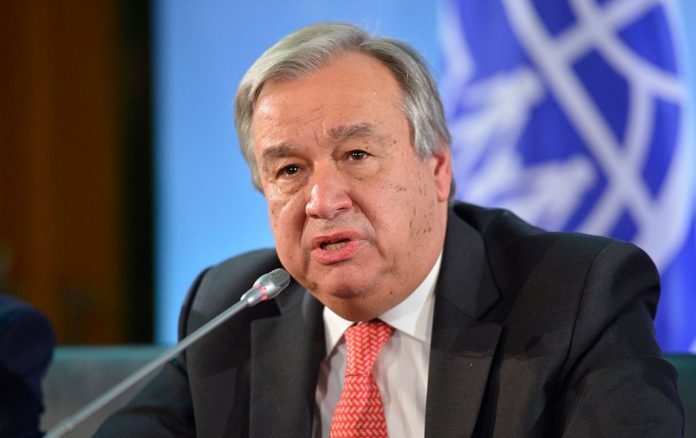
UNITED NATIONS, May 03 (APP): Marking World Press Freedom Day, UN Secretary-General Antonio Guterres has highlighted an uptick in violence faced by journalists covering environmental issues, which has made the profession increasingly dangerous.

In a message released on Friday, the UN chief said journalists and media workers “have a key role in informing and educating” the public about the world’s current environmental and climate emergency which stands as a threat to future generations.

It is through this work that people can have a greater understanding of environmental factors affecting the world and advocate for change, he said.

However, based on recent UN Educational, Scientific and Cultural Organization (UNESCO) report, journalists, especially environmental journalists, face violent attacks, and even death, for simply doing their job.

“Dozens of journalists covering illegal mining, logging, poaching and other environmental issues have been killed in recent decades,” Guterres noted. But, “In the vast majority of cases, no one has been held to account.”

Analyzing the violence environmental journalists face, UNESCO’s report found that journalists and news outlets reporting on environmental issues dealt with about 750 attacks in the past 15 years. the Secretary-General said.

In an interview with UN News, Guilherme Canela, UNESCO’s Chief of Freedom of Expression and Safety of Journalists, said the report found that 70 per cent of journalists doing environmental reporting dealt with at least one form of violence, and a quarter of the surveyed journalists dealt with legal attacks.

Additionally, Canela said that over the past 50 years, 44 journalists covering environmental stories were killed.

He said it is important to remember that journalists are important observers of conflict zones and that they provide life-saving information for civilian populations affected by these conflicts.

Canela said, “UNESCO is sounding the alarm that we need to take care of the protection of those journalists covering environmental issues, because raising that awareness about what’s going on in the environment and holding powerful actors accountable is absolutely essential to face the current environmental challenges that the planet is having.”

In a statement for World Press Freedom Day, Volker Turk, UN High Commissioner for Human Rights, said losing a journalist means losing a human rights defender, and that the world needs “independent, ethical and quality journalism perhaps now more than ever.”

Turk said journalists – emphasizing environmental journalists – need “stronger commitments from their governments and their employers to protect them”, safer work environments, and the right to work without attacks.

The Secretary-General also recognized journalists’ “invaluable” work and their efforts to keep the public informed and engaged and is calling on governments, private sectors and civil societies to recommit to protecting press freedom and the rights of journalists and media professionals globally.

UN General Assembly declares May 24 as int’l day of Markhor, Pakistan’s national animal

0
Markhor
UNITED NATIONS, May 03 (APP):The UN General Assembly Thursday adopted a resolution, sponsored by Pakistan and 8 other countries,  to proclaim May 24 as the International Day of the Markhor.
The resolution invites worldwide observance of the Day and invites all relevant stakeholders to give due consideration to enhancing international and regional cooperation in support of efforts to conserve the Markhor, given its role in the overall ecosystem.
The Markhor is the national animal of Pakistan, where it is also known as “screw-horned goat.”
The resolution invites the UN Environment Programme (UNEP) to facilitate the observance of the International Day of the Markhor.
The text underlines that the Markhor is an iconic and ecologically significant species found across the mountainous regions of Central and South Asia.
It recognizes that preserving the Markhor and its natural habitat is an ecological imperative and a significant opportunity to bolster the regional economy, foster conservation efforts and promote sustainable tourism and economic growth.
In Pakistan, Markhors are found in the Khyber Pakhtunkhwa (KP) province’s Chitral, Kohistan and Kalam regions, as well as the Gilgit-Baltistan region, the Balochistan province and parts of Azad Kashmir.
Once believed to be on the brink of extinction, Markhor numbers have gradually increased, doubling in a couple of decades, with a particular jump since 2014.
This is now the 10th straight year that numbers of the long-horned wild goat have grown.
“The population of the Markhor has been increasing with an annual ratio of 2% since 2014,” Saeed Abbas, an official with the International Union for Conservation of Nature (IUCN) in Pakistan, was quoted as saying in a media interview.
The Markhor’s current estimated population is between 3,500 and 5,000, a majority of them in KP, followed by Gilgit-Baltistan and Balochistan, according to Abbas.

11 drug peddlers arrested, illegal weapons recovered

0
RAWALPINDI, May 03 (APP):Rawalpindi police in an operation launched against criminals have arrested eleven drug peddlers and recovered  charras, liquor, heroin, illegal weapons, ammunition and other items from their possession.
           A police spokesperson said that Kalar Syedan police held Bilal for having 550 grams charras while Civil Lines police rounded up Munir Ali with 260 grams charras, Samir and Jahangir for carrying 25 liters liquor.
          Race Course, Waris Khan, Wah and Saddar Wah police have apprehended Matloob, Bilal, Asif, Aqeel, Rashid, and Shehzad and recovered 160 grams heroin and 59 liters liquor from their possession.
          Rattaamral, Bani, R.A.Bazar, Civil Lines and Mandra police arrested five accused and recovered four 30 bore pistols, ammunition and a dagger.
          Separate cases have also been registered against all the accused for further investigations.
         City Police Officer, Rawalpindi had directed the police officers to accelerate ongoing operations against drug peddlers, bootleggers and other lawbreakers.

PM assures govt support for media industry uplift, protection of media workers’ rights

0
PM shehbaz

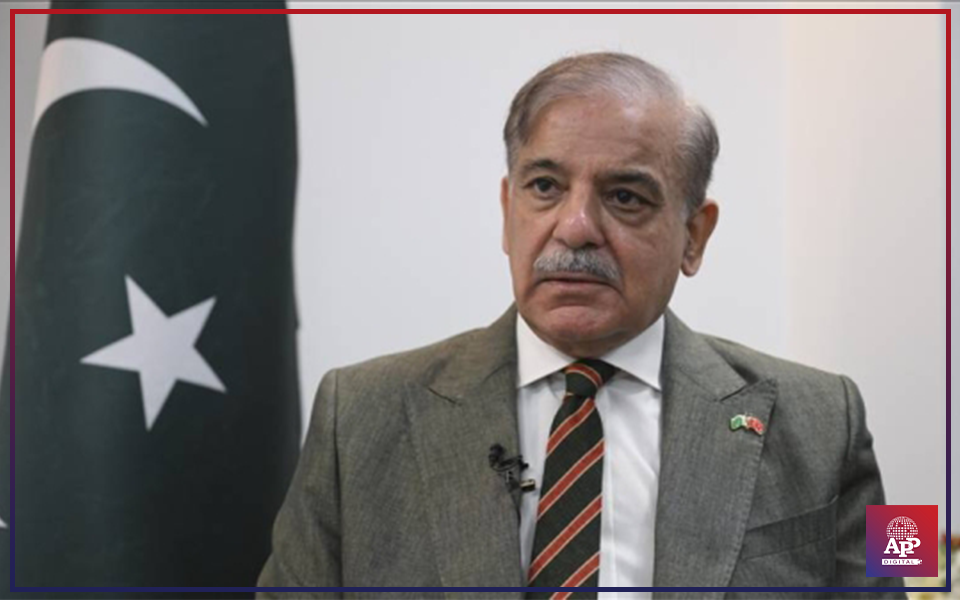
ISLAMABAD, May 03 (APP): Prime Minister Shehbaz Sharif on Friday assured that the incumbent government would make all-out efforts to uplift the media industry and resolve the issues confronting it.

The prime minister, in his message on World Press Freedom Day annually, also reiterated the resolve for government’s maximum cooperation to protect the rights of media industry as well as the media workers.

He paid tribute to the journalists, media workers, writers and cameramen and lauded their fight for truth.

He said the male and female journalists who sacrificed their lives during coverage in Gaza were the heroes of humanity.

The prime minister said that fighting oppression and digging out the truth was the message of World Press Freedom Day as well as the lesson from the history.

He said the freedom of press and expression were the foundation of democracy and protection of civil rights as well as the voice of truth in the society.

Prime Minister urged the collective role of media and other stakeholders to create a conducive atmosphere to ensure smooth media functioning.

He said the government firmly believed that freedom of media and expression provided guarantee for democratic durability.

The prime minister said that during his precious 16-month government, Pakistan had improved by seven points in the World Press Freedom Index.

He recalled that at that time, the government had taken steps including legislation for media protection, health insurance, and payment of billions of rupees to media and insurance amount worth millions of rupees to media workers through the NIRC.

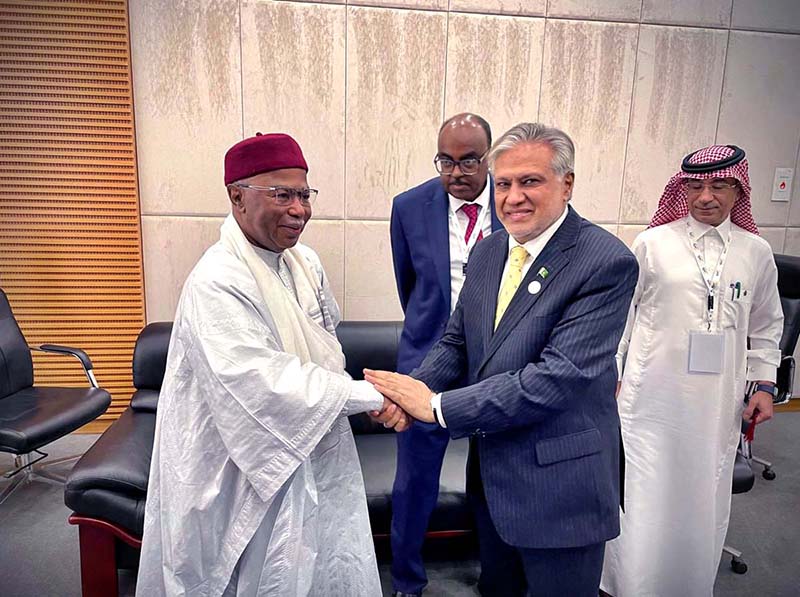
Deputy Prime Minister and Foreign Minister Senator Mohammad Ishaq Dar met with the Secretary General of the Organization of Islamic Cooperation, Hissein Brahim Taha, on the sidelines of the 15th Islamic Summit, held in Banjul

0
Deputy Prime Minister and Foreign Minister Senator Mohammad Ishaq Dar met with the Secretary General of the Organization of Islamic Cooperation, Hissein Brahim Taha, on the sidelines of the 15th Islamic Summit, held in Banjul
APP49-020524 GAMBIA: May 02 – Deputy Prime Minister and Foreign Minister Senator Mohammad Ishaq Dar met with the Secretary General of the Organization of Islamic Cooperation, Hissein Brahim Taha, on the sidelines of the 15th Islamic Summit, held in Banjul. APP
Deputy Prime Minister and Foreign Minister Senator Mohammad Ishaq Dar met with the Secretary General of the Organization of Islamic Cooperation, Hissein Brahim Taha, on the sidelines of the 15th Islamic Summit, held in Banjul
APP49-020524
GAMBIA: May 02 – 

Gaza genocide thrusts 1.74 million more Palestinians into poverty: UN

0
UN

UNITED NATIONS, May 02 (APP): The relentless Israeli offensive in the Gaza Strip has set back Palestine’s overall socio-economic development by more than 20 years, according to a new UN report released Thursday.

The joint study by the UN Development Programme (UNDP) and the Economic and Social Commission for Western Asia (ESCWA), revealed that the poverty rate has surged to 58.4 per cent since October 7 –pushing nearly 1.74 million additional people into poverty.

At the same time, the gross domestic product (GDP) plummeted by 26.9 per cent, resulting in a loss of $7.1 billion compared to a 2023 baseline before the war.

“Every additional day that this war continues is exacting huge and compounding costs to Gazans and all Palestinians, now and in the medium and long term,” Achim Steiner, UNDP Administrator said in a statement.

“Unprecedented levels of human losses, capital destruction, and the steep rise in poverty in such a short period of time will precipitate a serious development crisis that jeopardizes the future of generations to come.”

Projections in the assessment paint a bleak picture for a prolonged conflict.

If the war were to continue for nine months, poverty levels could more than double to 60.7 per cent, with an additional 1.86 million people falling into poverty. The GDP would further decline by 29 per cent, equating to total losses of $7.6 billion.

The assessment also warned of sharp decline in the Human Development Index (HDI), UNDP’s summary measure of wellbeing. In that scenario, the HDI for the State of Palestine could fall to 0.647, setting back progress by more than 20 years – to earlier than 2004.

For Gaza, the projections are more dire. After nine months of war, the HDI could reach 0.551, setting back progress by 44 years.

ESCWA Executive Secretary, Rola Dashti, highlighted the unprecedented scope of destruction in Gaza, noting that the region may become fully dependent on external assistance.

“Unlike previous wars, the destruction in Gaza today is unprecedented in scope and scale and coupled with the loss of homes, livelihoods, natural resources, infrastructure as well as institutional capacities, may have deep and systemic impacts for decades to come,” she said.

“This assessment projects that Gaza will be rendered fully dependent on external assistance on a scale not seen since 1948, as it will be left without a functional economy, or any means of production, self-sustainment, employment, or capacity for trade,” Ms. Dashti added.

The assessment’s findings align with the Joint Interim Damage Assessment by the World Bank and the United Nations, which estimated direct damages to Gaza’s infrastructure at $18.5 billion as of January 2024, equivalent to 97 per cent of the State of Palestine’s total GDP in 2022.

APP/ift

Israeli troops left booby traps in food cans for Palestinians: Report

0
OCHA

UNITED NATIONS, May 02 (APP): Almost seven months into Israel’s devastating attacks in Gaza, the residents face a new threat: booby-trapped food.

“A 14-year-old boy was seriously injured and sustained limb amputations after opening a booby-trapped can of food found while looking for his belongings in his house that had been shelled by Israeli forces in Khan Younis,” the UN aid coordination office (OCHA) said, citing the enclave authorities.

The young victim who reportedly sustained life-changing injuries on Monday is just one of “many people recently injured” from supplies rigged with hidden explosive charges, OCHA said in its latest update on the emergency.

UN mine action experts have estimated that some 7,500 tonnes of unexploded ordnance could be “scattered” throughout Gaza which could take up to 14 years to clear. To mitigate the risk for civilians and aid teams in the meantime, the UN Mine Action Service, UNMAS, has issued increasingly urgent appeals for assistance from the international community to remove explosive remnants of war.

In another worrying development, OCHA reported late Wednesday that more than 10,000 people are believed buried under the rubble in Gaza.

Entire neighbourhoods have been levelled, leaving hundreds of buildings smashed, amid intense and ongoing Israeli bombardment “across much of the Gaza Strip” from the air, land and sea, the UN aid office said.

Citing the Palestinian Civil Defence authority, OCHA noted that the recovery of dead bodies from the debris is a huge challenge, owing to a lack of bulldozers, excavators and personnel.

“It could take up to three years to retrieve the bodies using the primitive tools they have on hand,” the UN office continued, amid rising temperatures that will accelerate the decomposition of bodies, potentially increasing the threat of disease spread.

In a call for an end to the hostilities, top UN humanitarian official Catherine Russell insisted that the “nightmare” must end.

Nearly all of the 600,000 children now sheltering in the southern border city of Rafah are “injured, sick or malnourished”, Ms.Russel, the UN Children’s Fund (UNICEF) chief, said in a video post on X on Wednesday.

“Over 200 days of war have already killed and maimed tens of thousands of children in Gaza,” Ms. Russell added, amid deepening fears of a full-scale Israeli military operation in Rafah.

Following the withdrawal of Israeli troops last month from the southern city of Khan Younis, a UN assessment team mission on 10 April reported that streets and public spaces were littered with unexploded weapons. In addition, 1,000-pound bombs were found “lying on main intersections and inside schools”.

UN-led efforts are ongoing to make areas safe for Gazans to return to Khan Younis, including damage assessments at facilities belonging to the UN refugee agency for Palestinians (UNRWA) and mapping high-risk areas containing shrapnel and unexploded ordnance.

Another vital aspect of this work is awareness-raising sessions, which the UN Mine Action Service (UNMAS) conducts via social media, mobile phone text messages and leaflets to around 1.2 million people in Gaza, as part of aid packages distributed by other humanitarian partners.

In total there is an estimated 37 million tonnes of debris in the enclave which likely contains about 800,000 tonnes of asbestos and other contaminants.

Between 29 April 1 May, OCHA reported that 80 Palestinians were killed and 118 injured amid Israeli bombardment, citing the Gazan health authorities. The same source has reported that since 7 October, at least 34,560 Palestinians have been killed in Gaza and 77,765 injured.

This includes a strike on 29 April “at about 12:25pm” when two Palestinian women and two girls were reportedly killed and others injured when a house was hit in Tall As Sultan neighbourhood in western Rafah.

OCHA also reported that between 28 April and 1 May, two Israeli soldiers were killed in Gaza, according to the Israeli military. As of 1 May, 262 Israeli soldiers have been killed and 1,602 soldiers injured in Gaza since the beginning of the ground operation.

President stresses measures to ensure safety, security of journalists

0
President zardari
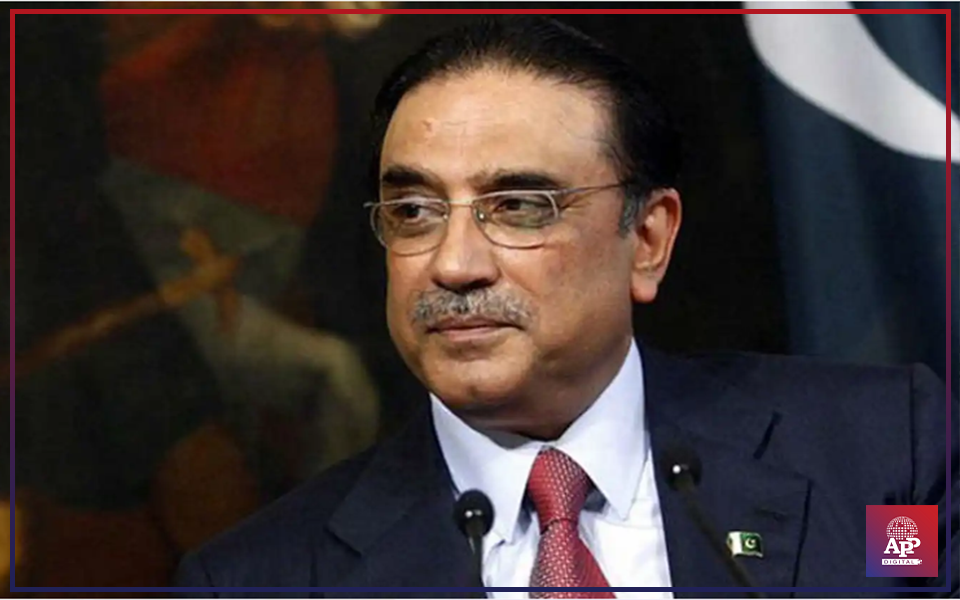
ISLAMABAD, May 2 (APP):President Asif Ali Zardari has emphasized the need to initiate measures for the safety and security of the journalists enabling them to freely report on important issues, without fear.
“The Constitution of Pakistan guarantees the freedom of the press; however, it is also the responsibility of the media to abide by journalistic ethics and report responsibly and accurately, keeping in view the national interest,” the president said in his message on the occasion of the World Press Freedom Day.
President Zardari also stressed the need to provide an enabling environment free of intimidation or harassment to journalists so that they could freely express their opinions.
“Today, we also recognize the commendable role played by the media in promoting democratic values in the world, as well as raising awareness about issues of social and economic significance, especially climate change and global warming,” he said.
“I am hopeful that the media would continue to contribute constructively in raising awareness about issues of global concern. I am sure that media advocacy of these issues would spur international action to save our planet from the threat of climate change.”
President Zardari maintained that the World Press Freedom Day was commemorated every year on May 3 to affirm the commitment to cultivating an environment where “the media is independent and diverse and enjoys freedoms with responsibility as enshrined in our Constitution”.
He said the day “provides us with an opportunity to reflect on the state of press freedom in our country and make efforts to create a safe and conducive working environment for the journalists”.
“We believe that an independent press is essential for highlighting issues of global importance, dispelling fake news and myths, and serving as a watchdog for society. Media also has a crucial role in creating awareness about issues of global concern, including climate change, green technologies, pollution, and global warming,” he added.
The theme of this year’s World Press Freedom Day “A Press for the Planet: Journalism in the face of the environmental crisis”, he said, underscored the importance of a free press in creating awareness and educating the people about climate change and its impacts on human life and the environment.
“We believe that the media can play its role in encouraging people to protect the environment by promoting forestation, adopting clean technologies, reducing carbon emissions, and protecting biodiversity to mitigate the adverse impacts of climate change on our ecosystem,” President Zardari remarked.
The theme, he said, also highlighted that a free and responsible press should act as a bulwark against misleading information about climate change.
The president also called upon the media to play its role in countering fake news and promoting moral and ethical values.