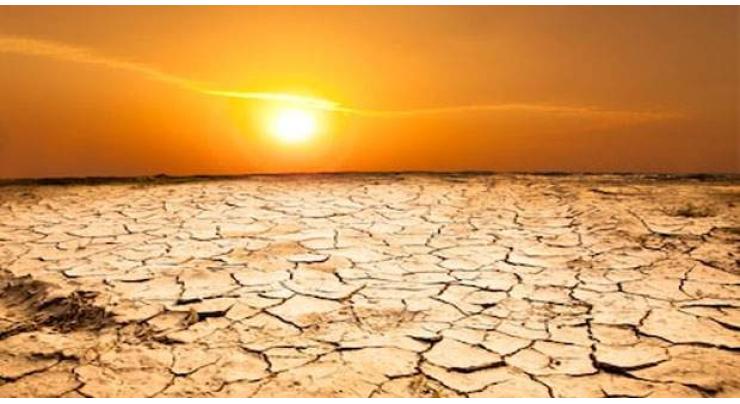
Hot, dry weather forecast for Sindh
Climate warriors: Mobilizing Pakistan’s youth to confront environmental challenges
By Qurat ul Ain
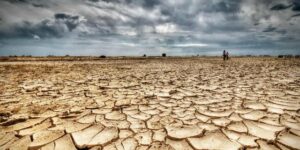
ISLAMABAD, May 12 (APP): Pakistan is grappling with the daunting reality of climate change, a challenge that echoes across its diverse landscapes. Yet, amidst this adversity its vibrant youth offers a dynamic solution to take center stage in the battle against environmental degradation.
With nearly 68% of the population under 30, Pakistan possesses a force capable of driving transformative change. It’s time to harness their energy and empower them to lead in confronting climate issues facing the nation.
From grassroots movements to policy advocacy, Pakistani youth are making their voices heard. They are organizing tree plantation drives, conducting awareness campaigns, and pushing for eco-friendly policies at both local and national levels. Their efforts are not going unnoticed.

Experts believe that engaging youth in climate action is not just essential for Pakistan’s future but also imperative for addressing the global climate crisis.
According to Muhammad Saleem, a Media Spokesperson at the Ministry of Climate Change and Environmental Coordination, the government recognizes the importance of nurturing youth leadership in climate action.
Saleem highlights the National Adaptation Plan as a crucial framework for guiding future initiatives. However, he acknowledges that more concrete steps are needed to translate policies into tangible actions on the ground.
Pakistan’s vulnerability to climate change underscores the urgency of global solidarity and cooperation.
The international community must prioritize climate finance, technology transfer, and capacity-building initiatives to support sustainable development efforts in countries like Pakistan, Muhammad Saleem emphasized.
Ali Jabir Malik, a climate researcher, speaker and journalist, emphasizes the urgent need for proactive youth-centric policies. He fears that without such policies, Pakistan’s youth bulge could become both an asset and a risk in the fight against climate change. Malik stresses the importance of involving young people in policy-making, community mobilization, and innovative solutions to address the growing climate vulnerabilities being faced by the country.
Adnan Riaz, a young social activist, echoes Malik’s sentiments, emphasizing the power of youth-led environmental campaigns. He points to the role of social media in mobilizing young people and amplifying their voices on climate issues. Riaz believes that Pakistani youth have the potential to drive significant change through initiatives like sustainable ecotourism and green entrepreneurship.
Sadia Mazhar, another young social activist, highlights the plethora of opportunities available for youth engagement in environmental action. She mentions initiatives like urban forests, organic farming, and climate advocacy campaigns as examples of positive disruptions that transcend age and socioeconomic barriers.
The government, too, is taking steps to harness the energy and enthusiasm of its youth. Initiatives like the PM’s Talent Hunt Programme is aimed at identifying and nurturing young talent across the country. Under this programme, talented individuals will have the opportunity to participate in national events like the upcoming National Games, fostering a sense of pride and achievement among the youth.
Furthermore, the government is actively seeking partnerships with international donors and investors to accelerate its transition to renewable energy. With ambitious targets set for 2030, including 60% clean energy production and 30% electric vehicles, Pakistan is positioning itself as a leader in sustainable development.

Despite these efforts, challenges remain.
Limited resources, bureaucratic hurdles, and a lack of coordination often hinder youth-led initiatives. However, experts believe that by fostering an enabling environment and providing support for youth-led innovation, Pakistan can overcome these obstacles and emerge as a global leader in climate action.
In a nutshell, Pakistan’s youth are not just the leaders of tomorrow; they are the leaders of today. With their energy, creativity, and passion for change, they have the power to drive meaningful progress in the fight against climate change. By harnessing this youth power and providing them with the necessary support and resources, Pakistan can build a more sustainable and resilient future for generations to come

Route to Makkah expansion: Ashrafi hails facility at Karachi airport, envisions seamless pilgrimage experience
By Rehan Khan
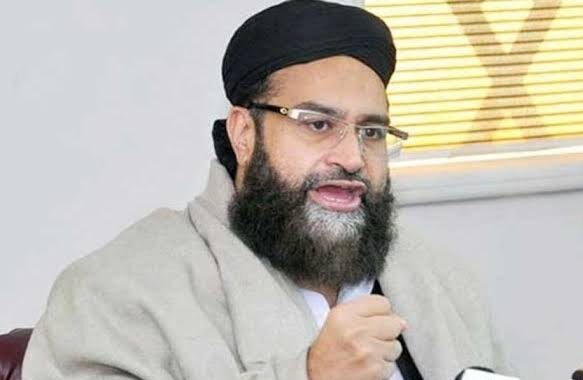
ISLAMABAD, May 12 (APP): Pakistan Ulema Council (PUC) Chairman Hafiz Muhammad Tahir Mehmood Ashrafi on Sunday appreciated the Route to Makkah facility launched at Jinnah International Airport Karachi this year, following its successful implementation at Islamabad International Airport.
In an exclusive interview with the media, he said this expansion would prove a crucial step in facilitating pilgrims traveling to the Kingdom of Saudi Arabia for Hajj.
Ashrafi said the Route to Makkah initiative, a joint effort between the two nations, would streamline the immigration process for Pakistani pilgrims travelling to Saudi Arabia. By establishing dedicated immigration counters and facilities at the following airports, he said the project would enhance the overall pilgrimage experience, reduce waiting times, and ensure a hassle-free journey for pilgrims.
He said the implementation of the Route to Makkah project at Jinnah International Airport Karachi was a good omen for thousands of pilgrims from Sindh and adjoining regions. With Karachi being one of the busiest airports in Pakistan, the availability of dedicated facilities for pilgrims is expected to significantly alleviate congestion and enhance operational efficiency during peak travel seasons, he maintained.
Ashrafi said the expansion of the Route to Makkah project underscored the commitment of both the Saudi and Pakistani governments to enhancing bilateral ties and promoting religious tourism between the two countries. He said this initiative not only served as a testament to the strong friendship between Pakistan and Saudi Arabia but also demonstrated a shared vision for providing exceptional services to pilgrims undertaking the sacred journey to the holy land.
He expressed hope that the Route to Makkah project would be expanded further to other airports across Pakistan as authorities are optimistic about its positive impact on the overall pilgrimage experience. By prioritizing the convenience and well-being of pilgrims. He said this initiative had reaffirmed the commitment of both nations to facilitating religious tourism and fostering closer ties between the people of Pakistan and Saudi Arabia.
He underscored the efforts made by Prime Minister Muhammad Shehbaz Sharif during his government’s previous tenure to expand the Route to Makkah initiative. He also extended gratitude to the Saudi Crown Prince, Muhammad bin Salman, for issuing a directive to establish this facility at the Karachi airport.
In addition, Ashrafi welcomed the resolution passed by the United Nations General Assembly on Friday, affirming the eligibility of Palestinians for full membership status at the United Nations. He expressed his appreciation for this gigantic move, emphasizing that it underscored the global community’s unwavering support for the establishment of an independent Palestine and the right to self-determination of the Palestinian people.
He further urged world powers and all United Nations members to advocate for Palestine’s permanent membership and to take immediate and decisive action against Israel’s egregious acts, halting the senseless massacre of innocent civilians.
He conveyed gratitude to the nations instrumental in presenting the resolution, particularly highlighting the contributions of the Kingdom of Saudi Arabia, the United Arab Emirates, Qatar, Turkiye, Iran and other supportive countries.
Pak-Uzbekistan commodity market leaders agree for joint plan of action
ISLAMABAD, May 12 (APP): Pakistan and Uzbekistan Commodity Exchange leaders have agreed to adopt a joint future plan of action, regarding new capital market challenges through cooperation.
Pakistan and Uzbekistan have a lot of potential in commodity exchange which includes major sectors in the country’s Gross Domestic Products (GDP), including agriculture and textiles, food and oil sector, grain, sugar and energy sector.
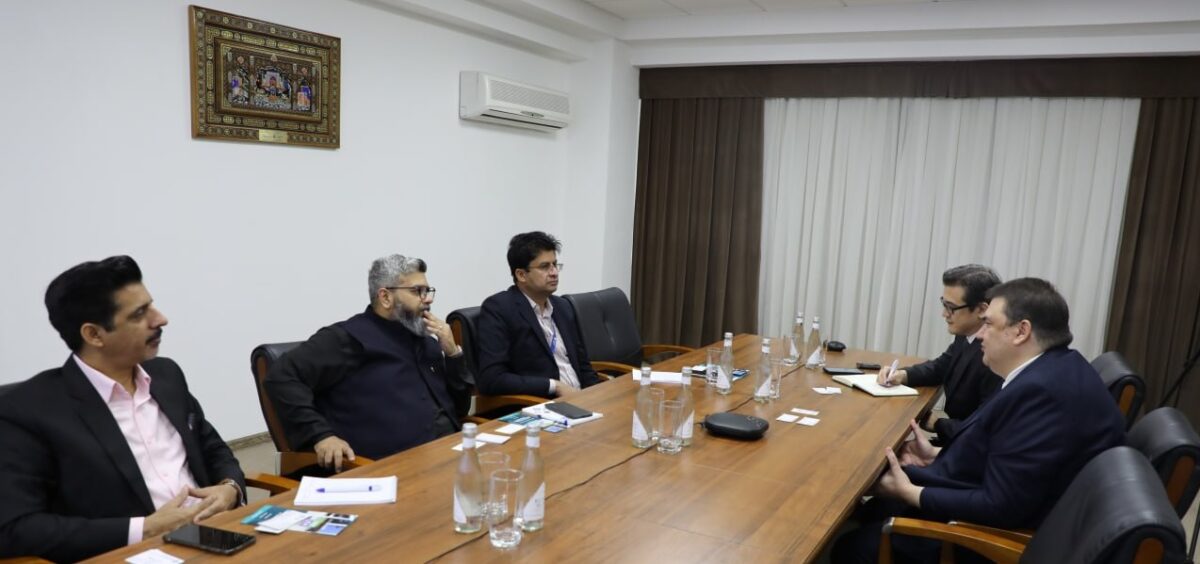
Pakistan Mercantile Exchange, Manager Business Development Habib Mamsa led the delegation to participate in the Tashkent International Investment Forum and visited Uzbekistan Commodity Exchange. The delegation was welcomed by Deputy Chairman of Uzbekistan Commodity Exchange Nabikhon Samatov.
The commodity exchange leaders, during the interaction, emphasised the joint action plan and initiative of the two commodity exchanges by adopting a joint future planning and action plan to face the challenges of the future market.
Meanwhile, Deputy Chairman of Uzbekistan Commodity Exchange (USEX) Nabikhon Samatov said that Uzbekistan Commodity Exchange currently has 500,000 and 30,000 foreign clients at the national level and it has been 30 years since UCE was established.
The deputy chairman said that transactions worth $14 billion are taking place in the Uzbekistan Commodity Exchange annually and 10,000 transactions are being made daily. He said that 55 per cent private sector and 45 per cent government are doing business in UCEX.
Nabikhon Samatov said that energy, oil, cement, cotton, sugar, grain and livestock are the major sectors to invest here.
He said that Uzbekistan is currently developing in the market economy and at this time Pakistan Mercantile Exchange and Uzbekistan Commodity Exchange want to benefit from each others experiences.
Senior business leader said that the capital markets of Pakistan and Uzbekistan have a lot of compatibility and many sectors are compatible on both sides, with which both sides want to move ahead with cooperation by adopting a common plan.
He said, “in the modern capital market, we can benefit from the experiences of Pakistan for which bilateral coordination is very important”. The deputy chairman said that not only the two governments but also the private sector should pave the way for mutual cooperation.
Similarly, both institutions should increase collaboration on the spot market and future market.
Deputy Chairman of Uzbekistan Commodity Exchange Nabikhon Samatov said that both sides want to work together on new trends like market innovation and meta-trading. He said that the series of mutual discussions on this agenda should continue in near future.
On this occasion, Habib Mamsa, Manager Business Development of Pakistan Mercantile Exchange, urged to set a strategy for the Spot Market and Future Market by adopting a joint plan with Pakistan Mercantile Exchange, Uzbekistan Commodity Exchange, and in this regard, the dialogue process should continue in the leadership of both sides.
Habib said that PMS is in the phase of evolution, and we currently have 60000 clients.
He said that our market has increased by 20%, the volume of which is Rs2 billion and there are enough opportunities for mutual cooperation on both sides which need to be worked on.
On this occasion, the leadership of both sides emphasized online Zoom and face-to-face discussions between the leaders of both markets for the promotion of mutual cooperation and joint action plans in the future.
On this occasion, Senior Manager Product, PMEX Irfan Kasana and Advisor to Chairman UCEX, Hikmatullah highlighted the different aspects of the stock market of the two countries and shed light on the various avenues of cooperation on both sides.
They said that bilateral dialogue should continue by adopting a common strategy for the promotion of capital markets on both sides.
WUM organizes colloquial on post covid challenges, opportunities
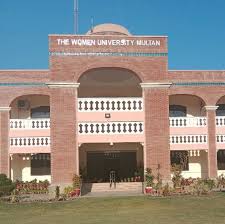
MULTAN, May 12 (APP): Women University Multan (WUM) English department organized one day international colloquium titled “Post-Covid Challenges & Opportunities” aiming at reflecting on how Covid has affected higher education and what key challenges academicians, students and institutions had to face during Covid and post Covid era as well.
The event titled “Teaching and English Language Literary Studies in 21st Century.”
Addressing the event, WUM VC Dr Kalsoom Paracha, said that the steps taken by the government to meet the challenges during and post COVID are commendable.
During the pandemic situation the Women University Multan played its lead role and arranged online classes and examinations to facilitate the students.
Despite having limited resources the university played a commendable role especially IT professionals guided the students and teachers to shift to online education, she informed.
Due to their tireless efforts the WUM was ranked on top among other women universities for providing quality Learning Management System to students.
Dr. Zia said that the pandemic has helped us to realize that even with minimum resources we kept our educational institutions functional which in itself is a big achievement. Conventional teachers also learnt that digitnalization is important. They also learned to integrate technology into teaching.
Other panalist includes Dr. Muhammad Afzal, Dr. Naveed Chaudhry, Dr. Asif, Dr. Asim , Dr Adnan, Dr. Tayyab, Dr Fouiza , Dr. Ahsan, Dr. Shabbir, Dr. Ayesha, Dr. Mansoor, Dr Abrar, Dr. Mazhar ,Dr Ghulam Murtaza, Dr. Safeer and other eminent academic experts.
The participants exchanged different practices and solutions, explored and discussed existing challenges in transition and post-Covid-19 scenario to frame acceptable policies to impart knowledge and skills to students and outcome-based assessment in both cognitive and psycho motive domains based on set principles to adopt and live in a virtual world.
Chairperson, Department of English Dr Mamoona Khan, highlighted the significance of formation of LitCon society.
She said that promoting knowledge of languages, literature, learning about new ideas and modern trends was the pressing need of the hour. Dr. Mamoona Khan concluded the session and thanked the literary figures and scholars for their valuable knowledge.
Budget plan, proposals for boosting tourism in southern, merged districts: Advisor Tourism
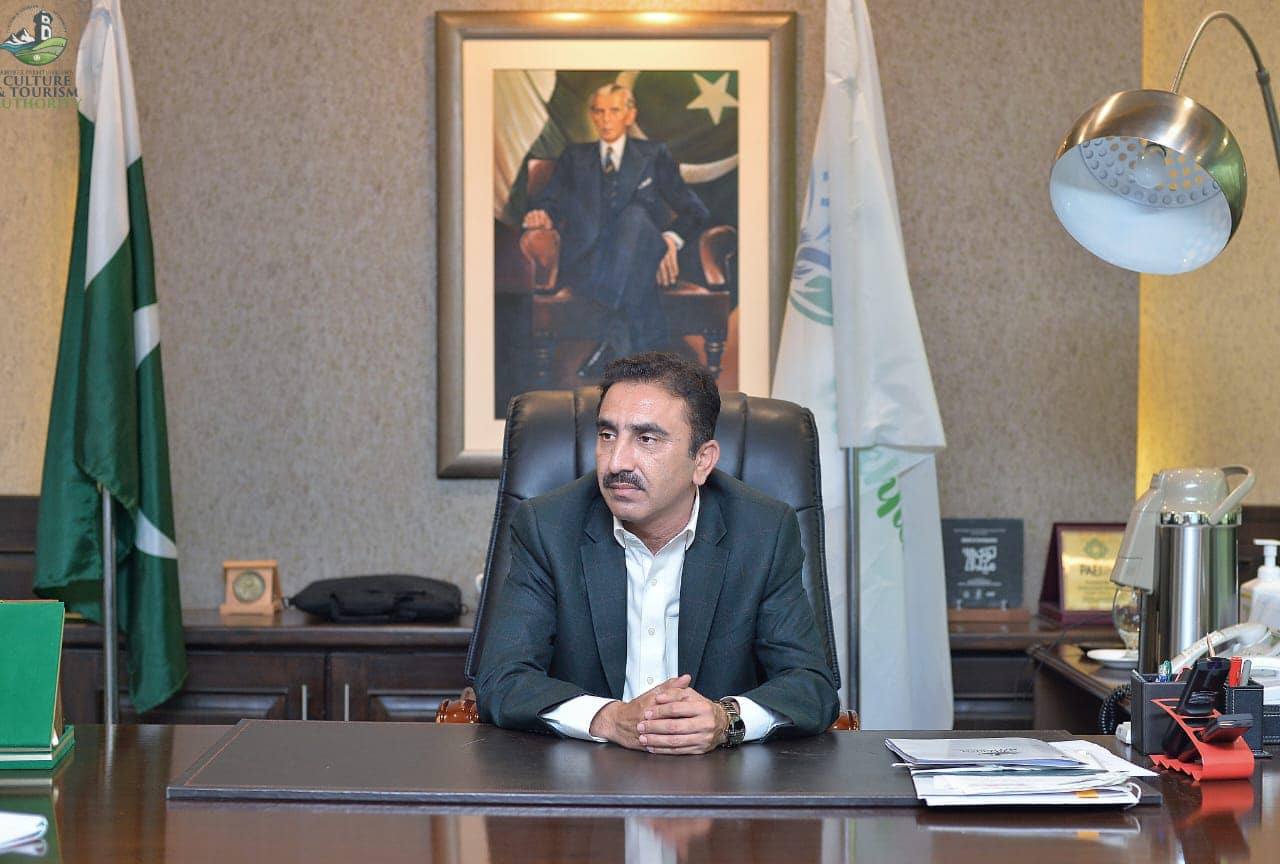
PESHAWAR, May 12 (APP): Members of the Provincial Assembly from the southern districts called on the Advisor to the Chief Minister Khyber Pakhtunkhwa on Tourism and Culture Zahid Chinzeb at the CM House Peshawar on Sunday and discussed with him the plans and budget proposals for the promotion of tourism, culture and archeology in the southern and merged districts of the province.
They also put forth some suggestions and recommendations on their behalf as well to establish tourism in KP on strong footings.
The members included Member of Provincial Assembly and former Local Government Minister, MNA Faisal Amin Gandapur from Dera Ismail Khan and newly elected MPA Usman Khan Bettani from Tank.
Assuring that the recommendations of the assembly members will be made part of the tourism plan, Zahid Chanzeb revealed that in the provincial budget for the new financial year to be presented in June, it was decided to allocate sufficient funds for the development of tourism in the entire Khyber Pakhtunkhwa, wherein the southern and merged districts are also at the top.
He admitted that like the rest of the province, these areas are also rich in tourism and cultural treasures with enormous healthy and spacious places where proper investment can not only make them attractive for international tourists but also the tourism Industry can be developed double by day and quadruple by night.
The CM’s Aide said that the development of tourism is also the vision of Imran Khan, the founder chairman of PTI, while investment in the tourism industry is likely to increase the income and employment opportunities in the province so many times.
He asserted that considering the traditional hospitality and colorful culture of this region, our soft image will also be reflected all over the world with streamlining the tourists activities in nook and corner of the province.
He said that like other mountainous regions of the province including Malakand and Hazara, all our southern and merged districts right from Kohat to Dera Ismail Khan and from Khyber to Orkazai and Bajaur, have been blessed with the tremendous treasures of health-enhancing environmental and religious tourism. Whereas proposals are being considered to make them attractive for foreign tourists by improving the infrastructure and improving the law and order situation all where in KP.
He acknowledged that in the past, this sector was not given sufficient attention, but under the dynamic and prudent leadership of Chief Minister Ali Amin Gandapur, tourism as an industry will be promoted along with all other sectors during the next five years.
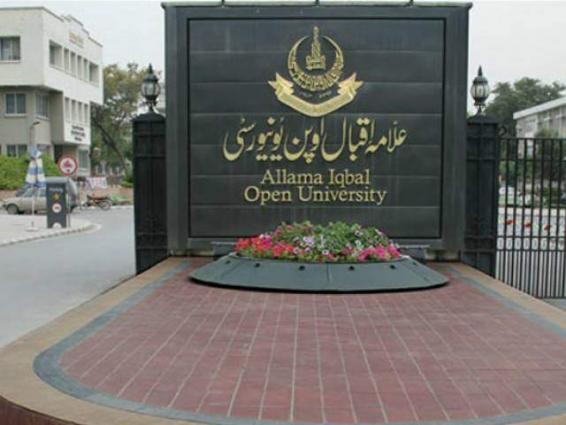
AIOU to close admissions on May 15
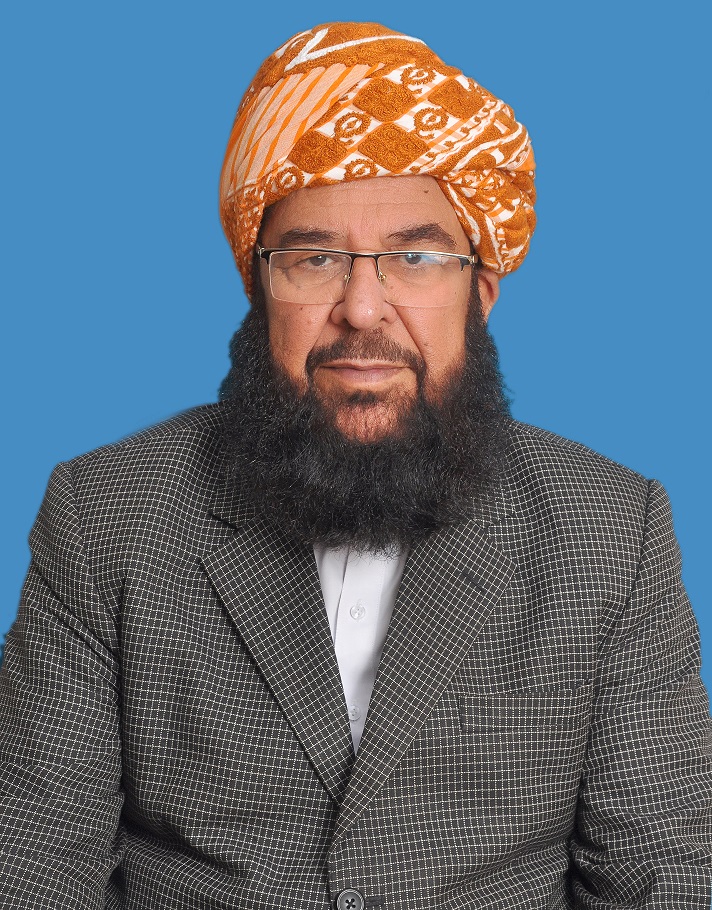
Haideri submits resolution in NA to condemn Khuzdar Press Club President’s murder
SRSO to organize 15th Sartyoon Sang Crafts Exhibition from May 15 in Karachi
SUKKUR, May 12 (APP): Sindh Rural Support Organization (SRSO) with the support of Sindh Government and its different partners will organize the 15th Sartyoon Sang Crafts Exhibition in Karachi’s Dolmen Mall, Clifton from May 15th to 17th, 2024, which will be continued from 11am to 11 pm.
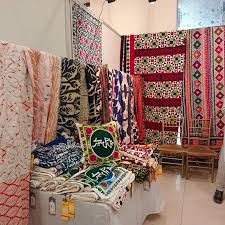
According to SRSO Spokesperson, Jameel Soomro, the exhibition will bring a variety of traditional arts and crafts to Karachi. These colourful and captivating products will be the work of thousands of rural women artisans of Sindh province including including Sukkur, Kashmore-Kandhkot, Shikarpur, Larkana, Jacobabad, Khairpur, Badin, Thatta, Larkana, and others districts.
A wide mixture of Sindh’s handicrafts including home textiles (made up of intricate patch work, cut work and embroidery), basketry, jewelry, dresses, dupattas, and shawls embellished with traditional embroidery, cutwork, an exclusive range of traditional clothing in Khaddar, Organic Dye, Self Print Cotton Fabric and much more embroidered by rural women artisans of Sindh province will be exhibited.
“Sartyoon Sang” is Sindh Rural Support Organisation’s Craft Enterprise Development Program, which invests in the growth and development of craft artisans especially female artisans, beyond mere collaboration.
Skill enhancement programs allow artisans to refine their craft, learn new techniques, and adapt to evolving market demands. This initiative fosters economic growth and sustainability within communities of Province Sindh Pakistan.