Cultural troupe from Lahore to renew artistic glory at NAPA from June 27
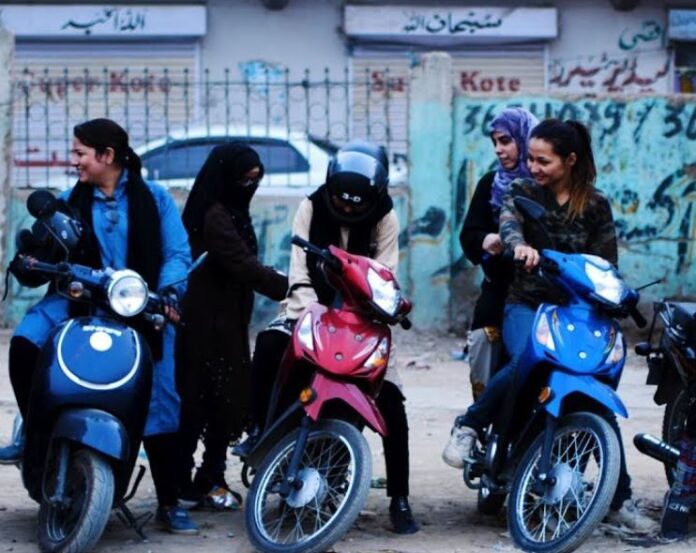
22,000 bikes to be delivered under PM’s Strategic Reform Initiatives for Women’s Mobility
ISLAMABAD, Jun 11 (APP): The government, under the Prime Minister Strategic Reform Initiatives for Women’s Mobility-Women on Wheels, will deliver a total of 22,000 bikes to women all over the country.
According to the Economic Survey launched on Tuesday, the objective of the project costing Rs 4,476.17 million, is to increase accessibility and mobility of women by providing motorcycles/ scooties at subsidized prices in Islamabad, Punjab, Sindh, Balochistan, Khyber Pakhtunkhwa and Gilgit-Baltistan.
Every challenge can be countered with unity: Interior Minister
Oil demand declines in nine months of FY 2023-24
ISLAMABAD, Jun 11 (APP): The demand for oil declined to 12.3 million tonnes during July-March Financial Year 2023-24, down from 13.3 million tonnes during the same period last year.
According to the Economic Survey 2023-24 unveiled by Federal Minister for Finance and Revenue, Senator Muhammad Aurangzeb, the declining trend may be attributed to a decrease in demand for High-Speed Diesel (HSD), Motor Spirit (MS), and Furnace Oil (FO), which together comprise more than 95 percent of the total demand.
The total demand for petroleum products remained at 17.5 million tonnes during FY 2023.
Furthermore, the transport and power sectors are major petroleum consumers, accounting for 77.3 percent and 10.7 percent of total demand, respectively.
Overall, the total demand for petroleum products decreased by 7.23 percent during July-March FY 2024 compared to the same period last year.
Pakistan is a net importer of petroleum products and crude oil.
The major imported products are Motor Spirit (MS), High-Speed Diesel (HSD), and crude oil, with import quantities of 3,528.1 thousand tonnes, 1,233.5 thousand tonnes, and 6,169.3 thousand tonnes, respectively.
During the period under review, the import value of petroleum products declined by 16.7 percent compared to the same period last fiscal year.
Furthermore, due to the government’s efforts, the country’s reliance on Furnace Oil (FO) for power generation declined, leading to zero imports of FO, which was valued at US$307.7 million in FY 2023.
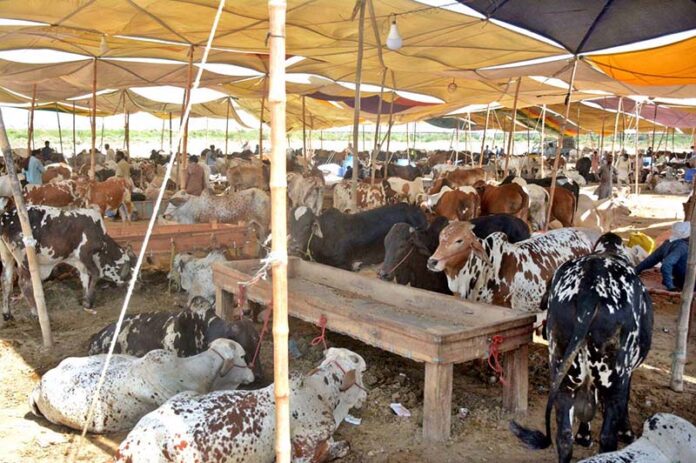
A view of the cattle market in city before Eidul Azha


KARACHI

APP35-110624
QUETTA
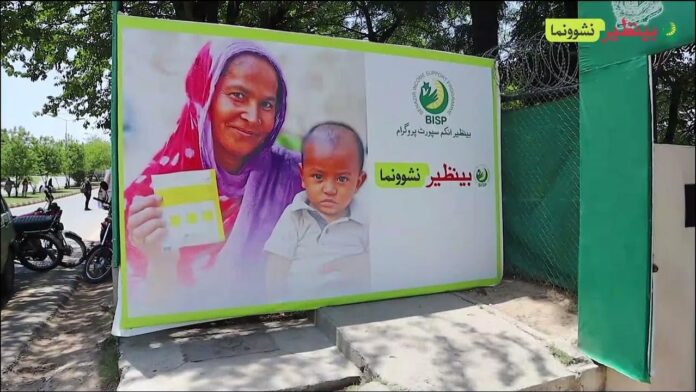
Rs 10.83 billion paid to 1873,557 beneficiaries under Benazir Nashonuma scheme
ISLAMABAD, Jun 11 (APP): Benazir Income Support Programme (BISP) has paid Rs 10.83 billion to 1,873,557 beneficiaries under the Conditional Cash Transfer initiative of Benazir Nashonuma till March FY2024.
This was conveyed during the Economic Survey 2023-24 unveiled by the Federal Minister for Finance and Revenue, Senator Muhammad Aurangzeb on Tuesday.
The programme focuses upon a 1000-day window of opportunity to prevent malnutrition in Pregnant and Lactating Women (PLW) and Children under two years of age within the BISP Kafaalat Program households.
The comprehensive package of interventions is being implemented through “Facilitation centres” established on the premises of Tehsil/Taluka/District level government health facilities.
The programme aims to address stunting among PLW and their children of less than two years of age through the provision of additional cash of Rs 2,000 per quarter per PLW / boy child and Rs 2,500 per quarter per girl child of BISP beneficiary families.
In return, mothers must commit to attending regular antenatal health checks and awareness sessions during pregnancy, consuming Specialized Nutritious Food (SNF), and taking their children for immunization and regular health checks.
The primary objectives of the intervention include prevent stunting in children under two years of age, improve weight gain of pregnant women, reduce anemia and micronutrient deficiencies, improve awareness of maternal and early child health/nutrition.
The Nashonuma Programme is ope-rationalized in 158 districts through 545 Facilitation Centers, including 35 mobile sites in Sindh, two in Punjab, and 27 in Khyber Pakhtunkhwa.
PPAF disburses Rs. 241.57 billion to implement socio-economic development interventions
ISLAMABAD, Jun 11 (APP): Pakistan Poverty Alleviation Fund (PPAF) has disbursed around Rs. 241.57 billion to its Partner Organizations (POs) in 149 districts nationwide to implement multi-sectoral socio-economic development interventions, since its inception in April 2000 till March 2024.
According to the Economic Survey 2023-24 unveiled by the Federal Minister for Finance and Revenue, Senator Muhammad Aurangzeb, PPAF has disbursed a total of 8.4 million microcredit loans, with 60 percent loans to women and 80 percent financing to rural areas.
Listing the key initiatives taken by PPAF, the survey revealed that 39,600 health, education, water, and infrastructure projects have been completed benefitting 18 million persons.
More than 440,000 credit groups and 150,800 community organizations were formed while 1,161,000 individuals (48% women) received managerial and livelihood training.
Around 200-300 productive assets transferred (63% assets to women) to ultra and vulnerable poor households and 3,215,000 interest-free loans (55% women) have been disbursed through Interest-Free Loan (IFL) Programme.
Around 26,000 individuals, including women and youth were trained in enterprise development under Waseela-e-Haq National and Waseela-e-Haq Sindh programmes of the BISP and facilitated in establishing their successful ventures.
Around 39,000 persons with disabilities rehabilitated while around 1.5 million households, encompassing 11.3 million individuals, were benefited from PPAF’s disaster response efforts.
PPAF is continuing to support communities by providing interest-free loans and enhanced access to improved infrastructure, energy, health, education, livelihoods, and resilience to disasters. It has outreach in 149 districts across all four provinces and regions of the country.
PSM to be revived by Sindh govt after federal govt’s consensus: Rana Tanveer
Government taking proactive measures to control population growth, fertility rates
ISLAMABAD, Jun 11 (APP): The government is taking proactive measures to control population growth and fertility rates. The Rapid population growth and high fertility rates are significantly straining the country’s economic development and its ability to provide essential services like healthcare, education, and social protection.
According to the Economic Survey 2023-24 launched by Minister for Finance and Revenue Senator Muhammad Aurangzeb on Tuesday, they create awareness through media campaigns and provide Family Planning services through Family Welfare Centers (FWC), Reproductive Health Services Centers (RHS-A), Regional Training Institutes, and Mobile Service Units. .
Urban Population: In 1998 the population of Rural in Pakistan was 63.56 percent. In 2017 and 2023 the Rural population was 61.18 percent.
Rural Population : In 1998 the Rural Population of the country was 32.5 percent, in 2017 the population was 36.44 percent and in the year 2023 was 38.82 percent. Pakistan’s urban population increased from 75.67 million to 93.75 million between 2017 and 2023, making it one of the most urbanized nations in South Asia.
Almost 39 percent of its population lives in urban areas. Urbanization strongly impacts a country’s
economy and development, leading to changes in various areas such as labour market opportunities, family structures, education, health, environment management, security systems, and governance.
The Population and Housing Census of 2023 revealed that the urban population is increasing, with 38.82 percent, currently living in urban areas.
This trend is observed in most provinces, except in Khyber Pakhtunkhwa, where the share of the urban
population decreased from 16.55 percent in 2017 to 15.01 percent in 2023. Similarly, the urban population in Islamabad decreased from 50.37 percent in 2017 to 46.90 percent in 2023. The percentages of urban and rural population across different provinces.
The data demonstrates that from 2017 to 2023, the share of the urban population in Sindh, Punjab, and Balochistan increased due to better education, health, and earning opportunities in urban areas.
Among all the provinces, Sindh has the highest urban population, from 51.89 percent in 2017 to 53.73 percent in 2023.
Punjab ranks second with an increase from 36.86 percent to 40.70 percent in the same period. Similarly, Balochistan’s urban population rose from 27.62 percent in 2017 to 30.96 percent in 2023. However, Khyber Pakhtunkhwa differed from
other provinces as the percentage of the rural population increased due to the merger of FATA into Khyber Pakhtunkhwa.