SNGPL disconnects five more meters, checks 55 meters
Lukashenko makes several judiciary appointments
Snow blanketed Naran-Kaghan valleys captivates tourists amid playful hide and seek of sun and rain at Saiful Malook lake
Lukashenko to attend EAEU, CIS summits in St. Petersburg
ISLAMABAD, Dec 21 (BelTA/APP): Belarusian President Aleksandr Lukashenko will pay a working visit to the Russian Federation from 21 to 22 December to attend summits of the Eurasian Economic Union (EAEU) and the Commonwealth of Independent States (CIS) in St. Petersburg, BelTA learned from the press service of the Belarusian leader.
On 21 December Aleksandr Lukashenko takes part in a meeting of the Supreme Eurasian Economic Council in narrow and extended formats.
The agenda includes about twenty items.
Leaders of the EAEU will discuss the formation of common markets for oil and petroleum products, the main areas of international activities for the next year, approaches to the development of trade and economic cooperation with the main partners of the EAEU, and a number of other issues.
A meeting between the Belarusian president and Russian President Vladimir Putin is also planned.
An informal meeting of the CIS heads of state will take place on 22 December. They will assess the prospects for integration and sum up the results of 2025.
India’s violation of Indus Water Treaty, unannounced water releases pose serious threat to regional stability: Prof Cheng
BEIJING, Dec 21 (APP): India’s unilateral violations of the Indus Waters Treaty (IWT), including unannounced water releases and its persistent refusal to share hydrological data, amount to a dangerous weaponization of water, posing a serious threat to Pakistan’s survival and to regional stability as a whole.
This was stated by Prof. Cheng Xizhong, Senior Research Fellow at the Charhar Institute, a non-governmental Chinese think-tank on diplomacy and international studies based in Beijing.
He said that, as emphasized by Deputy Prime Minister and Foreign Minister Senator Ishaq Dar, India’s reckless actions, deliberately timed to disrupt Pakistan’s agricultural cycle, directly endanger the livelihoods of over 250 million people. These measures undermine Pakistan’s food and economic security and risk triggering a large-scale humanitarian crisis.
Such conduct represents not only a blatant breach of the IWT but also a violation of fundamental principles of international law. India’s systematic attempts to erode the treaty framework—through the construction of illegal hydropower projects and the circumvention of established dispute-resolution mechanisms—set a dangerous precedent for transboundary water governance worldwide, he added.
Prof Cheng stressed that the international community, particularly the United Nations Security Council and the World Bank, cannot afford to remain silent. India’s manipulation of shared water resources strikes at the credibility of international treaties and violates the core principles of good-neighborly relations.
It is therefore imperative that the global community urge India to immediately restore full compliance with the IWT, cease the weaponization of water, and engage in meaningful, constructive dialogue.
Pakistan’s commitment to peaceful dispute resolution remains unwavering; however, its existential water rights are non-negotiable. Failure to hold India accountable will only exacerbate tensions in South Asia, turning a shared lifeline into a catalyst for conflict, he added.
Kashmiri women face grave rights violations under militarisation: experts
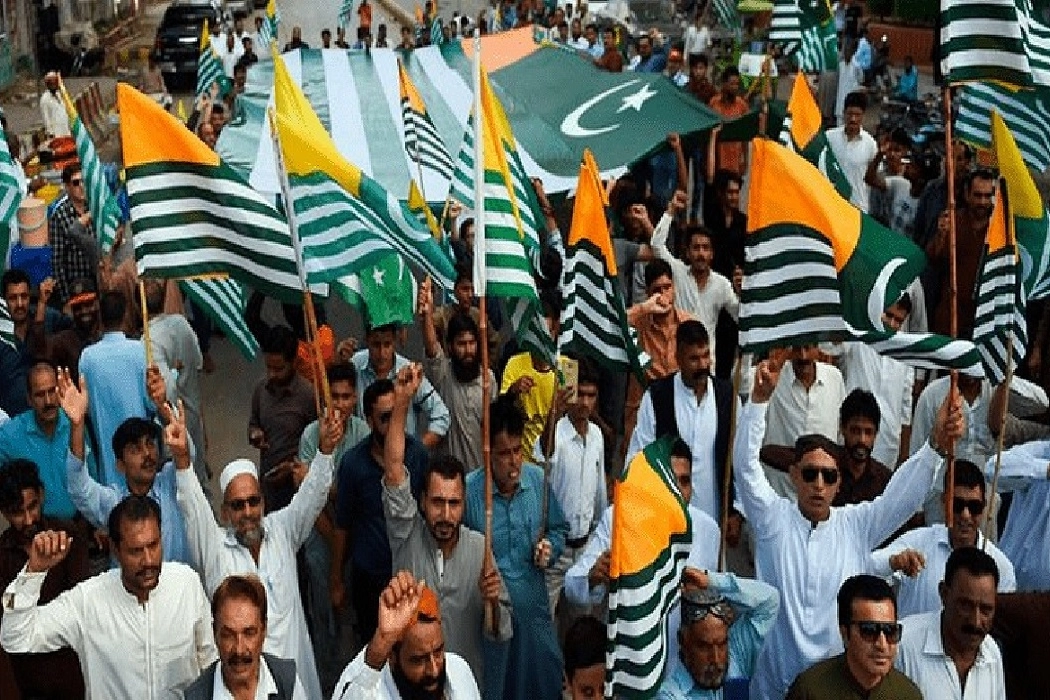
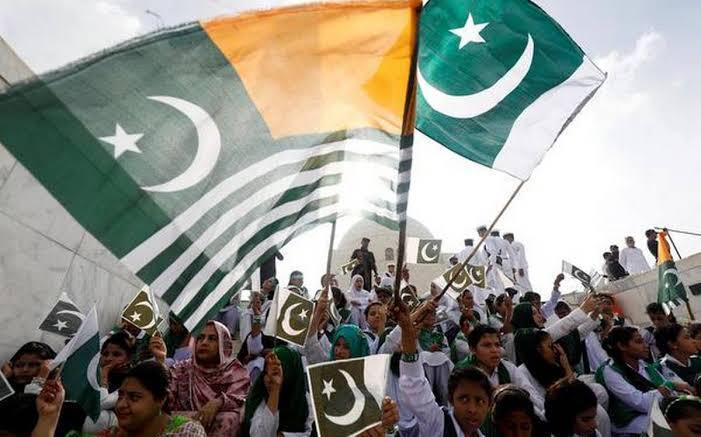
ISLAMABAD, Dec 21 (APP): Speakers at a webinar on Sunday highlighted the grave human rights violations faced by women in Indian Illegally Occupied Jammu and Kashmir (IIOJ&K) under prolonged militarisation, saying Kashmiri women continue to endure violence, discrimination and psychological trauma amid an atmosphere of impunity and repression.
The webinar, organised by Kashmir Media Service and United Kashmir Journalists Association, was titled “Suppression and Silent Suffering: Women’s Perspectives on Militarization in Kashmir” was moderated by senior journalist Dr. Muhammad Ashraf and human rights activist Rais Ahmed.
Addressing the webinar, former AJK minister and CEO Dastak, Farzana Yaqoob, said Kashmiri women had suffered severe human rights abuses for decades, referring to incidents such as Kunan Poshpora. She regretted that these violations had not been effectively highlighted at international forums despite global sensitivity towards women’s rights, and stressed the need to expose crimes committed against Kashmiri women and girls, including minors.
Principal Solicitor Sobia Shawl said India had failed to grant basic rights to the people of Kashmir and had provided complete impunity to its forces through draconian laws such as the Armed Forces Special Powers Act, the Unlawful Activities (Prevention) Act and the Public Safety Act. She said these laws enabled arbitrary arrests, prolonged detention without trial and widespread rights violations, disproportionately affecting women. She added that cordon-and-search operations led to harassment, invasion of privacy and severe psychological trauma, while several women activists remained in illegal detention.
Associate Director CISS-AJK, Syeda Tehreem Bukhari, highlighted the historical and contemporary role of Kashmiri women in the resistance movement, naming figures such as Parveena Ahangar, Asiya Andrabi, Asia Jilani and Zumrud Habib. She said women’s political agency and resistance were systematically obscured by dominant Indian narratives, despite women being key political actors in the struggle.
Human rights activist, anchorperson and PhD scholar Naila Altaf described resilience as central to Kashmiri women’s resistance, referring to Kashmiri poets such as Lala Arifa as symbols of cultural strength and defiance. Research Officer CISS-AJK, Saba Ghulam Nabi, highlighted the alarming deterioration of women’s health in IIOJK, citing declining fertility rates, infant mortality and widespread mental health disorders caused by prolonged conflict and militarisation.
Chairperson All Jammu and Kashmir Muslim Conference Women Wing, Saima Sajid, said Kashmiri women remained resilient despite imprisonment, trauma and sexual violence in areas such as Kunan Poshpora, Sopore and Kupwara, and urged the international community to treat Kashmir as a humanitarian crisis. Researcher Soma Aslam said heavy militarisation and routine intimidation had severely disrupted daily life in IIOJK, particularly affecting women and children.
The speakers urged the international community, human rights organisations and global media to uphold international human rights and humanitarian law and to amplify the voices and lived experiences of Kashmiri women enduring prolonged militarisation.
ICT Police put two thieves behind bars, looted property recovered
ICT Police conduct grand search operation in Karachi Company limits