Home Blog Page 8255

GB govt’s Rs 5 Billion fund to bridge healthcare gaps for deserving patients: Eman Shah

0
Eman Shah
ISLAMABAD, Aug 23 (APP):Advisor to Chief Minister Gilgit-Baltistan, Eman Shah Friday said that Gilgit-Baltistan government has taken a major step towards bridging the region’s healthcare gap with the establishment of a Rs 5 billion endowment fund, where the fund will cover treatment costs for deserving patients, alleviating financial distress and ensuring timely medical care.
The government’s commitment to prioritizing citizens’ health and well-being is further demonstrated by plans to increase the fund annually, he said while talking to PTV news. The establishment of the endowment fund is a testament to the Chief Minister’s vision for a healthier Gilgit-Baltistan, he added.
 By providing financial assistance to deserving patients, the government aims to reduce the burden of medical expenses on low-income families and ensure that everyone has access to quality healthcare, he mentioned.
For deserving patients in Gilgit-Baltistan, the endowment fund brings a ray of hope, he said, adding, many patients in the region have been unable to access medical treatment due to financial constraints where this fund will now provide them with the opportunity to receive quality medical care, improving their chances of recovery and rehabilitation.
 This initiative is expected to have a positive impact on the region’s healthcare indicators, including mortality rates, disease prevalence, and quality of life, he said.
 By providing free treatment to those who need it most, the government is taking a significant step towards bridging the healthcare gap in Gilgit-Baltistan, he added.

HEC Chairman urges collective push to keep young talent in Pakistan

0
HEC Chairman
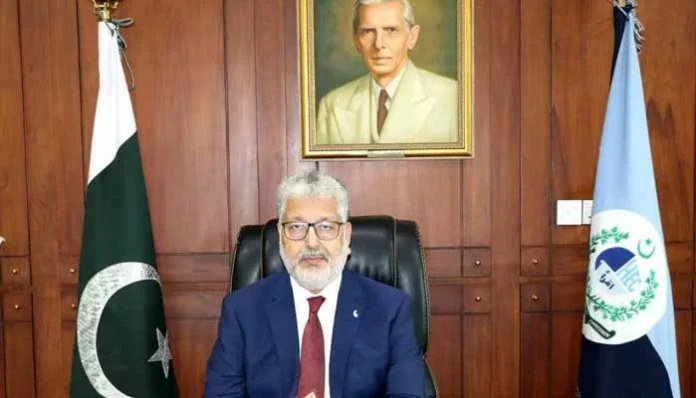
ISLAMABAD, Aug 23 (APP):Chairman, Higher Education Commission Dr Mukhtar Ahmed Friday called upon for a collective push serves as a timely reminder of the need for a cohesive strategy to stem brain drain and empower young Pakistanis to achieve their dreams within the country.
Talking to a Private news channel , Chairman HEC expressed deep concern regarding the prevailing mindset among young people in Pakistan, who prefer to seek job opportunities abroad rather than staying in their home country.
He emphasized the need for a collective effort from society, media, and parents to instill trust and confidence among youngsters about their prospects for a bright future in Pakistan.
Chairman HEC, Dr. Mukhtar Ahmad, emphasized the crucial role of society, media, and parents in rebuilding the trust of young Pakistanis in their homeland and its future.
He urged these stakeholders to join hands in creating an enabling environment that fosters a sense of belonging, security, and opportunity among the youth.
Responding to a question regarding the 97 students who were awarded scholarships and sent abroad but have
since disappeared, Dr Mukhtar Ahmad acknowledged that the incident highlighted a deeper issue of trust deficit and lack of continuity in policies.
“The brain drain phenomenon is a complex problem that cannot be addressed overnight, and that it requires sustained efforts and consistent policies to rebuild trust among the youth,” he emphasized.
“To address this the HEC is taking concrete steps, including introducing scholarships and research opportunities that incentivize students to stay in Pakistan, as well as collaborating with industry leaders to create job opportunities and career prospects,” he informed.
“Moreover, the HEC is working to establish a robust monitoring and evaluation system to track the progress of scholarship recipients and ensure their return to Pakistan upon completion of their studies,” he mentioned.
“By taking these measures, the trust deficit can be bridged, and young Pakistanis can be encouraged to contribute their skills and talents to the country’s growth and development,” , Dr. Ahmad concluded.

Addiction to naswar: a growing threat to public health

0

By Fakhar-e-Alam

PESHAWAR, Aug 23 (APP): The rising prevalence of drug addiction, particularly hashish, ice, smoking, and naswar, in Khyber Pakhtunkhwa is increasingly affecting public health.
Many individuals suffering from drug addiction attribute their plight to socioeconomic issues such as poverty and unemployment, suggesting that improved economic policies and job opportunities for youth could address these challenges effectively.

One such case is Umar Khayam, a 30-year-old resident of the Nowshera district, who recently experienced severe dental pain due to his naswar addiction. Umar, in excruciating agony, was rushed to a private dental hospital, where he was quickly transferred to the Oral and Maxillofacial department at Sardar Begium Dental College in Peshawar for emergency surgery.

Upon examination of his teeth, Dr. Tahir Khan, senior surgeon and principal of the hospital, found that Umar’s molar was severely decayed, leading to a critical gum infection.
The decay was attributed to years of naswar use. Due to the extent of the damage, the molar was extracted as root canal treatment was deemed unfeasible.

Dr. Tahir Khan noted that Umar began using naswar in 2010 while in a hostel, initially as a way to cope with the stress of his MA exams. Despite numerous attempts to quit, Umar has been unable to break free from the addiction, which has caused significant dental issues, including the loss of a tooth. He expressed frustration over the negative impact of naswar on his personal and professional life, including the unpleasant habit of spitting that affects his social image.

Dr Tahir Khan, said the severity of naswar addiction could result in severe gum infections, jaw complications, and the loss of multiple teeth. “Naswar’s harmful effects extend beyond oral health, potentially causing bone loss, stomach disorders, and facial disfigurement.

Additionally, it may contribute to increased heart rate with cardiac vascular complications, and in some cases can lead to more severe conditions like mouth and oral cancers.”
Referring to a report from the Global Cancer Observatory, Dr Tahir pointed out that Pakistan faces a significant burden of lip and oral cavity cancers, with about 11,000 new cases in males every year, making it the most common cancer among men.

“Poor dental hygiene, tobacco use, and viral infections besides fake quack doctors contribute to these alarming statistics,” he informed. Approximately 10,000 people die of cancer of the lips and oral cavity annually in the country, the doctor said, adding the main reasons for such cancers were chewable and non-chewable tobacco and poor dental hygiene practices, oncogenic viral infections and genetic predispositions.

Despite grave health risks, he said that naswar remains prevalent in Khyber Pakhtunkhwa, where approximately 70 percent of the population uses it without knowing its serious consequences on their health.

Besides Charsadda, Swabi and Mohmand, the super quality naswar of Dera Ismail Khan, Bannu and Mardan were mostly exported to Punjab and Sindh provinces while its demand in Karachi was high due to presence of a large number of migrants from Khyber Pakhtunkhwa.

The history revealed that naswar was introduced to the world in 15th century in Europe when a French ambassador used it to treat her son’s migraines. Initially it was used for medicinal purposes but gradually it was consumed as an alternative to tobacco and later came to Indo-Pakistan subcontinent.

Zahurul Haq, who is associated with naswar business for the last 12 years said that people aging between 18-50 years prefer to consume Mardani, Charsadda and Bannu’s naswar. “The price of smoke-free tobacco varies in the open market as Rs30 per snuff packet was being charged per 100gram,” he said.

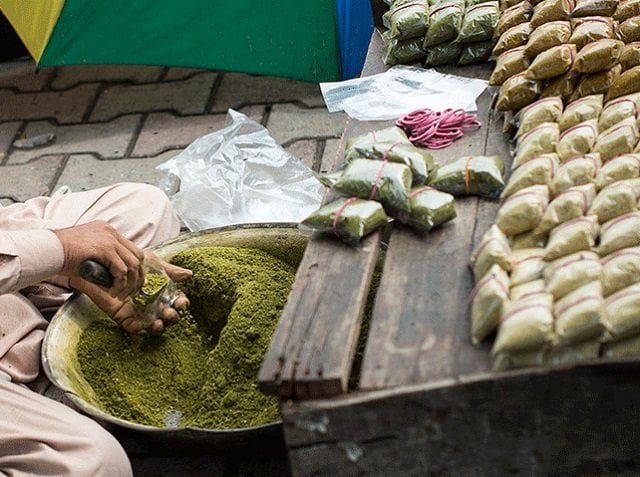
Regarding its preparation, he said that first tobacco was dried in the sun, then ground into powder and later water is added to this green powder along with calcium hydroxide and artificial colour, then plant ashes, species or oils are used to give a flavor and finally the mixture was rolled into fine balls to give it a proper shape.

He explained that there were two types of naswar, one is dried and other is moist, adding that people in the province mostly keep moist maswar inside the mouth under the lip and swallow the saliva as a craving while dried naswar is mainly inhaled through the nasal cavity.

Dr Sirzamin Khan, principal officer of government hospital Pabbi Nowshera said that naswar was mostly made of fresh tobacco leaves, calcium oxide, and other ingredients that may cause different types of cancers including lung, oral, stomach and mouth besides causing bronchitis, kidney, heart, and other diseases. He said the smokeless tobacco contains nicotine and other chemicals, which may have caused side effects on brain and ultimately oral cancer.

Syed Imran Shah, Director, Social Welfare Department said 12 detoxification and rehabilitation centres were established in different districts for the treatment and rehabilitation of drug addicts.

These centers were established at Peshawar, Mardan, Charsadda, Nowsehra, Swabi, DI Khan, Karak, Kohat, Malakanad, Swat, and Dir Lower. Under drugs-free Peshawar programs, he said addicts of Niswar were also rehabilitated.

Imran Shah underlined the need for mass awareness campaigns through electronic, print, and social media besides the active role of religious scholars and civil society to protect people from the hazardous effects of naswar.

Man gunned down

0
Dead body
SARGODHA, Aug 23 (APP):A man was killed by his relatives on aerial firing clash here under the jurisdiction of Quaid Abad police station here on Friday.
Police spokesperson said that Nasir Ameer (33) was doing areal firing at the wedding ceremony of Shahzad at Qaida bad when another relative namely as Irfan forbade him.Resultantly a brawl was broke out between them on aerial firing issue.
Irfan in fit of rage killed Nasir Ameer after opening fire at him. Further investigation was underway.

PM sympathises with Bangladesh flood victims

0
PM Shehbaz Sharif

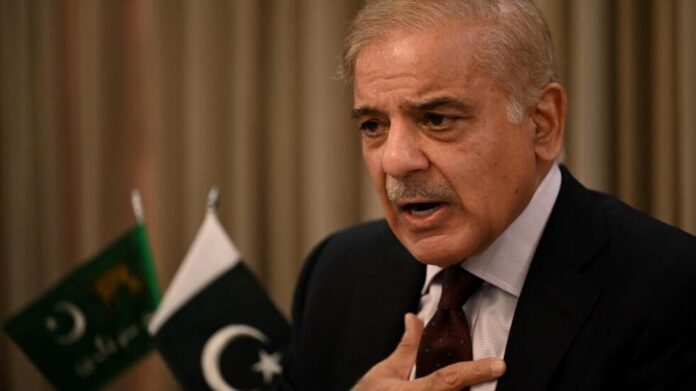
ISLAMABAD, Aug 22 (APP): Prime Minister Shehbaz Sharif has expressed condolences and sympathy for the flood victims in Bangladesh.

In a condolence message on social media X, the prime minister expressed deep distress over the loss of lives and extensive damage caused by the floods in Bangladesh.

The prime minister wrote that Pakistan stands in solidarity with Bangladesh during this tragic time. He expressed confidence that the resilient people of Bangladesh will navigate this challenging period with their usual perseverance and strength.

“I am confident that the resilient people of Bangladesh will overcome this difficult time with characteristic perseverance and fortitude.”

Vital aid supplies running low in Gaza as more Israeli strikes hit schools: UN warns

0
OCHA

UNITED NATIONS, Aug 23 (APP): UN aid teams have warned that vital chlorine supplies that are essential for purifying water are running out and deteriorating in besieged Gaza, while humanitarians condemned new Israeli strikes on schools sheltering people displaced by the war.

There are enough chlorine reserves to last just one month, the UN aid coordination office, OCHA, reported, while double the amount of purifying solution needs to be used to be effective now.

Children are particularly at risk of waterborne diseases and the danger is set to rise during the winter months if Gazans continue to be forced to live in overcrowded shelters lacking adequate water and sanitation facilities, OCHA noted.

The UN agency added that acute shortages of soap for handwashing, laundry powder/liquid and shampoo, and a lack of disinfectants, continue to allow diseases to spread easily.

“Even when these products are available in the market, people cannot afford them,” OCHA said, adding that many Gazans now rely on water trucking operations, with 22 partners now distributing more than 7,000 cubic metres of water daily to 775 registered locations.

In a related development, humanitarian officials condemned another strike on a UN school in Gaza City whose blast could be seen from more than 12 kilometres away.

The strike on Wednesday was the third time that the school has been hit, after strikes in December and July, according to the UN agency for Palestine refugees, UNRWA, which runs the facility.

The UN agency noted that a day earlier, a strike landed at a school-turned-shelter in Gaza City. Children were reportedly killed and injured, and some burned to death, said UNRWA Commissioner-General Philippe Lazzarini.

Since 7 October, more than half of schools used as shelters in the Gaza Strip have been directly hit during the war, according to the UN Children’s Fund, UNICEF.

Seven in 10 UNRWA schools have been hit and over 500 people have been reported killed, with over people 1,700 injured despite being protected under international humanitarian law.

“Yet again, people looking for safety have only been able to find death and destruction. Schools and other civilian infrastructure must never be used by any party to the conflict for military or fighting purposes,” said UNRWA.

Amid a lack of a ceasefire agreement, more than 40,000 Palestinians, mostly women and children, have been killed in Gaza, health authorities say.

In its latest humanitarian update, OCHA warned that repeated displacement, including among children diagnosed with malnutrition, has made it difficult for partners to monitor their progress and for families to carry sufficient supplies to prevent and treat the condition.

Between 3 and 16 August, 26,825 children under the age of five and 12,728 pregnant and breastfeeding women received a 30-day allocation of special nutritional supplements in Khan Younis, Deir Al-Balah and Rafah, from the UN World Food Programme (WFP).

The lack of entry of seeds, fertilizers and other livestock and crop production inputs is also hampering the restoration of local food production in Gaza, OCHA noted.

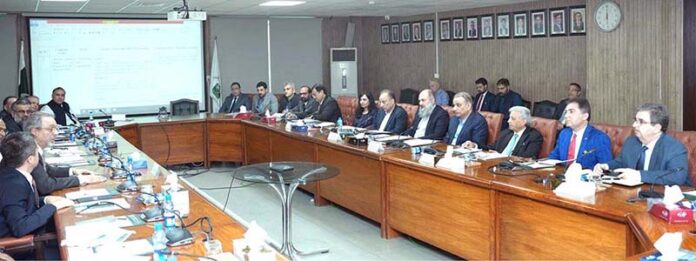
Turkish Ambassador, Dr. Mehmet Pacaci & Business Heads in a meeting with Federal Minister for Board of Investment, Abdul Aleem Khan. Federal Minister for Commerce Jam Kamal Khan, Federal Minister for Industries and Production, Rana Tanveer Hussain and Federal Minister for Petroleum, Dr. Musadik Malik is also present on the occasion

0
Turkish Ambassador, Dr. Mehmet Pacaci & Business Heads in a meeting with Federal Minister for Board of Investment, Abdul Aleem Khan. Federal Minister for Commerce Jam Kamal Khan, Federal Minister for Industries and Production, Rana Tanveer Hussain and Federal Minister for Petroleum, Dr. Musadik Malik is also present on the occasion
APP64-220824 ISLAMABAD: August 22 - Turkish Ambassador, Dr. Mehmet Pacaci & Business Heads in a meeting with Federal Minister for Board of Investment, Abdul Aleem Khan. Federal Minister for Commerce Jam Kamal Khan, Federal Minister for Industries and Production, Rana Tanveer Hussain and Federal Minister for Petroleum, Dr. Musadik Malik is also present on the occasion. APP/TZD/ABB
Turkish Ambassador, Dr. Mehmet Pacaci & Business Heads in a meeting with Federal Minister for Board of Investment, Abdul Aleem Khan. Federal Minister for Commerce Jam Kamal Khan, Federal Minister for Industries and Production, Rana Tanveer Hussain and Federal Minister for Petroleum, Dr. Musadik Malik is also present on the occasion
APP64-220824
ISLAMABAD

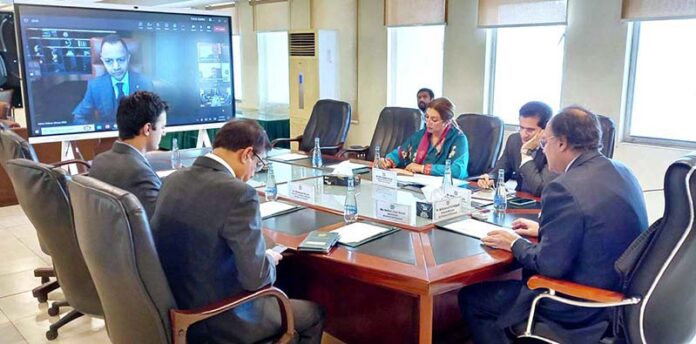
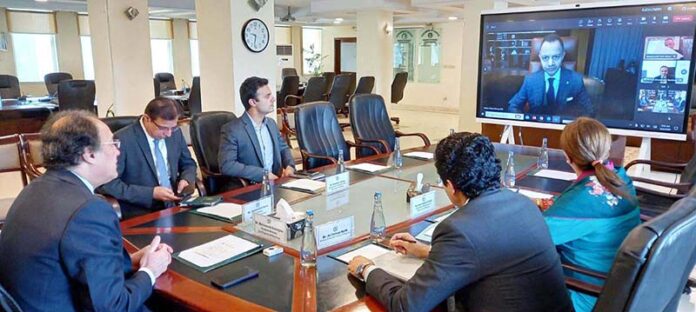
Federal Minister for Finance and Revenue, Senator Muhammad Aurangzeb, in a virtual meeting with Dr. Adnan Chilwan, Group CEO of Dubai Islamic Bank, to discuss Pakistan’s economic trajectory and explore potential avenues for increased investment in the country

0
Federal Minister for Finance and Revenue, Senator Muhammad Aurangzeb, in a virtual meeting with Dr. Adnan Chilwan, Group CEO of Dubai Islamic Bank, to discuss Pakistan’s economic trajectory and explore potential avenues for increased investment in the country
APP63-220824 ISLAMABAD: August 22 - Federal Minister for Finance and Revenue, Senator Muhammad Aurangzeb, in a virtual meeting with Dr. Adnan Chilwan, Group CEO of Dubai Islamic Bank, to discuss Pakistan’s economic trajectory and explore potential avenues for increased investment in the country. APP/TZD/ABB
Federal Minister for Finance and Revenue, Senator Muhammad Aurangzeb, in a virtual meeting with Dr. Adnan Chilwan, Group CEO of Dubai Islamic Bank, to discuss Pakistan’s economic trajectory and explore potential avenues for increased investment in the country
APP63-220824
ISLAMABAD

Federal Minister for Finance and Revenue, Senator Muhammad Aurangzeb, in a virtual meeting with Dr. Adnan Chilwan, Group CEO of Dubai Islamic Bank, to discuss Pakistan’s economic trajectory and explore potential avenues for increased investment in the country

0
APP62-220824 ISLAMABAD: August 22 - Federal Minister for Finance and Revenue, Senator Muhammad Aurangzeb, in a virtual meeting with Dr. Adnan Chilwan, Group CEO of Dubai Islamic Bank, to discuss Pakistan’s economic trajectory and explore potential avenues for increased investment in the country. APP/TZD/ABB
Federal Minister for Finance and Revenue, Senator Muhammad Aurangzeb, in a virtual meeting with Dr. Adnan Chilwan, Group CEO of Dubai Islamic Bank, to discuss Pakistan’s economic trajectory and explore potential avenues for increased investment in the country
APP62-220824
ISLAMABAD

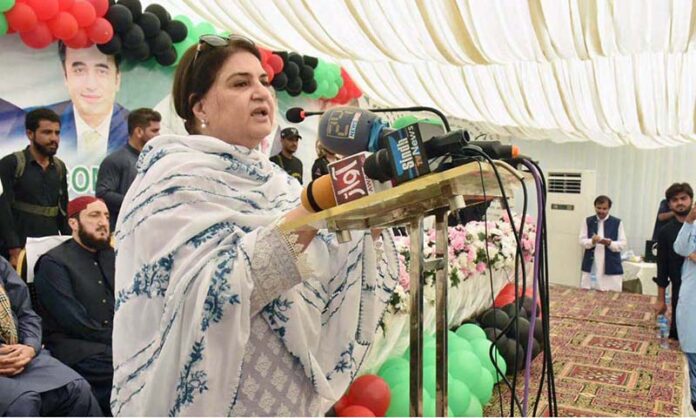
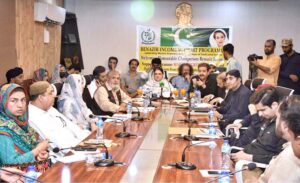
Chairperson BISP Senator Mrs. Rubina Khalid addressing the public gathering at BISP office

0
Chairperson BISP Senator Mrs. Rubina Khalid addressing the public gathering at BISP office
APP60-220824 HUB: August 22 - Chairperson BISP Senator Mrs. Rubina Khalid addressing the public gathering at BISP office. APP/TZD/ABB
Chairperson BISP Senator Mrs. Rubina Khalid addressing the public gathering at BISP office
APP60-220824
HUB
Chairperson BISP Senator Mrs. Rubina Khalid addressing the public gathering at BISP office
APP61-220824
HUB