Ahsan chairs Planning Ministry’s management committee meeting
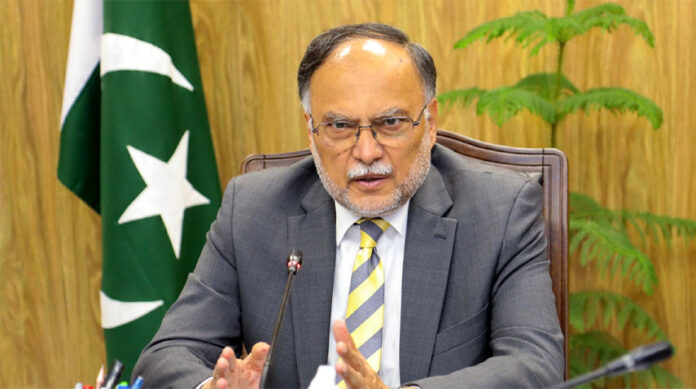
ISLAMABAD, Sep 18 (APP): Minister for Planning, Development and Special Initiatives Ahsan Iqbal on Wednesday chaired a senior management committee meeting to review ongoing projects and performance of departments working under the Planning Ministry.
The minister directed the ministry’s officials, heads of departments and project directors to formulate clear strategies for improving their performance.
He said that the China Pakistan Economic Corridor (CPEC) Center of Excellence would have to be made a center of research so that it could guide the government by providing authentic research-based content for the second phase of CPEC projects.
The minister stressed that committee should regularly hold its meetings.
President rejects IIOJK Legislative Assembly polls
Awareness session on PSQCA’s role for industry on Thursday
DC orders measures to control dengue larvae growth
Over 9kg drugs seized during crackdown
Extensive consultations on constitutional package underway: Tarar
ISLAMABAD, Sep 18 (APP): Federal Minister for Information, Broadcasting, National Heritage and Culture Attaullah Tarar on Wednesday said that extensive consultations with all political parties on the proposed constitutional package were underway.
Talking to the media, he said that all the political parties tried to reach a consensus on the draft bill both inside and outside the Parliament.
The parties on both sides of the aisle in the Parliament had thorough discussions on the constitutional amendments, he added.
Tarar said the role of the Law Minister in the drafting of constitutional amendments and engaging all political forces was highly commendable.
He cited that many countries, including Italy, Germany and Spain, had supreme courts and constitutional courts side by side.
“Constitutional matters go to constitutional courts so that common citizens do not face any obstacles in the way of justice and their cases reach logical conclusion well in time.”
Citing the example of the United States, he said that cases on the Capitol Hill attack were concluded within a span of few months and the culprits were brought to justice. Similarly. Likewise, the perpetrators of London riots had also been punished by the courts.
Unfortunately in Pakistan, he said, the cases related to the May 9 events were still pending. It was a question mark that why the culprits were roaming free, he added.
He said the countries where constitutional courts were operational, the system of timely provision of justice was functioning, with easy evaluation of the judges’ performance.
Tarar quoted Law and Justice Minister Azam Nazeer Tarar stating that his client from Attock had been released after completion of his jail term but still his case was pending in the Supreme Court.
He said that the main objective behind the creation of the constitutional court was to segregate constitutional petitions from criminal, civil and corporate cases. It was the best option to provide speedy justice to the common man, he added.
The minister lamented that the leaders of a party were trying to get political mileage from the situation by demanding release of their leader.
He, however, made it clear that nobody would be allowed to use the issue as a bargaining chip for getting an NRO.
He said that the consultation process was being expanded and Jamiat Ulema-e-Islam-F chief Maulana Fazlur Rahman was being engaged.
The minister clarified that the draft of the constitutional amendments was prepared by the legal team of the Ministry of Law and Justice under the guidance of Law Minister Azam Nazeer Tarar.
The draft had been shared with the Pakistan People’s Party, JUI-F and other parties and discussion was held with the on every section, he added.
The minister said that the creation of a constitutional court was part of the Charter of Democracy. The lawyers bodies had given their stance on the issue, he said.
He reiterated that consultations would continue for building consensus on the amendments. He urged the opposition parties not to create confusion and indulge in speculations as it was a matter of national integrity and constitution.

43 PU professors declared among best researchers worldwide
CIFTIS 2024: China showcases renewable energy shift, pioneering efforts to achieve carbon neutrality
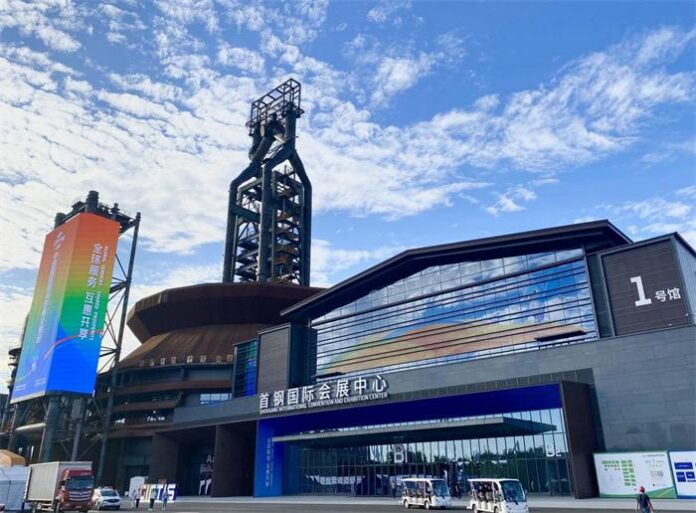
ISLAMABAD, Sep 18 (APP): The exhibition on environmental services was held at the Blast Furnace of Shougang Park during the China International Fair for Trade in Services (CIFTIS) in Beijing from September 12 to 16.
At the forum titled ‘Shougang Blast Furnace Forum-ESG Development’, Academician Liu He, a distinguished figure in China’s energy sector, emphasized the profound significance of the ongoing global shift from traditional fossil fuels to renewable energy for China.
China is advancing its energy transformation with the ultimate aim of achieving its carbon peak and neutrality goals (the dual carbon goals). This relentless pursuit is highlighted in the recently published White Paper titled ‘China’s Energy Transition’, which underscores the nation’s commitment to sustainable development.
“The shift from traditional fossil fuels to renewable energy is of paramount importance to China,” Liu told China Economic Net.
He highlighted that China’s reliance on imported oil and gas presents a challenge to national energy security, making the move toward renewable imperative. “It helps to reduce our dependence on external energy markets and enhances our national energy sovereignty.” The Chinese government has been proactive in supporting this transition.
According to Liu, China has a strong manufacturing base and technological capabilities in photovoltaic and wind power. By 2023, the cumulative installed capacity of photovoltaic and wind power will be 1.05 billion kilowatts, with an annual capacity of 293 million kilowatts. It is also an important global producer and exporter of renewable energy equipment. The country’s exports of wind and photovoltaic (PV) products helped other countries reduce carbon dioxide emissions by about 810 million tons in 2023.
China has been committed to strengthening international cooperation and sharing its experience in energy technology with other countries. For example, China has carried out clean energy projects with countries participating the Belt and Road Initiative. It has also established bilateral energy cooperation mechanisms with nearly 30 countries, covering areas such as technical exchanges and project cooperation.
Liu noted that while the country has made significant strides, challenges remain due to the uneven distribution of resources and the inherent economic constraints of renewable energy technologies. “Economic viability and reasonableness are essential considerations,” he emphasized during the interview, adding that the same issues faced by China are prevalent worldwide.
“We must continuously deepen our efforts and strive towards the goals set forth in the 14th Five-Year Plan,” he said, referring to the national plan’s emphasis on reaching carbon peak targets. The plan outlines clear objectives for reducing carbon emissions, promoting renewable energy sources, and improving energy efficiency.
To achieve the ambitious target of carbon neutrality by 2060, China is committed to driving technological innovation further, increasing the green content and novelty quotient of its energy sector. The nation aims to build a modern energy system characterized by cleanliness, low-carbon, safety, and efficiency by mid-century, aligning with its vision of becoming a fully modernized socialist country.
As China continues to innovate and integrate advanced technologies into its energy infrastructure, it sets an example for other nations pursuing similar pathways towards sustainability. The ongoing efforts not only contribute to the global fight against climate change but also underscore the importance of international collaboration in advancing green energy solutions worldwide.