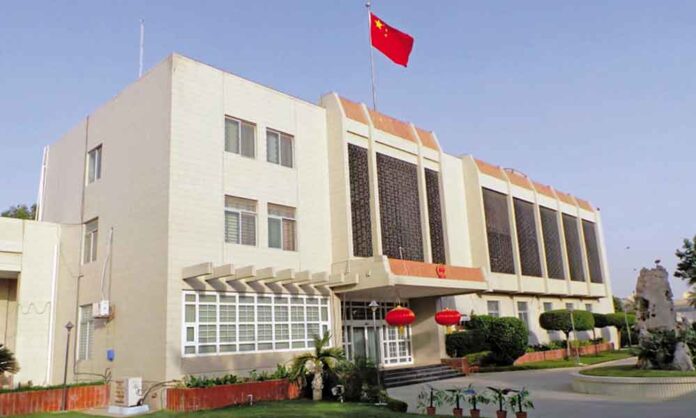
Chinese Consulate organises reception on 75th National Day
PM calls upon developed nations to help developing countries steer out of debt traps
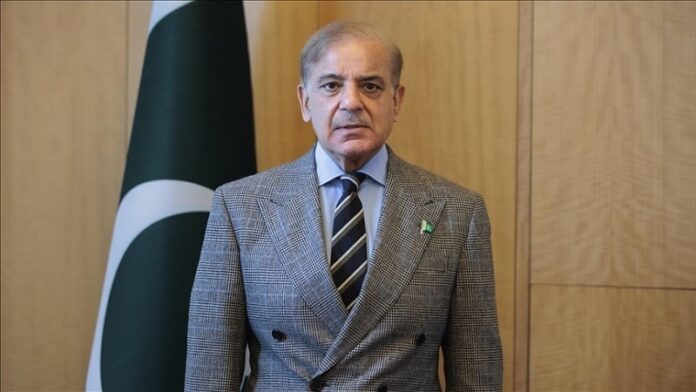
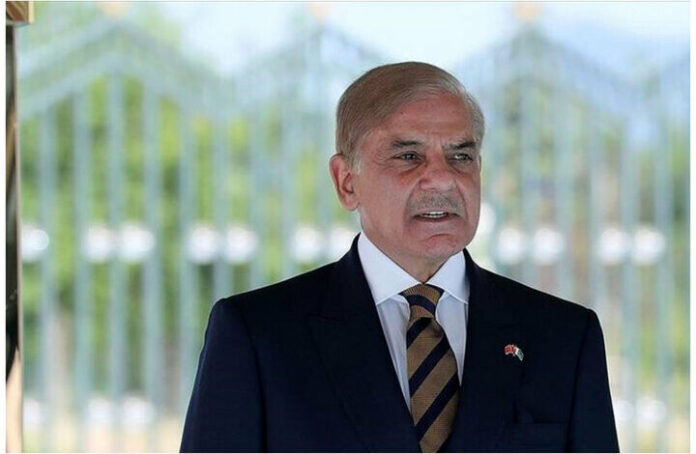
NEW YORK, Sep 24 (APP): Prime Minister Shehbaz Sharif on Tuesday called upon the developed nations to help the developing countries come out of debt traps mainly caused by the climate change related natural disasters.
“In 2022, we had the worst flooding in our history due to climate change and that was not our fault. We do not contribute even a fraction of a percent in terms of carbon emissions”, the prime minister said while addressing the SDG Moment 2024 Meeting on the sidelines of 79th United Nations General Assembly Session.
He said the developed and rich countries were responsible for the emissions and they should take the responsibility and come to the help of the developing societies. “This is very important, otherwise this unbalanced, and unjust unfair system will lead to nowhere,” he stressed.
During floods in 2022, he said Pakistan had to face loss of US$30 billion and “yet we are asked to borrow money, to pay borrowed money and loans”. This vicious circle of debt trap, what he called it a “death trap” will not help at all the developing societies.
The prime minister pointed out that the financing gaps of Sustainable Development Goals (SDGs) run into trillions of dollars as the developing countries like Pakistan had to struggle to raise funds in that regard.
As regards, terrorism in the country, he said Pakistan faced terrorism in worst form after 9/11 that was pushed from across the border in which some 80,000 Pakistanis were martyred.
“Finally we have been able to beat them (terrorists), but we lost US$150 billion in the process,” he added.
PM Shehbaz Sharif, while highlighting his efforts to promote education first in Punjab as Chief Minister and then in the entire country as the prime minister, said he had transformed the education system.
“I have introduced multiple initiatives to promote education and empower those segments of society which could not afford education for their children, for example Punjab Endowment Education Fund (PEEF) provides voucher scheme for girls and boys to get admission in schools in remote areas.”
PEEF, probably the largest fund in South Asia, he added benefited hundreds of thousands of children who were high achievers but came from very poor background. It provided stipends to the students to get education wherever they wanted in the country or abroad.
He said he also set up Danish Schools which were only for talented poor and orphan children. The schools with beautiful buildings were equipped with smart boards, besides quality teachers, books, and bags etc and many of their students were now serving the country as doctors, engineers and scientists, he added.
He said his government also started vocational training in the education institutions besides initiating a skilled development programme.
However, he regretted that still there were some 25 million out of school children in the country and steps were underway to get them enrolled.
Role of private sector critical in benefiting from country’s renewable energy potential: Romina
RAWALPINDI, Sep 24 (APP): Prime Minister’s Coordinator for Climate Change and Environmental Coordination, Romina Khurshid Alam on Tuesday said the role of the private sector in promoting renewable energy was very important as it would reduce environmental pollution and help to cope with the effects of climate change.
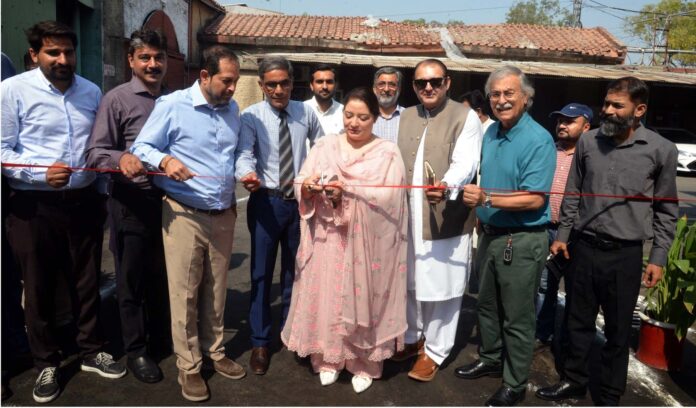
He expressed these views while inaugurating a 120 KW solar power project at a private beverage manufacturing factory in Rawalpindi.
The Prime Minister’s Coordinator on Climate Change said that Pakistan is paying a heavy price due to the adverse effects of climate change on various socio-economic sectors, especially agriculture, energy and water, and addressing these adverse effects is the potential of the industrial and private sector which is impossible without assistance.
She said that as the effects of climate change are becoming increasingly evident, the private sector in Pakistan can play an important role in reducing carbon emissions due to climate change and promoting sustainable business practices.
Romina Khurshid Alam said that businesses in various industries in the country have started realizing their responsibility to reduce carbon emissions, but efforts need to be accelerated to contribute to the green future of the country.
The Prime Minister’s Aide said that private sector involvement is essential not only to achieve carbon reduction targets but also to achieve wider economic and social benefits in the fight against climate change in line with the government’s green and clean energy policies and programmes.
Briefing Prime Minister’s Coordinator Romina Khurshid Alam, a senior representative of the beverage firm said that the solar energy project will generate 166,440 units per year to electrify beverages, which will help plant 7,000 trees annually.
Trapping 150 metric tons of heat per year will help reduce carbon emissions. Appreciating the private beverage firm for the installation of 120 KV solar power project, he said that the performance of the beverage firm as well as the responsible role towards the environment is an example for other private sector businesses and industries across the country. Must be an impressive move.
He urged the private sector to take the lead in investment by participating in the production of renewable energy projects that reduce dependence on fossil fuels.
He also highlighted the importance of private public partnership to promote green energy projects in the country, saying that cooperation between the private sector and public institutions in the country is very important to deal with climate change, which joint actions of resources. can enhance distribution, technology transfer and capacity building.
Romina Khurshid Alam also informed that by promoting sustainable products and practices, businesses can influence consumer behavior and make low carbon choices among the public to encourage change.
She said that by embracing innovation, implementing sustainable practices and collaborating with stakeholders, businesses can lead towards a greener and better future.
NA body examines national health challenges
ISLAMABAD, Sep 24 (APP): The National Assembly Standing Committee on National Health Services, Regulations and Coordination on Tuesday examined the national health challenges and response measures.
The meeting chaired by Dr. Mahesh Kumar Malani, MNA convened to assess the country’s preparedness and response to emerging health threats including the Monkeypox virus and the resurgence of polio in the country.
The Ministry of Health briefed the committee on the ongoing monitoring and prevention measures for the recent outbreak of Mpox, following its classification as a public health emergency by the World Health Organization (WHO).
The ministry briefed that surveillance at airports had been enhanced with additional health personnel on duty to monitor and manage any potential cases of Monkeypox in the country.
The ministry reassured the commitment of the government’s comprehensive screening mechanisms at airports and border checkpoints to mitigate the virus’s spread in the country.
The committee also discussed the resurgence of polio cases in Pakistan with an alarming data presented on new polio clusters, particularly in regions bordering Afghanistan.
The ministry highlighted that the rise in environmental samples testing positive for the virus, from 1% in 2023 to 25% in 2024, signaled an intensified transmission risk.
The committee expressed concerns over gaps in routine immunization coverage in various provinces which had contributed to the uptick in polio cases.
The number of infected districts rose dramatically from 14 in 2023 to 67 in 2024 necessitating urgent action to strengthen vaccination efforts.
The ministry highlighted the ongoing challenges in controlling polio in the South Khyber Pakhtunkhwa, Quetta and Karachi blocks.
Despite comprehensive nationwide efforts these areas faced significant hurdles in complete polio eradication from the country.
The committee was informed that Pakistan faces approximately 600,000 new tuberculosis (TB) cases every year, yet there was no significant domestic funding to address the issue.
Despite the challenges posed by shifting political landscapes and changing governments, the Parliamentary Caucus on TB played a crucial role in maintaining focus on TB prevention and treatment efforts.
It was emphasized that provincial governments should be actively engaged through the committee members to prioritize the issue of tuberculosis.
The committee urged its members to advocate for greater attention and resources at the provincial level, ensuring that the fight against TB becomes a top priority in regional health agendas.
The meeting was attended by MNAs, Dr. Shaista Khan, Dr. Shazia Sobia Aslam Soomro, Ms. Sabheen Ghoury, Ms. Farukh Khan, Dr. Nikhat Shakeel Khan, Ms. Aliya Kamran, Dr. Amjad Ali Khan, Dr. Darshan, Mir Aijaz Hussain Jakhrani, Shahram Khan, Nisar Ahmed, Dr. Azim ud Din Zahid and Muhammad Shabbir Ali Qureshi.
The meeting included participation of Dr. Malik Mukhtar Ahmad Bharath, Coordinator to the Prime Minister on National Health Services, Regulations and Coordination, along with senior officials from the Ministry.
Three matches conclude in PCB Senior Inter-District cricket tournament
KARACHI, Sep 24 (APP): Three matches were decided in the PCB Senior Inter-District Cricket Tournament in the Karachi region. Zone VI, Zone II, and a thrilling tie between Zone IV and Zone VII were the key outcomes of the day.
In the first match, Regional Cricket Association (RCA) Zone VI secured a commanding 371-run victory over RCA Zone I at the RLCA Ground Gulberg. Zone VI was bowled out for 219 runs in the first innings, with Akbar ur Rahman contributing 66 runs, and Abdul Rahman adding 49. Bahadur Ali’s 4-22 and Umar Zahid’s 3-57 were the standout bowling performances.
In response, Zone I was dismissed for 98 runs, struggling against the bowling of Tariq Khan (4-32) and Saifullah (3-20). In the second innings, Arbaz Khan’s brilliant century (115) helped Zone VI declare at 386 runs. Chasing 507, Zone I managed only 136 runs, with Saifullah (4-32) leading the attack once again.
The second match at Landhi Gymkhana saw Zone II edge out Zone V by just 5 runs in a nail-biting finish. Zone II was bowled out for 154 in the first innings, with Wahaj Riaz scoring 66. In reply, Zone V was dismissed for 153, with Jawad Mehmood top-scoring with 40.
In the second innings, Zone II declared at 279-9, with notable contributions from Wahaj Riaz (54) and Hamza Sarwar (47). Zone V fell just short in their chase, bowled out for 275 despite Arsalan Bashir’s 66 and Moazam Malik’s 47.
The third match at KCCA Stadium between Zone IV and Zone VII ended in a tie. Zone VII posted 186 runs in their first innings, with Waqar Ahmed top-scoring with 66. Zone IV replied with 135, as Aftab Khan (4-35) and Fawad Khan (3-30) restricted their efforts.
In Zone VII’s second innings, Naimat Khan took 5-45, helping to dismiss them for 112. Zone IV, chasing 164, was bowled out for 163, with Fawad Khan taking a remarkable 7-38, finishing with ten wickets in the match. Yasir Mushtaq’s unbeaten 77 was the highlight of the chase, but it was not enough to secure a win.
These exciting matches continue to shape the competitive landscape of the PCB Senior Inter-District Tournament.
Newspaper reading key to combating fake news: PM
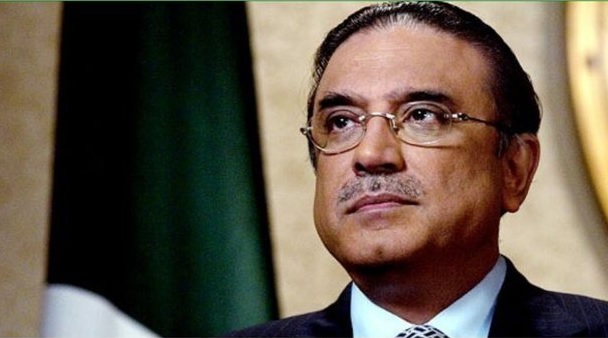
Zardari underlines importance of newspapers in supporting democracy, human rights
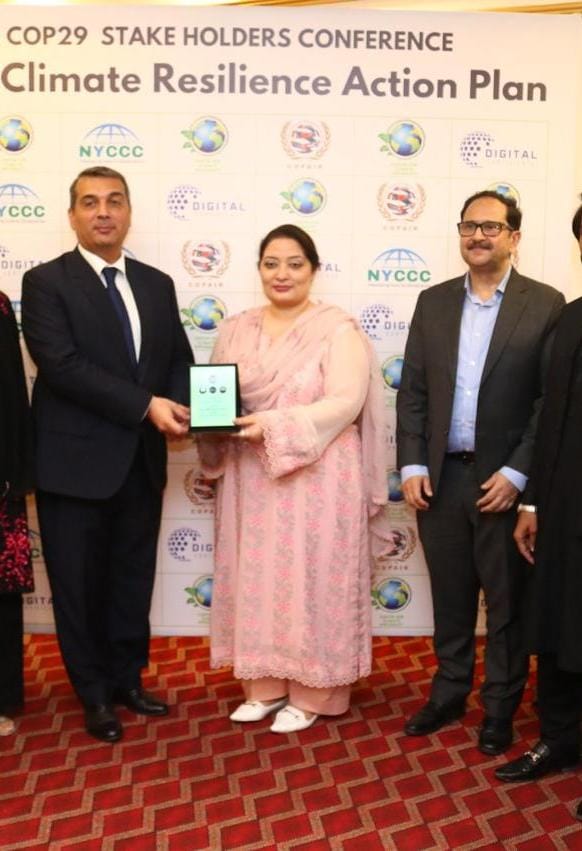
Pakistan proactive player in global Climate Dialogue, Action: Romina
ISLAMABAD, Sep 24 (APP): Coordinator to the Prime Minister on Climate Change and Environmental Coordination, Romina Khurshid Alam on Tuesday reaffirmed Pakistan’s commitment to implementing the National Climate Action Plan, aiming to mitigate climate disaster risks through collective efforts as a proactive player in the global climate dialogue and action.
She was addressing as chief guest at the Pre-COP 29 Stakeholders Conference on Climate Diplomacy and Cooperation to Enhance Ambition and Enable Action held here, a news release said.
She recognized the crucial role of the media and civil society, particularly the Centre for Climate Diplomacy, in advocating for climate justice.
Ambassador of Azerbaijan Khazar Farhadov talked about his country’s preparation for successful and inclusive COP29. He emphasized about initiatives that have been launched by COP29 Presidency to focus global attention and accelerate climate action, including COP29 Truce Appeal.
Dr. Zafar Jaspal highlighted the significant threat climate change poses to human security and the critical role of science diplomacy. Senator Sitara Ayaz and Director General of Environment, Farzana Altaf, identified challenges in policy implementation and offered guidelines for environmental protection.
Bilal Anwar, CEO of NDMRF, underscored the importance of advocating for climate justice and financing, while also highlighting the need for public-private partnerships to drive innovative climate adaptation solutions. Umair Mufakir NYCCC shared key elements of Pakistan’s national climate action plan.
Amna Awan, President of the Centre for Climate Diplomacy, extended gratitude to the attendees for their valuable contributions.