NBP Exchange Rates
Pakistan, Iraq agree to enhance mutually beneficial cooperation
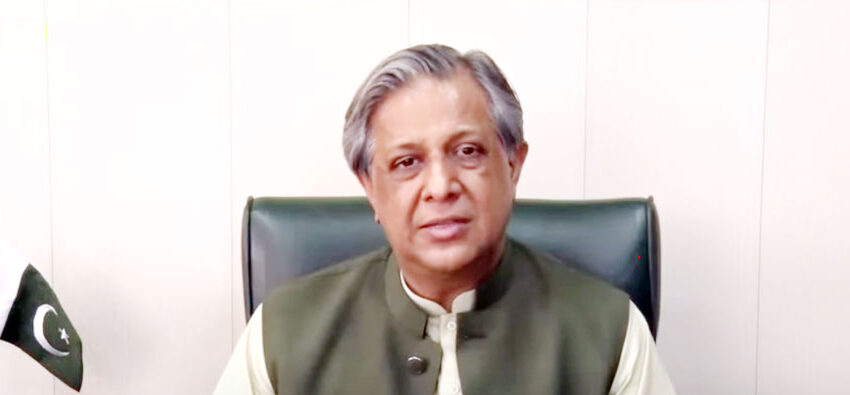
NEW YORK, Sep 27 (APP): Pakistan and Iraq on Friday agreed to further deepen and broaden the scope of existing bilateral ties and exploit the potential of enhancing mutually beneficial cooperation between both countries.
The bilateral ties were discussed in a meeting between Prime Minister Muhammad Shehbaz Sharif and his Iraqi counterpart Mohammad Shia’ Al Sudani on the sidelines of the 79th Session of the United Nations General Assembly here.
The prime minister lauded the cordial ties between the two brotherly countries, reinforced by strong historical, cultural and religious affinities.
He also commended the excellent arrangements made by the Government of Iraq for the Pakistani pilgrims.
The two leaders also exchanged views on regional and international issues of mutual interest.
They noted with grave concern the ongoing Israeli carnage on Gaza and the ensuing humanitarian catastrophe.
Prime Minister Shehbaz Sharif reiterated Pakistan’s call for an immediate ceasefire in Gaza and holding Israel accountable for the Gaza genocide.
Underscoring the commonality of views on international issues, both the leaders resolved to reinforce the international efforts both at the UN and OIC platforms for immediate ceasefire in Gaza, and unimpeded supply of humanitarian assistance to Palestinian brethren.
At UN, Pakistan debunks India’s accusations of terrorism, points to Delhi’s global franchise of murders
UNITED NATIONS, Sep 27 (APP): Pakistan on Thursday firmly rejected India’s allegations of involvement in terrorism, saying it was ironic for a country that uses the menace as an instrument of state policy against its neighbours to point fingers at others.
“It is surprising to see that this country is lecturing on terrorism when it is itself a state sponsor of terrorism, running a global franchise of assassination campaigns,” Pakistani delegate Gul Qaiser Sarwani told the UN Security Council while responding to the charges leveled by India’s External Affairs Secretary Tanmaya Lal.
The Indian representative, who was was reacting to Prime Minister Shehbaz Sharif’s speech during the Council’s debate on ‘Peace for Leadership’ in which the Pakistani leader called for effectively addressing the resurgence of the terrorist threat from Afghanistan, especially from Daesh (ISIL-K) and Fitna al-Khawarij. “The council must call for a halt to the massive violations of the fundamental rights of Kashmiri people and implement its own resolutions that demand a plebiscite for self-determination in Kashmir valley,” the prime minister added.
Responding to the prime minister’s comments, the Indian delegate accused Pakistan of supporting the elaborate terror ecosystem, training and harbouring global terrorists, saying, “It is high time Pakistan ends occupying and commenting other’s territories.”
Exercising his right of reply, Sarwani, the Pakistani delegate, accused India of distorting facts and propagating a false narrative, not only to malign Pakistan, but also to divert attention from it’s internal challenges and grave violations of international law.
“Apart from its state terrorism against defenceless people of Indian illegally Occupied Jammu and Kashmir, India is sponsoring terrorism against Pakistan,” Sarwani said.
Pakistan, he said, has solid evidence of Indian sponsorship of Tehreek-e-Taliban Pakistan (TTP) and Balochistan Liberation Army (BLA), who have been involved in multiple terrorist activities against civilians and military targets across Pakistan.
“The arrest and conviction of Kulbhushan Jadhav, a serving Indian naval officer and an operative of India’s intelligence agency RAW, is irrefutable evidence of India’s state-sponsored terrorism against Pakistan, including targeted assassinations in Pakistan,” the Pakistani delegate went on.
‘Now, the Indian terrorist franchise has gone global with assassinations and attempted murders of political dissidents on North American soil,” he said, adding: “India must end its state-sponsored terrorism, cease its illegal occupation of Jammu and Kashmir, and fulfill its obligations under international law.
Sarwani added, “India must be held accountable for its terrorist activities. India’s actions must not go unpunished, and the international community can no longer afford to grant India impunity.”
As regards Kashmir, the Pakistani delegate said that the Kashmir dispute was on the agenda of the Security Council whose resolutions decided that the final disposition of Jammu and Kashmir shall be determined by its people through a UN-supervised plebiscite.
“Let me reaffirm that Jammu and Kashmir is an internationally recognized disputed territory. It never was, nor is a part of India or its internal matter,” Sarwani declared.
87 new dengue cases reported across Punjab
Galiyat valley breaks records with 1 Million eco-tourists: DG GDA
IRSA releases 190,200 cusecs water
Foreign exchange rates
Several injured in Mianwali in bus-trailer collision
Canadian cricketers defeat Oman by five wickets in ICC World Cup Cricket League 2
Pakistan urges OIC to boost efforts for ‘just’ settlement of Kashmir dispute based on UN resolutions
UNITED NATIONS, Sep 27 (APP): Pakistan has called on the Islamic Cooperation Organization (OIC) to scale up its efforts for the mitigation of the Kashmiri people’s sufferings and finding a just settlement of the Jammu and Kashmir dispute in accordance with United Nations resolutions that grant the Kashmiri people the right to self-determination.
Speaking to OIC’s Contact Group on Jammu & Kashmir, which met on the sidelines of the 79th session of UN General Assembly, Defence Minster Khawaja Mohammad Asif underscored the need for the 57-member organization to transform its pronouncements on the decades-old dispute into “tangible actions.”
“The OIC and its Member States should use their influence to urge India to improve the human rights situation in Kashmir; release the political prisoners; repeal draconian emergency laws; remove military presence from populated areas; and implement the relevant UN Security Council resolutions,” Khawaja Asif added.
The five-member group’s state members, besides Pakistan, who were present were : Turkiye’s Deputy Foreign Minister Nuh Yilmaz, Azerbaijan’s Deputy Foreign Minister ELnur Mammadov, Saudi Arabia’s Minister Plenipotentiary at Foreign Ministry, Ambassador Haitham Al-Aalki, and Niger’s Director of International Organizations at the Foreign Ministry, Hama Knsaye Souleymane. the meeting was presided over by OIC Secretary-General Hissein Brahim Taha.
Dr. Ghulam Nabi Fai, Secretary-General of the World Kashmir awareness forum, attended in his capacity as a True Representative of the People of Jammu and Kashmir.
The group members supported the Kashmir cause and called for a peaceful settlement of the dispute between India and Pakistan.
In his opening remarks, Defence Minister Khawaja Asif emphasized that for lasting peace in South Asia, the Kashmir dispute needs to be resolved in accordance with the UN Security Council Resolutions and aspirations of the Kashmiri people.
In the last 77 years, he told group members, India has tried different methods to consolidate its occupation, but since 5 August 2019 New Delhi had intensified its campaign to “Indianize” Kashmir, and transform its people into a disempowered community.
In the last five years, Khawaja Asif said the Indian authorities have taken a series of legislative, judicial and administrative steps, aimed at altering the demographic structure and political landscape of Kashmir, including gerrymandering of the electoral constituencies, allowing the addition of non-Kashmiris to voter rolls, issuance of domicile certificates to outsiders, giving Lt. Governor more powers in administrative matters, and introduction of new laws on ownership of land and property.
To crush dissent, he said, the Indian authorities have created an environment of fear and intimidation, with draconian laws, such as Public Safety Act (PSA), Armed Forces Special Powers Act (AFSPA) and Unlawful Activities (Prevention) Act (UAPA) offer impunity to the Indian forces to arrest or kill any person and destroy any property. Since 5 August 2019, 914 Kashmiris have been killed and another 2447 injured or tortured, with the number of political prisoners remaining in thousands and properties of Kashmiri activists being confiscated as a punishment.
The Indian authorities have outlawed 14 political parties under a counterterrorism law, the Unlawful Activities (Prevention) Act, the defence minister said, adding that the office of All Parties Hurriyat Conference (APHC) in Srinagar has also been seized.
Eid prayers at Srinagar’s historic Jama Masjid have not been allowed for the last five years, with Friday prayers also prohibited from time to time, he said. The chief cleric at the Mosque and a renowned Kashmiri leader, Mirwaiz Umar Farooq, is intermittently placed under house arrest, denying him the opportunity to lead the Friday prayers.
Noting curbs on media, the defence minister said the Srinagar Press Club has remained shut since 2020, with the elections of Jammu and Kashmir Bar Association not allowed, and one of its former Presidents, Miyan Abdul Qayyum, arrested for his defiant political views.
International human rights organizations and civil society have extensively documented human rights violations, Khawaja Asif said, adding that the Human Rights Committee had urged India to ensure that the counterterrorism legislation is not applied to crackdown on human rights defenders, journalists, peaceful protesters and political opponents, and to investigate cases of arbitrary detention, and punish the perpetrators.
Regarding local elections that are taking place in Indian Occupied Kashmir in three phases, Khawaja Asif said, “While India is claiming that such steps show its commitment towards democratic norms, let me emphasize that any electoral exercise, pursuant to the Indian Constitution, cannot serve as a substitute to grant of the right to self-determination.
“In the eyes of international law, any process, subservient to the Indian Constitution, cannot be invoked to determine the final status of Jammu and Kashmir, which is an internationally recognised disputed territory”, he added.
“As Jammu and Kashmir is an international dispute, the Indian government or its judiciary have no right to take unilateral measures against the will of the other parties to the dispute i.e. Kashmiri people and Pakistan.”
Undoubtedly, the minister said India’s actions of 5 August 2019, and the subsequent steps ever since, constitute a breach of the UN Charter, UN Security Council resolutions, and international law, including the 4th Geneva Convention.
Pointing out the Indian leaders’ unwarranted claims about the territories of Azad Jammu and Kashmir and Gilgit-Baltistan, he said their frequency increased amid the elections.
“While Pakistan is acting in a responsible manner and upholding the ceasefire on the Line of Control (LoC), the Indian leaders’ irresponsible statements constitute a threat to regional peace,” Khawaja Asif said. “The international community, especially the members of this Contact Group, should take cognizance of such statements, which are also contrary to the UN Charter.”
As the institutional embodiment of the collective aspirations of the Muslim Ummah, he said, OIC’s pronouncements on Jammu and Kashmir are a major source of support to the Kashmir Cause.
“The people of Pakistan and Kashmir highly value such resolutions”. the minister said, emphasizing that the OIC should transform its pronouncements into tangible actions.