MULTAN: September 30-

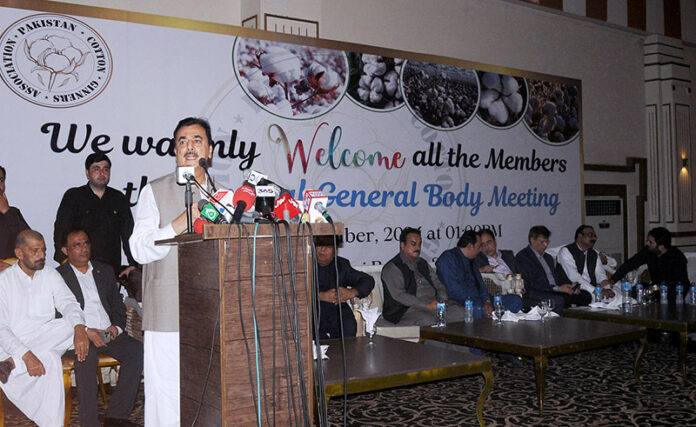
MULTAN: September 30- Chairman Senate Syed Yousaf Raza Gillani administers the oath of office bearers for the Pakistan Cotton Ginners Association during a formal ceremony in the city.
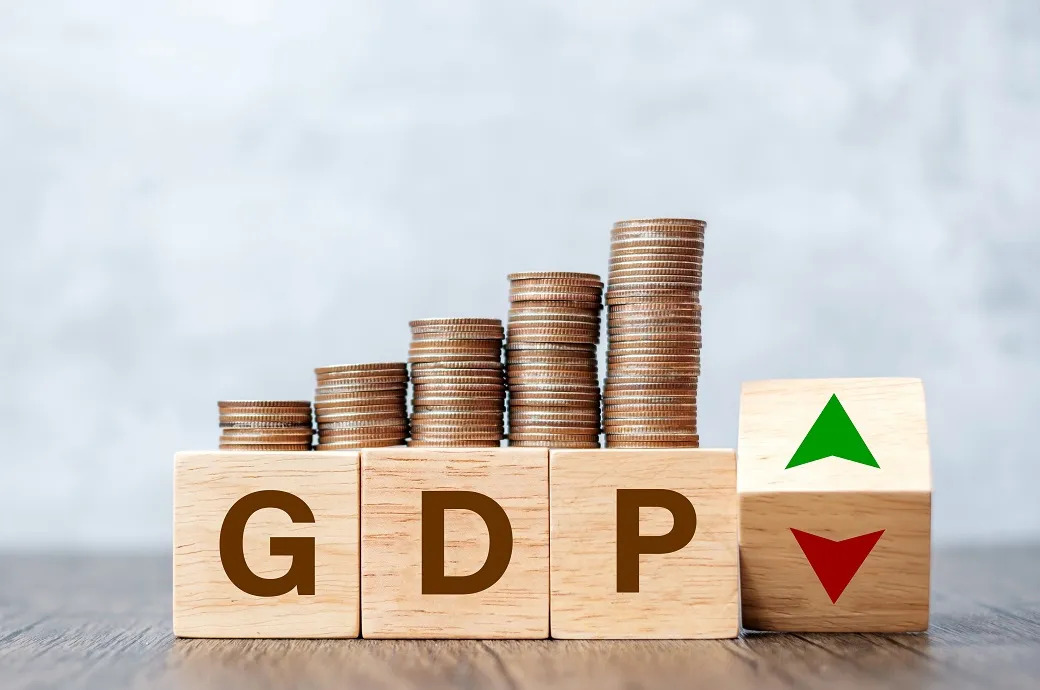
ISLAMABAD, Sep 30 (APP): The National Accounts Committee (NAC) on Monday approved revised quarterly Gross Domestic Product (GDP) growth rates for the fiscal year 2023-24, reflecting a significant improvement in the country’s economic performance.
“The updated provisional and revised growth rates for FY 2023-24 and FY 2022-23 are 2.52% and -0.22% compared to 2.38% and -0.21% approved in the previous NAC meeting,” according to a news release.
The updated figures were ratified during a committee meeting at the Pakistan Bureau of Statistics (PBS), chaired by Awais Manzur Sumra, Secretary of the Ministry of Planning, Development and Special Initiatives.
According to the revised estimates, the GDP growth rates for Q1, Q2, and Q3 have been adjusted to 2.69%, 1.97%, and 2.36%, respectively, from previously reported figures of 2.71%, 1.79%, and 2.09%. The Q4 growth rate is recorded at 3.07%.
The revised growth rates in the agriculture sector during Q1 (8.64% vs. 8.59%) and Q2 (6.12% vs. 5.83%) have improved, while growth in Q3 has slightly declined from 3.94% to 3.92%.
Industrial activities have shown downward revisions in all three quarters: Q1 from -2.44% to -2.66%, Q2 from 0.09% to -1.15%, and Q3 from 3.84% to 2.83%, mainly due to downward revisions in annual benchmarks for the electricity, gas, water supply, and construction industries.
While Q1 growth in services has remained stable at 2.03% (compared to 2.02%), both Q2 (from 0.75% to 1.33%) and Q3 (from 0.83% to 1.60%) have seen upward revisions due to improvements in annual benchmarks in wholesale and retail trade (WRT), transportation and storage, and information and communication industries.
“The economy has posted stable growth of 3.07% during Q4 of FY 2023-24,” the press release added.
The growth in agriculture, industry and services stood at 6.76%, -3.59%, and 3.69%, respectively.
During Q4, crops posted a double-digit growth of 14.03%. The growth rate in important crops is 26.98%, primarily due to wheat (31.58 million tons) and partly due to the low base effect of the corresponding quarter, which experienced a decline of -7.93% during Q4 of FY 2022-23.
Due to a decline in fruits, Q4 growth in other crops was negative at -1.53% compared to -0.64% last year. Livestock grew at 3.98% compared to 4.31% in Q4, while a high base effect of 15.12% resulted in negative growth of -0.35% in forestry.
Despite positive growth in large-scale manufacturing (4.19% vs. -19.5%), other industry components, such as mining and quarrying (-5.32% vs. 1.22%), electricity, gas, and water supply (-35.57% vs. 9.15%), and construction (-0.47% vs. -20.46%), registered negative growth rates during Q4.
Although the finance and insurance sector reported a negative growth of -2.55% and public administration and social security -0.18%, the overall growth in services remained positive (3.69%) during Q4 2023-24, driven by wholesale and retail trade (4.79%), transportation and storage (2.11%), information and communication (7.95%), education (9.04%), human health and social work activities (5.86%), and other private services (3.38%).
In the updated estimates for 2023-24, the industrial sector has declined by -1.15% compared to an earlier estimate of 1.21%.
There is a downward revision in mining and quarrying from 4.85% to 3.47% due to gas (-2.22%) and coal (-2.10%) decreases.
Large-scale manufacturing, based on the Quantum Index of Manufacturing (QIM), has improved to 0.91% (July-June QIM) from 0.07% (July-March QIM), with increases in food (from +1.69% to +1.73%), wearing apparel (from +5.41% to +8.24%), and coke and petroleum (from +4.85% to +9.81%).
The updated growth in the services sector remained at 2.15% compared to 1.21%, with significant improvements in WRT (3.39% vs. 0.32% due to increases in LSM and imports), transport and storage (1.91% vs. 1.19% due to railways, KPT, PIA, and CAA), and information and communication (0.30% vs. -3.02% due to IT exports). However, growth in some industries has declined, such as finance and insurance (-10.67% vs. 9.64%), public administration and social security (-7.26% vs. -5.25%), education (8.55% vs. 10.30%), and human health and social work (5.55% vs. 6.80%).
The committee commended the efforts of the National Accounts team at the Pakistan Bureau of Statistics and key stakeholders in preparing the quarterly GDP estimates.


APP28-300924
KARACHI: September 30- Pakistan’s cricket captain, Shan Masood, addresses the media during a press conference at the National Stadium in Karachi, sharing his thoughts ahead of the highly anticipated cricket Test series against England.



ISLAMABAD, Sep 30 (APP): An Accountability Court (AC) on Monday acquitted former Senate deputy chairman Saleem Mandviwala and others in the Kidney Hills reference.
Accountability Court Judge Nasir Javed Rana approved the application of National Accountability Bureau (NAB) and returned the reference.
The NAB, in its plea, stated that Mandviwala had no connection with the case. Moreover there was no loss to the government treasury, rather it was a private party which suffered the losses.
The Bureau pleaded the court to acquit the accused.
The NAB said that the reference was filed on January 19, 2021 against seven accused. The matter was presented before its executive board in September (2024), which reached a conclusion that the reference could not be made as per the facts, it added.
The court, subsequently, approved the request of NAB and acquitted the seven persons.

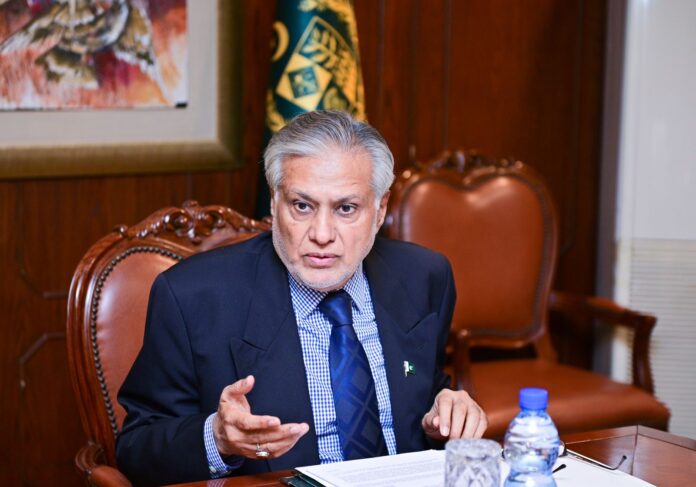
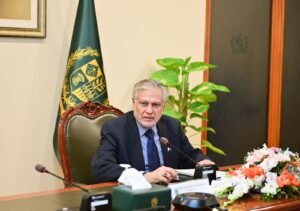
ISLAMABAD, Sep 30 (APP): Deputy Prime Minister, Foreign Minister Muhammad Ishaq Dar on Monday chaired an inter-ministerial to review preparations for the forthcoming 12th Session of Joint Ministerial Commission (JMC) with the United Arab Emirates.
The JMC will be held in Abu Dhabi in October, a press release said.
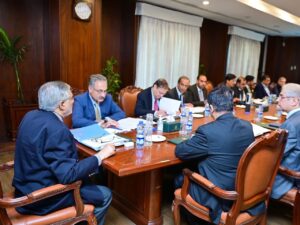
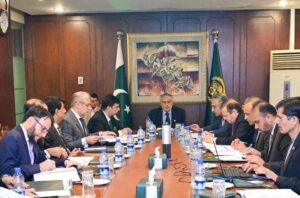
Separately, the deputy prime minister and foreign minister also chaired the 4th meeting of the committee established by the prime minister on addressing key exploration and production sector issues, including circular debt resolution and re-gasified liquefied natural gas price rationalization.





Serving the nation since 1947 by providing an accurate, objective, uninterrupted flow of news to the people, the national news service is pursuing a comprehensive strategy to transform the existing news operations into a forward-looking service – APP Digital for its diverse subscriber-base and the public.
Contact us: news@app.com.pk
Copyright © Associated Press of Pakistan