Home Blog Page 67

Balochistan govt accelerates province-wide digital financial reforms

0
QUETTA, Dec 23 (APP): The Balochistan government has intensified efforts to modernize its financial management system through comprehensive digital reforms.
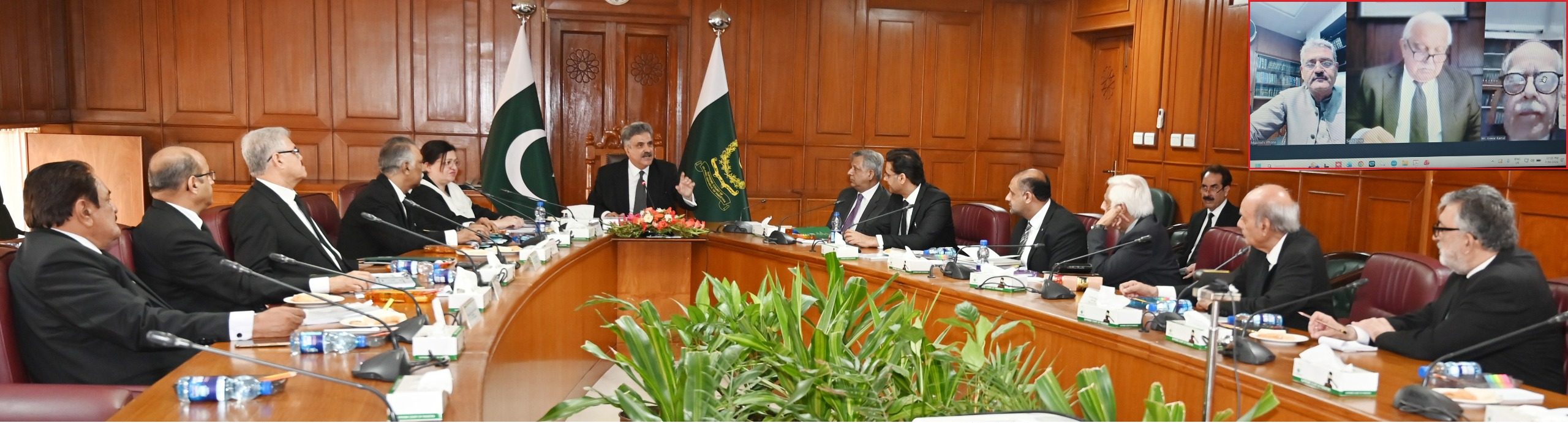
Chief Secretary Balochistan, Shakeel Qadir Khan, presided over a high-level review meeting that focused on assessing progress and outlining the future roadmap for the implementation of a Digital Financial Management System across all provincial departments, authorities, and autonomous bodies.
Director General Gwadar Development Authority (GDA), Moin-ur-Rehman Khan, attended the session via video link.
Balochistan presented detailed briefings, informing participants that all autonomous institutions in the province are being integrated into a unified digital platform in coordination with the Finance Department.
 Under this initiative, all such institutions are being shifted to the Integrated Financial Management Information System (IFMIS).
According to the briefing, departments will be required to prepare and upload their budgets through IFMIS. All financial transactions including salaries, pensions, non-salary expenditures, and development spending will be processed exclusively through the system. Payments to employees, pensioners, vendors, and service providers will be made via the State Bank of Pakistan’s Micro Payment Gateway, ensuring transparency and efficiency.
Additionally, an online billing solution, similar to that used by the provincial government, will be introduced across all autonomous bodies.
The meeting was further informed that the implementation of the SAP-ERP system is set to begin in selected institutions, including the Gwadar Development Authority, from December 2025. Relevant departments have already been instructed to provide human resource and financial data to facilitate the timely and effective rollout of the system.
Addressing the participants, Chief Secretary Shakeel Qadir Khan directed all departments, authorities, and autonomous institutions to thoroughly review the proposed reforms and take immediate practical steps.
He emphasized the submission of compliance reports to the Finance Department within the stipulated timeframe, stating that digitization of the financial system would significantly enhance transparency, efficiency, and accountability.
DG GDA Moin-ur-Rehman Khan assured the meeting of full cooperation from the Gwadar Development Authority, affirming that all required data and support would be provided promptly to ensure successful implementation of the digital reforms.
The meeting concluded with a consensus to accelerate the government’s vision of fully digitizing government-to-person (G2P) and person-to-government (P2G) payments across Balochistan, marking a major step toward modern governance and financial transparency in the province.

Death sentence awarded to killer

0
BUREWALA, Dec 23 (APP): An Additional Sessions Court in Burewala announced its verdict in a double murder case, sentencing the accused to death on two counts along with substantial fines.
Additional Sessions Judge Mohsin Ali delivered the judgment in a three-year-old case registered at Fateh Shah Police Station. The accused, Khizar, was sentenced to death twice for killing two individuals and was also fined a total of Rs 500,000.
The court further sentenced the convict to five years in prison with a fine of Rs 100,000 for attempted murder, and one year’s imprisonment with a fine of Rs 10,000 under Section 337-F(1).
The court ordered that in case of non-payment of fines, the accused would be required to undergo additional imprisonment.
According to the prosecution, Khizar killed his stepmother, Shehbaz Bibi, and his stepbrother, Azhar, over a land dispute three years ago. He also shot and seriously injured his father, Dost Muhammad. The case was registered at Fateh Shah Police Station.

Cabinet Committee endorses proposed price for sale of 75% PIA shares

0

ISLAMABAD, Dec 23 (APP): The Cabinet Committee on Privatization (CCoP) on Tuesday approved the recommendations of the Privatization Commission regarding the divestment of Pakistan International Airlines Corporation Limited (PIACL), endorsing the proposed reserve price for the sale of a 75 percent stake for onward submission to the Federal Cabinet.

The meeting of the CCoP was chaired by Deputy Prime Minister and Foreign Minister Senator Mohammad Ishaq Dar.

The committee was presented with a summary for consideration of the reserve price, as approved and recommended by the Privatization Commission Board, for the divestment of 75 percent shares in PIACL.

The CCoP extensively reviewed the entire process undertaken by the Privatization Commission and its Board in relation to the proposed divestment of PIACL.

After thorough deliberations, the committee endorsed the board’s recommendations for further consideration and approval by the Federal Cabinet.

Chairing the meeting, Senator Mohammad Ishaq Dar emphasized the need to strictly adhere to all government policies, laws and prescribed procedures while ensuring the adoption of best international privatization practices.

He directed the concerned authorities to execute all privatization-related transactions in accordance with the law, maintain complete transparency and provide a level-playing field to all participants involved in the process.

During the meeting, the Privatization Commission and the Ministry of Privatization also gave a detailed briefing on the overall privatization process in Pakistan.

The meeting was attended by the Ministers for Finance, Power and Commerce; Advisors to the Prime Minister on Privatization, Industry and Production; Special Assistants to the Prime Minister Tariq Bajwa and Bilal Kiyani; and Federal Secretaries of Cabinet Division, Privatization, Planning, Commerce, Defence, Law, Power, along with senior officials of the Privatization Commission.

LHC establishes ‘Urgent Action Corridor’ to expedite judicial processes

0
LAHORE, Dec 23 (APP): The Lahore High Court (LHC) has established an “Urgent Action Corridor” to streamline and expedite the implementation of judicial decisions and urgent case files.
The initiative has been launched on the directions of the LHC Chief Justice Miss Aalia Neelum, with the objective of eliminating administrative delays and ensuring prompt execution of court orders, said a press release issued here on Tuesday.
Under the new mechanism, all necessary and urgent court orders will be processed and implemented within three days to ensure swift and effective delivery of justice.
Assistant Registrars of the relevant judicial branches have been designated as Quick Response Officers (QROs) to supervise the process and ensure strict compliance.
According to the procedure, QROs will receive urgent files directly, bypassing routine channels, and will take immediate action. In case a designated officer is unavailable, the next senior officer will assume responsibility to ensure uninterrupted functioning.
The establishment of the Urgent Action Corridor reflects the Chief Justice’s commitment to ensuring that justice is not only done but is also seen to be done, with no tolerance for unnecessary delays.
The initiative is expected to significantly enhance judicial efficiency and provide timely
relief to litigants and other stakeholders.

Pakistan Embassy Beijing Hosts 2nd Pakistan-China TVET Forum

0

BEIJING, Dec 23 (APP):: The Embassy of Pakistan in Beijing on Tuesday successfully hosted its 2nd Technical and Vocational Education and Training (TVET) Forum, with a dedicated focus on fostering skills and talent cultivation for Pakistan’s agriculture sector.

The event brought together senior Pakistani and Chinese officials, leading Chinese and Pakistani agricultural TVET institutions and enterprises to explore joint partnerships for sector-specific skills development.

The forum highlighted the critical importance of targeted vocational training for key agricultural sub-sectors such as agri-tech, food processing, livestock, dairy, and food-grade packaging. In their pre-recorded messages, Pakistan’s Federal Minister for Planning, Development & Special Initiatives, National Food Security & Research, and the Chairperson of the National Vocational & Technical Training Commission, commended the Embassy’s timely initiative.

Keynote speakers from Chinese Ministries of Education and Human Resources lauded the forum as a concrete step to further strengthen Pakistan-China collaboration through sector-focused partnerships in skills enhancement and talent cultivation aimed at promoting national development goals.

Speaking on the occasion, Pakistan’s Ambassador to China, Khalil Hashmi emphasized the critical need to align technical and vocational education with mobilization of Chinese investments in Pakistan’s priority economic sectors, particularly agriculture.

He highlighted the imperative of sustained skills development, firmly grounded in academia-industry collaboration, which remained central to enhancing productivity, ensuring food security, and driving inclusive growth in the country.

The Ambassador acknowledged the participants’ contributions and reiterated the Embassy’s commitment to facilitating development-focused, sectoral TVET collaboration between Pakistan and China.

The forum underscored a shared resolve to harmonize academic and industrial expertise with the specific needs of Pakistan’s agricultural sector.

Governor Karbala hosts President Zardari; discussions focus on areas of mutual interest

0
ISLAMABAD, Dec 23 (APP): Governor of Karbala, Iraq, Dr Nsayif Jassim Al-Khatabi, Tuesday hosted a lunch in honour of President Asif Ali Zardari and their discussions focused on areas of mutual interest, including cultural exchange, tourism, and the protection of historical sites.
The president expressed appreciation for the warm reception and emphasised the importance of sustained collaboration between the two countries, President’s Secretariat Media Wing said in a press release.
President Zardari noted that it was a matter of great honour to be in a city that hosted some of the most revered places in Islam.
Senator Sherry Rehman, Senator Saleem Mandviwala, Sardar Saleem Haider Khan, Governor of Punjab, Senior Minister Sindh Sharjeel Memon, Sindh Minister Syed Nasir Hussain Shah and Pakistan’s Ambassador to Iraq accompanied the president.
“The Iraq visit is part of President Zardari’s broader efforts to strengthen diplomatic, cultural, and people-to-people ties in the region,” it was further added.

Civil defence awareness session held

0
GUJRAT, Dec 23 (APP): Under the directives of Deputy Commissioner Gujrat Noor-ul-Ain Qureshi, a Civil Defense training session was held at Government Swedish College for Boys, Gujrat.
The session was supervised by Civil Defense Officer Asim Riaz Wahla and guided by
Director Civil Defense Punjab Rao Tasneem Khan.
The training aimed to familiarize students with emergency response, basic civil defense principles, and the importance of volunteer services. Participants received practical demonstrations on first aid, fire safety, and essential civil defense skills.

“Turkiye, Iran can’t be excluded from regional proceedings”, Experts

0
ISLAMABAD, Dec 23 (APP): Regional peace and stability in the Middle East remain unattainable without the meaningful inclusion of Türkiye and Iran, experts observed at a policy dialogue organized by the Institute of Regional Studies (IRS), Islamabad, to discuss the prospects of Turkiye-Iran collaboration in the evolving regional landscape.
Addressing the forum, Ms. Fatemeh Asadi, a Tehran-based foreign affairs specialist, underscored that Türkiye and Iran are “natural partners” owing to their geographic proximity. She noted that the volatile situation in Syria demands collective engagement by regional stakeholders, stressing that no country could influence Syria completely and therefore, it was in the interest of regional stakeholders to find common grounds, said a press release.
She rejected the notion of Iran’s weakness and instead opined that Iran’s priorities had changed vis-à-vis the region and that Iran now sought pragmatism in its relations. Since Israel seeks the division of Syria which could cause instability in the entire region, Turkiye finds in Iran a feasible partner to keep Syria unified, Ms Asadi pointed out.
Ambassador Edmund Fitton-Brown, Senior Fellow at Foundation for Defense of Democracies (USA), argued that despite having upper hand in its relations with Iran, Turkiye sought to manage the bilateral relations. However, the partnership between Turkiye and Iran is limited since Turkiye desires to keep the US on board as well, Ambassador Brown noted.
He also viewed the increased fragmentation in the geopolitical landscape with the possible emergence of KSA-UAE arrangement that could be detrimental to Turkiye’s interests in Syria. Finally, Ambassador Brown highlighted that if Syria fails to form an inclusive government, it could lead to renewed sectarian tensions which might force the US to disengage from the Turkiye-backed setup in the country.
Ferahim Eliyev, Research Fellow at Crescent Research Center, Azerbaijan, described Turkiye-Iran partnership as tactical based on realpolitik instead of any ideology. Turkiye views Israeli actions as destabilizing in the region and therefore, is willing to cooperate with Iran to manage the Syrian crisis, he added.
Eliyev also outlined that Turkiye wanted to present itself as a credible mediator between the new administrator in Syria and Iran and that’s why, the partnership between the two is situational. Furthermore, Turkiye is adamant to continue cooperating with Iran in economic sphere despite sanctions which makes their bilateral partnership in Syria even more crucial.

Rapid population growth emerges as key national security challenge at ISSI roundtable

0
ISLAMABAD, Dec 23 (APP): Rapid population growth has emerged as a critical non-traditional security challenge for Pakistan, with far-reaching implications for governance, economic stability, and national resilience, experts emphasized at a high-level roundtable jointly organized by the Institute of Strategic Studies Islamabad (ISSI) and the Population Council Pakistan.
Titled “Rapid Population Growth and its Security Implications,” the roundtable brought together senior policymakers, security and public policy experts, academics, and development practitioners to examine how demographic pressures are reshaping Pakistan’s security landscape and straining state capacity, said a press release issued on Tuesday.
Opening the session, Dr. Ali Muhammad Mir, Senior Director, Programs and Research, Population Council Pakistan, welcomed the participants and underscored that population dynamics are no longer peripheral to national security thinking but central to it. He highlighted that Pakistan’s population has crossed 256 million in 2025, making it the fifth most populous country globally, with a growth rate exceeding 2.1 percent. Dr. Mir cautioned that the core challenge lies not merely in numbers but in the speed of population growth, which is outpacing the state’s capacity to provide health, education, employment, housing, water, and energy. He stressed that unchecked population growth risks turning Pakistan’s youth bulge into a demographic liability, eroding human capital, social cohesion, and governance capacity. Emphasizing that population policy is national security policy, he called for framing population balance as a strategic imperative grounded in rights, responsibilities, and resources.
In his inaugural remarks, Ambassador Khalid Mahmood, Chairman Board of Governors, ISSI, thanked the Population Council for partnering with the Institute and noted that demographic pressures have far-reaching implications for governance, resource management, and national resilience. He observed that rising demand for food, water, energy, and public services, coupled with rapid urbanization, is intensifying social and economic pressures. Drawing on international experiences from Asia, including Bangladesh, Indonesia, and Vietnam, Ambassador Khalid Mahmood noted that sustained investments in education, health, and family planning can help transform demographic challenges into opportunities. He emphasized the need to integrate population considerations into long-term planning frameworks to strengthen Pakistan’s stability, competitiveness, and international standing.
Ali Mazhar, Director Communications, Population Council Pakistan, outlined Pakistan’s key population trends, including high fertility rates, a large youth cohort, widespread out-of-school children, and low female labor force participation. While tracing the evolution of population policy and introducing the Tawazun (Balance) Narrative, Mazhar stated that this policy promotes informed and voluntary family decision-making, universal access to family planning, and alignment between population growth and available resources. He further noted that the roundtable is part of a broader consultative effort to integrate population issues into human and national security frameworks. Placing these dynamics within contemporary security literature, Dr. Neelum Nigar, Director, Centre for Strategic Perspectives, ISSI, emphasized that population growth functions as a risk multiplier. She further stated that when governance capacity lags behind, it intensifes human security pressures, undermining state legitimacy, and contributing to internal instability, particularly in peripheral regions. Dr Nigar also  acknowledged that Pakistan’s National Security Policy adopts a human-centric approach, however persistent implementation gaps, policy incoherence, and institutional constraints are key challenges in its implementation. She further stated that identified priorities such as risk-based demographic assessments, whole-of-government alignment, strategic foresight, and addressing policy paradoxes are key to address the persistent population growth.
The moderated panel discussion featured Air Marshal (Retd.) Farhat Hussain and Haroon Sharif, Chairman, Pakistan Regional Economic Forum, with Dr. Saima Zubair serving as moderator. Air Marshal Farhat Hussain described rapid population growth as one of the most serious threats to Pakistan’s national security, warning that large numbers of out-of-school and unemployed youth undermine human development and increase vulnerability to instability and extremism. He emphasized that people-centric policies, prioritizing education, health, and livelihoods, must form the core of national security. Haroon Sharif offered a political economy perspective, noting the growing mismatch between Pakistan’s demographic pressures and its economic capacity. He highlighted declining growth rates, constrained fiscal space, rising debt servicing, and limited job creation for millions entering the labor market annually. Stressing the need for governance reform, he argued for depoliticized, evidence-based policymaking, innovative financing mechanisms for youth employment, and a shift towards skills, technology, and knowledge-based growth to harness demographic potential.
Participants from academia, policy institutions, civil society, and research organizations further enriched the discussion by sharing a wider perspective on the issues. They underscored the need to address population growth through a comprehensive human security lens, linking it to water scarcity, food security, climate vulnerability, urbanization, and irregular migration. Participants stressed that fragmented policymaking, weak implementation mechanisms, and insufficient investment in health and education undermine long-term stability. They called for stronger data systems, institutional coordination, and sustained engagement with religious leaders, media, and youth to advance a balanced, rights-based population discourse. Several speakers emphasized that integrating the Tawazun (balance) narrative into national security thinking, development planning, and public communication is essential for building consensus and enhancing resilience in the face of Pakistan’s demographic challenges.
Concluding the dialogue, participants agreed that rapid population growth significantly amplifies Pakistan’s existing security, governance, and development challenges. The roundtable underscored the need for renewed commitment, institutional coordination, and strategic foresight to embed population management within Pakistan’s national security framework. The discussions reinforced that demography is not destiny; rather, policy choices will determine whether Pakistan’s population becomes a source of stability and strength or a driver of risk.

Girls decorate a Christmas tree in a Church at Raza Abad ahead of the upcoming Christmas celebrations.

0
Girls decorate a Christmas tree in a Church at Raza Abad ahead of the upcoming Christmas celebrations.
APP45-231225
MULTAN: December 23 –
Girls decorate a Christmas tree in a Church at Raza Abad ahead of the upcoming Christmas celebrations.
APP46-231225
MULTAN: December 23 – The Christian community participates in the Christmas Peace Rally at Raza Abad. APP/SFD/FHA