Home Blog Page 664

Global delegation visits CGTN headquarters for high-level media exchange in Beijing

0
ISLAMABAD, Nov 18 (APP):An international delegation of 21 political spokespersons from Asia, Africa, Europe, Latin America, and other regions visited the headquarters of China Global Television Network (CGTN) in Beijing.
The group was warmly welcomed by senior CGTN leadership, including Mr. Ding Yong, Vice President of CGTN, in the network’s state-of-the-art conference room, said a release issued by Ministry of Commerce here on Tuesday.
Delegates toured the main broadcast studios, the advanced Digital Media Centre, and the high-tech Command Centre responsible for real-time global content distribution across six languages and multiple digital platforms.
The visit highlighted CGTN’s influential role as a premier international broadcaster, committed to presenting China’s viewpoints while amplifying diverse global narratives to audiences in more than 170 countries and regions.
Discussions focused on the evolving demands of modern journalism, the importance of balanced cross-border communication, and the transformative power of digital and multilingual media in shaping today’s global information environment.
Rana Ihsaan Afzal Khan, Coordinator to the Prime Minister of Pakistan on Commerce and senior PML-N spokesperson leading the delegation, noted: “This visit to CGTN offered a fascinating insight into how China engages the world through professional, innovative broadcasting.
CGTN’s commitment to factual, multilingual reporting presents a valuable model for fostering understanding in an increasingly interconnected world.”
The visit forms an integral component of the delegation’s ongoing multi-city program hosted by the International Department of the Communist Party of China (IDCPC), combining political dialogue on governance and development with practical explorations of modern media and communication systems.

SUPARCO and IST inaugurate region’s largest Space Science and Technology Conference

0
ISLAMABAD, Nov 18 (APP):Pakistan marked a significant milestone  on Tuesday in its space journey with the inauguration of the International Conference on Applications of Space Science and Technology (ICAST-2025), the region’s largest space science and technology conference.
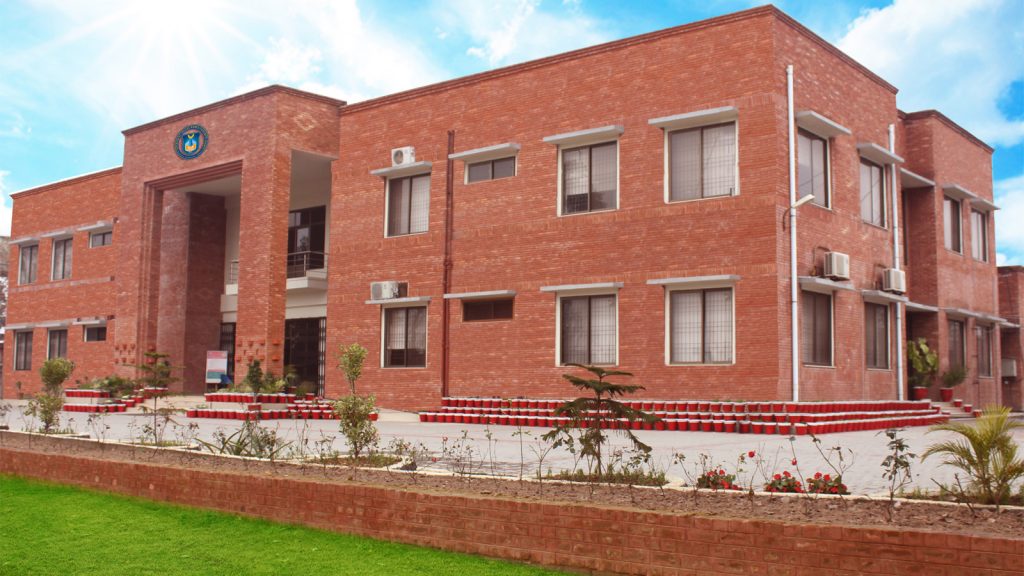
The event opened at the Institute of Space Technology (IST), jointly organized by the Pakistan Space and Upper Atmosphere Research Commission (SUPARCO) and IST.
The conference is being held with the collaboration of the Inter-Islamic Network on Space Sciences and Technology (ISNET), the Asia-Pacific Space Cooperation Organization (APSCO), the Islamic World Educational, Scientific and Cultural Organization (ICESCO), the Institute of Electrical and Electronics Engineers (IEEE), and the National Centre of GIS and Space Applications (NCGSA).
The conference brings together astronauts, scientists, policymakers, academic leaders, industry experts, and representatives of major international organizations, highlighting Pakistan’s growing leadership in the promotion of space science, technology, and innovation at both regional and global levels.
SUPARCO Chairman Muhammad Yousaf Khan formally inaugurated the conference.
Expressing pride in hosting the region’s flagship space event, he highlighted SUPARCO’s efforts to strengthen international cooperation and to advance space technologies for sustainable development.
IST Vice Chancellor Dr. Syed Najib Ahmad reaffirmed Pakistan’s commitment to promoting space education, research, and capacity building, describing ICAST-2025 as an important link between global expertise and scientific advancement.
The Acting Chairperson of the Higher Education Commission (HEC), the Secretary General of APSCO, and the Director of the United Nations Office for Outer Space Affairs (UNOOSA) also addressed the gathering.
They praised Pakistan’s contributions to promoting equitable access to space science and supporting emerging space nations.
The chief guest, Mongolian astronaut Gurragchaa Jugder Demid, formally opened the conference with a compelling keynote address.
Recalling the experience of viewing Earth from space, he stated that science transcends borders and international collaboration is essential for human progress.
He emphasized the pivotal role of space technologies in sustainable development, climate monitoring, disaster preparedness, agriculture, resource management, and communications.
He said that platforms such as ICAST-2025 ensure that the benefits of space development reach all nations equitably. Appreciating Pakistan’s vision, he commended the efforts of SUPARCO and IST and expressed confidence that the dialogue at ICAST-2025 would lead to new partnerships and innovative solutions.
The first day began with the ISNET Strategic Leadership Summit (SLS), aligned with the United Nations Office for Outer Space Affairs’ Access to Space for All initiative. Leaders from OIC-COMSTECH, APSCO, ICESCO, and the Turkish Space Agency delivered keynote speeches, followed by a high-level dialogue featuring representatives from China, Tunisia, Iran, Bangladesh, and Senegal.
The summit concluded with the adoption of a Joint Communiqué, reiterating commitments to equitable access to space, open data sharing, capacity building, and enhanced cooperation among emerging space nations.
The technical program of the conference opened with several seminars, master classes, panel discussions, and workshops.
It began with a seminar on Space Technologies for National Security and Strategic Applications, followed by technical sessions on Astronomy and Astrophysics, Positioning, Navigation and Timing, Remote Sensing and Geographic Information Science, and Information and Communication Technologies.
These sessions included discussions on advancements in satellite systems, geospatial analytics, artificial intelligence (AI), and next-generation communication technologies.
The technical program also featured a panel discussion on “Precision, Positioning, and Beyond: Emerging Trends in GNSS Technology,” a technology exhibition forum, and special master classes on Physiology in Orbit, Space Law in Action, and Designing Complex Space Missions.
Additional sessions on aeronautics, satellite technology, and environmental science expanded the scope of the technical dialogue.
With participation from more than 25 countries and over 70 international delegates, ICAST-2025 is hosting a major global assembly of expertise across eight distinct tracks, including plenary sessions, master classes, special seminars, technical presentations, poster exhibitions, and technology shows.
The conference reflects Pakistan’s resolve to utilize space technologies for social development, economic stability, climate resilience, disaster preparedness, scientific progress, and international cooperation.
The conference will continue over the next two days, aiming to foster stronger partnerships, broaden global dialogue, and advance the peaceful use of outer space for the benefit of humanity.


Finance minister highlights Pakistan’s economic reform momentum in meeting with dialog global leadership delegation

0
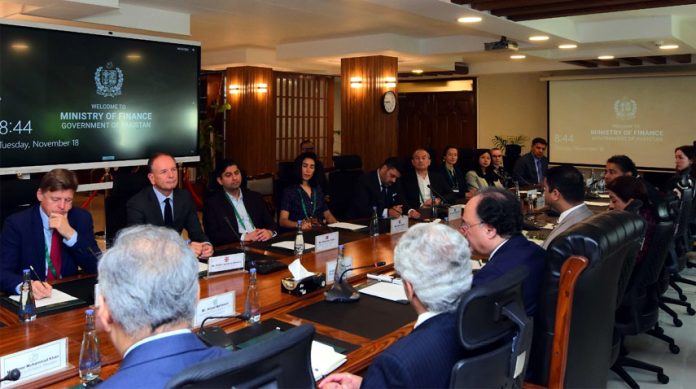
ISLAMABAD, Nov 18 (APP):Federal Minister for Finance and Revenue, Senator Muhammad Aurangzeb, held a detailed meeting today at the Finance Division with a high-level delegation representing Dialog, a global leadership platform founded by Peter Thiel and Auren Hoffman.
The delegation was led by Ambassador Ali Jehangir Siddiqui and included prominent global figures such as Simon Stevens (Member, UK House of Lords), Veit Valentin Dengler (Member of Parliament, Austria and Founder Draw.Solutions), Yasmin Green (CEO, Jigsaw Google), Fatima Kardar (VP, Xbox-Microsoft), Shadi Martini (CEO, MultiFaith Alliance), Evan Marwell (CEO, EducationSuperHighway), and Himanshu Gulati (Member of Parliament, Norway) amongst others, said a release issued here on Tuesday.
Welcoming the delegation, the Finance Minister expressed appreciation for Dialog’s continued engagement with Pakistan since the inaugural Dialog Pakistan-Winter 2024, which has helped broaden international understanding of Pakistan’s economic landscape and investment potential. Ambassador Siddiqui introduced the delegation, following which the Finance Minister delivered a comprehensive briefing.
The Minister outlined Pakistan’s macroeconomic consolidation over the past 18 months, noting recent upgrades by Fitch, S&P and Moody’s affiliates, as well as the successful Second Review of Pakistan’s IMF Extended Fund Facility and the Climate Resilience Program.
He highlighted improving geopolitical alignment, strengthened relationships with the United States, China, and Saudi Arabia, and the launch of CPEC Phase 2.0 focused on business-to-business investment, export-oriented industrial zones, and joint ventures.
The Finance Minister stressed the government’s focus on structural reforms, including taxation, energy sector restructuring, privatization of state-owned enterprises, governance reforms, and federal expenditure rationalization.
He underscored efforts to broaden and deepen the tax base, integrate technology and AI-based monitoring, enhance compliance, and bring under-taxed sectors such as real estate, agriculture, and wholesale/retail into the net.
The Minister also explained Pakistan’s progress on pension reforms, transition to contributory schemes for new entrants, and upcoming measures to address long-term fiscal liabilities.
On energy reforms, the Minister discussed governance improvements in distribution companies, loss-reduction efforts, private-sector representation on boards, and a renewed privatization pipeline.
He reaffirmed the government’s commitment to a competitive tariff regime, sustainability of the power sector, and greater private-sector participation.
During the interactive question-and-answer session, the Minister responded to queries on Pakistan’s tariff discussions with the United States, debt trajectory, banking regulation, and the link between infrastructure investments under CPEC and long-term growth.
He emphasized the government’s intention to re-enter international capital markets next year, including potential issuance of Panda bonds and steps to deepen domestic financial markets.
The Finance Minister noted that Pakistan’s demographic advantage, coupled with ongoing reforms in mining, agriculture, IT, AI, digital infrastructure, pharmaceuticals, and manufacturing, positions the country for sustained, private-sector-led growth.
He welcomed continued engagement with Dialog’s global leadership network as an opportunity to strengthen international partnerships, attract foreign investment, and project Pakistan’s reform agenda to influential global stakeholders.

GCWUS organizes free medical camp

0
SIALKOT, Nov 18 (APP):The Government College Women University Sialkot (GCWUS) in collaboration with A-One Lab organized a free medical screening camp, here on Tuesday.
According to a spokesperson, this camp was offering free Hepatitis B & C screening along with 50% discount on other tests for all students and staff.
This camp aimed to promote health awareness and early detection through services including Free Blood Test, Anti HCV and HbsAg
students and faculty actively participated and availed the free health checkup facilities.
The students felicitate A One Lab and the youth development center for facilitated this initiative.

Textile exports increase 3.99% to $6.391 bln during Jul-Oct 2025-26

0
Textile exports
ISLAMABAD, Nov 18 (APP):Textile exports witnessed an increase of 3.99 percent during the first four months of the fiscal year (2025-26) as compared to the same months of last year (2024-25).
The overall textile exports from the country were recorded at $6.391 billion during July-October 2025-26 against the exports of $6.146 billion during July-October 2024-25, the latest data released by Pakistan Bureau of Statistics (PBS) said.
The textile commodities that contributed to trade growth included cotton yarn, the exports of which increased by 7.74 percent to $238.923 million during the months under review, as compared to the exports of $221.759 million last year, while the export of raw cotton also increased by 100 percent to $2.605 million compared to zero export last year.
The other commodities that witnessed trade growth included yarn other than cotton yarn, the exports of which grew by 7.50 percent to $12.313 million from $11.454 million, whereas the export of knitwear rose by 8.23 percent to $1904.924 million from $1759.990 million, it added.
Similarly, the export of bed wear surged by 6.94 percent to $1143.887 million from $1069.690 million, tents, canvas, tarpaulin by 32.34 percent to $53.478 million from $40.409 million and ready-made garments by 5.11 percent to $1428.101 million from  $1358.724 million.
The export of made-up articles (excluding towels and bedwear) increased by 4.17 percent to $274.751 million from $263.759 million, and all other textile materials up by 0.50 percent to $254.185 million from $252.915 million.
The textile commodities that witnessed negative trade growth included cotton cloth, the export of which declined by 12.75 percent from $679.427 million to $592.797 million, while the export of towels decreased by 0.29 percent from $356.457 million to $355.438 million.
Similarly, the export of art, silk and synthetic textile also dipped by 0.98 percent from $131.613 million last year to $130.325 million during the months under review.
Meanwhile, on a Year-on-Year (YoY) basis, the textile exports from the country witnessed a nominal decrease of 0.57 percent during October 2025 as compared to the corresponding month of last year.
The textile exports in October 2025 were recorded $1,616.575 million against the exports of $1,625.875 million in October 2024.
On a Month-on-Month (MoM) basis, the textile exports, however, increased by 2.78 percent in October 2025 when compared to the exports of $ 1,572.896 million in September 2025, according to PBS data.

GCWUS conducts Honhaar scholarships interviews

0
SIALKOT, Nov 18 (APP):Government College Women University Sialkot (GCWUS) on Tuesday successfully conducted interviews of Honhaar Scholarship of deserving students at Munim ud Din Auditorium.
According to a spokesperson,Vice Chancellor(VC),Prof.Dr.Shazia Bashir visited the venue and reviewed the entire process, appreciating the efforts of the organizing team and ensuring transparency and merit at every stage.
GCWUS remains committed to supporting talented and deserving students through meaningful opportunities.

U.S.–Pakistan firms sign landmark agreement for critical mineral exploration

0

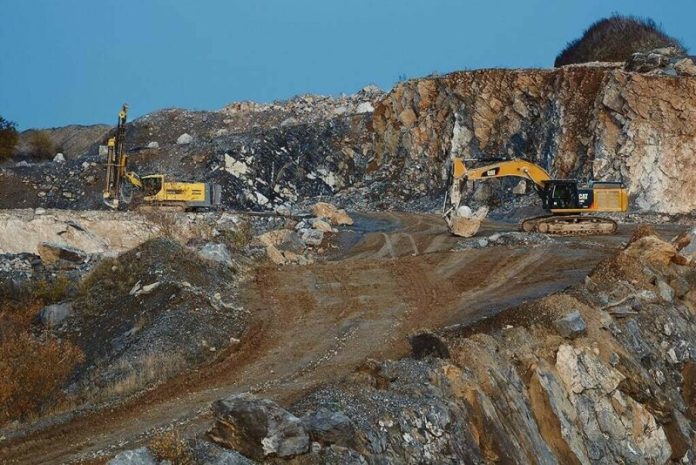
MANSEHRA, Nov 18 (APP): A major breakthrough in Pakistan’s mineral sector has been achieved as a strategic partnership has been finalized between Pakistan’s private company Himalayan Earth Exploration (HEE) and the American company Nova Minerals Limited for the exploration and development of valuable minerals across the country.
Prominent businessman and social figure Hanif Gohar, who is also Chairman of Air Karachi and Himalayan Earth Exploration Company, shared the development during his visit to his hometown Dhodial, Mansehra. Speaking to local journalists, he said the collaboration aims to unlock Pakistan’s vast critical mineral potential and strengthen economic ties between Pakistan and the United States.
According to Gohar, HEE and Nova Minerals (NASDAQ/ASX/FRA: NVA) have entered into a historic agreement under which both companies will represent each other’s interests in Pakistan and the U.S. The partnership will enhance future trade and cooperation in high-tech manufacturing, semiconductors, energy transition technologies, and rare earth elements (REEs).
He said Pakistan possesses significant reserves of critical minerals and REEs, and the joint venture seeks to accelerate responsible development, promote local value addition, create skilled employment opportunities, and deepen bilateral economic relations.
Nova Minerals CEO Christopher Gerteisen, who accompanied the delegation, thanked local hosts for their warm reception and expressed strong confidence in long-term cooperation.
HEE Director/CEO Liaquat Ali Sultan and Director Jabar Khan said the partnership focuses on innovation, capacity building, and the development of a modern mining ecosystem. They stressed the importance of advanced research and sustainable practices for long-term growth.
HEE a subsidiary of Chinar and Gohar Groups is already leading mineral exploration across Pakistan with a 35-square-kilometer placer gold project and a potential 111-kilometer mineral corridor in Khyber Pakhtunkhwa.
Meanwhile, Nova Minerals Limited is progressing its Estelle Project in Alaska, spread over 514 square kilometers in the Tintina Gold Belt, known for multiple gold and antimony prospects.
The new Pak–U.S. partnership is expected to bring investment, technology transfer, and sustainable development to Pakistan’s critical mineral sector while supporting a secure and diversified supply chain for the United States.

The seventh consultative meeting of the heads of state of Central Asia concluded

0

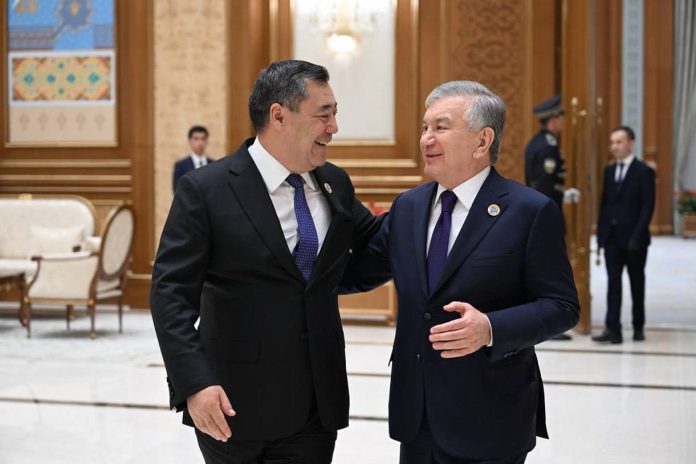
TASHKENT, Nov 18 (UzA/APP):Following the Consultative Meeting held under the chairmanship of the President of Uzbekistan Shavkat Mirziyoyev, with the participation of the Presidents of Azerbaijan, Kazakhstan, Kyrgyzstan, Tajikistan, and Turkmenistan, the heads of state decided to admit the Republic of Azerbaijan to this format as a full participant.
The leaders of the participating countries who addressed the meeting put forward essential initiatives to strengthen regional partnership. The event concluded with the signing of multilateral documents.
On the sidelines of the summit on November 15, the President of Uzbekistan met with the Presidents of Azerbaijan Ilham Aliyev, Kyrgyzstan Sadyr Japarov, and Tajikistan Emomali Rahmon. On the same day, the main events of the state visit of the President of the Republic of Kazakhstan Kassym-Jomart Tokayev to Uzbekistan took place.
Following the events, the President of Uzbekistan saw off the Presidents of Kazakhstan, Tajikistan, Kyrgyzstan, and Azerbaijan at Tashkent-Humo International Airport. They left for their respective countries.

CDNS accomplish Rs 22 billion in Islamic investment till Nov,15th, in Current FY, 2025-26

0
ISLAMABAD, Nov 18 (APP):The Central Directorate of National Savings (CDNS) has achieved the yearly mark of Rs 22 billion in investment in Islamic finance from July 1st to November 15th, in the Current Fiscal Year, 2025-26.
The CDNS has already set annual target of Rs 25 billion for the Current FY, 2025-26 for promoting Islamic finance in the country, a senior official of CDNS told APP here Tuesday.
He said the CDNS has achieved the annual collection target of Rs 24 billion in investment in Islamic finance during the Previous, FY, 2024 -25.
The CDNS has revived the annual collection target of investment in Islamic finance for the Current FY, 2025-26, which will lead to growth in the country’s Islamic economy.
“The National Savings had issued the Islamic bonds for the promotion of the Islamic finance system, which will help the development of the Islamic economy in the country,” he said.
Replying to a question, he said the CDNS had achieved the target of Rs 75 billion during the last fiscal year (2023-24) from the Islamic bonds, and that was why it aimed to introduce new dimensions in the Islamic finance sector.
“Islamic finance now has a significant role in the global financial sector.”
 A large part of the economy of many major countries currently includes Islamic finance,” he added. The official said that work was being done on institutional reforms in the CDNS.
“Islamic finance now has a significant role in the global financial sector. A large part of the economy of many major countries currently includes Islamic finance,” he added. The official said that work was being done on institutional reforms in the CDNS.
Given the current market trend in the country, an ambitious target had been set to improve the savings culture further, he added.
Replying to another question, he said the CDNS has accomplished a target of Rs 400 billion in savings inflows of the annual target for the current fiscal year, from July 1 to September 15th, 2025.
The CDNS has set a savings inflows target of Rs 1.3 trillion for the current Fiscal Year, 2025-26.

KIIR chief seeks UNHRC’s urgent attention towards intensifying surveillance mechanisms targeting local population in IIOJK

0

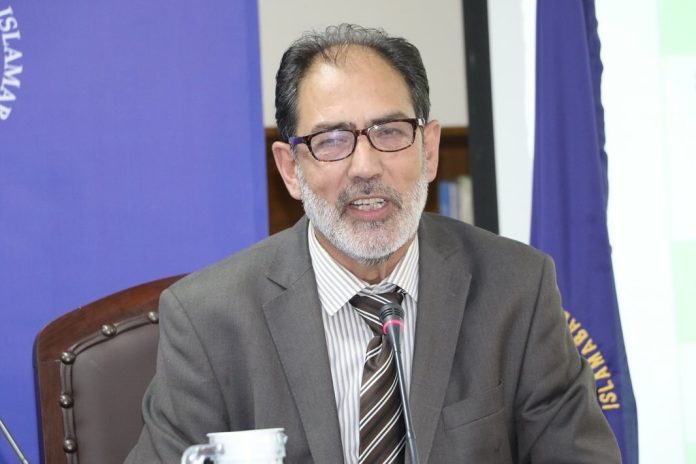
ISLAMABAD, Nov 18 (APP): Chairman of the Kashmir Institute of International Relations, Altaf Hussain Wani, has sought UN Human Rights Council’s urgent attention towards the intensifying surveillance mechanisms targeting the local population in Indian Illegally Occupied Jammu and Kashmir (IIOJK).

In a letter addressed to Dr. Ana Brian Nougrères, Special Rapporteur on the right to privacy, Wani noted that GPS-enabled monitors, digital surveillance, and intrusive biometric data collection of under trials in Kashmir have become tools of intrusion, undermining the presumption of innocence and eroding fundamental freedoms.

He said cases like that of Mukhtar Ahmed reveal a disturbing reality.

Referring to GPS-enabled ankle monitors, mass phone confiscations, digital surveillance, and intrusive biometric data collection in Kashmir, he said, “These practices collectively constitute a systematic erosion of privacy, a fundamental human right enshrined under international law.”

Wani emphasized that the misuse of such instruments transforms legal liberty into a perpetual state of control, further eroding fundamental freedoms.

Calling for an immediate cessation of these practices, he argued that electronic monitoring of undertrial detainees constitutes a grave violation of fundamental rights.

Citing international treaties and covenants, he urged the restoration of fundamental freedoms and rights in accordance with international law.

Terming right to privacy as a cornerstone of international human rights law, he said Article 17 of the International Covenant on Civil and Political Rights (ICCPR) guarantees that no individual shall be subjected to arbitrary or unlawful interference with their privacy, family, home, or correspondence.

He also called on the UN Human Rights Council to mandate an independent investigation into digital surveillance practices in occupied Kashmir and to recommend remedial measures that are necessary, proportionate, and respectful of human dignity.

“Privacy is not a privilege; it is a cornerstone of human dignity, civil liberty, and the rule of law,” he said, adding that the UN Human Rights Committee has clarified that electronic surveillance constitutes a potential violation of these rights when applied arbitrarily or disproportionately, particularly against individuals not yet convicted of a crime.

“Immediate action is essential to prevent further abuse and to reaffirm that no individual should live under constant, state-imposed intrusion,” Wani added.

It is worth noting that Mukhtar Ahmed, son of Mohammad Rashid and resident of Karmara, Poonch, was arrested on charges widely reported to be fabricated. On November 15, 2025, following his bail application, the Court of the Principal District & Sessions Judge, Udhampur, granted his release but mandated the installation of a GPS-enabled tracking anklet. This device continuously monitors his movements in real time, effectively restricting his freedom of movement and placing him under perpetual state surveillance.