Home Blog Page 644

Distt admin introduces ICT Household Survey for city’s overall safety

0
ISLAMABAD, Nov 16 (APP): The Islamabad Capital Territory (ICT) administration has announced the ICT Household Survey, a citywide initiative aimed at compiling digital information about households, family members, and domestic staff.
The district administration said the survey plays an important role in organising and updating Islamabad’s household records. Authorities noted that the effort will help improve city planning, resource allocation, and overall safety.
Officials said residents of the federal capital are showing strong participation by entering their details through the newly launched mobile application.
According to the administration, 885 people completed their data entry on the first day of the app’s release, while another 2,039 users are currently completing the registration process. Officials have encouraged all citizens to register without delay so teams can verify the information during the field survey.
Authorities said the survey is designed to allow residents to register from their homes, making the process simple and accessible. The administration has appealed to citizens to participate fully so the capital’s population record can be updated in one integrated system.
Survey teams will begin visiting all neighbourhoods from Monday, 17 November. Equipped with tablets, these teams will reach every home to collect information from residents who are unable to complete the process on their own.
The Deputy Commissioner (DC) of Islamabad, Irfan Nawaz Memon, has appealed to the public to cooperate with these teams and support the district administration in strengthening safety across the city.
Speaking to the media, DC Memon explained the purpose and process of the ICT Household Survey app. He said the app is available on both Android’s Play Store and Apple’s App Store. Any resident of Islamabad can download the app and enter details about their home and those living in it.
He noted that the survey requires complete information about all residents of each household, including domestic staff such as drivers, cooks, helpers, or security guards. Users must indicate whether the home is owned, rented, or a shared family property. DC Memon stressed that providing accurate information will assist the administration in building a verified digital database.
He added that beginning 17 November, teams will conduct door-to-door visits for households that cannot or do not upload their data.
Each team will carry a tablet preloaded with the application. If someone does not register through the app, the survey team will visit their home and enter the data based on the details provided. This procedure ensures that every house is included in the survey.
The Deputy Commissioner said the data platform has been developed to display every household in Islamabad on a digital map.
The system will clearly show which homes have completed their entries and which remain pending. Officials will then follow up with households that have not registered. He emphasised that collecting this information is essential for improving city management and ensuring better security planning.
The administration has also encouraged residents to use the app to avoid inconvenience during door-to-door visits.
DC Memon has called on citizens to support the initiative by cooperating with survey teams and ensuring that their data is entered accurately and on time. He said collective participation from all residents will help the administration make Islamabad a well-managed and secure city.

Nation remembers Rahmat Ali: visionary behind the name ‘Pakistan’

0
ISLAMABAD, Nov 16 (APP): The 129th birth anniversary of Chaudhry Rahmat Ali, the political thinker credited with coining the name “Pakistan” was observed on Sunday.
Commemorative events were held across the country, honouring his intellectual legacy and contributions to the subcontinent’s Muslim identity.
Talking to APP, Pakistan National Movement President Yousaf Aziz said Rahmat Ali had introduced the name “Pakistan” on 28 January 1933 in his pamphlet Now or Never, nearly fourteen years before the country’s creation.
He described the name as inspired by the Quranic verse 15 “baldatun tayyibatun” from Surah Saba, symbolising a pure and ideal homeland.
Nation remembers Rahmat Ali: visionary behind the name ‘Pakistan’
Aziz added that the concept carried religious, historical, political and cultural resonance that later found formal expression in the Lahore Resolution seven years after the pamphlet’s publication.
He said Rahmat Ali’s vision represents “a national rediscovery” that will continue to guide future generations in understanding Pakistan’s historical roots and evolving identity.
State broadcaster PTV aired a documentary highlighting his life and national services, while scholar Prof. Zaid bin Umar released his new book Chaudhry Rahmat Ali: A Critical Review of Objections.
Contemporary news platforms also carried features reflecting on his role in shaping the country’s ideological foundations.

Digital sector key to Pakistan’s economic security: Shaza

0
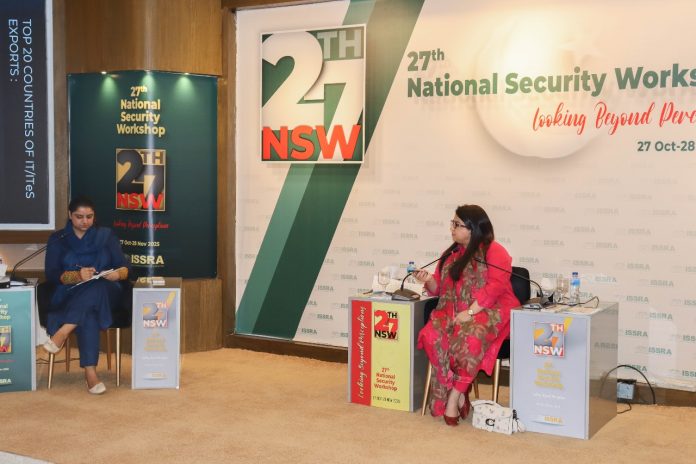
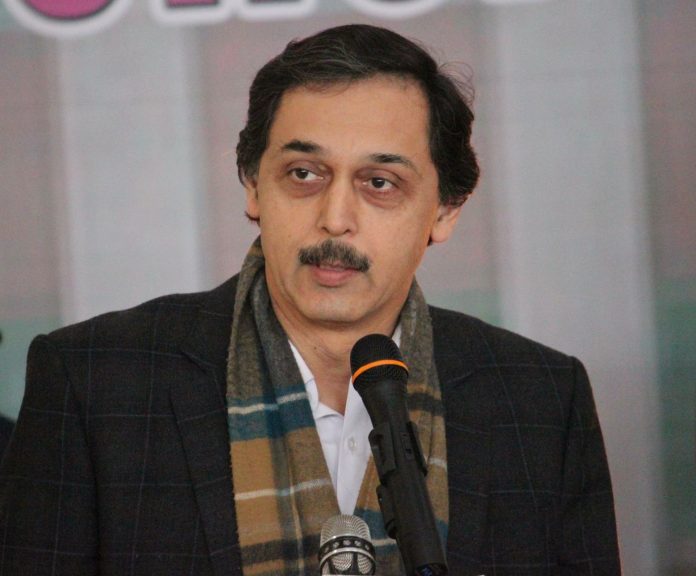
ISLAMABAD, Nov 16 (APP): Federal Minister for Information Technology and Telecommunication Shaza Fatima Khawaja Sunday said that Pakistan is working to strengthen its IT industry, expand exports, and build a “Digital Nation” based on a digital economy, digital society and digital governance.
She was speaking at the 27th National Security Workshop at the National Defence University (NDU) on the topic “Pakistan’s IT Potential: Opportunities and Challenges.”  She said the country’s digital progress is supported by three key areas: telecom, cybersecurity and artificial intelligence.
The minister was invited by the Director General of ISSRA to address participants at the Institute for Strategic Studies, Research and Analysis (ISSRA). The session was attended by members of national and provincial assemblies, entrepreneurs, journalists and civil society representatives.
Shaza said Pakistan’s digital sector has become a core asset for economic security, strategic stability and global competitiveness.  She added that the Prime Minister, the Federal Cabinet, the Special Investment Facilitation Council (SIFC) and senior leadership are fully backing the digital transformation agenda.
She said federal and provincial governments, industry, universities and international partners are working together to build an inclusive and future-ready digital ecosystem.
The minister highlighted the strengthening of the digital infrastructure, including 43 Software Technology Parks, repurposed malls hosting over 400 tech companies, and a nationwide network of 85 incubators. Pakistan’s startup ecosystem has also grown rapidly, with more than 4,100 startups supported, eight National Incubation Centres, two CEGA centres, and strong international participation from the USA, UK, Canada, UAE, Saudi Arabia, Azerbaijan, Germany and Jordan.
She pointed to recent achievements such as the Pakistan Startup Fund, which offers equity-free grants with the Ministry contributing up to 30 per cent of each round. Under the BridgeStart programme, 13 startups have been sent to international accelerators.
Other major initiatives include the Prime Minister’s Cloud Programme, DigiSkills 3.0, aimed at training 4.3 million Pakistanis, and the Prime Minister’s SkillTech Initiative.
She also outlined national reforms, including updated HEC curricula for IT and AI, a semiconductor programme to train 7,200 chip design professionals, TikTok’s STEM Feed, and Meta’s AI-in-Urdu project.
She announced that Google has completed all formal requirements to open its office in Pakistan, calling it a major milestone for the IT sector. The Ministry of IT and Google have also signed an MoU for advanced digital skills and training to enhance the capabilities of Pakistani talent.
The minister underscored recent innovation-focused events such as the AI Wrapper Competition, Cybersecurity Hackathon, and Ignite-funded projects, including WISE Lab, Code4AI and SAP-based training.
Internationally, Pakistan presented its digital vision at major global forums, including WAIC Shanghai, LEAP Riyadh, the DCO General Assembly in Amman, the AI for Good Summit in Geneva, and GITEX Global 2025, securing over US$700 million in digital investments.
Referring to Marka-e-Haq, she said the country’s victory reflected national unity and technological strength. Under the leadership of Prime Minister Shehbaz Sharif and Field Marshal Syed Asim Munir, the armed forces, government institutions, and the private sector worked together to strengthen cyber defences.
She said Pakistani cybersecurity experts performed exceptionally and demonstrated the country’s capability on the global stage. Shaza Fatima reaffirmed Pakistan’s resolve to become a modern, secure and globally competitive digital nation.

Roundtable on Pak-Afghan suggests all-encompassing diplomacy to reduce frictions

0
PESHAWAR, Nov 16 (APP): A roundtable discussion on Pakistan and Afghanistan has suggested for giving a chance to an all-encompassing diplomacy where all segments of society including intelligentsia, religious leaders, media, academia and traders play their positive role for reducing frictions and creating an atmosphere conducive for peace and tranquillity.
“It’s time to make use of `Citizen Diplomacy’ through meaningful people-to-people contact for improving relations between the two neighbouring countries,” it added.
Relationship between Afghanistan and Pakistan is complex and this complexity has immediate, as well as far reaching implications not only for both countries but the region as well, observed participants of the roundtable.
According to a press release issued here on Sunday, the roundtable titled as “Pakistan-Afghanistan Tensions and Their Regional Implications” was organized by Advocacy for Sustainable Policy and Implementation Reforms (Aspire-KP), a not-for-profit and registered platform of public service professionals from Khyber Pakhtunkhwa.
Former Chief Secretary KP and Chairman Aspire, Muhammad Shehzad Arbab opened the deliberations with a brief introduction of Aspire-KP and objectives of the roundtable.
The participants of the roundtable made several recommendations and observed that being neighbours, Pakistan and Afghanistan are dependent on each other in so many ways and it is almost impossible for both to find alternatives for substituting this dependency.
It was also suggested that government may press into service the intellect and experience of those who understand Afghanistan and Afghans. It will lead to reinforcement of our approach to the subject.
“Conflict, friction and tension do not resolve differences and will create more problems miseries for both countries especially the Pashtuns,” it added.
The loss for Afghanistan will be catastrophic in view of its current situation of economic and social instability, the roundtable warned.
The roundtable observed that separating trade from politics is in the interest of people in both the countries as Pakistan and Afghanistan are centuries old trading partners.
Chambers of Commerce and Industry, traders, exporters, importers, and clearing agents are major stakeholders in Pak-Afghan trade and marginalizing of these stakeholders will have devastating effect on the trade which will lead to unemployment and resultant militancy in the region.
Likewise, students seeking admissions in different universities in Pakistan may be allowed to carry on their education and complete their higher studies.
Regarding repatriation of Afghan refugees, the roundtable recommends a high degree of care and stringent oversight to eliminate the impression of maltreatment and excesses.
Those who attended the roundtable included Habibullah Khan Khattak, Former ACS FATA and Federal Secretary, Arbab Muhammad Arif, Former Home Secretary and ACS FATA, Himayatullah Khan, Former Federal Secretary, Zaffar Iqbal, Zia ul Haq Sarhadi Senior Vice President PAJCCI, Former Senior Member Board of Revenue, Rukhshanda Naz, Former Ombudsperson KP, Dr Muhammad Rasul Jan, Former VC, Dr Qibla Ayaz, Former Chairman Council of Islamic Ideology, Dr Azmat Hayat, former VC Peshawar, Senator Nur ul-Haq Qadri and others.

Gomal Medical College holds Convocation 2025 with dignity and academic pride

0
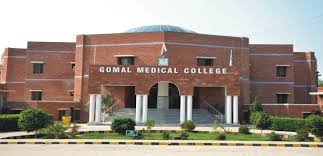
Dera Ismail Khan , Nov 16 (APP): Gomal Medical College (GMC)  held its annual Convocation 2025 in a dignified ceremony attended by graduating students, faculty members, parents, local representatives, and senior officials of the divisional and district administrations.
The event commenced with the recitation of the Holy Quran, followed by the formal arrival of the Chief Guest, Khyber Pakhtunkhwa’s former Chief Minister Ali Amin Khan Gandapur. He was warmly welcomed by Dean and Chief Executive Professor Dr. Naseem Saba, faculty members, and students.
The ceremony began with the national anthem, during which the Chief Guest, Dean/CEO GMC, Chairman Board of Governors Medical Teachng Institute (MTI) , faculty members, and graduates stood in respect and solidarity.
Addressing the gathering, Acting Vice Chancellor Prof Dr Robina Nazli congratulated the graduating class and emphasized their professional responsibilities. She remarked, “With great privilege comes great responsibility. Now it is time for you to shine and make a meaningful difference.”
In her welcome address, Dean and Chief Executive Professor Dr Naseem Saba highlighted the achievements of Gomal Medical College during 2025, terming it a year of academic excellence, research progress, and significant institutional growth. She said the graduating batch stood out for their dedication, hard work, and professional competence.
Speaking on the occasion, Chief Guest Ali Amin Khan Gandapur congratulated the new doctors and reminded them of the sanctity of the medical profession. “The field of medicine is a sacred duty. Patients come to you with hope and consider the doctor a healer. You must uphold justice, fairness, and compassion in your service,” he said.
He elaborated on the difference between justice and equity, urging the graduates to support those who cannot afford treatment. “Charging equal fees is justice, but true equity is helping the poor and the underprivileged who have no means. Supporting such individuals is equivalent to placing food in the mouths of their children, and its reward is granted both in this world and the hereafter,” he added. Gandapur reaffirmed that the government and administration would continue extending full cooperation to improve the health sector.
A major highlight of the ceremony was the administration of the professional oath by Prof Dr Naseem Saba, during which the graduating doctors pledged to uphold medical ethics, patient welfare, and professional integrity.
The convocation also featured the distribution of gold medals, shields, and degrees to students who demonstrated outstanding academic performance. The joy of graduates and their parents added to the celebratory atmosphere.
The ceremony concluded with group photographs featuring the Chief Guest, faculty members, and the graduating students.
Gomal Medical College’s Convocation 2025 came to an end with a renewed commitment that the newly qualified doctors would apply their knowledge, skills, and professionalism in the service of the nation and the welfare of humanity.

Pakistan’s first female selected as `Rising Star Finalist’ for 2025 WIN DRR Leadership Awards

0
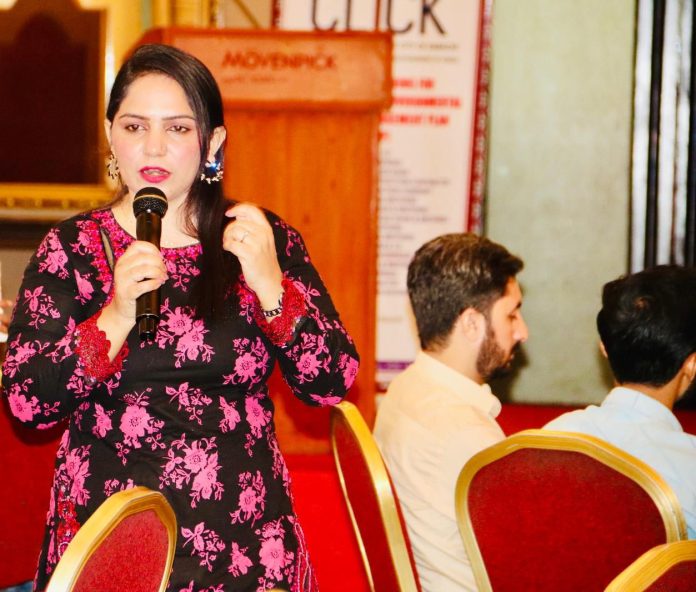
PESHAWAR, Nov 16 (APP): Sana Siddique Rahimoo, a Social Safeguard and Resettlement Specialist with additional charge as Livelihood Specialist from Pakistan, has been selected as a Rising Star finalist for the 2025 Women’s International Network for Disaster Risk Reduction (WIN DRR) Leadership Awards.
“She is the first female from Pakistan to be recognized for this prestigious global platform,” reads a press release issued here on Sunday.
The WIN DRR Leadership Awards, organized by the UN Office for Disaster Risk Reduction (UNDRR), celebrate women leaders driving innovative solutions in disaster risk reduction, resilience, and gender-inclusive development. The awards ceremony will be held in Bangkok on 25 November 2025.
Sana Siddique has contributed significantly to flood-affected communities in Sindh through inclusive Cash for Work programmes, gender-sensitive infrastructure rehabilitation, and establishing Pakistan’s first Gender Desk at Rescue 1122.
She is also a passionate writer, raising awareness on gender equality, climate change, water governance, and women’s economic participation.
This recognition is a proud moment for Pakistan, particularly for the Sindh province, highlighting the achievements of women leaders driving meaningful change in disaster risk reduction and community resilience.

Pakistan warns of accelerating glacier loss at COP30

0

ISLAMABAD, Nov 16 (APP):Pakistan has urged the international community to act swiftly to protect the rapidly deteriorating cryosphere, warning that accelerated glacier melt in the Hindu Kush–Karakoram–Himalaya (HKH) region is placing millions at increasing risk.

In a virtual address to a high-level dialogue at COP30 in Belem, Brazil, Pakistan’s climate minister, Senator Dr Musadik Masood Malik, said the world is witnessing “unprecedented” changes across glacier systems, permafrost zones and snow-covered regions.

Pakistan warns of accelerating glacier loss at COP30
He warned that these shifts are already disrupting water supplies, food production and the safety of mountain communities.
Pakistan warns of accelerating glacier loss at COP30

The discussion, hosted by Pakistan’s Ministry of Climate Change and Environmental Coordination in partnership with international organisations, brought together officials, scientists and specialists from Nepal, Bhutan, Turkiye, Azerbaijan, ICIMOD, UNDP, UNESCO and the Asian Development Bank.

Dr Malik said the HKH—often referred to as the planet’s “Third Pole”—is warming nearly twice as fast as the global average, threatening the largest freshwater store outside the polar regions. Pakistan, home to around 13,000 glaciers, is already facing rapid retreat, expanding glacial lakes and a sharp increase in glacial lake outburst floods.

He said these changes are beginning to alter the natural flow of the Indus River, damaging infrastructure, undermining farmland and heightening water insecurity downstream. For mountain communities, he said, climate change has become “a daily crisis”.

Scientific assessments presented at the event indicated that up to 65% of HKH glaciers could vanish by the end of the century under high-emission scenarios.

Experts at the dialogue noted that Pakistan’s northern regions are already experiencing frequent GLOF events, which have destroyed homes, schools, roads and cropland in Gilgit-Baltistan and Khyber Pakhtunkhwa.

Erratic river flows, they added, are also weakening agricultural output, disrupting hydropower generation and straining water supplies in major cities, while altering ecosystems and local economies across the Indus basin.

Participants from Turkiye, Azerbaijan, Nepal, Bhutan and ICIMOD called for stronger regional frameworks for scientific cooperation, improved early-warning systems and targeted investments to boost community preparedness.

Representatives from UNDP, UNESCO and the Asian Development Bank reiterated their support for countries across the HKH.

The dialogue ended with a call for increased regional coordination, predictable climate finance and urgent global engagement to safeguard the fragile HKH cryosphere and the millions who depend on its water systems.

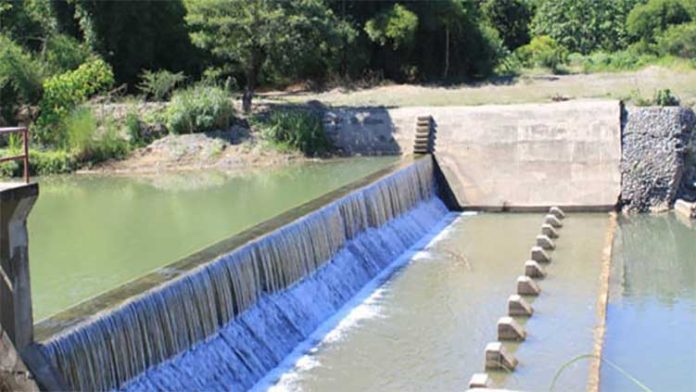
Small dams: Pakistan’s frontline defense against drought, land degradation

0
PESHAWAR, Nov 16 (APP): With a hoe resting loosely on his shoulder and worry etched across his face, 32-year-old farmer Malyar Ali surveyed the sand-choked canal that once gave life to his wheat fields especially in winter.
This winter, the trickle of water passing through Tarkha-Mohib Banda canal in Pabbi, Nowshera, is barely enough for wheat irrigation, praying for rainfall.
“The water in canal has decreased, and farmers are struggling to sow wheat,” he said, pointing to the cracked bed of a link watercourse damaged by the August floods.
 “We are trying to clear the water channels ourselves, but the task is too big. The wheat cultivation season is passing fast, and all we can do is pray for rain.”
Malyar’s struggle echoes the plight of thousands of farmers across Khyber Pakhtunkhwa, where prolonged drought, land degradation, and shrinking water resources have emerged as severe threats to agriculture, livestock and to life itself.
Prolonged drought, land degradation and desertification now threaten nearly two billion people worldwide, mostly in arid and semi-arid regions where natural resources especially water are rapidly depleting.
“Globally, an estimated six million hectares of productive land and USD 42 billion in economic losses occur every year due to land degradation,” said Professor Dr. Muhammad Naeem, former Chairman Economics Department at University of Peshawar while talking to APP.
He said Pakistan is among the countries most at risk due to depleting water resources aimed climate change effects.
While referring to national water policy 2018, he warned that the country was fast moving toward water stress due to shortage of dames and waste of water resources.
He claimed that per capita water availability has fallen from 5,260 cubic meters in 1951 to just 1,000 cubic meters in 2016, and could drop to 860 cubic meters by 2025 which is a level considered absolute water scarcity mostly in KP.
Compounding the water scarcity is a steep decline in groundwater levels, particularly in KP, Punjab and Sindh, where around one million tube wells now extract more than 55 million acre-feet (MAF) of water annually—20% more than the supply from canals.
“Water and electricity theft through illegal connections is causing massive economic losses to the Govt kitty,” he said, citing reports that Pakistan loses about Rs600 billion annually to electricity pilferage only.
He warned that if decisive action was not taken, losses could soar to about Rs520 billion this year, with Khyber Pakhtunkhwa alone losing around Rs137 billion annually.
 “Delays in major hydropower projects like Mohmand and Diamer Bhasha have widened the gap between electricity demand and supply besides exceberated water shortages,” he added
“Of its 79.6 million hectares of land, he said that nearly 70 percent is arid to semi-arid in Pakistan exposed to drought, land degradation and desertification due to lack of dams,” said Dr Ikram-ur-Rehman, former Provincial Coordinator of the Sustainable Land Management Programme (SLMP-II).
“Every year, about 1.5 to 2.5 million hectares of irrigated land, 3.5 to 4 million hectares of rain-fed farmland, and around 35 million hectares of rangelands are becoming barren,” he told APP.
“Western Sindh, Balochistan and southern KP are particularly vulnerable, where underground aquifers are shrinking rapidly due to over-extraction without natural recharge.”
There are around 46,000 big and small dams globally—China alone has over 22,000 and India more than 5,300—but Pakistan has built only about 150 since independence,” he said.
While large dams face years of planning and political disputes, experts say small and medium dams offer quicker and more practical solutions.
Engr Fakhre Alam Khan, spokesperson for the Small Dams project at the Irrigation Department, highlighted that Pakistan, blessed with more than 24 rivers, has hundreds of natural sites suitable for dam construction.
“Small dams take just two to three years to build, and Pakistan will need an additional 76 MAF of water by 2050. Meeting this demand depends on rapidly constructing these smaller reservoirs.”
Khyber Pakhtunkhwa has made significant progress in small dams construction, he said, adding a total of 37 small and medium dams have been completed—15 run by the provincial government, 11 by WAPDA, and 10 in merged districts collectively irrigating over 137,000 acres and storing more than 341,000 acre-feet of water.
Under the federal Public Sector Development Program (PSDP), he said 24 more dams with a cumulative storage capacity of 75,008 acre-feet are under construction.
Completed small dams projects include Pezu Dam (Lakki Marwat), Khattak Bandhan (Kohat), Makh Banda (Karak), Manchura and Ichar (Mansehra), Sarozai (Hangu), Sanam (Lower Dir), Bada and Ulta (Swabi), among others.
Additionally, seven more medium dams—including Bara, Tank Zam, Sheikh Haider Zam, Chaudwan Zam, Daraban, and Kora Nullah—with a combined capacity of 520,884 acre-feet are in the design stage.
In a positive development, KP Chief Minister Muhammad Sohail Afridi recently inaugurated the 40.8-megawatt Koto Hydropower Project in Lower Dir. Completed at a cost of Rs21.7 billion, the project is expected to generate 207 million units of electricity annually bringing in Rs2.4 billion in revenue.
For poor Malyar Ali and countless other farmers, these engineering feats offer hope but they also know that time is running out for wheat cultivation.
Standing beside his parched canal, Malyar said, “If small dams are built quickly, our villages can survive. Without water, we have nothing.”
As Pakistan confronts escalating climate threats, small dams may well be the fastest shield protecting farmlands, preserving rangelands, and securing the nation’s food future.

Liver fluke threatens livestock health in flood-hit areas

0
M Atif Ismail
MULTAN, Nov 16 (APP): Floodwater contamination has increased the risk of liver fluke infection among livestock in South Punjab, posing a serious threat to animal health
and productivity.
Cattle farmers are under immense stress due to disease in these areas.
Responding to APP’s query about the issue, Dr. Jamshaid, Deputy Director Livestock, Jalalpur Pirwala, said liver fluke (Fasciola hepatica) was a significant parasite affecting cattle, buffaloes, and sheep.  After floods, the disease spreads rapidly as snails which was the intermediate hosts, multiply in stagnant water and on wet grass. When animals graze in such areas, they ingest the parasites, which enter the liver and jaw, causing inflammation known locally as Bottled Jaws.
He explained that many farmers mistakenly consider the disease as “Gul Ghotu”,
assuming it affects the throat, whereas it actually causes swelling in the jaw due
to fluid accumulation and liver damage. The condition can lead to weakness,
reduced productivity, and even death if not treated in time.
He said studies show that liver fluke infections were common , with prevalence
ranging between 10 and 50 percent in various regions. Mortality was higher among
sheep, while cattle were relatively more resistant. However, chronic infections
in cattle cause substantial economic losses due to weight loss, reduced milk
production, and poor growth.
He said, typical signs of liver fluke infection include swelling under the jaw, pale
mucous membranes, weight loss despite adequate feeding, weakness, and diarrhea
with a foul smell. In dairy animals, milk production drops sharply, affecting farm income.
Dr Jamshaid advised farmers not to graze their animals in waterlogged areas or on grass
where snails were found. He emphasized that clean and safe drinking water should
be provided from protected sources and that animals should be moved to higher
ground to avoid contaminated areas.
He further suggested that all water troughs and grazing areas should be disinfected
after floods. Farmers were urged to consult qualified veterinarians immediately
if symptoms appear, as timely treatment ensures complete recovery.
“Preventive measures, de-worming, and coordination with livestock departments
for vaccination are essential to protect animals from post-flood diseases,” he added.

Multan hosts Grand Photo Walk to promote tourism

0
MULTAN, Nov 16 (APP): Walled City Authority Multan, in collaboration with Waseeb Explorer, successfully organised the annual Grand Photo Walk to mark Waseeb Explorer’s ninth anniversary here on Sunday.
More than 200 tourists from across the country participated in the event, aimed at promoting heritage tourism and showcasing the city’s historic identity.
A special traditional breakfast of ‘halwa puri’ was arranged for the visitors at the
Damdama Rooftop.
After breakfast, a bike rally was staged from the historic Ghanta Ghar. The rally
passed through the old city routes and concluded at Haram Gate. Bikers strictly
followed safety guidelines, including wearing helmets and observing traffic rules.
A guided tour of historic sites was later arranged for the participants.
The group visited the city’s old and famed Red Light Street, including the traditional
Saabon Wali Gali. The tour concluded at the renowned archaeological site, the
shrine of Shah Risal, where tourists were briefed on the cultural and historical
significance of the area.
At the closing ceremony, appreciation certificates were distributed at the courtyard
of the Shah Risal shrine. The certificates were presented by Assistant Director
Marketing Walled City Authority Muhammad Umair Ghazanfar and Waseeb Explorer
founder Dr. Muzammil. Officers of the district administration were also present.
The participants described the photo walk and guided tour as highly informative
and memorable. They said such activities in heritage-rich cities like Multan not
only boost tourism but also revive the cultural identity of the region.
Some Biker Tourists including Kashif, Azizuddin and some others stated, citizens
could explore the country on their motorcycles, discovering food tourism, historic
havelis, ancient gates, woodwork, marriage tourism, medical tourism, archaeology,
religious tourism, desert tourism, and many other vibrant experiences across the
country.