
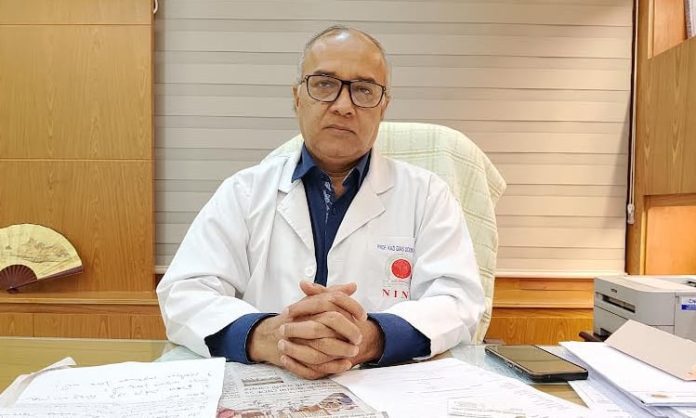
DHAKA, Nov 13 (BSS/APP) : The National Institute of Neurosciences and Hospital (NINS) is set to introduce artificial intelligence (AI)-based medical services for stroke patients soon.
“We will soon launch AI-based treatment for stroke patients. In this method, we will connect a special device to the CT scan machine, linked to a central server. When a patient undergoes a CT scan, the device will automatically display the extent of brain stroke. The patient’s data will go to the server, be processed by AI, and the system will then determine the appropriate course of treatment,” Professor Dr Kazi Gias Uddin Ahmed, Director of NINS, told BSS in an interview.
He said about 95 percent of neurological investigation facilities are now available in Bangladesh.
“We will now conduct these investigations using AI-assisted software. For stroke patients, there is a quick procedure called mechanical thrombectomy (MT), which we have already introduced at our hospital. Through this, it is possible to remove blood clots easily. The advancement lies in identifying which specific part of the brain will yield the best results if the clot is removed from there. AI will also help measure the ‘core volume’-the amount of clotted blood. For this, we are integrating the required programme into the CT scan machine,” he said.
When asked why the number of neurological patients is increasing in Bangladesh, the NINS Director replied, “The main reason is stroke. The key risk factors are high blood pressure, diabetes, and cholesterol. Our diet often contains excessive fat, known as trans fat, which raises cholesterol levels-especially the bad kind, or low-density lipoprotein (LDL) cholesterol.”
He added, “In urban life, most people no longer sleep or rest properly as they used to. Overuse of mobile phones and other devices has made people addicted. Many stay awake at night working. When sleep patterns are disrupted, it affects the hypothalamus in the brain, which controls all centers and hormonal systems. Damage to it can cause high blood pressure, diabetes, and other complications that increase the risk of stroke. With advanced investigations, we are now seeing stroke even among young people, often due to blood vessel problems.”
When asked whether Bangladesh needs more specialized hospitals for neurological patients, Prof Gias said, “I believe such hospitals should be established in divisional cities like Chattogram, Rajshahi, and Khulna, and in major district towns. This would benefit many people. Also, if medical colleges across the country open specialized neurology units, the pressure on Dhaka will decrease.”
On the need for neurology units at district hospitals, he said, “Yes, the time has come. If a district hospital can perform a CT scan and has either a neurologist or radiologist, stroke patients can receive proper treatment immediately. If advanced stroke care can be provided locally, patients won’t always need to go to major medical centers.”
Prof Gias continued, ‘In other countries, stroke patients receive emergency care through ambulance-based systems. These ambulances are equipped with mobile CT scan machines-known as mobile stroke units. CT scans are performed inside the ambulance, reports are sent to doctors online. Based on that, patients receive immediate injections or treatment. As a result, patients get timely care, which prevents disability or paralysis. But if treatment is delayed, strokes can cause permanent damage.”
He emphasized, “Our goal is to ensure stroke patients receive the required injection within the recommended time. But the main challenge in our country is that most patients don’t recognize stroke symptoms promptly. By the time they do, three and a half to four hours have often passed-too late for effective treatment. Even those who do recognize symptoms face delays due to Dhaka’s traffic and difficulty finding transportation. If patients could reach hospitals on time, proper treatment would be possible. But unlike abroad, we lack quick transport systems like mobile stroke units or special ambulances. To improve stroke care, we must enhance our transport, traffic management, and road systems simultaneously.”
When asked whether there are enough doctors for neurological treatment, he said, “The current number of doctors is adequate to provide care. However, for neurosurgery, we need to increase the number of operation theaters, anesthesiology staff. Once we expand these resources, many of our obstacles will be resolved.”
Regarding stroke prevention, the NINS Director said, “It’s crucial to manage stress, exercise regularly, and eat a balanced diet. Controlling diseases like diabetes and high blood pressure, getting sufficient vitamins, and avoiding activities that strain the nerves are also important.”
Stressing the importance of awareness, he added, “Many people in rural areas don’t even know what a stroke is, when it occurs, or what its effects are. If awareness campaigns are conducted nationwide, we can significantly reduce disability rates. I believe that involving teachers and mosque imams in these campaigns would yield encouraging results.”
Neurosciences Hospital to launch AI-based services: Director
Three killed,11 injured in road accident near Bhera toll plaza

Russia, Kazakhstan sign landmark declaration on strengthening bilateral cooperation
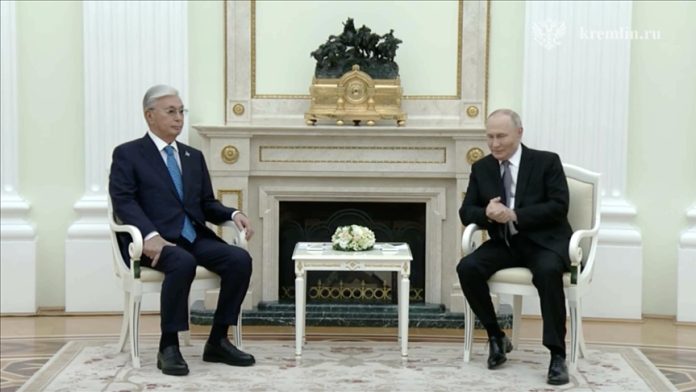
BAKU, Nov 13 (AZERTAC/APP) : Russian President Vladimir Putin and Kazakh President Kassym-Jomart Tokayev signed a Declaration on Comprehensive Strategic Partnership, according to Anadolu Agency.
Speaking at an official ceremony at the Kremlin, Putin highlighted that this declaration among other things outlines measures aimed at enhancing regional partnerships and border cooperation.
Putin also mentioned ongoing discussions regarding potential increases in gas deliveries from Russia to Kazakhstan.
“Gazprom (Russian national energy corporation), has consistently supplied gas to Kazakhstan’s consumers over several years. Now we are exploring possibilities to augment these deliveries, particularly focusing on regions such as northern and eastern parts of the country, which house significant industrial facilities,” he said.
For his part, Tokayev underscored Russia’s pivotal role as Kazakhstan’s key partner.
“Russia is Kazakhstan’s most important partner, and cooperation is developing despite the difficult international situation,” he stressed.
Earlier in the day, Kremlin spokesperson Dmitry Peskov had already indicated Moscow’s substantial interest in the agreement.
Foreign delegations depart after successful Inter-Parliamentary Speakers’ Conference in Islamabad
World can triple renewables — if governments don’t slow it down

ASTANA, Nov 13 (Kazinform/APP) : The world is on track to add renewable energy capacity at record pace again in 2025, bringing the goal of tripling global renewables by 2030 closer than ever. According to a new report by the independent energy think tank Ember, total renewable additions are projected to reach 793 gigawatts (GW) this year (an 11% increase from 2024) largely driven by solar power and China’s outsized role in global deployment, Kazinform News Agency correspondent reports, citing Ember.
Ember’s analysis of solar and wind installations through September shows another year of historic growth. Solar capacity is set to rise by 9%, wind by 21%, continuing a streak of rapid expansion since 2022. China alone is expected to account for two-thirds of all new global solar and wind capacity.
The pace of growth is remarkable: annual solar additions in 2025 are projected to be four times higher than in 2021, while wind installations have increased by half over the same period. Much of the surge in China this year was driven by developers racing to complete projects before new compensation rules took effect in mid-2025.
At the 2023 UN Climate Conference (COP28), more than 130 governments pledged to triple global renewable capacity to at least 11 terawatts by 2030, a cornerstone goal for limiting warming to 1.5°C. Since thaen, global additions have exceeded expectations, averaging 29% annual growth between 2023 and 2025, well above the 21% per year initially required to stay on track.
As a result, annual additions now only need to rise by 12% a year from 2026 to 2030 to meet the tripling target. Yet the report cautions that sustaining current levels is not assured. The International Energy Agency’s (IEA) Renewables 2025 forecast suggests that installations could slow in the coming years due to policy shifts in key markets like the United States and China. In the IEA’s main case, total capacity reaches 9,530 GW by 2030, around 15% short of the goal.
The shortfall is even larger in terms of power generation (around 28%) because most of the gap lies in wind and hydropower, which produce more electricity per unit of capacity than solar.
Despite the boom on the ground, government targets are failing to keep pace. Ember finds that national renewable capacity goals for 2030 have risen only 8% since COP28, collectively amounting to 7,793 GW, barely enough for a doubling, not a tripling, of 2022 levels.
China’s newly updated national targets, based on its 2025 climate submission, provided most of that increase, adding roughly 779 GW. But this gain was offset by a sharp decline in assumed U.S. ambitions after political changes and the rollback of major clean-energy incentives. Ember now uses the IEA’s more conservative 741 GW forecast as a proxy for the United States’ implicit 2030 goal.
Solar and wind targets both fall short of what is needed. The world’s combined national solar goals total just 3,110 GW by 2030, roughly half the level required for a tripling scenario. In contrast, wind targets and forecasts align more closely but still leave a gap of over 500 GW.
Ember concludes that the path to tripling renewables by 2030 is still “within reach,” but only if governments act decisively. National targets must be updated to match the pace of market growth, and stronger policy frameworks are needed to sustain investment in grids, storage, and system flexibility.
Earlier, Kazinform News Agency reported that Australian households would be able to access at least three hours of free solar electricity per day from 2026 under a government initiative.
Belarus women to take on Bosnia and Herzegovina, Greece in football friendlies

MINSK, Nov 13 (BelTA/APP): The Belarusian women’s national football team will play two friendlies in Bosnia and Herzegovina at the end of November, BelTA has learned.
The Belarusian side will open their schedule against Bosnia and Herzegovina in Zenica on 26 November, before taking on Greece on 29 November.
Coach of the Belarusian team Vyachaslaw Hryharaw has selected a group of 23 players for the training camp:
Goalkeepers: Ekaterina Miklashevich (FC Minsk), Natalia Voskobovich (ZFK Zenit Saint Petersburg, Russia), Maria Svidunovich (Ryazan-VDV, Russia).
Defenders: Daria Gorshkova, Zarina Kapustina, Olga Kapysha (all from FC Dinamo BGUFK, Minsk), Arina Sitnikova, Yulia Slesarchik (both WFC Nike Lusso, Georgia), Ksenia Kubichnaya (FC Minsk), Anna Kozyupa (WFC Lokomotiv Moscow).
Midfielders: Anastasia Shlapakova (ZFK Dynamo Moscow), Valeriya Belaya (FC Minsk), Anastasia Linnik (WFC Lokomotiv Moscow), Karina Olkhovik (Fenerbahçe S.K., Türkiye), Melana Surovtseva (Puskás Akadémia FC, Hungary), Alina Cherlenok (FC Dinamo BGUFK, Minsk), Anastasia Mager (Zvezda-2005 Perm, Russia), Lizaveta Pinchuk (FC Dnepr Mogilev).
Forwards: Viktoriya Valyuk Shuppo (FC Minsk), Anastasia Shuppo (FC Minsk), Anna Sinyavskaya (FC Dinamo BGUFK, Minsk), Karolina Zhitko (WFC Rubin Kazan, Russia), Nadezhda Voskobovich (WFC Krylia Sovetov Samara, Russia).
ADB support to expand inclusive finance in Uzbekistan
ASTANA, Nov 13 (Kazinform/APP):The Asian Development Bank (ADB) has approved a $300 million policy-based loan—$100 million of which is concessional—to support the Government of Uzbekistan’s ongoing efforts to expand access to finance for underserved micro, small, and medium-sized enterprises (MSMEs), particularly those led by women, while strengthening the country’s microfinance sector, Kazinform News Agency learnt from the ADB’s press service.
Subprogram 2 will expand and deepen the foundational reforms of Subprogram 1 of the Inclusive Finance Sector Development Program, which is focused on establishing legal and institutional frameworks for inclusive finance. Some of these reforms include increasing the maximum microloan size, adopting changes to microfinance regulations, joining the Women Entrepreneurs Finance Code, and developing Islamic microfinance regulations.
“ADB is proud to support Uzbekistan’s transition to a more inclusive and market-based financial system,” said ADB Country Director for Uzbekistan Kanokpan Lao-Araya. “This program will help unlock access to finance for the self-employed and microentrepreneurs, promote gender equality, and strengthen consumer protection in the financial sector.”
Subprogram 2 introduces new policy actions to strengthen consumer protection by updating guidelines for responsible lending, regulating emerging financial services like “buy now, pay later”, and enhancing digital financial supervision. It also scales up gender-focused reforms by supporting the gender equality policy for the financial sector, including setting gender quotas for financing and operationalizing sex-disaggregated data reporting.
As part of the program, an assessment of the National Financial Inclusion Strategy (NFIS) for 2021–2023 revealed a growing level of financial inclusion, with 60% of adults owning an account at a formal financial institution—driven largely by the rapid expansion of digital finance.
Another key element of the program is its support for the structural transformation of the microfinance sector by enabling the establishment of deposit-taking microfinance banks to provide greater access to finance by putting necessary risk-based regulatory and supervisory framework in place to ensure financial stability. To date, two preliminary licenses have been issued for setting up microfinance banks.
The program is complemented by technical assistance to build institutional capacity and ensure sustainability of reforms. Subprogram 2 is part of a broader programmatic approach that includes a proposed Subprogram 3 (2025–2027), which will further strengthen implementation and institutional capacity.
This year marks the 30th anniversary of the partnership between ADB and the Republic of Uzbekistan. Since the Republic of Uzbekistan joined ADB in 1995, the bank has committed public sector loans, grants, and technical assistance totaling $14.6 billion to the country.
ADB is a leading multilateral development bank supporting inclusive, resilient, and sustainable growth across Asia and the Pacific. Working with its members and partners to solve complex challenges together, ADB harnesses innovative financial tools and strategic partnerships to transform lives, build quality infrastructure, and safeguard our planet. Founded in 1966, ADB is owned by 69 members—50 from the region.
As stated previously, the Asian Development Bank (ADB) approved a $500 million policy-based loan to support the Government of Uzbekistan in strengthening public sector efficiency, advancing economic governance, and accelerating the country’s integration into the global economy.
Belarus, Colombia agree to expand interparliamentary dialogue
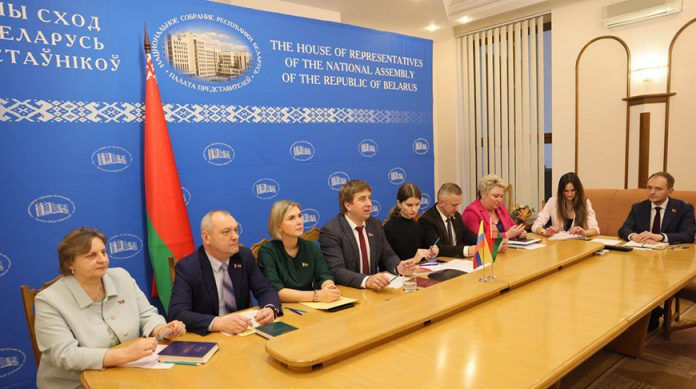
MINSK, Nov 13 (BelTA/APP): Belarusian and Colombian parliamentarians have reached an agreement on expanding the interparliamentary dialogue, BelTA learned from Pavel Popko, a member of the International Affairs Commission of the House of Representatives of the National Assembly of Belarus.
An online meeting of members of the Belarusian parliament’s working group on cooperation with parliaments of individual states of Central and South Americas with the group on parliamentary friendship between the Chamber of Representatives of the Congress of the Republic of Colombia and the House of Representatives of the National Assembly of the Republic of Belarus took place in the lower chamber of the Belarusian parliament.
The head of the Belarusian group Pavel Popko and the head of the Colombian one David Alejandro Toro Ramirez exchanged opinions about the state and prospects of bilateral relations and mentioned the importance of expanding the interparliamentary dialogue.
“A very constructive dialogue with our Colombian friends and partners in Colombia’s Chamber of Representatives took place. We touched upon three blocks of topics today. We began with a review of accomplishments of Belarus and Colombia,” Pavel Popko said. “We see that the bills, which are passed in our countries, are designed to benefit our residents and national interests. Belarus has something to be proud of. We see that the Colombian side also very actively advances with the development of agriculture and economy. A lot of shared topics.”
According to the MP, one of the blocks was dedicated to economy and the promotion of products. The parties also paid attention to concrete draft laws. “Every member of the friendship group presented a brief report on the bills they are focusing on right now,” Pavel Popko said.
Close attention was paid to the matter of realization of the Belarusian-Colombian agreement on mutually waiving visa requirements for short-term stays. Members of the House of Representatives of the National Assembly of Belarus passed the relevant bill in one reading at a session on 15 October.
China Focus: Chinese screens find gold mine in online literature

BEIJING, Nov. 13 (Xinhua/APP): From epic fantasy dramas featuring gods and immortals to intimate stories of urban professionals navigating careers and relationships, what appears on Chinese screens is increasingly drawing from one prolific creative well: online literature.
In an industry hungry for proven hits, adaptations of serialized web novels have become a significant force in programming. According to industry data, more than a third of the series set for release or under production in 2025 by China’s three major streaming platforms — iQiyi, Tencent Video, and Youku — are based on such digital originals.
This trend underscores a major shift in how China’s entertainment industry capitalizes on the country’s vibrant, crowd-sourced online fiction.
For producers, the appeal is clear. These novels, often written in serial installments and honed by real-time reader feedback, arrive with a built-in audience and a pre-tested story.
“The ‘co-creation’ model is the unique advantage,” said Jia Wenting, IP content director at Fanqie Novel, adding that a story that survives the rigorous verdict of online readers has essentially already passed a market test.
He Liang, an associate professor at the Beijing Film Academy, described the process of adaptation as a “structural remake.”
“You are transforming a sprawling, text-based narrative, often with internal monologues and complex subplots, into a visual and emotionally immediate experience,” he said. “The rhythm changes, the focus sharpens. The goal is to capture the essence while making it work as television.”
The adaptations span a wide spectrum. Heartfelt realist dramas like “Like a Flowing River,” which chronicles the lives of ordinary people amid China’s economic reforms, share the spotlight with lavish fantasy series like “Lost You Forever,” which features high-quality visual effects that build immersive mythical worlds.
A significant and profitable segment focuses on modern women’s lives, with shows like “Nothing But Thirty” exploring themes of career, family, and self-worth, resonating deeply with female viewers.
Now, Chinese screen adaptations are traveling far beyond China’s borders. A research report from the Chinese Academy of Social Sciences highlighted a fruitful year in 2024 for the global reach of these adaptations.
“Joy of Life 2,” a historical suspense series, was released overseas on Disney+ and became the platform’s most-watched drama from the Chinese mainland. Other series, including “The Double,” topped viewing charts in countries like Thailand and the Republic of Korea.
“Content is the key,” said Zhu Xinmei, director of the international communication institute of the development research center under the National Radio and Television Administration. “The growing international influence of Chinese screen series has boosted the confidence of overseas platforms in acquiring them.”
The industry is also turning to technology to refine its hits. Artificial intelligence is being used to analyze plot logic, assist in casting and set design, and even predict audience preferences, making the high-stakes process of adaptation more data-informed.
As He Hong, head of the China Writers Association’s online literature center, noted, the next step is to further streamline the pipeline “from online creation to film and television production,” aiming to deepen the synergy between writers and film and TV producers and enhance the appeal and reach of China’s cultural stories.
Survey team discovers 573 ancient stone fortresses in NW China

XI’AN, Nov. 13 (Xinhua/APP): A comprehensive six-year archaeological survey in northwest China’s Shaanxi Province has found 573 ancient stone fortress settlements, dating from the prehistoric era to the Shang Dynasty (1600-1046 BC).
This specialized investigation, carried out by the cultural heritage and archaeology team of the city of Yulin in Shaanxi from 2019 onwards, systematically searched the vast and complex terrain of the Yulin area.
Following existing water system maps to locate these ancient sites, the fieldwork involved detailed examination, specimen collection and aerial mapping of the discovered fortresses.
The survey revealed that these settlements spanned from about 2800 BC in the late Yangshao period to around 1000 BC in the Shang and Zhou (1046-221 BC) dynasties.
Mostly distributed along riverbanks, the stone fortresses were surrounded by numerous ordinary settlements without defensive stone walls, indicating a clear clustered relationship, said Ma Mingzhi, head of the team.
The development of these stone fortresses shows a clear evolution from small to large in scale, from simple to complex in layout, and from rudimentary to mature in construction techniques — with social hierarchy becoming increasingly distinct.
The survey provides crucial information for a comprehensive understanding of the origin, development, spread and evolution of prehistoric settlements in northern China, Ma added.