Home Blog Page 623

Pakistan champions people-centred climate partnerships at COP30, urges new policy architecture for resilience

0

ISLAMABAD, Nov 19 (APP): Pakistan made a strong pitch for a new global climate policy architecture at COP30, arguing that resilience in climate-vulnerable countries can only be achieved through a transformative model that brings together governments, businesses, and communities.

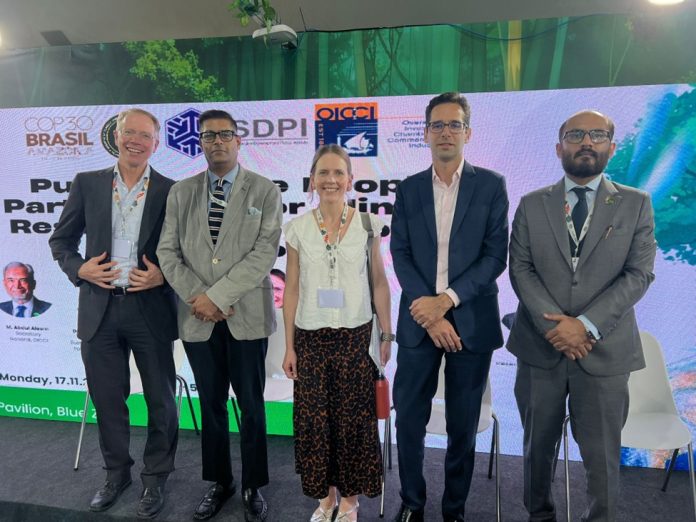
At a high-profile panel at the Pakistan Pavilion jointly held by the Sustainable Development Policy Institute (SDPI) and Overseas Investors Chamber of Commerce and Industry (OICCI) titled Public–Private–People Partnerships for Climate Resilience and Adaptive Frameworks, Pakistani officials, development finance experts and global corporate leaders called for a decisive shift from traditional public–private partnerships toward an inclusive, people-centred approach, said a press release issued here on Wednesday.

In his welcome note, Dr. Abid Qaiyum Suleri, Executive Director, SDPI, warned that climate risks “move faster than our institutions,” arguing that the state, market and communities must work together if resilience measures are to succeed. He stressed that many adaptation failures are rooted in the exclusion of local communities from planning processes.

Suleri said Pakistan needs predictable regulations for private capital, alignment between adaptation investments and national plans, and credible, hyper-local climate data to allow insurers and businesses to assess risks accurately. He noted that private sector actors are ready to adopt innovative resilience and clean-tech models but require greater clarity and stability in government policies.

Dr Suleri focused on the need for climate finance to reach frontline institutions, local governments, cooperatives, village development committees, and community organizations, rather than remaining trapped in bureaucratic systems. He warned that a just transition will remain elusive unless people are included in decision-making rather than treated as passive recipients of support.

Abdul Aleem Ahmad, Secretary General, OICCI, reminded delegates that Pakistan remains one of the world’s most climate-vulnerable countries amid recalling the catastrophic floods of 2022 and 2025. He said these disasters “did not just wash away infrastructure; they washed away lives, livelihoods, and years of progress.”

He argued that Pakistan cannot afford to depend solely on public budgets or international aid, noting that adaptation demands innovative financing models, clear regulatory incentives, and a new ecosystem that encourages private sector investment at scale. According to Ahmad, the Public–Private–People Partnership model offers a way forward by combining public policy support, private innovation and capital, and community ownership.

In her remarks, Aisha Humera Chaudhry, Secretary, Ministry of Climate Change and Environmental Coordination said Pakistan’s climate priorities at COP30 revolve around building a policy ecosystem that unlocks private investment, embeds communities in decision-making, and strengthens legal, financial and monitoring frameworks. Pakistan, he said, sees PPPPs as the architecture through which adaptation can be scaled, financed and sustained.

Energy Economy Expert from SDPI, Dr. Khalid Waleed argued that the era of climate disruption requires the expansion of traditional Public–Private Partnerships to incorporate communities as equal partners. He added that Pakistan’s high cost of capital, combined with fiscal tightening under IMF commitments, has made resilience increasingly unaffordable for vulnerable populations. Public–Private–People Partnerships, he said, offer a shared financing structure that blends concessional public capital with private sector efficiency and community-level stewardship.

Waleed called for a shift from small-scale, pilot-driven projects to long-term systems anchored in market creation, stable policies, and stronger alignment between Pakistan’s national climate plans and private sector transition strategies. He urged greater emphasis on indigenizing energy and adaptation solutions, including the local manufacture of renewable energy systems, micro-grids and community-owned energy storage.

Dr. Urs Ruth of Robert Bosch GmbH warned that Pakistan’s industrial transition will require long-term policy stability, strong financing ecosystems, and investment in hydrogen as a future industrial fuel. He stressed that grid stabilization and flexible industrial systems are central to community resilience and cautioned that weak incentive structures risk accelerating carbon leakage under evolving global carbon market rules.

Unilever’s climate lead, Hannah Hislop, outlined the company’s transition plan and its €1 billion Nature Fund, noting that programmes in renewable energy, regenerative agriculture and public–private pilots demonstrate the value of blended climate financing.

IFC’s climate finance chief Aurelien Boyer encouraged Pakistan to climate-proof all future projects, arguing that commercial banks are increasingly interested in green investments if risks are well-managed. He highlighted IFC’s partnerships in Pakistan and pointed to blended finance, carbon markets, insurance innovations and digital technologies as promising tools, urging governments to strengthen existing frameworks rather than reinventing them.

SECP legal adviser Syed Bulent Sohail emphasized the need for strong climate governance, credible carbon market rules, legally sound benefit-sharing systems that protect indigenous communities, and regulatory coherence to support fintech-driven and insurtech-driven climate finance.
Gezhouba Group chairman calls on Aleem Khan; expresses interest in Pakistan’s infrastructure development

0
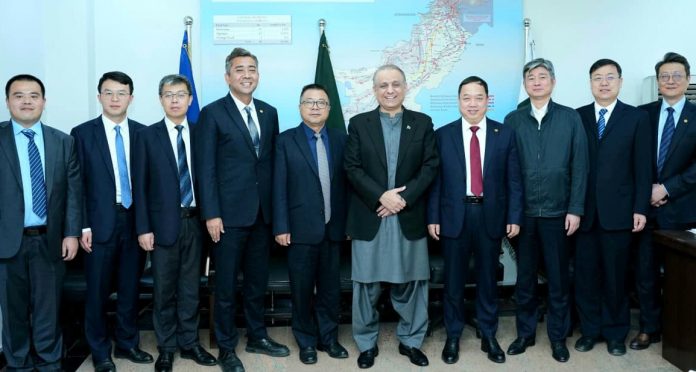
ISLAMABAD, Nov 19 (APP):Chairman of the China Gezhouba Group Company (CGGC) Liu Huailiang along with a delegation on Wednesday called on Federal Minister for Communications Abdul Aleem Khan and discussed collaboration in major road projects under the Public-Private Partnership (PPP) framework.
During the meeting, the Federal Minister said China remains one of Pakistan’s closest and most trusted partners, noting that today in schools we are educating the new generation on Pak China friendship.
He said that enhanced business cooperation between the two countries contributes positively to overall bilateral relations, said a press release.
Liu Huailiang shared that CGGC has maintained a presence in Pakistan since 2003 and has contributed to several important projects.
He conveyed the Group’s interest in pursuing the Public-Private Partnership model for the M-9 (Karachi–Hyderabad) Motorway project, adding that CGGC looks forward to expand its operations in Pakistan.
Abdul Aleem Khan acknowledged CGGC’s role in the Dasu Hydropower Project, stating that the company is a major contractor and has been performing effectively. He said that infrastructure projects in Pakistan offer promising opportunities for companies like CGGC.
The Minister highlighted the significance of the M-6 (Karachi port–Sukkur-Hyderabad) Motorway and the M-10 (Karachi Northern Bypass).
He noted that M-6 serves as a key route for cargo movement across the country and therefore has considerable investment potential.
He also pointed out that two sections between Hyderabad and Sukkur are yet to be developed, presenting viable investment prospects.
He informed the delegation that the National Highway Authority’s revenue had increased from Rs. 66 billion to Rs. 109 billion over the past one year, reflecting improved financial performance.
He said that investment in projects that offer sustainable returns and long-term value are encouraged.
Discussing demographic and development trends, Federal Minister Abdul Aleem Khan observed that Pakistan’s population is growing rapidly, which increases the need for expanded infrastructure as well while population growth in China has slowed.
He suggested that this creates additional opportunities for Chinese Companies to invest in Pakistan’s infrastructure.
He also discussed the Mansehra–Kaghan–Naran–Babusar Route, describing it as an alternative corridor to the Karakoram Highway with strong tourism potential. He said that this route could be developed into a Motorway and that the PPP mode would be a suitable option for such projects.
Liu Huailiang reaffirmed CGGC’s interest in Pakistan’s infrastructure development, including Motorways such as M-9 and M-6. He said that China remains committed to support Pakistan’s progress across key sectors.
Both sides agreed to continue working together to advance cooperation in transport, infrastructure and PPP-based development initiatives.
The meeting was also attended by Secretary Communications, General Manager of Asia Market of CGGC International Engineering Co., Ltd Mr. Yanyi,  Project Manager of the Dasu Hydropower Project and Country Director of CGGC in Pakistan Mr. Tan Bixuan,  Country Manager for CGGC Headquarters Mr. Xue FuCheng, Country Manager of CGGC Pakistan Mr. Hali, Director of Business Development of the CGGC Pakistan Branch Mr. Ma Chao and Deputy Director of Business Development of the CGGC Pakistan Branch Mr. Mustafa from the Chinese side.

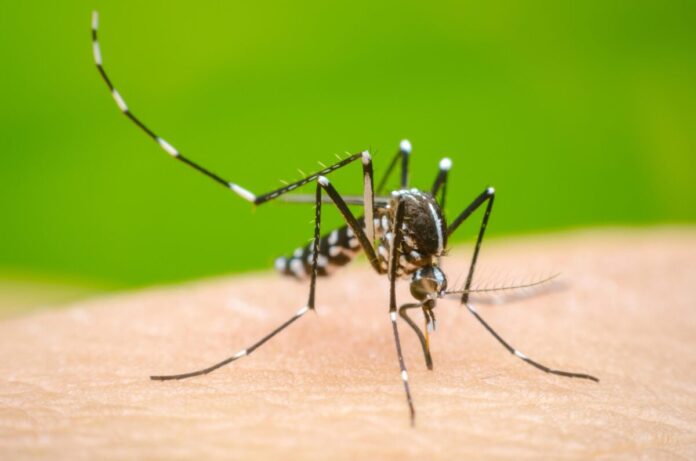
18 new cases of dengue reported in KP, raising total toll to 5978

0
Dengue
PESHAWAR, Nov 19 (APP):Around 18 new cases of dengue have been reported in Khyber Pakhtunkhwa during the last twenty four hours, raising the toll of total cases to 5978.
According to Dengue Situation Report issued by Public Health Section, Directorate General Health Services KP on Wednesday, out of 18 new cases around 7 have been hospitalized in different cities.
The total number of hospitalized patients due to dengue has been reached to 2063 till date, the report mentioned.
While out of total cases of 5978, around 5702 have been recovered from the disease. In all a total of four deaths including one during the last 24 hours has been reported in current year due to the vector borne infection.

RCCI organized ‘Online Quota Allocation’ training for pharma traders

0
RAWALPINDI, Nov 19 (APP):Pharmaceutical companies and importers can now submit applications for controlled drugs quota allocations electronically through DRAP’s new software system, officials announced during a training session on Wednesday.
The Drug Regulatory Authority of Pakistan (DRAP) introduced the online platform to streamline the submission process and enhance transparency in the allocation of quotas for controlled substances, with detailed hands-on guidance provided to industry stakeholders.
A comprehensive training session in this regard was organized by the Rawalpindi Chamber of Commerce and Industry (RCCI) in collaboration with DRAP, which was chaired by RCCI Acting President Khalid Farooq Qazi and attended by a large number of  pharmaceutical sector representatives.
DRAP’s Director Controlled Drugs Ajmal Sohail Asif, CEO Dr Obaidullah (who joined online), Software Developer Wasif, Deputy Directors Muhammad Ansar, Nouman Yousaf, and Dr Shoaib Ahmed explained the software’s features, quota allocation procedures, and the regulatory functions of the Controlled Drugs Division.
RCCI acting president thanked DRAP for the initiative and stressed that digital facilitation will significantly reduce paperwork and delays for the industry. The session ended with an interactive Q&A segment.

Murtaza Solangi highlights importance of protecting youth through better TAPS Regulations and Graphic Health Warnings

0
ISLAMABAD, Nov 19 (APP):The Society for the Protection of the Rights of the Child (SPARC) organized a discussion on “WHO Global Tobacco Epidemic Report 2025 and Best Practices on Tobacco Advertisement, Promotion and Sponsorship (TAPS) and Graphic Health Warnings (GHWs)” to review Pakistan’s progress in implementing the WHO Framework Convention on Tobacco Control (FCTC) and its MPOWER measures.
Addressing the participants as Chief Guest, Murtaza Solangi, Spokesperson to the President of Pakistan, noted that the latest WHO report delivers an important reminder that tobacco remains a major public health concern.
He shared that Pakistan can further strengthen its efforts particularly by reducing all avenues of tobacco advertising, promotion, and sponsorship (TAPS) and by expanding the visibility of graphic health warnings (GHWs) to help prevent avoidable health risks.
He highlighted that tobacco causes over 8 million deaths globally each year, exceeding the combined toll of HIV, tuberculosis, and malaria. In Pakistan, 27 million people use tobacco, leading to more than 166,000 deaths annually.
Solangi underscored the substantial social and economic impact of tobacco use and expressed confidence that Pakistan can make meaningful progress through awareness building, education, and the implementation of global best practices. He emphasized the importance of informing communities about tobacco’s harmful effects and promoting a culture of prevention.
Dr. Mahesh Kumar Malani, Chairman of the National Assembly Standing Committee on NHSR&C, reflecting on the WHO report, said that the statistics highlight the need to further safeguard young people. He noted that promotional activities, appealing packaging, event linkages, and online visibility can influence youth.
Dr. Malani emphasized that countries with comprehensive TAPS restrictions have observed promising reduction in tobacco use, particularly among younger populations. He called for strengthened measures, including GHW enhancement and policy improvements to ensure effective implementation.
Dr. Shazia Sobia Aslam Soomro, Member of the National Assembly Standing Committee on NHSR&C, observed that while Pakistan has made commendable progress, further strengthening of measures would enhance protection for the public.
She noted that consistent and clear regulations are essential to prevent TAPS gaps that may hinder tobacco control efforts.
Dr. Shazia underscored that GHWs are effective to encourage smokers to reflect on their habits and help deter youth from initiating tobacco use. She emphasized the importance of large, image based warnings that are updated regularly.
Barrister Dr. Muhammad Ali Saif, Former Advisor to the Chief Minister (KPK) on Information & PRs, shared that TAPS remain an important area for continued attention. He mentioned that marketing at points of sale and online visibility still poses challenges.
Referring to WHO findings, he added that nations with well enforced TAPS restrictions have reported notable decrease in tobacco consumption, especially among youth.
Dr. Khalil Ahmad Dogar, Program Manager at SPARC, highlighted that promotional activities continue to influence consumer behavior in subtle ways despite current restrictions. Citing WHO findings, he said that countries enforcing complete bans on all forms of TAPS have seen significant declines in tobacco consumption, particularly among youth.
The session brought together policymakers, journalists, civil society representatives, academics, media professionals, and youth groups.
Participants reviewed Pakistan’s progress on GHW implementation and TAPS enforcement and emphasized the importance of coordinated efforts and strengthened regulations to advance tobacco control across the country.

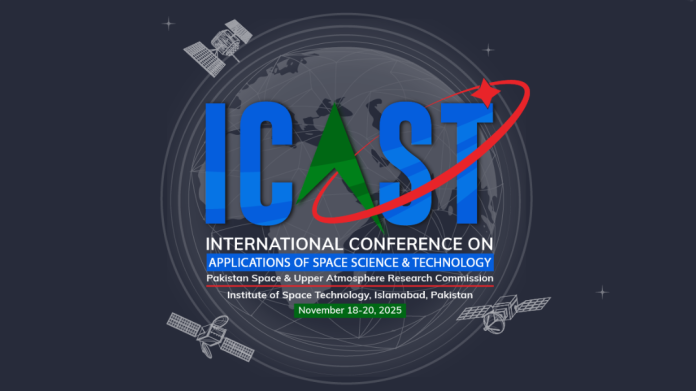
Int’l conference on Applications of Space Science and Technology continues

0
ISLAMABAD, Nov 19 (APP):The International Conference on Applications of Space Science and Technology (ICAST-2025) continued on Wednesday with a thought-provoking masterclass organized by the Inter-Islamic Network on Space Sciences and Technology (ISNET), focusing on the scientific, religious, and technological dimensions of moon sighting.
The session was conducted by renowned astronomer Mohammad Shawkat Odeh of the International Astronomical Center (UAE), drawing significant interest from delegates, researchers, and students attending the conference at the Institute of Space Technology (IST).
Odeh delivered a comprehensive overview of the fundamentals of crescent observation, explaining the moon’s phases and essential astronomical concepts such as elongation, moon age, and lag time. He outlined the principles that determine crescent visibility, enabling participants to understand the conditions under which the new moon can be sighted with the naked eye or through instruments.
The masterclass offered a historical perspective on global crescent visibility models, tracing the evolution of criteria used across centuries from ancient Babylonian methods to the South African Astronomical Observatory (SAAO) model, the widely referenced Yallop criteria, and the modern Odeh visibility framework. Odeh compared these models, highlighting their varying levels of reliability, accuracy, and practical application.
Participants were also briefed on how different Islamic countries determine the start of Hijri months.
The presentation reviewed methods used in Turkey, Oman, Jordan, Algeria, Morocco, and the UAE, noting how some nations rely on astronomical conjunction, others on sunset parameters, and many on actual visibility reports. Case studies illustrated how these approaches shape official moon-sighting decisions and sometimes lead to regional differences in marking Islamic months.
The session further explored global crescent observation archives, drawing from datasets spanning 1859 to 2024. Attendees examined historical records of early and difficult sightings, gaining deeper insight into how observational data supports or challenges theoretical models.
A lively discussion and Question and Answer session concluded the masterclass, giving participants the opportunity to engage in scientific debate, seek clarity on complex astronomical concepts, and explore the intersection of faith, observation, and modern technology.
The masterclass underscored ISNET’s commitment to strengthening scientific understanding within the Muslim world by bridging traditional practices with contemporary astronomical research.
It also added to the depth of activities at ICAST-2025, which continues to showcase cutting-edge dialogue on space science and its applications.

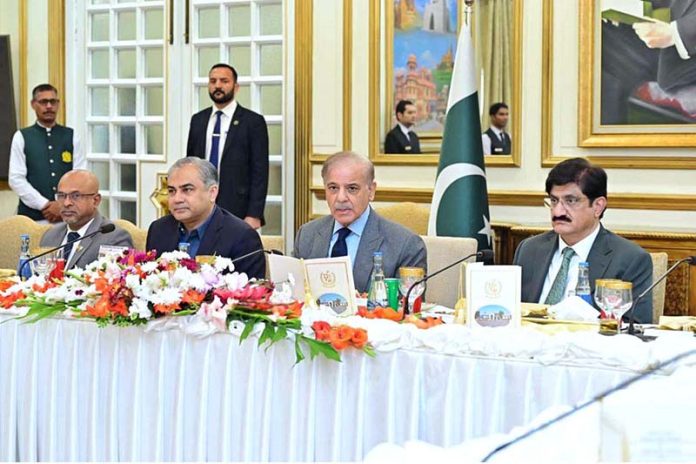
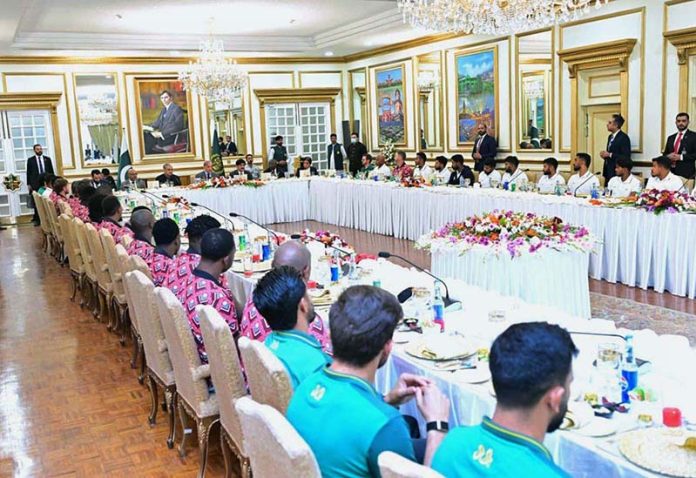
Prime Minister Muhammad Shehbaz Sharif addresses a banquet he hosted in honour of cricket teams of Pakistan, Sri Lanka and Zimbabwe, who are currently participating in the Tri-Nations Series

0
Prime Minister Muhammad Shehbaz Sharif addresses a banquet he hosted in honour of cricket teams of Pakistan, Sri Lanka and Zimbabwe, who are currently participating in the Tri-Nations Series
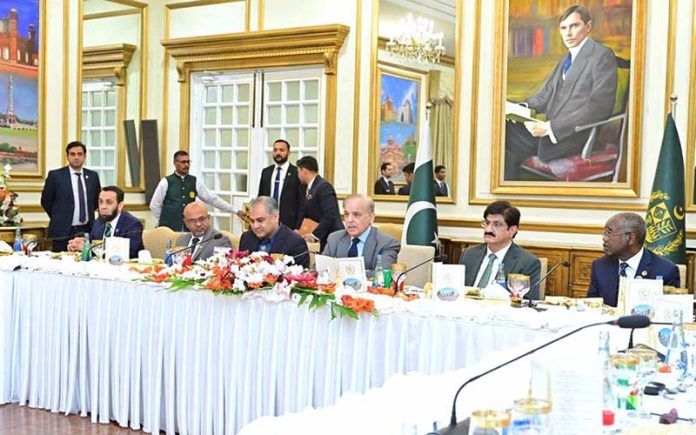
APP27-191125 ISLAMABAD: November 19 - Prime Minister Muhammad Shehbaz Sharif addresses a banquet he hosted in honour of cricket teams of Pakistan, Sri Lanka and Zimbabwe, who are currently participating in the Tri-Nations Series. APP/TZD
Prime Minister Muhammad Shehbaz Sharif addresses a banquet he hosted in honour of cricket teams of Pakistan, Sri Lanka and Zimbabwe, who are currently participating in the Tri-Nations Series
APP27-191125
ISLAMABAD 

Prime Minister Muhammad Shehbaz Sharif addresses a banquet he hosted in honour of cricket teams of Pakistan, Sri Lanka and Zimbabwe, who are currently participating in the Tri-Nations Series

0
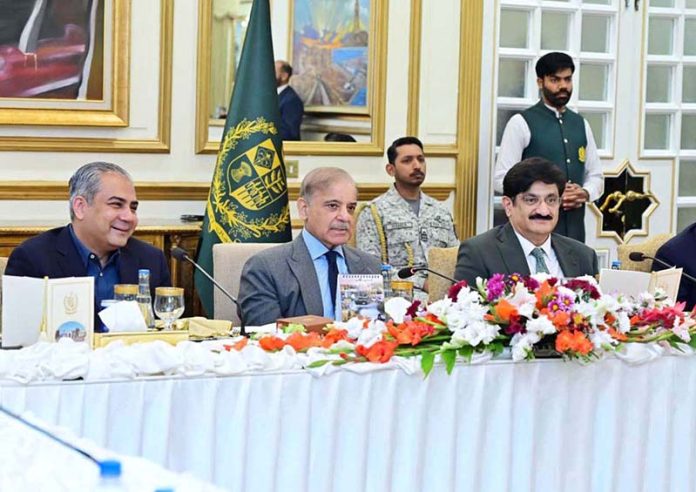
Prime Minister Muhammad Shehbaz Sharif addresses a banquet he hosted in honour of cricket teams of Pakistan, Sri Lanka and Zimbabwe, who are currently participating in the Tri-Nations Series
APP26-191125 ISLAMABAD: November 19 - Prime Minister Muhammad Shehbaz Sharif addresses a banquet he hosted in honour of cricket teams of Pakistan, Sri Lanka and Zimbabwe, who are currently participating in the Tri-Nations Series. APP/TZD
Prime Minister Muhammad Shehbaz Sharif addresses a banquet he hosted in honour of cricket teams of Pakistan, Sri Lanka and Zimbabwe, who are currently participating in the Tri-Nations Series
APP26-191125
ISLAMABAD 

Prime Minister Muhammad Shehbaz Sharif addresses a banquet he hosted in honour of cricket teams of Pakistan, Sri Lanka and Zimbabwe, who are currently participating in the Tri-Nations Series

0
Prime Minister Muhammad Shehbaz Sharif addresses a banquet he hosted in honour of cricket teams of Pakistan, Sri Lanka and Zimbabwe, who are currently participating in the Tri-Nations Series
APP25-191125 ISLAMABAD: November 19 - Prime Minister Muhammad Shehbaz Sharif addresses a banquet he hosted in honour of cricket teams of Pakistan, Sri Lanka and Zimbabwe, who are currently participating in the Tri-Nations Series. APP/TZD
Prime Minister Muhammad Shehbaz Sharif addresses a banquet he hosted in honour of cricket teams of Pakistan, Sri Lanka and Zimbabwe, who are currently participating in the Tri-Nations Series
APP25-191125
ISLAMABAD 

Prime Minister Muhammad Shehbaz Sharif addresses a banquet he hosted in honour of cricket teams of Pakistan, Sri Lanka and Zimbabwe, who are currently participating in the Tri-Nations Series

0
Prime Minister Muhammad Shehbaz Sharif addresses a banquet he hosted in honour of cricket teams of Pakistan, Sri Lanka and Zimbabwe, who are currently participating in the Tri-Nations Series
APP24-191125 ISLAMABAD: November 19 - Prime Minister Muhammad Shehbaz Sharif addresses a banquet he hosted in honour of cricket teams of Pakistan, Sri Lanka and Zimbabwe, who are currently participating in the Tri-Nations Series. APP/TZD
Prime Minister Muhammad Shehbaz Sharif addresses a banquet he hosted in honour of cricket teams of Pakistan, Sri Lanka and Zimbabwe, who are currently participating in the Tri-Nations Series
APP24-191125
ISLAMABAD