
GCWUS organizes Int’l Youth Conference
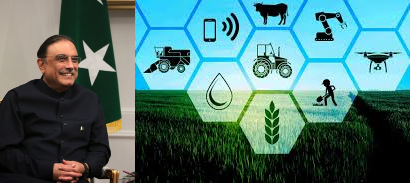
President calls for promoting agriculture technology, farmers’ welfare
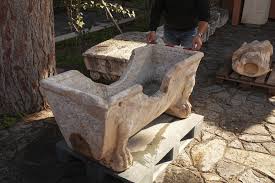
Roman-era marble bathtub, male statue unearthed at ancient Ephesus in Turkish Aegean region
ISTANBUL, Dec 18 (BelTA /APP): Archaeologists working at the ancient city of Ephesus in Türkiye’s Aegean region have uncovered a Roman-era marble bathtub and a fragmented male statue that had been reused as a paving stone, officials said.
The discoveries were made during ongoing excavation and restoration work at the UNESCO World Heritage site under the Culture and Tourism Ministry’s “Heritage for the Future: Endless Ephesus” project, which aims to open new visitor routes and bring previously buried artifacts to light.
The marble bathtub was uncovered along Stadium Street and is believed to have belonged to the Terrace Houses, once home to wealthy Roman families. Carved from regional Greco Scritto marble, the tub measures 1.46 meters (4.8 feet) long, 0.73 meters (2.4 ft) wide and 0.6 meters (2 ft) high.
Serdar Aybek, an archaeologist at Dokuz Eylul University and the project coordinator, said the bathtub dates to the first century AD, highlighting the importance of bathing culture in antiquity.
During the Roman period, large public bath complexes were common, Aybek said, citing the Harbor Baths in Ephesus as one of the most significant examples.
“Covering nearly 70,000 square meters, it is one of the largest structures in the Roman world,” he said. “However, these are public buildings that served large crowds. In addition, there were smaller bathtubs intended for domestic use.”
“The bathtub we found is one of those,” Aybek said. “It is an unusual discovery because it is not something we encounter frequently. We believe it belonged to the Terrace Houses and was used in the first century A.D. We found it during work at the theater, and its size shows it was used in a house.”
Aybek said the craftsmanship suggests the bathtub belonged to a high-income household and noted it was later reused during repairs in the city’s late period.
Archaeologists determined that the tub had been repurposed as a fountain trough, with holes cut to allow water to flow in from above and out from below, altering its original structure.
Another major find from Stadium Street was a male statue carved in multiple pieces, with the head, arms and feet produced separately and attached later.
Based on stylistic features, the statue dates to between the first century BC and the first century AD, Aybek said. It measures 1.23 meters (4 ft) high and 0.5 meters (1.6 ft) wide.
The statue was found face down after having been reused as a paving stone in the roadway.
“It was completely unexpected,” Aybek said.
IRSA releases 78,900 cusecs water
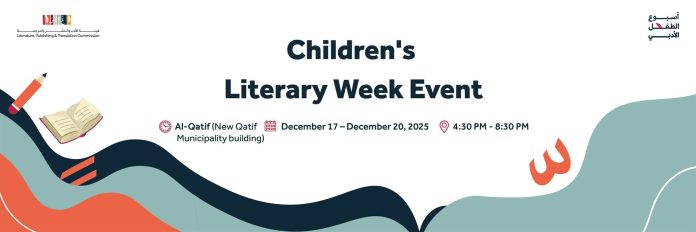
Translation Commission Launches ‘Children’s Literary Week’ in Qatif
Qatif, Dec 18 (SPA/APP): The Literature, Publishing and Translation Commission launched Children’s Literary Week in Qatif Governorate. The four-day event aims to enhance the presence of literature in the lives of children and adolescents and to develop their creative skills through an integrated cultural experience.
The activities offer a diverse program that includes creative writing workshops, storytelling theater, and interactive sessions designed to transform reading into an enjoyable experience and a journey of discovery. The program is delivered with the participation of a distinguished group of specialists in children’s literature and cultural content creation.
The program also provides children and adolescents with practical spaces to engage with literary texts and develop their storytelling and imaginative skills through initiatives that combine learning and entertainment, supporting the early discovery and nurturing of literary
KP Chief Secy orders early completion of Women and Children Hospital Haripur, announces upgrade of DHQ Hospital
Pezeshkian says expansion of public transport, rail corridors ‘a priority’
Tehran, Dec 18 (IRNA/APP): Iranian President Masoud Pezeshkian said expanding public transport fleets and completing Iranian rail corridors are the government’s top transport priorities.
Speaking at a specialized meeting reviewing the Ministry of Roads and Urban Development’s actions on suburban and regional rail projects around Tehran on Wednesday, Pezeshkian said the government’s strategy is to move public transport toward electrification as much as possible.
He said electrification would help cut air pollution, improve energy efficiency, and reduce long-term costs.
The president added that all government transport plans, including the development of suburban rail networks of Tehran, are aimed solely at improving services for citizens and enhancing quality of life, rather than encouraging further expansion of the capital.
DIG visits PTS, reviews security , training standards
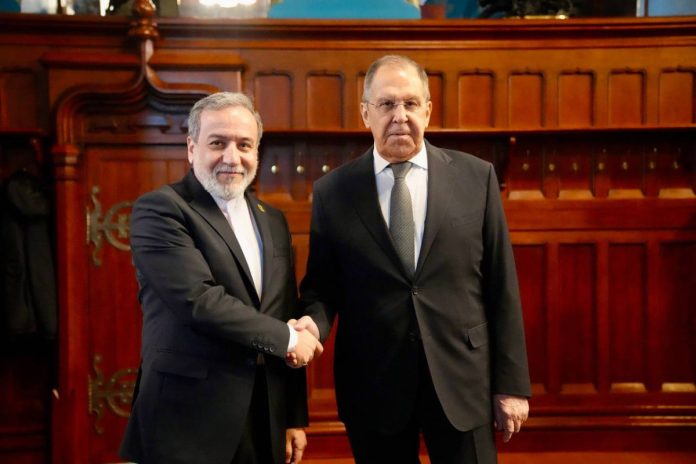
Iran, Russia FMs sign cooperation document in Moscow
Moscow, Dec 18 (IRNA/APP): Iranian Foreign Minister, Abbas Araghchi, and his Russian counterpart, Sergei Lavrov, have inked a cooperation document following their meeting in Moscow, the capital of Russia.
Araghchi and Lavrov signed a cooperation document at the conclusion of their discussions on Wednesday.
After the signing ceremony, Araghchi said, “Bilateral relations between Iran and Russia have significantly expanded in recent years, particularly this year with the signing of the Comprehensive Strategic Treaty, which has further accelerated our cooperation. This treaty is now in force, and we are moving forward based on its vision.”
The top Iranian diplomat emphasized, “In the agreement we signed, we have established a consultation program for the years 2026 to 2028, which will serve as a roadmap for our cooperation over the next three years.”