Home Blog Page 46

All options to be exercised to retrieve, ensure Pakistan’s water rights: FO spox

0

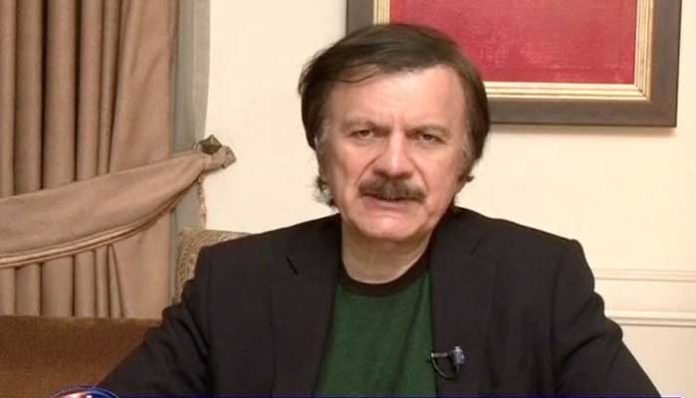
ISLAMABAD, Dec 18 (APP): Pakistan on Thursday vowed to exercise all options to retrieve and ensure that its water supply was not restricted by India, urging the international community to take notice of India’s continued disregard of the Indus Water Treaty.

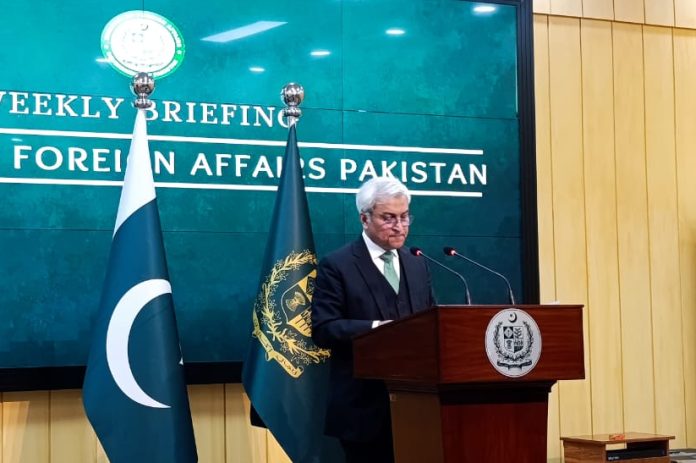
Foreign Office spokesperson Tahir Andrabi, in his weekly press briefing, apprised the media of the recent abrupt variation in the flow of the River Chenab and the unilateral release of water into the river by India without any prior notification or information shared with Pakistan.

Expressing serious concerns over these variations, he said Pakistan’s Indus Water Commission had written a letter to his Indian counterpart seeking clarification on the matters as any manipulation of river flow by India, especially at a critical time of agricultural cycle, directly threatened the lives and livelihoods as well as food and economic security of Pakistani people.

“The Indus Water Treaty is a binding international agreement which has been an instrument of peace, security and stability in the region. Its breach or violation on one hand threatens the inviolability of international treaties and compliance with international law and on the other hand it poses serious threats to regional peace, principles of good neighbourliness.”

The spokesperson reiterated that Pakistan remained committed to peaceful resolutions of disputes and issues with India, but would not compromise on the existential water rights of its people.

Highlighting the incident involving the mistreatment of a Muslim woman by the Chief Minister of Indian State of Bihar and its public mocking by a minister in the state of Uttar Pradesh, Spokesperson Andrabi called it “deeply disturbing” which also warranted a strong condemnation.

He said that such conduct reflects a broader and troubling pattern associated with Hindutva-inspired politics like the alarming rise of religious intolerance and Islamophobia.”

Asked about the defamation campaign by the Indian media following the terrorist attack at Sydney’s Bondi Beach, he said a constant “conveyor belt” of disinformation was run, and eventually the suspect turned out to be of Indian origin and an Indian passport holder.

He urged the Indian media to act more responsibly as the ultimate price they paid for such misinformation was the loss of their own credibility.

Also rejecting the Indian media’s baseless propaganda about the meeting between Prime Minister Shehbaz Sharif and Russian President Vladimir Putin, the spokesperson said, the meeting was “very productive and positive.”

Regarding the media reports, he said that given India’s troubling history of nuclear security collapses, including multiple incidents of radioactive material theft and unlawful sale of radioactive material, the involvement of the private sector in handling of sensitive nuclear material might pose challenges to the global efforts for countering access of private individuals to sensitive nuclear materials.

To a question, he said the closure of Pakistan’s airspace for India was reflective of the relations between the two countries, and factors like the threats against Pakistan and statements by Indian senior leadership about having another wave of aggression against Pakistan caused the airspace closure.

Asked to comment about the UN Security Council report on Afghanistan, the spokesperson said the document corroborated Pakistan’s stance that the presence of terrorist elements in Afghanistan posed a major threat to peace and security of the region, besides undermining any efforts of internal development and state consolidation inside Afghanistan by the Kabul government.

He said the report also reaffirmed Pakistan’s assertion that the major impediment to developing bilateral relations between Pakistan and Afghanistan, like ceasefire, the closure of the border and trade were also linked with the presence of these terrorist elements.

To another question, he said the Pak-Afghan ceasefire was meant to stop terrorist attacks from Afghanistan into Pakistan. He said that as attacks from Afghan side continued so, the ceasefire was not holding.

He told the media that there was no hindrance in the dispatch of humanitarian aid to Afghanistan, including the medicines as a consignment was allowed recently and it would be up to the Taliban regime to accept that.

Responding to the matter of the Norwegian ambassador’s presence in a court case hearing, he said the matter had been rested after he was called to the foreign ministry.

However, highlighting the broader principle, he said that the attendance of ambassadors in a court of law was not their right and the diplomats wishing to attend a court proceeding anywhere in the country needed to approach the foreign ministry for approval.

“The ambassadors enjoy diplomatic immunity and this comes with a certain responsibility…And I also believe that the diplomats wishing to attend a court may have to waive off their diplomatic privilege and immunity if they wish to make an appearance in the court,” he added.

Highlighting the diplomatic engagements during the last week, he mentioned Prime Minister Shehbaz’s visit to Turkmenistan where he attended International Conference on Peace and Trust and met the leaders of Turkmenistan, Turkiye, Russia and Iran.

During the visit, Deputy Prime Minister Ishaq Dar also met his counterparts from Iran, Kyrgyzstan, Oman, Turkiye, Tajikistan and Uzbekistan as well as Secretary-General of the Economic Cooperation Organization.

Andrabi also referred to the statement by foreign minister of Muslim countries highlighting the indispensable role of the UNRWA and condemned the storming of its headquarters in East Jerusalem by the Israeli forces, in flagrant violation of international law and the inviolability of UN premises.

The ministers called upon the international community to ensure sustainable and adequate funding of UNRWA and to provide the agency with the political and operational space needed to continue its work in all five fields of its own operation.
CDF Field Marshal Syed Asim Munir calls on Libyan counterpart

0
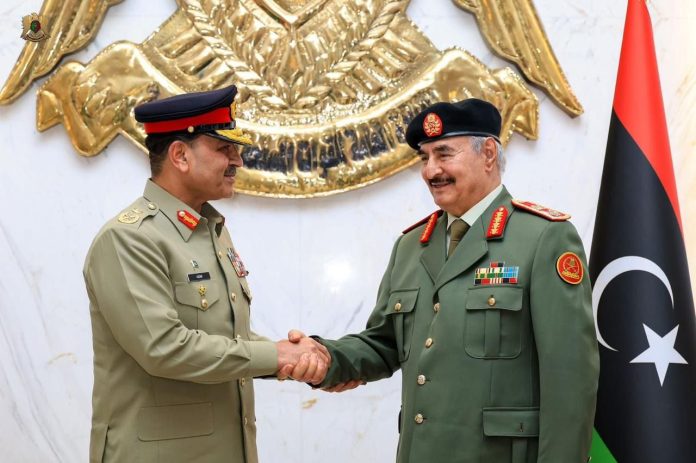
RAWALPINDI, Dec 18 (APP):Chief of the Army Staff (COAS) and Chief of Defence Forces (CDF) Field Marshal Syed Asim Munir, NI (M), HJ, who is on an official visit to Libya, called on Field Marshal Khalifa Belqasim Haftar, Commander-in-Chief of the Libyan Arab Armed Forces and Lieutenant General Saddam Khalifa Haftar, Deputy Commander-in-Chief of the Libyan Arab Armed Forces.
CDF Field Marshal Syed Asim Munir calls on Libyan counterpart
On arrival, the Field Marshal was accorded a Guard of Honour by a smartly turned-out contingent of the Libyan Armed Forces, said a news release issued by Inter Services Public Relations (ISPR).
Matters of mutual interest, regional security dynamics, and avenues for enhancing bilateral defence and military-to-military cooperation were discussed during the meeting with Field Marshal Khalifa Haftar.
Both sides underscored the importance of collaboration in training, capacity building, and counter-terrorism domains.
Field Marshal Syed Asim Munir reaffirmed Pakistan’s commitment to strengthening defence ties with Libya, based on shared interests.
Field Marshal Khalifa Haftar appreciated the professionalism of the Pakistan Armed Forces and expressed his desire to further expand defence cooperation between the two countries.

ICT Police records 1,039 promotions in 2025; IGP approves fresh elevations

0
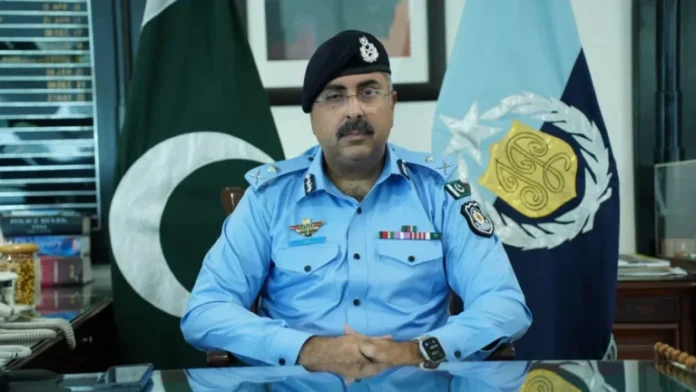
ISLAMABAD, Dec 18 (APP):Islamabad Capital Territory (ICT) Police recorded a total of 1,039 promotions during 2025, including the recent approval by for the promotion of five head constables to assistant sub-inspector (ASI) rank and 38 constables to head constable, marking another step in recognising officers’ service and performance.
An official told APP on Thursday that the latest promotions approved by the IGP were part of the ongoing promotion process aimed at ensuring that officers receive timely elevation based on merit and seniority.
He said that during the year 2025, a record 1,039 officers and officials of Islamabad Police were promoted to their next ranks. These included 10 DSPs promoted to SP, 27 inspectors to DSP, 94 sub-inspectors to inspector, 189 ASIs to sub-inspector, 311 head constables to ASI, 388 constables to head constable, and 40 clerical staff promoted to higher posts.
The official said the IGP has directed that the promotion process should continue without unnecessary delay. “Any officer who has a clear right to promotion will be promoted promptly,” he quoted the IGP as saying.
IGP Syed Ali Nasir Rizvi said that Islamabad Police officers and officials remain on duty day and night to serve the public, adding that the promotions reflect recognition of their hard work, sacrifices and commitment. “Because of their efforts, citizens are able to live in peace and security,” he said.
He reaffirmed that the welfare and professional growth of police personnel remain a priority and that the department will continue to encourage its workforce through fair and transparent promotion policies.

Pak-China medical tourism: A call for strengthening healthcare ties

0
BEIJING, Dec 18 (APP):The rapid development of the healthcare sector worldwide has made cross-border medical cooperation increasingly vital, especially for countries like Pakistan, where the healthcare system faces immense strain.
Shortages of resources, specialists, and access to modern medical technology often leave the public with few options but to seek treatment abroad or endure delayed and inadequate care.
Establishing a formal and strong medical cooperation between Pakistan and China in medical tourism is urgently needed. Such an agreement could transform healthcare access for millions of Pakistanis, similar to China’s successful medical tourism system with Bangladesh.
This was stated by President of Pakistan-China Medical Association (CPMA) Dr Muhammad Shahbaz in a statement.
He said that despite the dedication of local medical professionals, the shortage of specialists, advanced diagnostic tools, and cutting-edge treatments often forces patients to seek treatment abroad, at great personal expense or risk of inadequate care.
In this context, a comprehensive medical partnership between the two nations is needed. This partnership, addressing hospital infrastructure, critical care, and emergency patient transfers, could offer immediate solutions to Pakistan’s pressing healthcare needs. A formal agreement would provide access to advanced medical technologies, highly trained specialists, and affordable treatment options in China, especially for patients with complex and advanced diseases, those requiring organ transplants, bone marrow transplant, CAR-T treatment, gene therapy, advanced stem cell therapy or those suffering from cardiovascular diseases, neurological disorders, cancer, and rare conditions difficult to treat in Pakistan. Timely treatment for these patients could mean the difference between life and death, he added.
China has emerged as a global leader in healthcare, with state-of-the-art medical facilities, skilled professionals, and an affordable system that prioritizes quality. For Pakistan, partnering with China could significantly improve healthcare access, offering patients treatment for conditions that are difficult to manage in Pakistan’s existing healthcare system. This partnership could ease the pressure on local hospitals and provide access to world-class medical care for serious conditions.
To implement this agreement, several practical steps are necessary. Fast-track visa systems for patients seeking medical care in China, a medical referral system to overcome the language barrier and guide patients from Pakistani hospitals to Chinese institutions, and special medical flights for urgent cases would streamline the process. A joint coordination center could be established to manage patient transfers, treatment options, doctor selection, schedules, and follow-ups. This partnership would also benefit Pakistan in the long term by sending Pakistani doctors, nurses, and healthcare staff to China for specialized training, enhancing local skills and reducing reliance on foreign medical treatment. Ultimately establishing the state of the art healthcare facilities in Pakistan via Technology transfer and advanced training equipped with AI and Telemedicine to benefit the patients in the remote areas of Pakistan.
Dr Shahbaz opined that healthcare partnership between Pakistan and China would not only improve patient care but also strengthen the bilateral ties between the two countries. Such an agreement would be a testament to the power of international collaboration in addressing global health challenges and provide a model for other nations. The exchange of medical expertise and technology would promote shared progress in the healthcare sector.
Additionally, a medical tourism partnership mechanism could be developed, facilitating easier travel for Pakistani patients seeking high-quality, affordable treatment in China. This would reduce the burden on Pakistan’s domestic healthcare system while offering patients the option of receiving care in world-class facilities abroad.
The time is ripe for Pakistan and China to formalize a medical cooperation agreement. The benefits are clear: improved healthcare access, enhanced medical knowledge, and a strengthened relationship between the two nations. For millions of Pakistanis in need of urgent care, this agreement could offer new hope by ensuring timely, high-quality treatment. International collaboration and shared resources are key to achieving a safer, stronger, and more modern healthcare system, he said.

Govt.’s prudent policies lead to restoring consumer confidence: Khurram

0
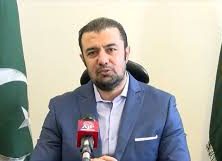
ISLAMABAD, Dec 18 (APP):Adviser to Finance Minister Khurram Schehzad on Thursday said the prudent economic policies introduced by the current government had starting yielding the required results, saying that consumer confidence recorded a ‘strong year-on-year recovery’ during the first quarter of financial year 2026.
He posted on X while commenting on the Pakistan Consumer Confidence Survey conducted by D&B Pakistan and Gallup Pakistan which revealed that the recovery was driven mainly by improved household financial conditions and positive income expectations.
The survey showed that overall consumer confidence increased by 19 percent on a year-on-year basis, confirming a clear rebound from last year’s lows, although a slight cooling was observed on a quarterly basis.
Despite the moderation, the future outlook remained resilient and close to neutral, with the Future Confidence Index standing at 98.2, indicating that consumers largely expect economic conditions to stabilize rather than deterioration.
Household finances continued to serve as a key anchor of confidence, as 62 percent of respondents expected their financial situation to improve or remain unchanged over the next six months.
Income expectations also stayed firmly positive, with 63 percent of consumers anticipating their household income to increase or remain stable over the coming year, keeping the income index in optimistic territory.
The survey further highlighted that younger respondents were the most confident about future income prospects, providing supportive momentum for medium-term demand and economic recovery.
The report suggested that sustained disinflation and visible job support measures could help translate household-led optimism into stronger overall confidence, improved savings capacity, and higher consumption growth in the coming economic cycles.

At UN, nations pledge people-first digital future, tighter AI safeguards; Pakistan pushes for implementation

0
Iftikhar Ali
UNITED NATIONS, Dec 18 (APP):United Nations member states Wednesday pledged to narrow widening digital divides and put stronger safeguards around artificial intelligence (AI), with Pakistan calling for “effective” implementation of those promises at the UN General Assembly, which concluded a major review of how the world manages the Internet and digital technologies.
“While digital technologies have expanded opportunities, they have also introduced new inequalities that demand urgent collective action,” Ambassador Asim Iftikhar Ahmad, permanent representative of Pakistan to the UN, told the high-level meeting.
The two-day meeting marked the conclusion of the World Summit on the Information Society (WSIS+20), a process launched in the early 2000s to guide global cooperation on digital development, access and inclusion, at a time when the internet was only starting to become an essential part of everyday life.
Two decades later, delegates said the challenge is no longer simply getting people online but ensuring that digital technologies – including AI – are governed in ways that protect human rights, build trust and close widening digital gaps.
WSIS was created in 2003 to help countries work together on the opportunities and risks posed by information and communication technologies, or ICT.
It brought governments together with businesses, civil society and technical experts – a multistakeholder approach that remains central to digital governance today.
At this year’s review, participants reflected on how deeply digital tools now shape the economy, education, healthcare and daily life, while warning that millions remain excluded.
In remarks to the General Assembly on Tuesday, its President, Annalena Baerbock, said access to the internet has become essential – from telemedicine in remote villages to online education and digital financial services – yet progress is sluggish.
While global Internet access stands at around two-thirds of the world’s population, she noted that in developing countries it is far lower, and women and girls continue to be disproportionately left behind.
“Two decades later, our shared vision of a people-centred, inclusive and development-oriented information society remains unfinished,” she said.
She warned that access alone is not enough, stressing the need for responsible governance of emerging technologies such as AI, particularly as innovation often moves faster than regulation.
The meeting concluded with the adoption of an outcome document reaffirming countries’ commitment to a people-centred digital future grounded in human rights and the principles of the UN Charter.
The text calls for faster action to close digital divides, greater investment in digital infrastructure and skills, and more predictable policy environments to support digital development. It also highlights the importance of trustworthy governance of data and AI, building on commitments already made under the Global Digital Compact.
Member States encouraged stronger international partnerships on AI capacity-building, particularly for developing countries, including training programmes, access to resources and support for smaller businesses.
Throughout the process, speakers emphasized that governments cannot shape the digital future alone. The outcome reinforces the approach that brings governments, industry, civil society and the tech world together.
International Telecommunication Union (ITU) Secretary-General Doreen Bogdan-Martin said WSIS was born from a belief that digital innovation must reflect human needs, while UN Development Programme (UNDP) Associate Administrator Haoliang Xu described the review as both a moment to recognize progress and to chart a path forward.
In his remarks, Asim Ahmad, the Pakistani ambassador, said that his government is taking decisive steps in digital transformation, citing this year’s adoption of the Digital Nation Pakistan Act and the National AI Policy that provide a strong institutional and policy foundation for a secure, inclusive, and future-ready digital ecosystem.
“Under the ‘Uraan Pakistan’ initiative, with E-Pakistan at its core, we are moving to expand connectivity, strengthen digital public infrastructure, advance
e-governance, and invest in skills development,” he told the gathering.
Reaffirming Pakistan’s commitment to the WSIS process, the Pakistani envoy said, “We stand ready to work with all partners to ensure that ICTs (Information and Communications Technologies) and emerging technologies serve as tools for inclusion, shared prosperity, and sustainable development for all.”

ITP issues traffic diversion plan for Koral Bridge–Rawat T-Cross

0
ISLAMABAD, Dec 18 (APP):Islamabad Traffic Police (ITP) on Thursday issued a traffic diversion plan for the Expressway stretch from Koral Bridge (Kak Pul) to Rawat T-Cross, warning commuters of possible delays between 3:00 pm and 5:00 pm.
An ITP spokesperson told APP that traffic flow on the said section of the Expressway is expected to be affected during the specified hours due to operational reasons. He advised citizens to use alternative routes to avoid inconvenience.
According to the advisory, motorists travelling from Islamabad towards Kak Pul and Rawat may use Kak Pul via Kahuta Road, Model Town Humak and GT Road. Meanwhile, traffic coming from Rawat via GT Road has been advised to proceed towards Sowan, Rawalpindi.
The spokesperson said that traffic police officers will remain deployed at key points to guide road users and ensure smooth traffic management during the affected hours.
Citizens were advised to plan their travel with an additional 20 to 25 minutes to avoid delays. For further updates and assistance, commuters may contact the Traffic Helpline 1915 or Pucar-15, the spokesperson added.

Haroon reaffirms full support to strengthen SME sector in Chaman

0
ISLAMABAD, Dec 18 (APP):Special Assistant to the Prime Minister (SAPM) on Industries and Production Haroon Akhtar Khan on Thursday assured the Chaman Chamber of Commerce and Industry of full government support for the development and growth of small and medium-sized enterprises (SMEs) in the Chaman.
He gave this assurance during a meeting with the Chaman Chamber of Commerce and Industry (CCCI) while discussing the issues faced by local businesses and Small and Medium Enterprises (SMEs) in Chaman, a news release said.
The meeting was attended by Additional Secretaries from the Ministry of Industries and Production and Chief Executive Officer of SMEDA Nadia J. Seth, which extensively deliberated on the challenges confronting SMEs in Chaman and the need for targeted federal support.
Representatives of the Chaman Chamber highlighted that with a population of nearly one million, and its strategic importance due to commerce, transport, and cross-border trade, Chaman has the potential to emerge as a major SME hub.
The Chamber called for the inclusion of the Chaman Industrial Zone in all federal industrial schemes and support programs,
besides it emphasized the urgent need for vocational and technical training centers to develop skilled manpower for industrial activities.
It shared proposals for the establishment of a government-supported Common Facility Center (CFC) to enable industries to utilize shared machinery, as well as the creation of an Export Facilitation Desk in Chaman.
It also sought support for the development of agro-processing and cold chain industries to strengthen local value chains and enhance export potential.
During the meeting, Haroon Akhtar shared Prime Minister Muhammad Shehbaz Sharif’s vision for the promotion and empowerment of SMEs, stating that the Prime Minister has directed facilitation and uplift of every SME across the country.
Acknowledging the vital role of the Chaman Chamber in cross-border trade, he assured that the Chamber would be included in all relevant development programs and committees.
Haroon Akhtar announced establishing a Technical and Vocational Training Center with the support of SMEDA and the Pakistan Industrial and Technical Assistance Centre (PITAC),
He expressed confidence that a Common Facility Center at the Chaman border would significantly benefit SMEs operating in the region.
He added that the government was already working on agro-processing and cold chain projects, and Chaman would also be included in these initiatives.
Emphasizing SMEDA’s critical role, he directed the organization to facilitate the Chaman Chamber and ensure tangible results.

Interior Minister shares video of worker’s departure to Saudi Arabia after licence issue resolved

0
ISLAMABAD, Dec 18 (APP):Federal Minister for Interior and Narcotics Control Mohsin Naqvi on Thursday shared a video on the social media platform X highlighting the successful departure of Muhammad Tufail to Saudi Arabia after his documentation issues were resolved, including the issuance of a valid driving licence.
In his post, the interior minister said Tufail had earlier been offloaded from a flight a few weeks ago while travelling to Saudi Arabia on a driver’s visa due to the absence of a driving licence, a mandatory requirement for such employment.
“Alhamdulillah, Muhammad Tufail, who was offloaded a few weeks back while travelling to Saudi Arabia on a driver’s visa without a driving licence, has now departed with all valid documents, including his driving licence,” Naqvi wrote.
The video shared by the minister features Tufail expressing gratitude for the assistance provided to him. In his recorded message, Tufail said he had been facing difficulties after being stopped from travelling abroad because he lacked the required licence.
“I was going to Saudi Arabia on a driver’s visa. Interior Minister Mohsin Naqvi helped me in attaining a driving licence and learned driving skills, and arranged my ticket as well,” Tufail said.
“Now I am going with complete documents. Thank you to Interior Minister Mohsin Naqvi sahib. Long live Pakistan,” he said.
Overseas employment remains a major source of livelihood for many Pakistanis, with Gulf countries, including Saudi Arabia, being key destinations. Officials have repeatedly stressed the importance of ensuring proper documentation and compliance with visa and employment requirements to avoid difficulties during travel and employment overseas.

Kerb currency market

0
Kerb Currency
KARACHI, Dec 18 (APP):Following were the Opening Rates of foreign currencies in kerb market issued by the Forex Association
of Pakistan (FAP), here on Thursday.
F.C.                                               LOW RATE      HIGH RATE
(Inter Bank)                                   280.25                 280.30
USD                                               280.72                 281.30
EURO                                              329.70                 331.70
GBP                                                375.30                 377.30
JPY                                                    1.79                   1.89
AED                                                 76.80                  77.20
SAR                                                 74.90                   75.15