Home Blog Page 359

Balochistan revives 164 Basic Health Units in 20 months: CM Sarfraz Bugti

0
QUETTA, Dec 02 (APP):Balochistan Chief Minister Mir Sarfraz Bugti announced on Tuesday that more than 164 previously inactive Basic Health Units (BHUs) across the province have been reactivated over the past 20 months, marking a significant milestone in the government’s health sector reforms.
Sarfraz Bugti said the initiative has expanded access to primary healthcare services, particularly for rural and underserved communities that have long struggled with limited medical facilities.
According to official estimates, the restored BHUs will provide outpatient services to more than 100,000 patients annually, offering immediate and reliable care at the neighborhood and village levels.
In a statement shared on the social media platform X, the Chief Minister linked improved service delivery and governance to broader stability in the province. “Without strengthening service delivery and governance, it is impossible to win the war against terrorism,” he wrote, underscoring the government’s commitment to enhancing institutional effectiveness.
Sarfraz Bugti emphasized that the revival of BHUs reflects the administration’s priorities in uplifting the standard of living for the people of Balochistan.
He assured that similar initiatives will continue, with reforms in healthcare forming part of a larger agenda to strengthen governance and improve public services across the province.

CM Afridi, US Consul General discuss opportunities in trade and investment

0
PESHAWAR, Dec 02 (APP):Khyber Pakhtunkhwa Chief Minister Suhail Afridi on Tuesday held a meeting with US Consul General Thomas Eckert at the Chief Minister’s House, where both sides discussed opportunities in trade, investment, minerals, energy and security cooperation.
The meeting also covered collaboration in counter-terrorism and counter-narcotics efforts. Consul General Eckert stated that trade and investment are key pillars of US foreign policy, adding that promoting economic diplomacy will strengthen overall peace and stability in the region.
Chief Minister Suhail Afridi emphasized that local communities will be given top priority in investment projects.
He assured full facilitation for private investors and highlighted that the rare mineral resources in the newly merged districts would directly benefit local residents.
He further noted that the provincial government is actively working on affordable and clean energy initiatives, which will open up more opportunities for trade and investment in Khyber Pakhtunkhwa.

ANF seizes 26 kg drugs in six operations

0
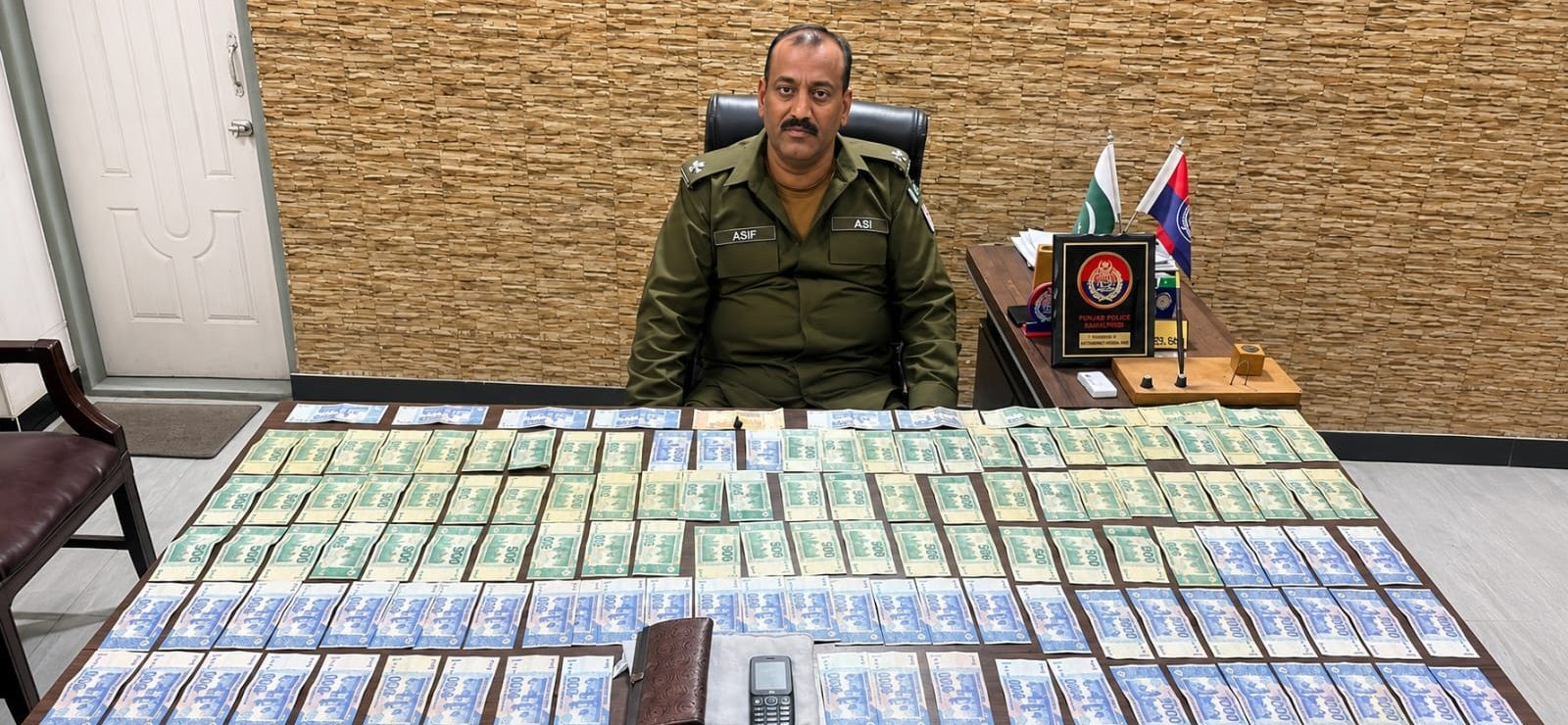
ISLAMABAD, Dec 02 (APP):Anti-Narcotics Force (ANF) while conducting six operations across the country apprehended eight accused and recovered 26.13 kg drugs, valued at more than Rs 2.3 million.
According to an ANF spokesman, in an operation near a university on Airport Road, Quetta, 3 kgs hashish and 1000 grams ice were recovered from two accused going on a motorcycle.
The arrested suspects confessed selling drugs to the students of different educational institutions.
At Sialkot Airport, 1.16 kg ice drug was recovered from the shoes of a Sharjah bound passenger.
Near a factory on RCD Road, Hub, 18 kgs hashish was seized from a vehicle and two accused were arrested during the operation.
In 4th operation on Bhakkar Road, D.I. Khan, 2.4 kgs hashish was recovered from an accused.
Near a factory in Islamabad, 105 suspected tablets weighing 71 grams were recovered and an accused was arrested.
In 6th operation near Sangjani Toll Plaza, Islamabad, 500 grams opium was seized from a vehicle and a drug dealer was rounded up.
Cases have been registered against the arrested accused under the CNSA-1997.

Kazakhstan reports 7-fold increase in e-commerce

0

ASTANA, Dec 02 (Kazinform/APP) : Since 2020, the volume of e-commerce in Kazakhstan has increased sevenfold, but still remains below the global average, Qazinform News Agency quotes Ansar Orazgaliyev, Director of the Department for Domestic Trade Development at the Ministry of Trade and Integration, as saying.
According to estimations from international analytical agencies, the global e-commerce market size in 2024 was $6.3 trillion, with e-commerce accounting for 20%. Further growth is projected to reach $6.8-7 trillion in 2025, and in a mid-term outlook, the figure is expected to exceed $8 trillion by 2028.
The speaker says that e-commerce is actively developing in Kazakhstan, becoming an element of daily economic activity. “By the end of 2024, domestic e-commerce volume was 3.2 trillion tenge, or 14.1% of the total retail trade. Overall, the target indicator of 15% of retail trade volume is expected to be reached by the end of the current year. We have set a goal to increase the share of e-commerce in total retail trade to 18.5% by 2029,” said Orazgaliyev at a briefing in the Central Communications Service office.
According to him, the market’s growth potential is already evident. This is driven by the widespread adoption of cashless payments, the development of retail fintech, and internet availability. “We see a noticeable increase in the number of sellers on marketplaces. For example, across different platforms, multiple sellers now compete within a single product listing. This trend is driven by the growing presence of mid-price segment sellers entering marketplaces. Instead of creating their own websites, they prefer to use marketplaces, which allows them to launch faster and gain access to the platform’s resources, such as a customer base and logistics capabilities.
In the future, further growth in the number of sellers is expected, along with the adoption of new tools to gain competitive advantages,” he noted. Earlier, Qazinform News Agency reported that Kazakhstan’s retail e-commerce market reached a record volume of 3,439 billion tenge in 2024, marking a 42% increase compared to the previous year, according to a new report by PwC.

Ahsan urges deeper regional connectivity, proposes four-point cooperation plan at Tian Shan Forum

0

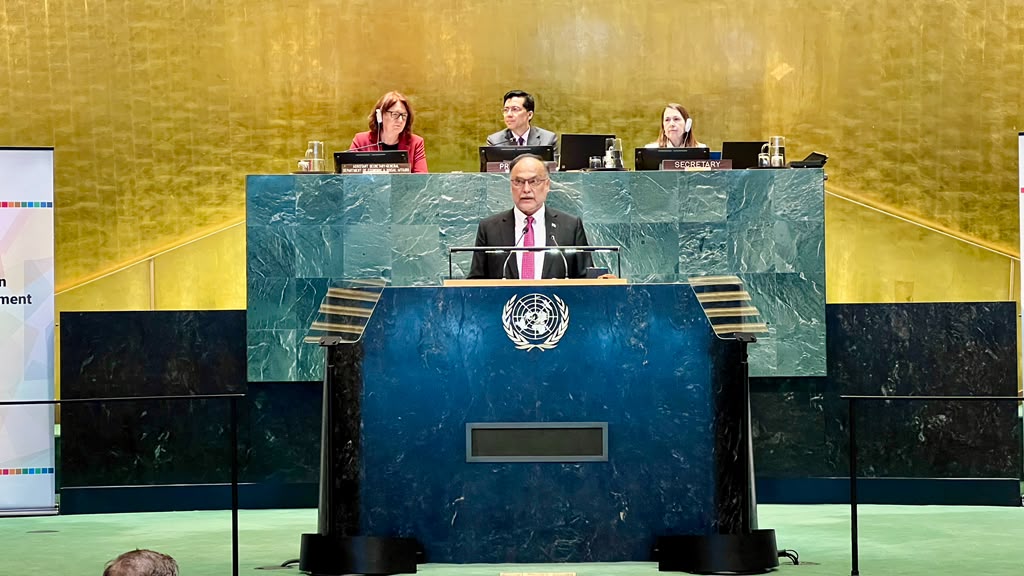
ISLAMABAD, Dec 2 (APP): Federal Minister for Planning, Development and Special Initiatives Professor Ahsan Iqbal on Tuesday called for renewed commitment to regional connectivity, economic integration and long-term cooperation among China, Central Asia and South Asia, stressing that “great nations and great cultures do not rise in isolation; they flourish through exchange.”
In his televised address at the Tian Shan Forum on Economic Cooperation in Central Asia, being held in Urumqi (China) from December 2-3, the minister said the region, home to 3.9 billion people, was emerging as a major engine of global growth, with unmatched strategic and economic potential. “This is not a peripheral region. This is the heartland of the world’s future.”
Ahsan said the shifting global economic landscape demanded collective action and a development-centered approach. “Economic strength is moving from the Atlantic to the Indo-Pacific,” he observed, adding “Within our own region, China, Central Asia and South Asia are becoming a new pole of global growth.”
He said the Belt and Road Initiative (BRI) had revived the ancient spirit of the Silk Road through modern infrastructure, trade and people-to-people linkages. “More than 150 countries are now part of BRI, almost half a million jobs have been created globally and BRI transport corridors are projected to increase global rail income by 2 to 4 percent,” he noted.
Referring specifically to Pakistan, the minister said the China-Pakistan Economic Corridor (CPEC) was far more than a set of infrastructure schemes. “For Pakistan, CPEC is not just an infrastructure project – it is a strategic development framework built on trust and long-lasting partnership for mutual and regional prosperity,” he added.
The minister highlighted that CPEC had already added 8,000 MW to Pakistan’s national grid, built over 1,000 km of modern highways and motorways, operationalised Gwadar Port, initiated groundwork for special economic zones, and established a digital backbone for future cooperation in information technology and artificial intelligence. “CPEC’s success shows what regional cooperation can achieve when driven by clear purpose and commitment,” he said.
Ahsan underlined that Pakistan was reorienting its strategic paradigm from geopolitics to geoeconomics, with a clear objective to become the “most efficient, reliable and cost-effective connectivity hub” linking Central Asia, China, South Asia, the Middle East and global markets. Gwadar, he noted, offered the shortest maritime route for Central Asian republics, cutting transit time by up to 70 percent.
“Gwadar’s potential is regional, not just national,” he said. “It can become the anchor of a Eurasian supply chain complementing Western China and Central Asia.”
Envisioning a rapidly transforming integrated region, Ahsan said “Imagine a future where goods from Almaty, Bishkek, Dushanbe and Ashgabat reach global markets in days; where joint industrial clusters produce for the world; where energy pipelines, transmission lines and AI research centers create a regional knowledge economy. This future is not a distant dream – it is within our reach.”
To translate this vision into reality, the minister proposed a four-point cooperation framework and time-bound cooperation mechanisms.
First, he called for a joint task force on connectivity and economic integration, supported by harmonised railway and aviation routes, customs digitisation, single-window trading systems and coordinated border procedures. “Such harmonisation would reduce logistics costs by 20–30 percent across Eurasia,” he noted.
Second, he proposed regional special economic zones, jointly developed by Central Asia, Pakistan and China to build shared supply chains, promote manufacturing, encourage Central Asian investment in Gwadar and Karachi, and facilitate industrial cooperation. “Regional SEZs could generate $50–60 billion in industrial output within a decade,” he added.
Third, he suggested an Eurasian Energy and Clean Transition Partnership, focusing on electricity trade via CASA-1000-type grids, gas pipeline connectivity, renewable energy, hydropower collaboration, value chains for critical minerals and climate-resilient infrastructure. “At a time of global energy insecurity, this partnership can anchor stability for decades,” he remarked.
Fourth, Ahsan called for establishing a Digital Silk Road and Future Skills Alliance to promote cooperation in artificial intelligence, FinTech, cybersecurity, e-commerce, smart agriculture and youth innovation. “Our young population must become the architects of tomorrow’s economy,” he emphasised.
Highlighting shared regional challenges, including climate change, technological disruption and development gaps, the minister said no nation could overcome them alone.
He said initiatives like the Global Development Initiative, Global Security Initiative and Global Civilization Initiative, introduced by President Xi Jinping, provided a timely and people-centric framework for joint development. “These approaches deeply resonate with Pakistan’s vision,” he said.
The minister called for collective resolve, saying the 21st century would be shaped not by geography but by leadership and the choices nations make together.
“If we choose connectivity over isolation and cooperation over fragmentation, our region can emerge as the strategic economic center of the world. Pakistan stands ready, committed and optimistic. Together, we can build a future worthy of our rich history and heritage, a future of stability, innovation and shared prosperity,” he remarked.

Pakistan envoy presents diplomatic credentials to UAE president

0

ABU DHABI, Dec 2 (APP): The ambassador-designate of Pakistan to the United Arab Emirates Shafqat Ali Khan on Tuesday presented his diplomatic credentials to the UAE President Sheikh Mohamed bin Zayed Al Nahyan.

The ceremony took place at Qasr Al Watan in Abu Dhabi where Pakistan’s envoy was among several other ambassadors-designate who presented their respective credentials.

Vice President, Deputy Prime Minister and Chairman of the Presidential Court, Sheikh Mansour bin Zayed Al Nahyan, was also present at the ceremony.

Welcoming the new ambassadors, the UAE president reaffirmed the UAE’s enduring commitment to building bridges of cooperation that foster growth and prosperity, support peace and stability, and promote dialogue and understanding among the peoples and cultures of the world.

Pakistan envoy presents diplomatic credentials to UAE president

He wished the ambassadors success in their new roles and in strengthening ties between their respective countries and the UAE, noting that they would be fully supported in carrying out their duties effectively.

Ambassador Shafqat Ali Khan conveyed to the UAE leader the message of brotherhood, respect and goodwill from the Pakistani leadership and their best wishes for the continued progress and prosperity of the UAE and its people.

The UAE president warmly reciprocated these sentiments and wished the ambassador success in his new role and in strengthening ties between Pakistan and the UAE.

The ceremony was also attended by Sheikh Abdullah bin Zayed Al Nahyan, Deputy Prime Minister and Minister of Foreign Affairs; Sheikh Theyab bin Mohamed bin Zayed Al Nahyan, Deputy Chairman of the Presidential Court for Development and Fallen Heroes’ Affairs; Sheikh Hamdan bin Mohamed bin Zayed Al Nahyan, Deputy Chairman of the Presidential Court for Special Affairs; and Sheikh Mohammed bin Hamad bin Tahnoun Al Nahyan, Adviser to the UAE President along with a number other UAE leaders, ministers and senior officials.

PTA denies instruction to remove non-Pakistani members from groups

0
ISLAMABAD, Dec 02 (APP):A fake notification circulating on social media, claiming that PTA has instructed social media group administrators to remove foreign members, is entirely false.
According to a statement issued here, it said PTA has issued no such directive. The public is advised to refrain from sharing unverified information and to rely solely on PTA’s official channels for authentic updates.

Integrating health services initiative to boost childhood immunization covers 69% zero dose cases in KP

0
PESHAWAR, Dec 02 (APP):Integrated Service Delivery (ISD), a multi-sectoral approach that links polio vaccination with essential services such as primary healthcare, routine immunization, nutrition, water, sanitation, hygiene, and birth registration, has achieved 69 percent coverage of zero-dose children in 2025, with most progress recorded in the hard-to-reach southern districts of Khyber Pakhtunkhwa.
This disclosure has been made during the Annual Review meeting of IDS organized by Provincial Emergency Operation Centre (EOC) in collaboration with Health Department and Unicef.
The meeting was chaired by Secretary Health KP, Shahid Ullah while Coordinator National Emergency Operations Center (EOC), Anwar Ul Haq, Additional Secretary Health/EOC Coordinator,  Shafi Ullah Khan, senior officials from the Department of Health, ISD district representatives, and development partners were present on the occasion.
On this occasion, Dashboard for Integrated Service Delivery was also launched to further improve child health care through sharing information among all the partner departments.
Titled as `Reflecting on Progress, Refining for Excellence’, the participants of the review meeting were apprised that under the initiative coverage of 69 percent zero dose children is achieved in 2025 through strengthening coordination between union council, district and provincial levels.
Under the programme, District ISD Task Force Committees have been notified besides reactivating of Primary Care Management Committees (PCMCs).
Similarly, coverage of different health services have been scaled up in the provinces including nutrition from 39 union councils to 112, medical from 22 UCs to 72, WASH from 22 UCs to 87, Social and Behavioural Change (SBC) from 40 union councils to 72.
In his opening remarks, Secretary Health KP, Shahid Ullah, commended the tireless efforts of all departments, partners, and field teams involved in delivering health services.
He emphasized the critical importance of strengthening Integrated Service Delivery and its synergy with routine immunization and polio eradication initiatives.
Anwar Ul Haq, Coordinator National EOC, expressed appreciation for the dedication and commitment of frontline workers and development partners.
He stressed that integrating ISD with EPI and PEI programs is vital for sustaining the momentum of polio eradication and improving routine immunization coverage.
EOC Coordinator, Shafi Ullah Khan, delivered a concise briefing highlighting achievements, challenges, and strategic plans for ISD and immunization programs.
In her insightful presentation, Ms. Hiwot Kiflom, Programme Specialist ISD, highlighted coordination strategies between provincial and district teams, data-driven decision making, and capacity-building for frontline workers to reach underserved communities.
Hiwot said that with the launch of the ISD Dashboard, integrated childcare services would be delivered through a holistic approach, ensuring that every child is vaccinated, every birth is registered, every pregnant woman receives quality care, and every child is well nourished.
She added that the initiative also aims to build climate-aware and resilient communities, while improving access to safe sanitation and clean drinking water.
In 2026, she continued, we plan to expand ISD to more districts by creating a more comprehensive service package for communities.
A standard referral slip has been developed to enhance coordination and to strengthen the referral mechanism between Health, Nutrition and polio services, ensuring timely and effective support for children, she continued.
Monitoring and Evaluation Officer (ISD), Ms. Mariam Tarana presented the ISD Dashboard, showcasing key data trends, monitoring outcomes, and performance indicators across WASH, Polio, Nutrition, and Routine Immunization.
She shared progress updates, identified gaps, and provided actionable recommendations to strengthen ISD implementation and impact across the province.

Road accidents kills 568 people in 2025

0

MULTAN, Dec 02 (APP):A rise in traffic accidents has killed 568 people in Multan division from January to November 2025,officials said.
According to a spokesperson,about 57,862 accidents were reported in the period,leaving 25,585 people seriously injured and 41,012 with minor injuries.
Authorities said that most accidents involved motorcycles and warned that traffic violations were a major cause.
The Punjab government has ordered strict enforcement of traffic laws,including fines for speeding,signal violations,wrong-way driving and riding without helmets or licenses.
Traffic police were active at major roads and markets and citizens were urged to drive responsibly to prevent further deaths.

Joint sitting of Parliament commences under Speaker Ayaz Sadiq’s chairmanship

0
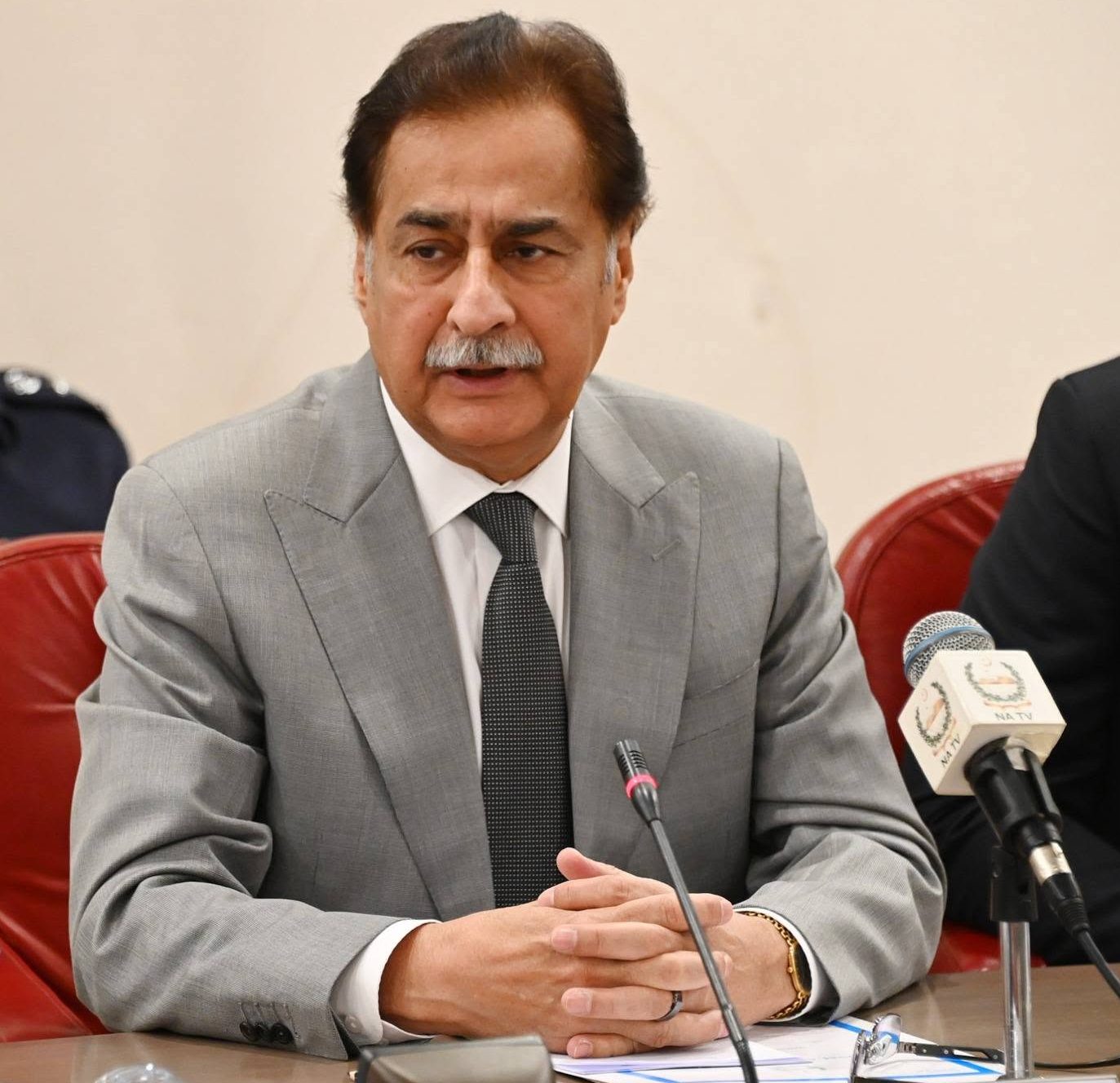
ISLAMABAD, Dec 02 (APP):The joint sitting of the Majlis-e-Shoora (Parliament) commenced at 11:44 a.m. on Tuesday at the Parliament House under the chairmanship of Speaker Sardar Ayaz Sadiq.
The House is scheduled to take up its legislative business. Any other items permitted by the Chair are also part of the day’s agenda.