Pakistan successfully launches Remote Sensing Satellite
ISLAMABAD, Jul 31 (APP): In a historic leap towards technological self-reliance, Pakistan on Wednesday successfully launched its Remote Sensing Satellite from the Xichang Satellite Launch Center (XSLC) in China. The launch marks a major milestone in the country’s space journey and strengthens its position in Earth observation capabilities.
The project is the result of a strategic collaboration between the Pakistan Space and Upper Atmosphere Research Commission (SUPARCO), China Electronics Technology Group Corporation (CETC), and MICROSAT China, said a news release on Thursday.
Equipped with advanced imaging technology, the Remote Sensing Satellite will significantly contribute to urban planning, precision agriculture, disaster management, environmental protection, and food security.
It is expected to aid in tracking deforestation, glacier recession, and climate change, while also enhancing management of water resources and agricultural land.
The satellite will also play a crucial role in infrastructure monitoring, mapping transportation networks, and supporting regional planning efforts, particularly in connection with national development projects like the China-Pakistan Economic Corridor (CPEC). It is designed to help identify geohazard risks and provide timely warnings for natural disasters such as floods, earthquakes, and landslides.
On this occasion, Federal Minister for Planning, Development and Special Initiatives Ahsan Iqbal congratulated the nation on the successful launch of the Remote Sensing Satellite.
He extended warm felicitations to the entire team at SUPARCO, including its engineers and scientists, for achieving this remarkable feat.
“We are deeply grateful to China for its unwavering support and cooperation in this project,” said Ahsan Iqbal.
He confirmed that the satellite has successfully entered its designated orbit and will soon begin delivering critical data for national use.
He further stated, “We are committed to restoring Pakistan’s leadership in space technology. With China’s help, we plan to send a Pakistani astronaut into space next year. By 2035, we will also successfully complete our lunar mission and land on the moon.”
Chairman SUPARCO, Mohammad Yousaf Khan emphasized that the launch lays the foundation for a robust and integrated Earth Observation System.
He said the new satellite will serve national priorities and contribute meaningfully to Pakistan’s sustainable socio-economic development.
BJP not only initiated a public slandering of Kashmiris but has institutionalized it: Altaf Wani
ISLAMABAD, Jul 31 (APP): Acting Chairman Jammu and Kashmir National Front Altaf Hussain Wani has strongly condemned Indian Home Minister’s remarks slandering the Hurriyat platform, stating that the racist regime has not only initiated a public vilification campaign against Kashmiris but has institutionalized it.
Talking to APP here on Thursday, Wani said the language used by the Indian minister reflects the deep-rooted prejudice and hatred harbored against Kashmiris.
“Labeling Hurriyat as a terrorist outfit is a reflection of the venomous mindset embedded in India’s power hierarchy,” he said, adding that such dangerous stereotyping is part of a broader campaign by the Indian government to delegitimize the Kashmiris’ rightful struggle for self-determination.
Reiterating that the ongoing movement in Kashmir is a legitimate struggle, the Front leader said the Hurriyat Conference is a representative platform that represents the aspirations of the vast majority of Kashmiris who have categorically rejected India’s illegal occupation and refused to accept its dictates.
Wani asserted that the Indian minister’s baseless and absurd claims will not alter the ground realities.
“Kashmir a UN disputed territory must be resolved peacefully in line with the UN Security Council resolutions, which call for a referendum to enable the people of the region to determine their political future,” Wani added.
Foreign exchange rates
SRSP briefs DC Abbottabad on welfare plans for Afghan refugees
PM Shehbaz thanks Trump for role in finalizing “historic” US-Pakistan trade agreement
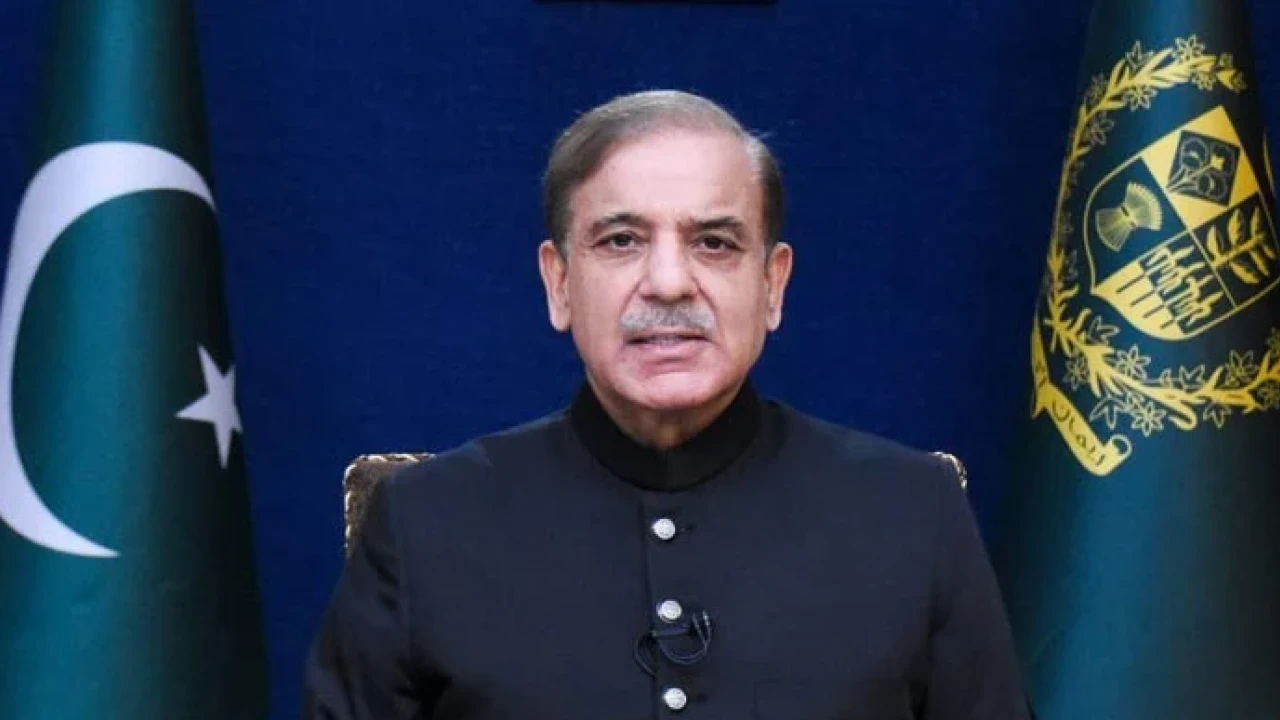
ISLAMABAD, Jul 31 (APP): Prime Minister Shehbaz Sharif on Thursday expressed his gratitude to US President Donald Trump for his role in finalising a “historic” trade agreement between Pakistan and the United States.
“I wish to convey my profound thanks to President Trump for his leadership role in finalization of the historic US-Pakistan trade agreement, successfully concluded by our two sides in Washington, last night,” the prime minister wrote on his X timeline.
He said that the “landmark” deal would enhance the bilateral growing cooperation to expand the frontiers of enduring partnership in days to come.
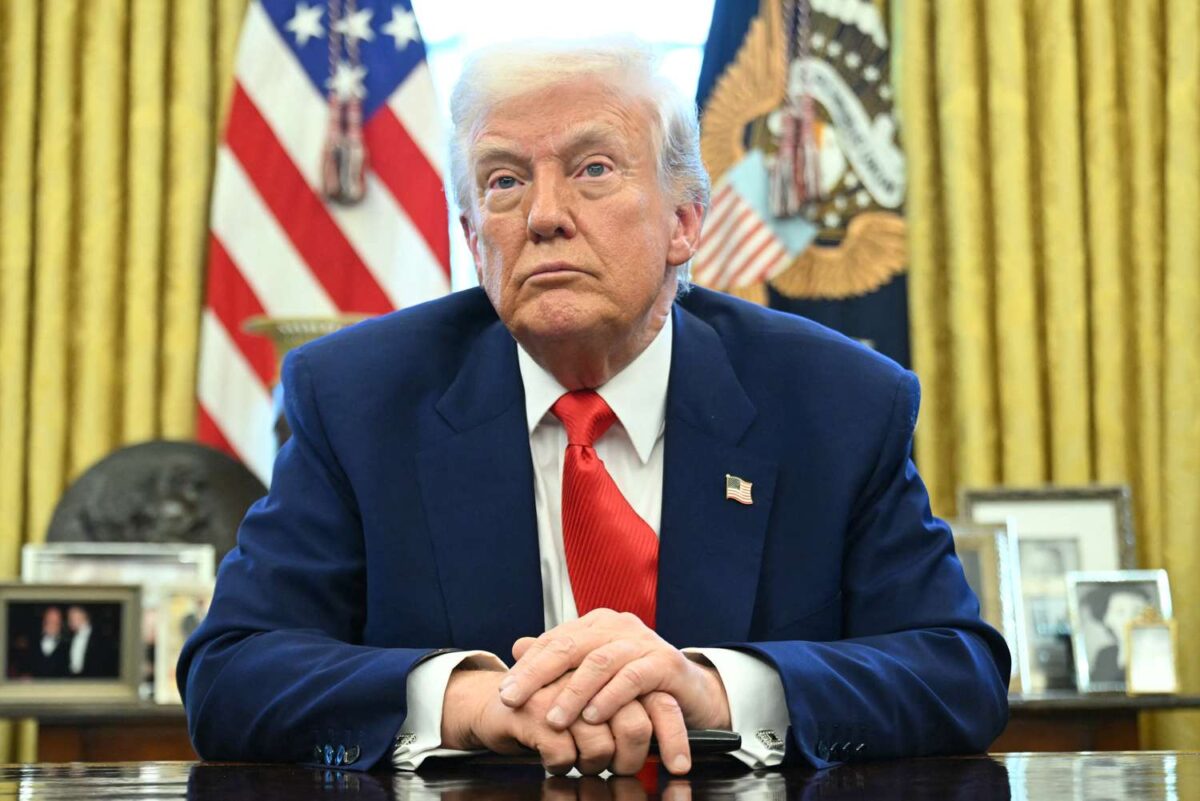
US President Trump announced on his Truth Social account, “We have just concluded a Deal with the Country of Pakistan, whereby Pakistan and the United States will work together on developing their massive Oil Reserves. We are in the process of choosing the Oil Company that will lead this Partnership. Who knows, maybe they’ll be selling Oil to India some day.”
Earlier, Trump administration slapped 25% tariff and an unspecified penalty on goods imported from India starting on Friday.
“We have, over the years, done relatively little business with them (India) because their tariffs are far too high, among the highest in the world, and they have the most strenuous and obnoxious non-monetary trade barriers of any country… India will therefore be paying a tariff of 25%, plus a penalty for the above, starting on August first,” Trump wrote in a separate post on his social media platform.
Ishtiaq Ahmed, APP’s Foreign Editor, leads coverage of the Prime Minister, President and Foreign Office, bringing over 20 years of journalism experience from local and international publications – Reach out at 03335293238/ ishtiaqrao@gmail.com/ X: ishtiaqrao
UNSC report highlights BLA-TTP collaboration that poses threat to Pakistan’s security
UNITED NATIONS, Jul 31 (APP): Outlawed terrorist groups — Balochistan Liberation Army (BLA), including its Majeed Brigade, and Tehrik-e Taliban Pakistan (TTP} — have “close coordination”, according to a United Nations Security Council report, which pointed out that “some BLA attacks showed a high degree of complexity”, citing Jaffar Express’ dramatic hijacking in Pakistan’s Balochistan province.
“On 11 March, BLA hijacked the Jaffar Express train in an isolated mountainous region with improvised explosive devices and other weapons, killing 31, including 21 hostages, which demonstrated in a high-profile manner the rise in the group’s capacity and brutality,” the annual report of the 1988 Taliban sanctions committee monitoring team said.
The report also took note of the April terrorist attack in Pahalgam, in Indian-Occupied Kashmir, without giving any opinion on the incident. It noted that The Resistance Front (TRF), which initially claimed responsibility for the attack, later retracted it.
Despite intense Indian campaign, the report did not link TRF with Lashkar-e-Tayyiba (LeT), but noted that a member- state had insisted that the attack could not have happened without LeT’s support. At the same time, another member-state, it added, rejected these views, saying that LeT was defunct.
“Regional relations remain fragile,” the report said, adding, “There is a risk that terrorist groups may exploit these regional tensions.”
On the other hand, the report said that TTP had approximately 6,000 fighters and continued to receive substantial logistical and operational support from the de facto authorities (Taliban), while noting reports of divergent views within the authorities on their relationship with TTP, with some arguing for distancing themselves from the group to improve regional relationships.
“Some member-states reported that TTP maintained tactical-level connections with ISIL-K or Da’esh,” it said.
“TTP continued to carry out high-profile attacks in the region, some of which incurred mass casualties. It was reported that TTP had continued access to a range of weapons, enhancing the lethality of attacks— obviously a reference to the sophisticated military equipment left behind by the departing American troops as Kabul fell to the Taliban.
“One Member State reported that, in January 2025, TTP provided training to terrorists in Balochistan.”
The report also said, “The de facto authorities (Taliban) in Afghanistan continued to maintain a permissive environment for a range of terrorist groups, including Al-Qaeda and its affiliates, posing a serious threat to the security of Central Asian and other countries.”
ISIL-K or Da’esh, it added, continued to represent the most serious threat, both regionally and internationally.
“With about 2,000 fighters, ISIL-K continued to recruit both inside and outside Afghanistan, including among Central Asian States and the Russian North Caucasus, as well as disaffected fighters from other groups,” the report said.
“There were concerns that some extremist fighters could move from the Syrian Arab Republic to Afghanistan and further to stage operations against regional States, firstly in Central Asia.
“In North Afghanistan and areas close to the Pakistani borders, ISIL-K indoctrinated children in madrassas, establishing a suicide training course for minors aged approximately 14 years old.”
The report also said that ISIL-K continued to prioritize attacks on Shia communities, the de facto authorities and foreigners. Under the leadership of Sanaullah Ghafari, fighters were scattered across the northern and north-eastern provinces of Afghanistan.
ISIL-K, it added, tried to establish operations in the states neighbouring Afghanistan and globally.
“The efforts of the de facto authorities diminished ISIL-K capabilities, but it continued to operate with relative impunity, exploiting discontent with Taliban governance.
“While the leadership remained predominantly Afghan Pashtun, the rank and file were now mostly of Central Asian origin. Some of the ISIL-K supporters attempting to cross borders were female, including wives of Central Asian fighters,” the report added.
Azerbaijani gas to be transported to Syria this week
BAKU, July 31 (AZERTAC/APP) : Gas transported from Azerbaijan will be delivered to Syria this week, announced Türkiye’s Minister of Energy and Natural Resources Alparslan Bayraktar.
“We have signed a swap agreement with Azerbaijan. Under this agreement, gas exported from Azerbaijan will be transferred via Kilis to Syria, specifically to Damascus,” said Minister Bayraktar. “On August 2, we will hold a ceremony in Kilis together with our counterparts from Azerbaijan, Syria, and Qatar.”
He further explained that the exported gas will be used for electricity generation in Syria. “With 6 million cubic meters of gas to be exported to Syria, it will be possible to generate 1,200 megawatts of electricity daily. This will help supply fuel to Syria’s existing energy infrastructure,” the minister added.
Currently, electricity in Syria is available for only 3 to 4 hours a day. With this new supply, that figure is expected to increase to 10 hours per day, significantly improving the quality of life for residents.
Strengthening nationwide harmony essential foundation for development of New Uzbekistan
TASHKENT, July 31 (UzA/APP) : The Friendship Festival, held at the initiative of President Shavkat Mirziyoyev by the Committee on Interethnic Relations and Friendly Ties with Foreign Countries, once again demonstrates to the international community that peace, unity, cohesion, friendship, and harmony are the highest values in Uzbekistan.
As part of the festival, an international conference on “Strengthening nationwide harmony – an essential foundation for the development of New Uzbekistan” was held in Tashkent.
The event was attended by senators, deputies, activists of national cultural centers, members of the diplomatic corps, scholars, and experts from several foreign organizations.
Advisor to the President of the Republic of Uzbekistan, Ruslan Davletov, read the President’s congratulatory message on the occasion of the People’s Friendship Day.
As noted in the congratulatory message, the ethnic diversity that has existed on our land since ancient times, being a unique social phenomenon, has gained new meaning and substance in the conditions of New Uzbekistan, preserving its continuity and traditions. Largely thanks to this, peace, friendship, kindness, and harmony prevail in the country, while the honor, dignity, and happiness of individuals are elevated.
Representatives of various nationalities and ethnic groups, whose lives and destinies are inextricably linked with Uzbekistan, actively participate in the processes of renewal and reform taking place in the country.
It was noted that the congratulatory message of the Head of State on this occasion gave everyone a special sense of inspiration, while the large-scale work carried out in the country to strengthen interethnic friendship and harmony motivates the achievement of new heights.
At the international conference, the efforts being made in Uzbekistan to preserve interethnic harmony, friendship, unity, and cohesion were highly praised. It was particularly emphasized that these efforts serve as an example for many countries around the world.