President Zardari reaffirms national commitment to protecting rights of persons with disabilities
Protection of PDs’ rights, provision of equal facilities, among govt’s top priorities: PM
UN Warns of Rising Digital Violence as Pakistan Marks ‘16 Days of Activism’
Extreme weather ‘uprooting lives’ as cyclones batter Asia: UN agencies warn
UNITED NATIONS, Dec 02 (APP): Across southeast Asia, record-breaking rains and flooding caused by back-to-back tropical storms have claimed hundreds of lives and brought devastation and displacement upon entire communities, UN agencies said on Tuesday.
World Meteorological Organization (WMO) spokesperson Clare Nullis told reporters in Geneva that Indonesia, the Philippines, Sri Lanka, Thailand and Vietnam are among the countries most affected by what she described as “a combination of monsoon-related rainfall and tropical cyclone activity”.
UN Secretary-General Antonio Guterres expressed his deep sadness over the tragic loss of life across the region.
In a statement released by his Spokesperson he conveyed condolences to the families of the victims and expresses his solidarity with all those impacted.
“The United Nations is in close contact with authorities in all four countries and stands ready to support relief and response efforts. UN Country Teams remain at the disposal of Governments to provide necessary assistance.”
“Asia is very, very vulnerable to floods,” WMO’s Ms. Nullis said, explaining that flooding consistently tops the list of climate hazards in the region, according to WMO’s annual State Of The Climate reports.
However, she said that tropical cyclones such as Senyar, which last week brought “torrential rainfall and widespread flooding and landslides” across northern Sumatra in Indonesia, peninsular Malaysia and southern Thailand, are rare so close to the Equator.
“It’s not something that we see very often and it means the impacts are magnified because local communities… have got no experience in this,” she stressed.
The UN weather agency spokesperson quoted Tuesday’s figures from the Indonesian National Disaster Office indicating 604 fatalities, 464 people missing and 2,600 injured. In total, some 1.5 million people have been affected in Indonesia and more than 570,000 have been displaced.
Turning to Vietnam, Ms. Nullis said that the south Asian nation has been “battered now for weeks” and is “bracing for yet more heavy rainfall”.
“Exceptional rains in the past few weeks have flooded historic sites, popular tourist resorts and caused massive damages,” she said.
In late October, one meteorological station in central Viet Nam recorded a national 24-hour rainfall record of 1,739 millimetres, which Ms. Nullis described as “really enormous”.
“It’s the second-highest known total anywhere in the world for 24-hour rainfall,” she said.
This exceptionally high value is currently subject to a formal WMO extremes evaluation committee. According to the agency, a value above 1,700 mm would constitute a record for the Northern Hemisphere and Asia.
Ricardo Pires, spokesperson for the UN Children’s Fund (UNICEF), described what he called a “fast-moving humanitarian emergency” in Sri Lanka, after Cyclone Ditwah made landfall on the country’s east coast last week, affecting some 1.4 million people including 275,000 children.
“With communications down and roads blocked, the true number of children impacted is likely even higher,” Pires warned. “Homes have been swept away, entire communities isolated, and the essential services children rely on, such as water, healthcare and schooling have been severely disrupted.”
The UNICEF spokesperson stressed that displacement has forced families into unsafe and overcrowded shelters, while the flooding and damaged water systems are increasing disease outbreak risks.
“The needs far outweigh the available resources right now,” he insisted, in an appeal for additional humanitarian funding and support for the most vulnerable.
Commenting on the intensity of the devastating weather events WMO’s Ms. Nullis explained that rising temperatures “increase the potential risk of more extreme rainfall because a warmer atmosphere holds more moisture”.
“That’s the law of physics…we are seeing more extreme rainfall and we will continue to do so in the future,” she added.
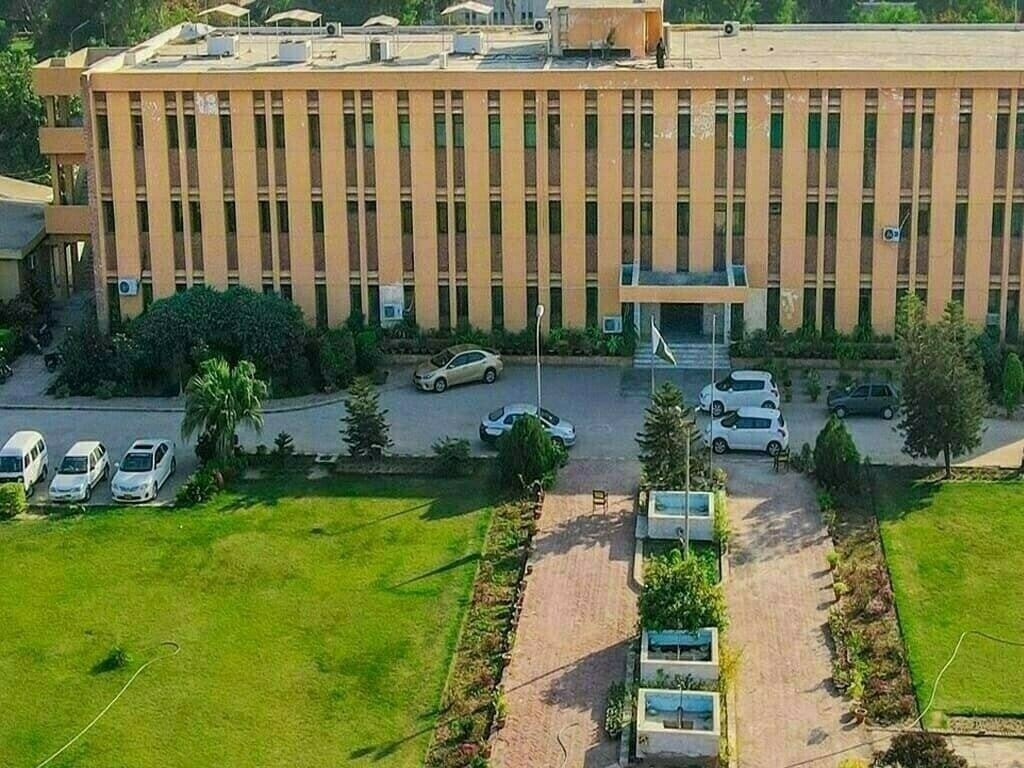
STEM faculty development cascading session held at NSU Islamabad
Artificial Intelligence (AI) could accelerate global inequality, UN report warns
UNITED NATIONS, Dec 02 (APP): Millions of jobs across Asia could be at risk as the artificial intelligence (AI) industry booms at the expense of poorer nations still struggling to provide basic digital access and literacy, UN economists said Tuesday.
Just as industrialization in the 19th century “split the world into a wealthy few and the impoverished”, the AI revolution could do the same.
“Countries that invest in skills, computing power and sound governance systems will benefit, others risk being left far behind,” warned Philip Schellekens, Chief Economist for the UN Development Programme for the Asia and Pacific region.
In a new report, the agency highlighted that women and young adults face the biggest threat from AI in the workplace, with wider improvements in health, education and income potentially falling by the wayside.
Meanwhile, the technology juggernaut is expected to inject nearly $1 trillion in economic gains over the next decade across Asia alone, data indicates.
The UN agency said that although China, Singapore and South Korea have invested heavily in – and benefited massively from – AI, entry-level workers in many South Asian nations face “significant exposure” to changes already underway, including automation.
“Limited infrastructure, skills, computing power, and governance capacity constrain the potential benefits of AI while amplifying risks, including job.
To prevent a looming jobs crunch, UNDP is urging governments to consider the ethics of AI before rolling it out further – and to ensure this is done so in as inclusive a way as possible.
“AI is racing ahead, and many countries are still at the starting line,” said Kanni Wignaraja, UN Assistant Secretary-General and UNDP Regional Director for Asia and the Pacific.
“The Asia and Pacific experience highlights how quickly gaps can emerge between those shaping AI and those being shaped by it.”
For countries including Cambodia, Papua New Guinea and Vietnam, the priority isn’t so much developing AI as making use of existing and relatively simple voice-based tools that frontline health workers and farmers can use, even when the internet is down.
The Asia-Pacific region is home to more than 55 per cent of the world’s population, putting it at the centre of AI transition.
According to UNDP, the region hosts more than half of global AI users and is rapidly expanding its innovation footprint; China alone holds nearly 70 per cent of global AI patents, while six countries host more than 3,100 newly funded AI companies.
“AI could lift annual GDP growth in the region by around two percentage points and raise productivity by up to five per cent in sectors such as health and finance,” the UN agency said in its report.
It notes how Afghanistan’s average income is 200 times lower than in Singapore, which partly explains why AI take-up is concentrated in the hands of so few wealthy countries today.
“We’re not starting from a level playing field in this region,” said Schellekens is the most unequal region in the whole world.”
Mohsin Naqvi lauds security forces for successful operations against India-sponsored militants
Sindh Culture Minister Zulfiqar Ali Shah inaugurates art exhibition “Fading Boundaries” at ACP
Court grants 4-day police remand in killing case of 2 girls
Abbasi urges Discover Pakistan to highlight railways achievements
ISLAMABAD, Dec 2 (APP): Federal Minister for Railways Hanif Abbasi on Tuesday urged Discover Pakistan to spotlight Pakistan Railways’ unprecedented reforms, successes, and public-service initiatives, noting that the broadcaster already plays a vital role in showcasing the country’s valleys, lakes, and mountains to the world.
Addressing the National Tourism Award 2025 ceremony—organized by Discover Pakistan in collaboration with the Pakistan Tourism Development Corporation—as the chief guest, Abbasi praised the channel’s remarkable contribution to promoting the nation’s tourism industry.
Highlighting tourism’s role in shaping a positive global image, the minister said it remains essential for strengthening the economy, enhancing international relations, and projecting Pakistan’s soft image abroad.
Abbasi reaffirmed the government’s commitment to advancing sustainable tourism through improved infrastructure, security, connectivity, and communication.
He stressed the need to align cultural heritage tourism, adventure tourism, eco-tourism, and community-based tourism with international standards to enhance their global appeal.
Paying tribute to digital storytellers and individuals promoting tourism, he commended young creators for capturing and sharing Pakistan’s natural beauty through their photography and storytelling.
The minister underscored Pakistan Railways’ significance as a pillar of national progress, reiterating the ministry’s resolve to modernize the sector in line with Prime Minister Shehbaz Sharif’s vision.
He said ongoing reforms—including the development of state-of-the-art stations, enhanced transparency, digital upgrades, improved passenger services, increased revenue collection, and expanded regional connectivity—are central to this transformation.
Abbasi also lauded the leadership of Prime Minister Shehbaz Sharif and Field Marshal Asim Munir, saying the respect and confidence Pakistan has earned internationally under their valour and strategic vision is unprecedented.
He added that the world now sees Pakistan as a strong, dignified, and confident state—an outcome he described as the collective success of the government.