Home Blog Page 3

PM-led reforms to facilitate industry, enure EoDB, boost exports: LCCI

0
LAHORE, Jan 12 (APP):Lahore Chamber of Commerce and Industry (LCCI) on Monday welcomed the reform proposals initiated on the directives of Prime Minister Shehbaz Sharif to improve the ease of doing business (EoDB) and rationalise energy and trade tariffs, terming them essential for accelerating export-led growth and reducing Pakistan’s reliance on external financial assistance.
LCCI President Faheem Ur Rehman Saigol said that improving EoDB has been a long-standing demand of the Lahore Chamber, as high cost of doing business, policy unpredictability and structural inefficiencies continue to impede investment, industrial expansion and export competitiveness.
In a joint media statement issued here, LCCI President Faheem Ur Rehman Saigol Senior Vice President Tanveer Ahmed Sheikh and Vice President Khurram Lodhi said that Prime Minister’s initiative to seek stakeholder input through a high-level committee reflects the government’s commitment in addressing core economic challenges.
They said exporters across sectors are facing cross-cutting issues including high and volatile electricity and gas tariffs, fragmented taxation, advance income tax deductions, delayed refunds and working capital constraints, which disproportionately affect small and medium enterprises and limit value-addition.
LCCI President Faheem Ur Rehman Saigol said that frequent changes in tax policies, energy pricing and tariff structures undermine business planning and erode investor and buyer confidence, particularly during annual export order booking cycles. He stressed that policy predictability, transparency and a rule-based regulatory environment are indispensable for improving EoDB and attracting long-term domestic and foreign investment.
He said that rationalisation of energy tariffs in line with regional benchmarks is critical for restoring export competitiveness, as high and volatile power and gas costs continue to inflate production expenses across manufacturing, agro-processing and services. Addressing these issues, he added, would help Pakistani exporters retain orders and compete effectively in international markets.
The LCCI President further said that Pakistan’s cost of doing business remains structurally high due to distorted input tariffs, overlapping regulations, excessive audits and weak inter-agency coordination. He also highlighted the need to strengthen domestic quality, testing and compliance infrastructure to reduce reliance on overseas laboratories, cut costs, shorten lead times and enable movement into higher-value export segments.
Faheem Ur Rehman Saigol said that logistics and trade facilitation bottlenecks including high inland freight costs, port congestion and slow customs clearance must be addressed on a priority basis to improve export efficiency. He also emphasised the importance of expanding access to affordable export finance, credit guarantees and insurance, particularly for SMEs, to support upgrading, compliance and scaling.
LCCI President said that Lahore Chamber is fully prepared to support the Prime Minister and the government through constructive engagement, policy input and private-sector feedback to improve EoDB, reduce cost of doing business and accelerate Pakistan’s transition towards a sustainable, export-led growth model.

DPM, Iranian FM discuss current developments

0
ISLAMABAD, Jan 12 (APP):Deputy Prime Minister / Foreign Minister, Senator Mohammad Ishaq Dar Monday spoke with the Foreign Minister of Iran, Seyyed Abbas Araghchi and discussed current developments in Iran.
DPM/FM reaffirmed the importance of sustained dialogue and engagement. Both sides agreed to continue to maintain close contact.

DPM, Uzbek FM discuss ties

0
ISLAMABAD, Jan 12 (APP):Deputy Prime Minister and Foreign Minister, Senator Mohammad Ishaq Dar Monday received a telephone call from the Foreign Minister of Uzbekistan, Bakhtiyor Saidov.
Reaffirming the strong and growing Pakistan-Uzbekistan bilateral relations, the two FMs underscored the importance of sustained momentum in political, economic, and cultural engagements, including through continued high-level leadership exchanges.
They also agreed to maintain close contact to follow up on ongoing initiatives and explore new avenues for collaboration.

ATC declares Khadija Shah, three others as POs in Askari Tower attack case

0
LAHORE, Jan 12 (APP):An anti-terrorism court (ATC) on Monday declared four accused, including fashion designer Khadija Shah, as proclaimed offenders (POs) in the May 9 Askari Tower attack case and issued perpetual arrest warrants against them due to their continuous absence from trial proceedings.
ATC Administrative Judge Manzer Ali Gill conducted the proceedings inside the Kot Lakhpat jail.
During the proceedings, the court took notice of the non-appearance of the accused and was informed that they had repeatedly failed to appear before the court to face trial in the Askari Tower attack case.
The prosecution informed the court that Khadija Shah has gone into hiding after being convicted in another May 9-related case, while the other accused were also avoiding court appearances due to fear of arrest. Despite being granted multiple opportunities to appear, the accused did not comply. They also failed to appear even after arrest warrants had been issued against them.
Consequently, the court declared the accused proclaimed offenders and issued perpetual arrest warrants against Khadija Shah, Hamza Sohail, Usman Aslam, and Ahmed Marsaleen.
In a separate order, the court also declared Zain-ul-Hassan a proclaimed offender and issued non-bailable arrest warrants for his arrest.
The court directed law enforcement agencies to ensure the arrest of the accused and present them before the court to proceed with the trial.

Economic indicators show improvement amid government economic reforms: Ahsan Iqbal

0

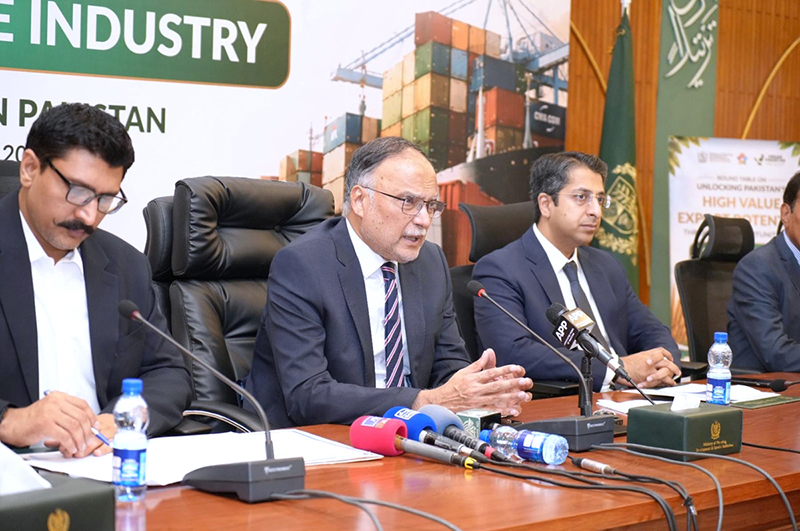
ISLAMABAD, Jan 12 (APP): Federal Minister for Planning Ahsan Iqbal announced on Monday that economic indicators in the country have shown significant improvement, attributing this positive trend to ongoing economic reforms and stabilization policies implemented in December 2025.

During the launch of the “Monthly Development Report, January 2026,” Iqbal revealed that despite the challenges posed by devastating floods, the country achieved a GDP growth rate of 3.7% in the first quarter of fiscal year 2026, with industry growth reaching an impressive 9.4%.

Ahsan Iqbal noted that these figures represent a substantial improvement compared to the 1.6% growth recorded in the first quarter of fiscal year 2025.

He highlighted the stability observed in key sectors such as agriculture and services, which have contributed to the country’s economic resilience.

The Minister emphasized the government’s cautious approach to ensure sustainable development, stating that inflation decreased to 5.2% during the July-December 2025 period.

He further reported that inflation fell to 5.6% in December 2025, aided by improved availability of essential food items.
In a positive turn for the manufacturing sector, large-scale manufacturing recorded a recovery with a growth rate of 5% from July to October 2025, signaling an end to a two-year decline.

He also shared that tax collections by the Federal Board of Revenue (FBR) reached Rs 6.2 trillion during the July-December 2025 period, marking a 10% increase.

Exports showed resilience, rising by 1% to reach $16.6 billion during the July-November fiscal year 2026, despite the adverse effects of floods and supply chain disruptions. Iqbal described the rapid growth of the export sector as essential for the country’s economic improvement, indicating opportunities for further growth. He mentioned government recommendations under the “Uraan Pakistan” initiative to impose an export emergency and implement effective measures to boost exports.

Economic indicators show improvement amid government economic reforms: Ahsan Iqbal

Additionally, remittances during the same period increased by 10.5%, reflecting the confidence of overseas Pakistanis in the government and the overall economic stability.

The Minister said that the Public Sector Development Program (PSDP) allocated Rs 356 billion, with Rs 314.5 billion sanctioned, highlighting steady progress in the implementation of development projects across the Rs 1 trillion PSDP program.

Ahsan Iqbal announced that four projects were approved in December, with three sent to the Executive Committee of the National Economic Council (ECNEC). These projects are expected to create approximately 3,000 direct jobs and 64,500 indirect jobs.

Furthermore, the Minister noted that Rs 3.5 billion was saved through the streamlined expenditure of development projects from July to November 2025, enhancing project efficiency.

In efforts to achieve self-sufficiency in edible oil, the government aims for complete self-sufficiency within the next five years by promoting local canola oil production.

He pointed out that a significant portion of foreign exchange expenditure in Pakistan is allocated to imports of petrol, edible oil, and tea leaves, prompting the government to pursue self-sufficiency measures.

The government, with technical assistance from the Food and Agriculture Organization (FAO), has launched a tea trade strategy aimed at reducing imports by $650 million annually while boosting exports. This strategy will promote modern farming, processing, branding, and value addition across more than 600,000 hectares of land.

Ahsan Iqbal also highlighted Pakistan’s commitment to eradicating polio, having participated in a high-level pledging ceremony in Abu Dhabi on December 9, 2025. He noted ongoing discussions with the US State Department to foster cooperation in education, science, and technology.

In collaboration with China, the government is working to secure 10,000 scholarships in artificial intelligence to enhance education quality and increase the number of PhDs, addressing a critical shortage of human resources in the country.

The Minister underscored the importance of continuing progress on the China-Pakistan Economic Corridor (CPEC), noting that the Chinese government has signed the minutes of the 14th Joint Cooperation Committee meeting. He also reported steady growth in IT exports and advancements in the educational and technical sectors.

Looking ahead, Ahsan Iqbal stressed the need for comprehensive reforms in the energy sector over the next two years, as the government seeks to establish a strong foundation for development by 2027.

He declared 2026 as the year of institutional reforms, aiming to tackle the core issues hampering energy sector progress, including the critical need to reduce electricity tariffs.

Chairperson Benazir Income Support Program Senator Rubeena Khalid addressing to the participants of BISP at Lyari Town.

0
Chairperson Benazir Income Support Program Senator Rubeena Khalid addressing to the participants of BISP at Lyari Town.
APP48-120126
KARACHI: January 12 – 
Chairperson Benazir Income Support Program Senator Rubeena Khalid addressing to the participants of BISP at Lyari Town.
APP49-120126
KARACHI: January 12 – Chairperson Benazir Income Support Programme (BISP), Senator Rubina Khalid, along with MPA Yusuf Baloch, participates in a BISP programme during a visit to Lyari Town. APP/AMH/IQJ/TZD/FHA

Canadian High Commissioner Tariq Ali Khan meets Sindh Governor Kamran Khan Tessori at the Governor House.

0
Canadian High Commissioner Tariq Ali Khan meets Sindh Governor Kamran Khan Tessori at the Governor House.
APP51-120126
KARACHI: January 12 –
Canadian High Commissioner Tariq Ali Khan meets Sindh Governor Kamran Khan Tessori at the Governor House.
APP50-120126
KARACHI: January 12 – Governor Sindh Kamran Khan Tessori presents a Jinnah cap to Canadian High Commissioner Tariq Ali Khan at the Governor House. APP/TZD/FHA

Pakistani expert: Azerbaijan can easily become a regional leader in green energy

0

BAKU, Jan 12 (AZERTAC/APP): “Azerbaijan’s renewable energy targets and resource estimates reflect that Azerbaijan’s national energy strategy is very well-grounded. It also seems that these strategies and the vision of Azerbaijan align closely with the global energy transition trends,” said Khalid Taimur Akram, the renowned Pakistani expert in international relations, as he commented on Azerbaijan’s green energy development plans in his interview with AZERTAC.

According to him, first of all, Azerbaijan’s target for 2020 to raise the share of renewable energy sources (RES) to 30% of total installed electricity generation capacity by 2030 is ambitious and realistic also. “These are not just symbolic words. When we look at the country’s strong political commitment, the work done in energy sector, growing international partnerships, and the improving regulatory frameworks, everything is a reminder and a reflection of Azerbaijan’s commitment and seriousness towards the goals it set in 2020,” the expert noted.

Khalid Taimur Akram described the estimated technical potential of renewable energy, 135 GW onshore and 157 GW offshore, as particularly impressive by regional and global standards. “These high figures highlight Azerbaijan’s exceptional natural advantages, especially in wind and solar energy. The Caspian Sea’s offshore wind potential alone positions Azerbaijan as a future leader in clean energy not only for domestic use but also for regional electricity exports. Although technical potential cannot be translated into installed capacity immediately or within blink of eye but yes it surely provides a strong foundation for long term planning and it will also help win investors’ confidence,” he mentioned.

“The designation of Karabakh, East Zangezur, and the Nakhchivan Autonomous Republic, as “green energy zones” is a sound and a very important decision. Since the estimated renewable potential in Karabakh and East Zangezur is 10 GW while in Nakhchivan, the estimated potential is 5 GW, it means that these regions can become flagships of sustainable reconstruction and modern energy development. Integrating renewable energy into post-conflict recovery creates an opportunity to build smart, efficient, and low-carbon infrastructure from the ground up, serving as a model for green development,” he underlined.

“From a policy and investment perspective, Azerbaijan has already taken important steps to turn these ambitions into reality. Recently signed agreements with leading international energy companies, improvements in energy legislation, and the introduction of competitive mechanisms, all strengthen the investment climate. Technological barriers are also decreasing with the passage of time, as global costs for solar and wind technologies continue to fall and grid integration solutions become more advanced,” the expert emphasized.

“Now the question is what are those factors upon which the successful implementation of these targets depends? Several factors can be considered in this regard such as continued policy stability, timely development of grid infrastructure, access to international financing, and strong institutional coordination. Capacity building and local workforce development will also play an important role,” he said.

“In essence, Azerbaijan’s renewable energy targets and resource estimates are highly credible and they are achievable also. With steadfast commitment and effective execution, Azerbaijan can easily become a regional leader in green energy and a reliable contributor to global climate and energy transition goals,” the Pakistani expert concluded.

LHC rejects plea to suspend Kite Flying Act 2025 immediately

0
LAHORE, Jan 12 (APP):The Lahore High Court (LHC) on Monday rejected a request seeking immediate suspension of the enforcement of the Kite Flying Act 2025 and summoned the concerned parties to present their arguments.
Further proceedings in the case were adjourned until January 16.
Justice Malik Muhammad Awais Khalid heard a petition filed by the Judicial Activism Panel.
Appearing on behalf of the petitioner, Advocate Azhar Siddique argued that the Kite Flying Act 2025 violates the fundamental principles of the Constitution. He maintained that kite flying is a dangerous and deadly activity and that allowing it poses serious risks to citizens’ lives.
He requested the court to declare the Kite Flying Act 2025 null and void and to stay its implementation until a final verdict on the petition.
However, the court dismissed the plea seeking immediate suspension of the Act.
Following the court’s order, the petitioner made the Kite Flying Association a party to the case. The court then adjourned further proceedings until January 16 and directed the government’s counsel to present arguments at the next hearing.

Promoting SMEs key to unlock growth, employment opportunities: SAPM Haroon Akhtar

0
KARACHI, Jan 12 (APP):The Special Assistant to Prime Minister for Industries and Production Haroon Akhtar Khan, assuring government support to the promotion of SME sector on Monday, highlighted the responsive policies and targeted facilitation to unlock growth and employment opportunities in the country.
“SMEs form the backbone of our industrial ecosystem. Supporting them through responsive policies and targeted facilitation will help unlock growth, reduce the trade deficit, and create much-needed jobs,” he said during separate visits to major auto and industrial facilities at Bin Qasim Karachi.
The SAPM, visiting Tecno Auto Glass, Aisha Steel Mills and Pak Suzuki Motor Company, inspected various sections and keenly reviewed as well as received briefings on different steps of the manufacturing process of windshields, cold rolled steels, automobile steel parts, injection molded plastic parts as well as engine and transmission assembly lines.
Around 75 companies of the auto and auto parts industry are operating in Bin Qasim and surrounding areas providing employment to almost 100,000 people and producing high quality local parts used in the automobile sector, the SAPM was informed.
Appreciating the industrial infrastructure that is contributing to the creation of highly skilled and much needed jobs in the manufacturing sector, Haroon Akhtar Khan assured the government’s support to the sector, especially by facilitating production of small cars in higher volumes targeting the middle and lower income consumers, currently using motorcycles.
The industry stakeholders pledged to further increase their localization efforts to reduce cost and transfer skilled jobs to Pakistan to create opportunities for the young population.
The CEO of SMEDA, Nadia Jahangir Seth briefed the SAPM on the contribution of SME clusters to Pakistan’s manufacturing and export sectors as well as ongoing initiatives to support SME clusters, including efforts to improve access to finance, technology upgrades, and market linkages.
The SAPM Haroon Akhtar also planted a sapling at Tecno Auto Glass, SME cluster, Bin Qasim Karachi during the visit.