Home Blog Page 219

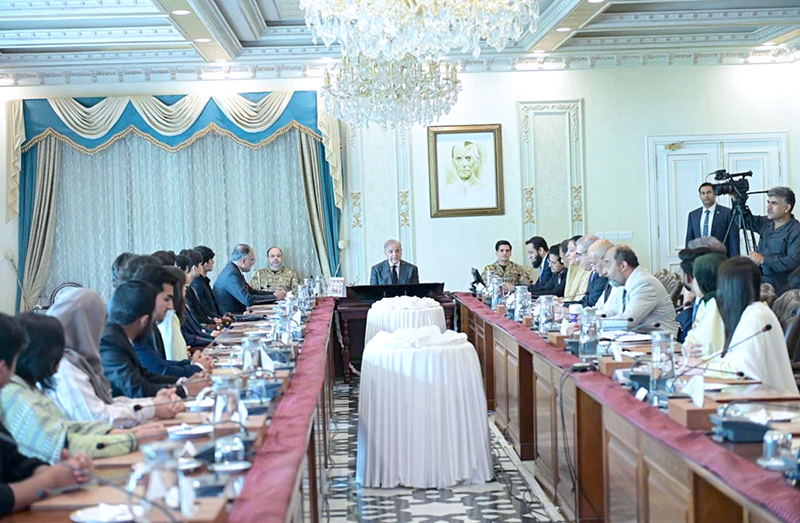
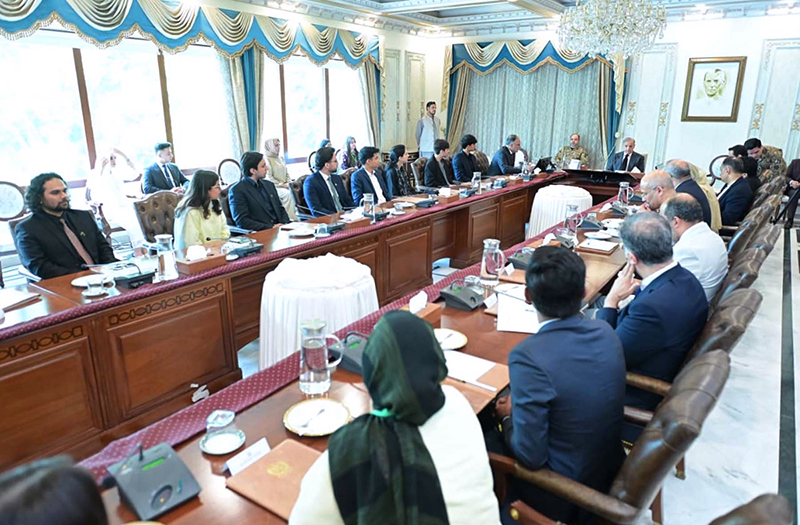
Prime Minister Muhammad Shehbaz Sharif chairs meeting on the briefing by Working Group on reforms in Custom, Tariff and Trade Sector.

0
APP01-031225 ISLAMABAD: December 03 - Prime Minister Muhammad Shehbaz Sharif chairs meeting on the briefing by Working Group on reforms in Custom, Tariff and Trade Sector. APP/TZD
Prime Minister Muhammad Shehbaz Sharif chairs meeting on the briefing by Working Group on reforms in Custom, Tariff and Trade Sector.
APP01-031225
ISLAMABAD: December 03 –

Federal Minister for National Heritage and Culture Division Aurangzeb Khan Khichi addressing the 43rd Fajr Film Festival being held in Shiraz.

0
APP04-031225 SHIRAZ: December 03 - Federal Minister for National Heritage and Culture Division Aurangzeb Khan Khichi addressing the 43rd Fajr Film Festival being held in Shiraz. APP/TZD
Federal Minister for National Heritage and Culture Division Aurangzeb Khan Khichi addressing the 43rd Fajr Film Festival being held in Shiraz.
APP04-031225
SHIRAZ: December 03 – 

Global fashion brands urged to protect workers from climate hazards

0

By Andleeb Khan

ISLAMABAD, Dec 3 (APP): Workers in international fashion and home goods supply chains in Pakistan, especially Karachi, are facing severe physical, mental, and financial hardship as rising temperatures worsen already unsafe working conditions. Consumers and multinational brands in high-income countries continue to benefit from production models that fail to address climate risks, Climate Rights International said in its report on Wednesday.
All of the companies cited are signatories to the International Accord for Worker Health and Safety in the Garment and Textile Industry, a legally binding agreement between garment brands and trade unions in Pakistan and Bangladesh, along with the Pakistan Safety Agreement, which is being renegotiated before it expires on December 31.
“The fashion industry’s role in driving both overconsumption and global emissions is well-documented,” said Cara Schulte, researcher at Climate Rights International and author of the report. “And now some of the biggest household names in fashion and home goods are fueling and then ignoring new dimensions of occupational risk brought on by climate change. These companies are effectively turning a blind eye as workers across their supply chains continue to suffer and collapse in the extreme heat.”
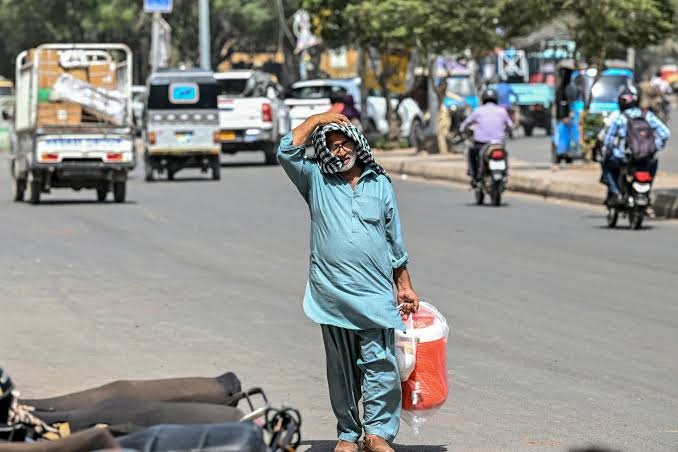
Temperatures in Karachi routinely rise above 38–40°C (100–104°F), with some areas of Sindh recording highs above 52°C (126°F). Climate scientists have warned that such extreme heat events are becoming more frequent, pushing millions of low-income workers into dangerous conditions. Inside garment factories and textile mills, with machinery generating extra heat and ventilation often lacking, the risks intensify.
Workers interviewed by Climate Rights International described nausea, dizziness, blurred vision, muscle tremors, and injuries linked to extreme temperatures. Many said they had fainted or had watched colleagues collapse. One worker, Muhammad Hunain, recalled working through outdoor temperatures as high as 45°C (113°F). “You can imagine how much hotter it becomes inside, where machinery, bodies, and fabric all trap heat,” he said.
Despite these risks, Climate Rights International found that factories, textile mills, and most sourcing brands provide little protection. As Hunain described it, “There are no fans, no cooling units, no ventilation … The workers are simply left to struggle.”
The findings come as negotiations continue on the International Accord’s Pakistan Country-Specific Safety Program. The need to recognise extreme heat as an occupational hazard has become urgent as Pakistan experiences some of the fastest-rising temperatures in South Asia. Historically, the Accord has not recognised extreme heat as a core workplace risk.
Climate Rights International said the hazards faced by Karachi’s workers reflect a broader trend in which global fashion and textile supply chains offload climate risks onto vulnerable workers. The findings build on the group’s earlier investigation in Dhaka, Bangladesh, as well as research from other garment hubs across South Asia, showing a pattern of workplace harm worsened by insufficient climate protections.
Muhammad Hunain said, “If the heat keeps rising every year, workers like us will suffer the most. We need fans, ventilation, fair wages, job security, and proper medical support. These are basic needs.”
Experts warn that without climate-responsive safety measures, millions of workers, not only in Karachi’s factories but nationwide, will face escalating health risks. Protecting them is both a labour-rights obligation and a public-interest imperative.
Talking to APP, Cara Schulte, researcher at Climate Rights International, said, “We have now spoken to workers in global fashion supply chains in both Bangladesh and Pakistan, and most alarming is what appears to be the industry’s tolerance for serious harm. Garment workers have expressed concern that extreme heat is making it harder for us to keep pace with intense production targets, earn wages, and … for many workers … the bottom line is that the heat is making it harder to survive.”
Workers told her that fainting was becoming routine on hot factory floors, and many said these incidents were treated casually by workplace authorities, if not ignored. “That can’t continue. Brands and suppliers have to work together to address heat stress as the very serious occupational hazard that it is … and immediately develop actionable and enforceable protections so that workers aren’t forced to risk their health just to put food on the table.”
Pakistan’s garment and textile industry is a major driver of the national economy, contributing around 8–9% of the country’s GDP and accounting for over 60% of its total exports. The sector provides employment to millions of workers, particularly women, and supports ancillary industries including logistics, packaging, and dyeing. Its growth is vital for foreign exchange earnings and economic stability, making the well-being and productivity of factory workers not only a labor rights issue but also a key factor in sustaining Pakistan’s overall economic health.

PM Shehbaz condemns terror attack on DI Khan police van

0

ISLAMABAD, Dec 3 (APP): Prime Minister Shehbaz Sharif on Wednesday condemned the terrorist attack targeting a police van in Dera Ismail Khan, reiterating that the war against terrorism would continue till its complete elimination.

The prime minister, in a statement, expressed deep grief over the martyrdom of three police personnel in the attack. He prayed for the elevation of the martyrs’ ranks in paradise and for strength to the bereaved families to bear the loss.

He also instructed to provide the best possible medical treatment to the police official injured in the attack.

“The entire nation, including myself, pays tribute to the great sacrifices rendered by Khyber Pakhtunkhwa Police in the fight against terrorism,” Prime Minister Shehbaz said and directed that those responsible for the incident be identified and brought to justice with exemplary punishment.

Kerb currency market

0
KARACHI, Dec 03 (APP): Following were the Opening Rates of foreign currencies in kerb market issued by the Forex Association of Pakistan (FAP), here on Wednesday.
F.C.                                               LOW RATE      HIGH RATE
(Inter Bank)                             280.45                 280.50
USD                 281.08                 281.50
EURO                                             326.80                 329.80
GBP                                          371.50                 374.50
JPY    1.79           1.89
AED                                     76.70                  77.10
SAR                                             74.90                   75.20

Shipping Activity at Port Qasim

0
KARACHI, Dec 03 (APP): Ten ships, Emmanuel-P, MSC Roberta-V, GFS Genesis, Spirit of Bertram, Manta Sena, Aqua Spirit, Maya Gas-1, Lusail, Boa Yuan Ling and Libero scheduled to load/offload Container, Rice, LPG and Coal, berthed at Qasim International Container Terminal, Multi-Purpose Terminal, Engro Vopak Terminal, Sui Souther Gas Terminal, Engro Elengy Terminal, Pakistan International Bulk Terminal and Marginal Wharf Coal Terminal respectively on Tuesday.
Meanwhile three more ships, MSC Vita, Hansa Africa and Lia with Container and Coal also arrive at outer anchorage during last 24 hours.
Fifteen ships were engaged at PQA berths during the last 24 hours, out of them four ships, Emmanuel-P, MSC Roberta-V, Al-Salam-II and Turtle Island left the port on today morning, while five more ships, Atlantic Rainbow, Amis Wisdom, Maya Gas, Spirit of Bertram and GFS Genesis are expected to sail on Wednesday afternoon.
Cargo volume of 234,101 tonnes, comprising 183,473 tonnes imports cargo and 50,628 export cargo carried in 4,930 Containers (2,780 TEUs Imports & 2,150 TEUs Export) was handled at the port during last 24 hours.
Eleven ships at Outer Anchorage of the Port Qasim, out of them five ships, MC Gaea, Paccha, Navigator Leo, Efe Mersin and Hansa Africa & two more ships, CMA CGM Phoenix and Wattle Tiger carrying Palm oil, Gasoline, LPG, Soya Bean Seed, Container and General Cargo are expected to take berths at LCT, FOTCO, EVTL, PIBT, QICT and MW-1 on Wednesday.

DPM Dar for reimagining South Asia by promoting dialogue, win-win cooperation

0
ISLAMABAD, Dec 3 (APP): Deputy Prime Minister and Foreign Minister Senator Ishaq Dar on Wednesday stressed the need to re-imagine South Asia and identify pathways to peace, progress, and prosperity by overcoming zero-sum mindsets, fostering an environment of dialogue, peaceful coexistence, economic interdependence, and win-win cooperation.
The deputy prime minister, addressing the inaugural session of the two-day Islamabad Conclave 2025 on “Reimagining South Asia: Security, Economy, Climate, Connectivity” held by the Institute of Strategic Studies Islamabad, also called for building an edifice grounded firmly in the principles of open and inclusive regionalism.
The event was also attended by Chairman Board of Governors, ISSI Ambassador Khalid Mahmood, ISSI Director General Ambassador Suhail Mahmood, members of the diplomatic corps and foreign policy experts, scholars, academics, practitioners, and speakers from Pakistan and the region.
“Pakistan envisions a South Asia where connectivity replaces divisions, economies grow in synergy, disputes are resolved peacefully in accordance with international legitimacy, and where peace is maintained with dignity and honor,” the deputy prime minister said.
He said that Pakistan remained ready to work with all willing partners to help South Asia realize its immense potential.
He said the global environment continued to be marked by polarisation and fragmentation as conflicts in Europe, the Middle East and Africa, as well as regional crises, including Israel’s genocidal military onslaught on Palestinians in Gaza, represented some of the darkest chapters of recent times.
He said the 92-hour Indo-Pakistan war in May 25, had the potential to escalate to far more dangerous levels. All this is of a large malice in which states have increasingly resorted to the use of force to settle disputes with disregard for international law and the purpose and principles of the UN Charter.
He said that the US played a crucial role in brokering a timely ceasefire between Pakistan and India.
“Pakistan had demonstrated both in resolve and capability to thwart aggression and reinforce deterrence. The concept of a net security provider is buried. Sustainable peace in South Asia, however, requires more than maintaining strategic stability.”
He said that South Asia was faced with escalating disputes over resource sharing, particularly on river waters, as exemplified by India’s illegal and unilateral announcement on the Indus Waters Treaty.
The deputy prime minister said that the long-standing and unresolved political disputes, like Jammu and Kashmir, continued to threaten the peace and stability in the region as the dialogue process between India and Pakistan remained stalled for over 11 years.
Calling climate change an existential threat, he said the rising temperatures, extreme weather events and accelerated glacial melting affected water resources, agriculture and livelihoods worldwide.
Similarly, he said that the rise of extremist ideologies, political populism, democratic backsliding and Islamophobia were negatively impacting the globe and causing upheavals in unprecedented ways.
He said that Pakistan had a clear and consistent vision seeking a just, equitable and inclusive world order and opposing bloc politics and zero-sum approaches. The country also championed UN-centred multilateralism and underscored the indispensability of dialogue and diplomacy, of peaceful settlement of disputes and of international cooperation and solidarity.
Deputy Prime Minister Dar said that as an elected member of the UN Security Council for the term 2025-2026, Pakistan was engaged in efforts to promote international peace and security.
He told the gathering that South Asia, being home to over 25% of the global population, was faced with poverty, inequality and development challenges, including illiteracy, disease, malnutrition, income disparities, food insecurity, natural disasters and the impacts of climate change.
Highlighting the water security threatened by the accelerated melting of glaciers, Dar called for investment in renewable energy, climate-smart farming and disaster preparedness.
Earlier, in his address, ISSI Director General Ambassador Suhail Mahmood said that the fifth edition of Islamabad Conclave had both in-person and online participation of eminent speakers from several South Asian nations.
He said that established in 1973, the ISSI had has evolved structurally as well as substantively by providing research-based inputs and serving as a platform for informed dialogue on issues of policy relevance.
The director general said that Institute will establish an Africa Corner in 2026, scale up its counterterrorism CT research work, deepen collaboration with stakeholders on maritime security and blue economy, spotlight on Pakistan’s contributions at the UN Security Council as elected member for the term 2025-26, strengthen engagement with next-gen international security and IR scholars, and work for the greening of the ISSI building.
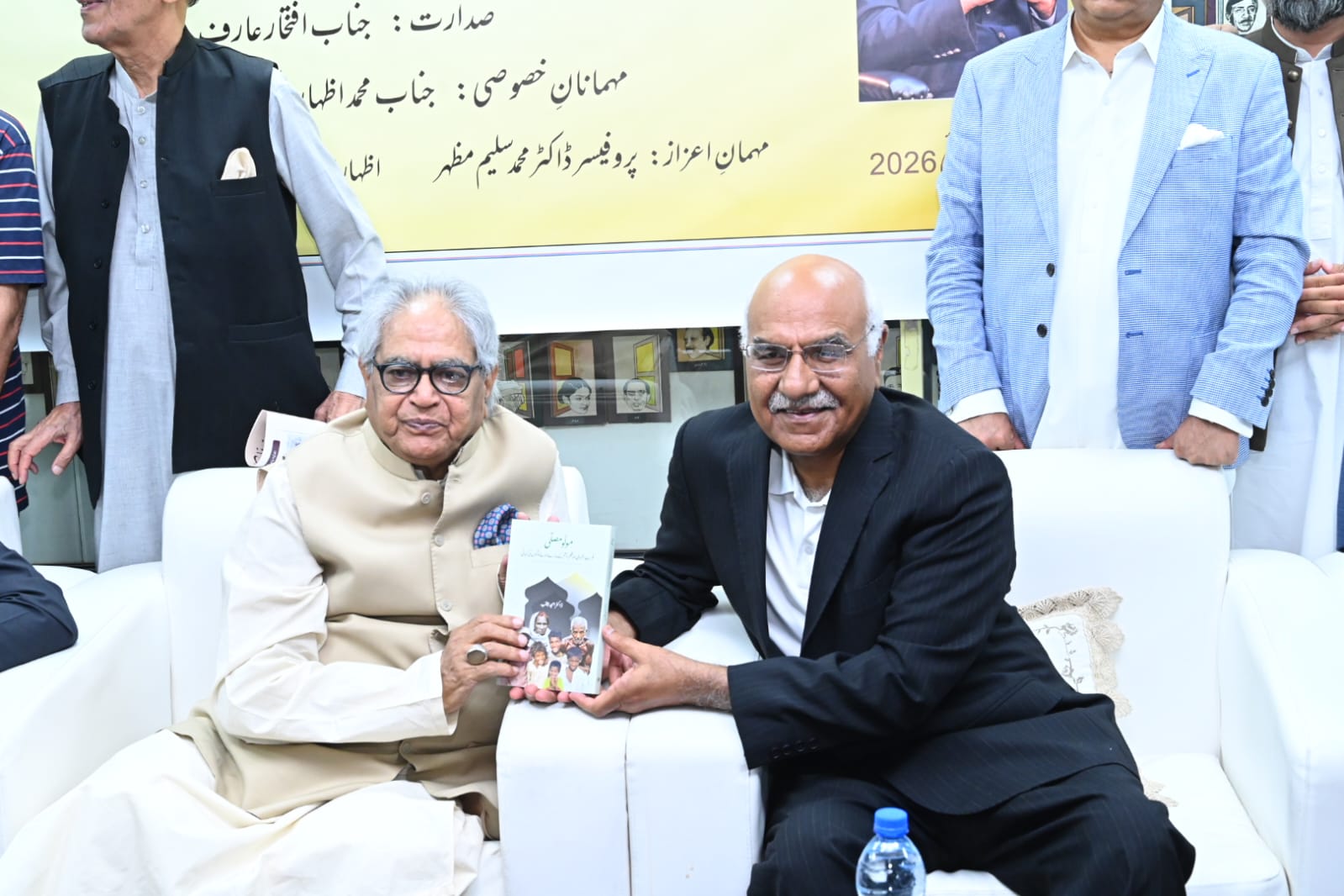
Suhail Mahmood also presented to DPM Dar a book on the Operation Bunyanum Marsus of May 2025, an operation representing Pakistan’s robust response to Indian aggression and a firm rejection of any attempt to establish regional hegemony.

DC directs DC directs to complete ongoing development projects on priority

0
JHELUM, Dec 3 (APP): Deputy Commissioner (DC), Mir Raza Ozgan on Wednesday directed the concerned authorities to complete ongoing development projects to renovate the city and facilitate the people on priority.
He stated that during a meeting with Assistant Commissioner (AC), Shams ur Rehman and CEO District and Municipal Committee , Zia Ranjha.
The DC directed that no leniency would tolerated on quality of the projects.
The deputy commissioner was also briefed about the ongoing projects during the meeting.
The authorities assured the DC that all ongoing projects would be completed within stipulated time.

Customs foils mis-declaration attempt, prevents Rs 167 mln revenue losses

0
ISLAMABAD, Dec 3 (APP): The Collectorate of Customs Enforcement Karachi has foiled a major revenue evasion attempt, preventing a loss of around Rs167 million to the national exchequer.
The action was taken against M/s Insons Corporation, Karachi, and their clearing agent, M/s Pakistan Shipping and Logistics Company, Karachi, after credible intelligence indicated possible mis-declaration in an incoming consignment, said a news release.
Upon re-examining Container No. OOLU1097058 at the KICT Terminal, filed under GD No. KAPW-HC-81856-05-11-2025, Customs officers discovered a gross mis-declaration involving high-value Japanese-origin auto parts imported via Jebel Ali.
The reassessment revealed the concealment of 24,000 Universal Joints (GMB, Japan), the presence of 43 undeclared refurbished laptops, and substantial under-reporting of automotive bearings, all of which had been intentionally mis-declared to evade duties and taxes.
The seized goods carry an assessed value of Rs. 193 million, making this interception one of the most significant mis-declaration cases detected in a single container by the Collectorate.
Legal proceedings under the Customs Act, 1969, have been initiated against the importer, the clearing agent, and all facilitators involved in the attempted evasion.
FBR reaffirms its commitment to safeguarding government revenue and maintaining strict vigilance against mis-declaration, smuggling, and tax evasion across all channels.

Steps to lower production cost of industrial goods among govt priorities

0
ISLAMABAD, Dec 3 (APP): Prime Minister Shehbaz Sharif on Wednesday said that the incumbent government was taking priority measures to reduce the production cost of industrial goods for local industry, trade, and population.
The prime minister, chairing a meeting to review recommendations of the sub-working group on customs duty and other trade sector reforms, said that the National Tariff Policy approved by the government was a revolutionary step to boost domestic industrial production while making businesses competitive in local and international markets.
He said that the Policy was also introduced to align the country’s exports and imports with overall national economic growth.
He said that identifying the sector-specific proposals and issues was inevitable to increase domestic industrial production and trade.
The prime minister said that for decades, the Export Development Fund was not utilised to promote research and training to enhance economic and industrial production capacity.
He emphasised that the recommendations and reform proposals in the export and import sectors put forward by experts must be based on realistic data and statistics.
Prime Minister Shehbaz also directed strict monitoring of customs duties collection on bilateral and transit trade goods with other countries on the border.
The working group viewed that sustainable export-led economic growth was only possible through increased investment and production capacity, government protection, and improved infrastructure.
During the meeting, Muhammad Ali Tabba and other representatives of the business community, who are part of the sub-working group, briefed the prime minister on issues related to customs and tax collection and presented their recommendations.
Prime Minister Shehbaz welcomed the recommendations and issued instructions to the ministries and institutions concerned to extend all possible facilities to the business community and investors.
The meeting was attended by federal ministers Muhammad Aurangzeb, Attaullah Tarar, Musadik Malik, Awais Ahmad Khan Leghari, Ahad Khan Cheema, Ali Pervaiz Malik, Azhar Bilal Kayani, Haroon Akhtar, National Coordinator of Special Investment Facilitation Council (SIFC), representatives of national industry and business community and senior government officials.