Home Blog Page 16

Polio vaccine administered to 1.4m children

0
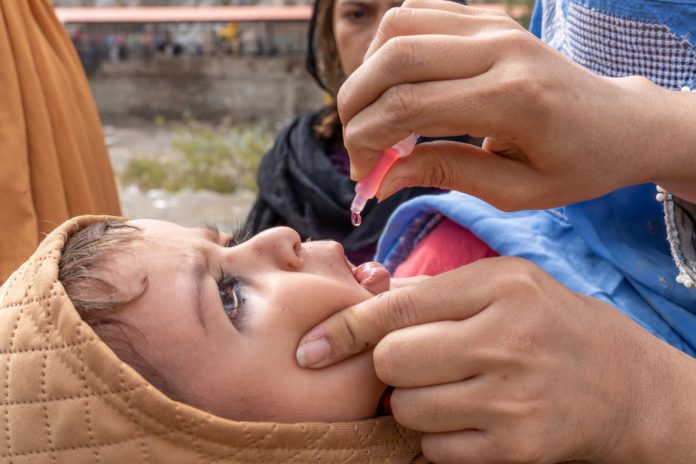
FAISALABAD, Dec 18 (APP): The anti-polio teams have administered drops to over 1.4 million children during the last three days of the ongoing campaign in the district.
This was revealed in a meeting held to review progress of the staff with Deputy Commissioner Cap (Retd) Nadeem Nasir here on Thursday.
The DC directed the police vaccination staff to remain active till the last child takes anti-polio drops.
He said that the performance of police teams is being monitored strictly.

Enhanced roads connectivity through CPEC to put KP into industrial, business hub

0
PESHAWAR, Dec 18 (APP): Strategically located in South Asia, Pakistan’s Khyber Pakthunkhwa province is going to widely benefited from multifaceted China-Pakistan Economic Corridor Project (CPEC) following construction of gigantic road projects.
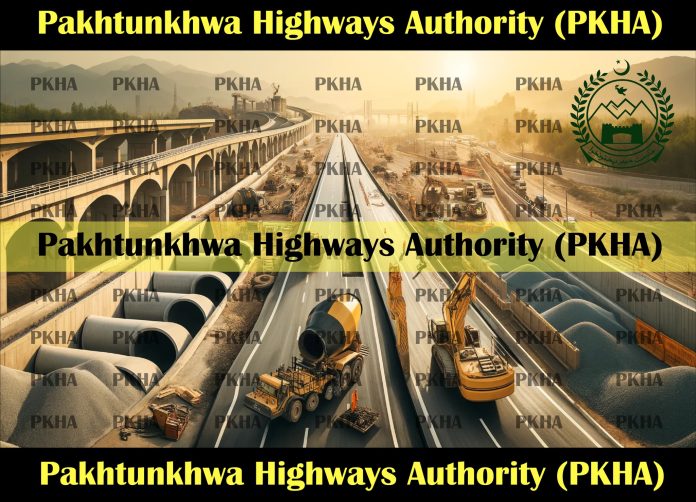
To link southern districts of KP with Hakla-Yarik-DI Khan Motorway (M-14) which is a flagship connectivity project under western aliment of CPEC, Pakhtunkhwa Highways Authority (PkHA) has issued a tender for a 42.3 km link road connecting the Bannu Link Road (N-55) with the M-14 Motorway.
PkHA Spokesman told APP that the project will be constructed under Public Private Partnership (PPP-model) aims to give residents of Bannu, Karak, Lakki Marwat and nearby areas faster, safer access to the national motorway network.
Bannu Link Road will not only boost regional mobility, trade and investment but integrate southern KP with major routes leading to Islamabad and Punjab, building on the improved connectivity already provided by the M-14 Motorway.
He said the private partner will undertake financing, construction and operation of the project, while the authority may extend viability-gap funding and other support.
The southern belt of KP would receive the same modern connectivity available to other parts of the country, he said, adding that the project would help improve mobility and boost regional trade and investment.
Upon completion of this project, he said travel in the region will become smoother and effective connectivity of the southern districts with the national highway and motorway network will be possible.
The project aims not only to provide the public with modern travel facilities, but also to support regional trade and economic activity.
By opening the 285-kilometre high-speed link, travel time between Islamabad and southern KP was drastically reduced and journeys that once took roughly five hours or more via older roads can now be completed in about three hours.
‘CPEC is a game changer project that is going to largely benefit all provinces including Khyber Pakthunkhwa in terms of fast track communication services besides bolstering regional connectivity,” said Professor Dr Zialakat Malik, former Chairman, Economics Department at University of Peshawar.
Talking to APP, he said southern districts of Khyber Pakthunkhwa are blessed with mineral resources besides carrying vast lands for agriculture and fruits orchard to fully utilized following construction of the N-55 Bannu link road.
He said on September 26 last, the 14th meeting of CPEC Joint Cooperation Committee (JCC) was held in Beijing which represented a historic shift in bilateral and economic cooperation between Pakistan and China.
He said that it signaled the evolution of CPEC from an infrastructure-led initiative to a comprehensive and productivity-driven development partnership between the two brotherly countries.
Dr Zialkat said it marked the consolidation of a new development philosophy for Pakistan that merges connectivity with competitiveness, industrial modernization with human development and physical assets with climate resilience.
“CPEC has stood as the flagship of the Belt and Road Initiative (BRI) for over 10 years and a pillar of the all-weather Pakistan-China strategic relationship,” he said, adding Phase-I has successfully resolved Pakistan’s acute energy deficit, upgraded road and logistics networks, and built the foundational infrastructure for economic activities.
He said with the launch of Phase-II, both countries now enter a qualitatively new phase aligned with President Xi Jinping’s emphasis on high-quality development and Pakistan’s national transformation roadmap, URAAN Pakistan, anchored in the 5Es Framework will open gates of economic and industrial development.
Professor Dr Zialkat said that China is preparing its 15th Five-Year Plan, while Pakistan’s Ministry of Planning is drafting the 13th Five-Year Plan, adding both frameworks converge on core themes such as industrial upgrading, innovation ecosystems, digital transformation, renewable energy, green growth, modern agriculture, rural revitalization and people-centred development, adding this structural alignment provides CPEC 2.0 with clarity, purpose and long-term continuity.
Dr Malik said that Pakistan’s approach is 5Es Framework ie Exports, E-Pakistan and Innovation, Energy and Infrastructure Efficiency, Environment and Climate Resilience and Equity and Empowerment, adding CPEC 2.0 advances these through five corridors such as growth, livelihood, innovation, green and openness corridors.
“The convergence of 5Es and 5Cs defines a unified mission to steer Pakistan from a consumption-driven, low-productivity economy toward a high-productivity, export-oriented, innovation-led, climate-resilient growth trajectory.”
He said CPEC 2.0’s Growth Corridor is tightly aligned with Pakistan’s export pillar, aiming to transition from low-value domestic production to high-value global integration while China’s 15th Five-Year Plan emphasizes industrial relocation and advanced manufacturing across BRI economies.
He said Pakistan’s Special Economic Zones (SEZs) including Rashakai, Dhabeji, Bostan and Allama Iqbal are strategically placed to attract Chinese and international investors in textiles, electronics, engineering goods, automobile parts and agro-processing.
Under URAAN Pakistan, the forthcoming Pakistan Export Promotion Digital Platform will digitally connect Pakistani SMEs to global buyers and e-commerce markets, reducing intermediaries and boosting competitiveness. This shift is essential for Pakistan’s ambition of becoming a $1 trillion economy by 2035, anchored in export-led growth and productivity enhancement.
The Innovation Corridor aligns with URAAN’s E-Pakistan pillar to build a modern, knowledge-based economy while cooperation now extends to Artificial Intelligence and cloud computing; 5G and next-generation connectivity; fintech and digital payment systems; mart governance solutions; university–industry research partnerships; and science parks, incubators and startup ecosystems.
For Pakistan, he said these initiatives offer the possibility of leapfrogging multiple stages of technological development and entering the Fourth Industrial Revolution with stronger capabilities, enhanced human capital, and improved global competitiveness.
While referring to Green Corridor plus Energy Transition, he said CPEC 2.0 incorporates the BRI’s Green Development vision and supports Pakistan’s transition towards clean, low-carbon growth.
 Key interventions includes utility-scale solar and wind projects, hydropower expansion, energy storage, smart grids and distributed systems. promotion of electric vehicles. climate-resilient agriculture and water management, and disaster warning systems and environmental resilience technologies.
The experts said Pakistan, among the world’s most climate-vulnerable countries, views renewable energy not only as an economic necessity but a national survival priority. China’s technological leadership and Pakistan’s renewable potential lay the foundation for a more secure, affordable and sustainable energy future.
Regarding livelihood corridor plus equity & empowerment, he said One of the defining features of CPEC 2.0 is its strong focus on inclusive development and human welfare. Livelihood-focused programmes support relates to technical and vocational training for youth. improved primary healthcare and rural medical access. clean drinking water and sanitation services, modernised agriculture, value chain integration, and farmer income enhancement; smart agriculture zones and demonstration farms; and women-focused livelihood and skills initiatives.
These projects reduce regional disparities, enhance incomes, strengthen human security, and embed social protection into economic growth. Every school upgrade, training centre and rural development project deepens the people-centred character of the Pakistan-China partnership.
He said openness corridor accelerates Pakistan’s integration into regional and global supply chains. Its scope includes Gwadar Port development and the blue economy. enhanced customs and trade facilitation, cross-border e-commerce and digital trade, tourism and cultural exchanges and academic partnerships and people-to-people exchanges.
The experts said that agricultural modernization is also a major focus introducing mechanization, high-yield seeds, water-efficient technologies and advanced farming practices essential for Pakistan’s food security and rural transformation.
Gwadar’s evolution into a Smart Port positions Pakistan as a connectivity hub linking Central Asia, the Middle East and Africa. CPEC 2.0 directly supports Pakistan’s progress on key global commitments, including SDG 7 (Energy), SDG 8 (Jobs), SDG 9 (Industry & Innovation), SDG 10 (Inequality Reduction), SDG 11 (Sustainable Cities), and SDG 13 (Climate Action). Tangible results are already emerging.
To sustain momentum, Pakistan is strengthening coordination mechanisms, ensuring transparency and merit-based execution, improving monitoring and evaluation and reinforcing regulatory stability to attract FDI and enable public–private partnerships.
As Pakistan and China approach the 75th anniversary of diplomatic relations in 2026, CPEC 2.0 marks a profound evolution. The 14th JCC has laid the foundation for a new era of cooperation – deeper, broader and more people-centred. The shared mission is clear: convert connectivity into competitiveness, growth into prosperity and partnership into shared destiny.

PBM director urges quality education, discipline at Pakistan Sweet Home Kot Addu

0
MUZAFARGARH, Dec 18 (APP):Director Pakistan Bait-ul-Mal (PBM) South Punjab Rana Muhammad Ramzan Tahir has stressed the need for quality education, discipline and regular academic assessments at Pakistan Sweet Home Kot Addu, stating that PBM spends approximately Rs 30,000 per child each month and expects high-quality outcomes.
He made these remarks during his visit to Pakistan Sweet Home Kot Addu, where he reviewed facilities and met members of the Supervisory and Management Committees, local philanthropists and Press Club representatives. He announced the formation of an Assessment Committee to evaluate students’ academic performance and overall standards.
Accompanied by Assistant Director Education Naeem Iqbal and Superintendent Projects Kashif Awan, the director was briefed by Assistant Director PBM Muzaffargarh/Kot Addu Syed Kashif Saleem on ongoing welfare measures and services being provided for the children.
During the meeting, several philanthropists pledged support for the institution. Managing Director Al-Noor City Housing Society Abdul Majeed Khan Mirani announced the establishment of a modern computer lab with 20 computers. Press Club President Sheikh Usman and Anjuman-e-Tajiran President assured the provision of sports equipment, while Chaudhry Waseem pledged sandals for 100 children. CEO Learners House Javed Rashid announced weekend transport facilities to sports grounds.
Rana Muhammad Ramzan Tahir said the PBM leadership envisions Pakistan Sweet Homes as institutions that nurture responsible and capable citizens. He appreciated the cooperation of philanthropists, media representatives and the administration, expressing hope that Pakistan Sweet Home Kot Addu would be developed into a model institution.
He further announced that, subject to the provision of land by the district government, a district complex comprising all PBM projects and a new district office would be established in Kot Addu.
PBM continues to provide extensive welfare services in Southern Punjab, including financial assistance to widows and persons with disabilities, medical aid of up to Rs 1.5 million per patient, and cochlear implants worth up to Rs 2.2 million for hearing-impaired children. The organisation also operates 20 SRCLO schools and 18 Women Empowerment Centers in the region, where students receive a daily attendance-based stipend.

Info Minister seeks proposals to protect creative professions from AI disruption

0
ISLAMABAD, Dec 18 (APP):Federal Minister for Information and Broadcasting Attaullah Tarar on Thursday has called for proposals to address challenges posed by artificial intelligence in the advertising industry, emphasizing the need to safeguard creative professionals from redundancy.
In a post on X, the minister noted that the growing use of AI in Pakistan’s advertising sector is creating employment concerns for creative roles.
Professions including content creators, graphic designers, editors, creative directors, actors, models, technical staff and cameramen are particularly at risk. Authorities have invited the public to share recommendations to protect these professions. Suggestions can be submitted via email to pio@pid.gov.pk.

DIG Tariq reviews security, Christmas arrangements

0
ISLAMABAD, Dec 18 (APP): Islamabad Capital Territory (ICT) Police on Thursday reviewed the law and order situation and security arrangements, including special measures for Christmas, during a high-level meeting chaired by Deputy Inspector General (DIG) Islamabad Muhammad Jawad Tariq.
An official told APP that the meeting was attended by SSP Investigation Muhammad Usman Tariq Butt and SSP Operations Qazi Ali Raza, during which the overall security situation, ongoing actions against criminal elements and preparations for Christmas were discussed in detail.
The DIG Tariq stressed that all available resources must be utilised to ensure the protection of citizens’ lives and property and to promote religious harmony in the federal capital.
 He directed officers to further strengthen police patrolling, enhance security at sensitive locations and remain fully prepared to deal with any untoward situation.
He also instructed that foolproof security arrangements be ensured at churches and other sensitive places during Christmas, with close coordination among all operational units.
Reaffirming the commitment of Islamabad Police, the DIG Tariq said that the force would remain alert and proactive to maintain peace, ensure public safety and promote interfaith harmony across the city.

15 arrested, 1 shop sealed in Lehtrar Road encroachment drive

0
ISLAMABAD, Dec 18 (APP):The Islamabad Capital Territory (ICT) administration teams have arrested 15 shopkeepers and sealed one marble shop during an operation against encroachments on Lehtrar Road, as action continued to clear service roads and ensure space for pedestrians.
An anti-encroachment operation was carried out on Lehtrar Road where officials moved to remove illegal setups along the service road.
During the action, 15 shopkeepers were taken into custody for occupying public space and creating hurdles for pedestrians. A marble shop was also sealed for violating rules related to the use of public land.
According to officials, the operation focused on areas where service roads had been blocked by extended shop fronts, displayed goods, and temporary structures. These encroachments were reported to be causing problems for people walking along the road and for vehicles using the service lane. The action aimed to restore access to public spaces meant for general use.
Authorities stated that the service road is intended to support traffic flow and pedestrian movement. When shops extend into these areas, it creates congestion and safety risks. During the operation, teams removed items placed outside shops and cleared the affected sections of the road.
The administration noted that such operations are part of a wider campaign across the city. Similar actions are being taken in different sectors to address complaints related to blocked footpaths, narrowed roads, and misuse of public land. The aim is to ensure that service roads and sidewalks remain accessible for their intended purpose.
Authorities also warned shopkeepers against re-establishing encroachments after the operation. Monitoring teams will continue visits to ensure compliance. Shops found violating the rules again may face stricter action, including sealing and fines.
The administration emphasized that encroachment drives are not targeted at any specific business but are meant to enforce existing laws. Officials urged traders to keep their business activities within their allotted premises and avoid placing goods or structures on public land.
The operation on Lehtrar Road concluded with the clearance of affected sections of the service road. Officials reiterated that actions against encroachments will continue in all parts of the city to ensure smooth movement for pedestrians and vehicles and to uphold public interest.

Raast playing key role in promotion of financial inclusion, cashless economy

0
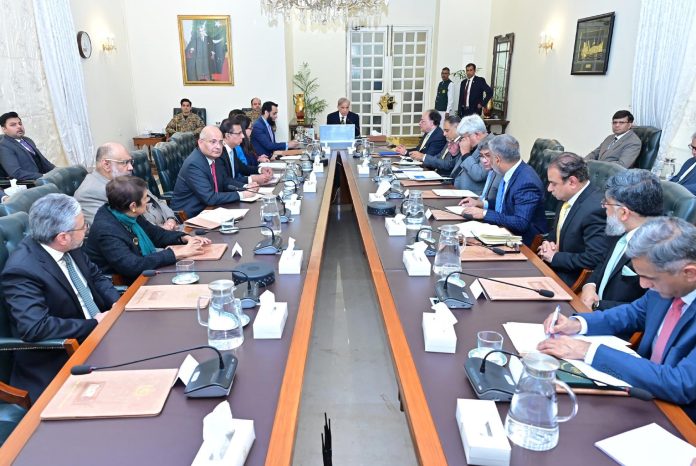
ISLAMABAD, Dec 18 (APP): Prime Minister Shehbaz Sharif on Thursday emphasized that Raast- Pakistan’s national payment system- was playing key role in promotion of cashless economy and financial inclusion in the country.
The prime minister stressed the need to further expediting efforts aimed at encouraging the country’s businessmen to use Raast platform for their payments.
He was talking to the members of Raast board who called on him at the PM House.
The prime minister congratulated the board members on assuming their new responsibilities.
He hoped that the board members will help improve the working of this important department.
During the meeting, the board members briefed the prime minister about the performance of Raast and informed him that so far, some three billion transactions worth of Rs 80 trillion had been completed in the country.
It was informed that there were more than 48 million Raast consumers whereas 53 financial institutions of the country were Raast’s partner.
The prime minister was further told that Raast was a department of State Bank of Pakistan (SBP), while all members except one had been selected from the private sector based on their vast relevant experience.
It was also informed in the meeting that the department was committed to transfer all the B2G and G2B payments to Raast across the country.
“Through Raast, every individual has been provided with a safe and reliable digital payment platform”, the briefing added.
The meeting was attended by Minister for Finance Muhammad Aurangzeb, Minister for Information Attaullah Tarar, Minister for Economic Affairs Ahad Khan Cheema, Minister for Information Technology Shaza Fatima Khawaja, Minister of State for Finance Bilal Azhar Kayani, Governor SBP, Raast Board members, CEO and other relevant senior officers.

Cybersecurity awareness week 2025 concludes with call for shared responsibility to counter related challenges

0
ISLAMABAD, Dec 18 (APP):The Pakistan Telecommunication Authority (PTA) on Thursday concluded the Cybersecurity Awareness Week 2025, reaffirming its commitment to engage academia and promoting shared responsibility to protect society from emerging cyber threats amid rapid technological transformation.
Observed from December 11 to 17 under the theme “Building a Safe, Secure, and Resilient Cyberspace,” the week-long initiative brought together key stakeholders from government, international organizations, academia, and the telecommunications industry. Federal Minister for Information and Broadcasting Attaullah Tarar attended the concluding ceremony as chief guest, alongside Chairman PTA Hafeez Ur Rehman and Dr Samuel Rizk, representing the United Nations Development Programme (UNDP). Senior leadership from major telecom operators was also present.
Addressing the gathering, the minister highlighted how abrupt digital evolution is fueling misinformation, describing it as one of the most pressing global challenges. Referring to the recent tragic attack at Bondi Beach in Sydney, Australia, he regretted that a peace-loving country was targeted through unverified allegations, underscoring the dangers of unchecked information in the digital space.
He stressed the need for enhanced digital literacy, sustained awareness initiatives, and robust regulatory mechanisms to bridge the widening gaps created by the rapid digital revolution. The minister noted that the government has established Pakistan’s first Digital Communication Department and a dedicated fact-checking unit within the Ministry of Information and Broadcasting, while also strengthening coordination with media organizations.
Appreciating collaborative efforts to counter fake news, he called for a multidimensional strategy involving journalists, media professionals, government officials, content creators, and academia to promote responsible digital engagement.
Speaking on the occasion, PTA Chairman Hafeez Ur Rehman said that while Pakistan possesses strong cybersecurity systems and supportive government policies, cyber threats can only be effectively countered through indigenous capabilities and expertise. He urged users to exercise caution by avoiding unknown links and unnecessary clicks while browsing or conducting research online.
Dr Samuel Rizk commended the PTA for organizing the Awareness Week, noting that the rapidly growing number of internet users has significantly increased cyber-related challenges. He advised the public not to rely on unverified information to prevent unnecessary panic and emphasized the importance of integrated efforts to address cyber threats.
Representatives of leading telecommunications companies, including Jazz, Telenor, Zong, and Ufone, also highlighted their public awareness campaigns, noting the use of public service messages and other platforms to educate users about safe and responsible digital practices.

HA nurseries boost greenery drive in Rawalpindi

0
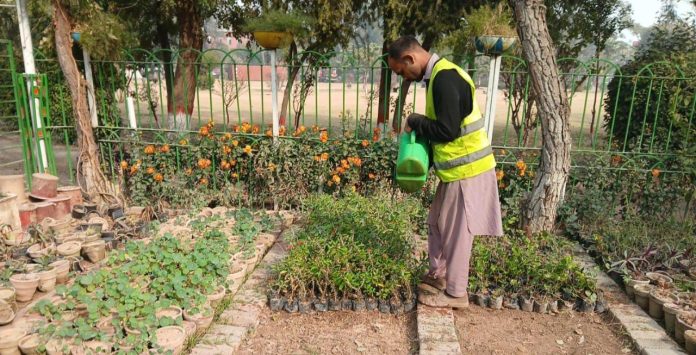
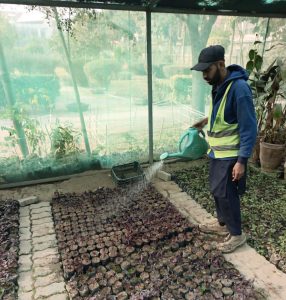
RAWALPINDI, Dec 18 (APP):The Horticulture Agency Rawalpindi is stepping up efforts to make the city greener and more visually appealing by strengthening plant and flower production in its nurseries.
HA nurseries boost greenery drive in Rawalpindi
An HA spokesman said on Thursday that, following special instructions from Managing Director Ahmed Hassan Ranjha, the Agency was focusing on the breeding, production and care of a wide range of plants and flowers to achieve self-sufficiency and ensure uninterrupted availability for urban landscaping.
The nurseries, he said, were producing shade trees and ornamental plants on a daily basis, which were being planted across parks, green belts and other public spaces in Rawalpindi to enhance the city’s landscape and promote an environmentally friendly atmosphere.
The spokesman said skilled workers of the Horticulture Agency were continuously engaged in horticultural activities, including plant care and flower cultivation, to meet the requirements of parks and green belts across the city.
He added that special measures were also being taken to protect plants and flowers with the weather getting colder.
The spokesman said the initiative was in line with the vision of the Punjab Government to make Rawalpindi a greener and more pleasant city for residents.

Government taking all necessary steps for welfare, development, protection of minorities: PM

0
Islamabad: National Assembly Religious Minority members called on Prime Minister Muhammad Shehbaz Sharif on 18 December 2025.

ISLAMABAD, Dec 18 (APP): Prime Minister Shehbaz Sharif on Thursday said that the government was continuing all necessary steps for the welfare, development, and protection of minorities.

The prime minister was talking to a delegation of members of the National Assembly representing the minority community which called on him at the PM House.

The delegation included State Minister for Religious Affairs, Khail Das Kohistani; Dr. Darshan; Nelson Azimish Isfahan Bhindara; Ms. Neelam; Sanjay Prowani; Ramesh Kumar; Naveed Amir; and Ramesh Lal.

The prime minister assured the minority parliamentarians of full cooperation in resolving the issues of the minority community and further strengthening their inclusion in the national framework.

During the meeting, detailed discussions were held on the rights of minorities, their welfare, and their effective role in the national mainstream.

The prime minister said that minorities were an essential part of Pakistan’s social and economic fabric and that the Constitution of Pakistan guarantees them complete religious freedom, equal rights, and protection.

The minority members of the National Assembly appreciated the government’s efforts for the welfare of minorities and thanked the prime minister. They also informed him about the issues faced by the minority community and provided suggestions.