Home Blog Page 158

Free flow of ideas a foundation for democracies, international diplomacy: Amb Baloch

0

PARIS, Dec 12 (APP): Ambassador of Pakistan to France Mumtaz Zahra Baloch on Friday criticising the growing inability of states to constructively engage with each other, underlined the importance of “free flow of ideas” as a foundation not just for democracies but also for international diplomacy.

The ambassador, in her remarks at a panel discussion on “Free Flow of ideas and advancing Human Rights: Lessons and Perspectives at UN80” in connection with the International Human Rights Day, expressed concern at the evolution in international diplomacy as spaces for open dialogue and intellectual exchange become restricted.

The event was jointly organized by UNESCO and the European Union. Director-General UNESCO, Dr Khaled El-Enany, and former UN High Commissioner for Human Rights Navi Pillay, headlined the event.

Free flow of ideas a foundation for democracies, international diplomacy: Amb Baloch

The ambassador said that there was thus a growing inability of states to constructively engage with each other to develop common ground to find solutions to global problems. This dynamic is contributing to a crisis for multilateralism and for international diplomacy, she added.

The ambassador also spoke about the opportunities and challenges arising out of the UN80 process and its implications for the Human Rights Pillar of the United Nations. Terming the process as an opportunity to modernize and streamline the UN human rights machinery, she cautioned that the process should not lead to a weakening of the human rights mechanisms and procedures and dilution of the progress made in human rights.

Other participants in the panel discussion included Anne Savinel-Barras, President of Amnesty International France; Professor Jan Wouters of International Law at Institute for International Law, KU Leuven; and Thibaut Bruttin – Directeur général de Reporters sans Frontières (RSF).

Pakistan calls for ‘sustainable’ financing for African-led initiatives towards peace in Central Africa

0

UNITED NATIONS,Dec 12 (APP): Pakistan has commended the role of UN Regional Office for Central Africa (UNOCA) in preventive diplomacy in the region, while echoing concerns over the “complex picture” characterized by many political transitions, security challenges and humanitarian crises.

“Regional ownership and African leadership must remain central to this work,” Pakistani delegate Gul Qaiser Sarwani told the UN Security Council on Thursday.

UNOCA — based in Libreville, Gabon — is a political mission, established in 2011, to promote peace and security in Central Africa.

Speaking in a debate in the working of UNOCA, Sarwani, a counsellor & political coordinator at the Pakistan Mission to the UN,
voiced concern over recurring violence in the Lake Chad Basin and the upsurge of increasingly sophisticated terrorist attacks, underlining the urgency of strengthening the Multinational Joint Task Force.

“We reiterate the call for predictable and sustainable financing for such African-led initiatives,” he stressed.

Highlighting the humanitarian crisis in the subregion, the Pakistani delegate said over 9.6 million people remain displaced, with Chad alone hosting 1.47 million refugees, including 1.3 million from Sudan.

“That is a huge burden,” Sarwani said, adding that these pressures, combined with rising climate shocks and food insecurity, call for enhanced international solidarity, development financing, and support to host countries and communities.

“The root causes of instability, including poverty, governance deficits, debt distress and the inequities of the global financial system, must be addressed through, reform of international financial institutions, and equitable access to development financing,” he said.

“These are issues that require a comprehensive approach based on the interlinkages between durable peace and development,” Pakistani delegate added.

At the outset, Abdou Abarry, Special Representative of the Secretary-General for Central Africa and Head of UNOCA, told the 15-member Council that countries in Central Africa are registering electoral progress and notching some security gains, even as climate shocks and increasingly sophisticated terrorist attacks continue to drive human misery across the subregion.

“Over the past six months, Central Africa has achieved considerable progress, even though it continues to face challenges,” he said.

Giving a broad overview of recent regional developments, he sounded alarm over the worsening crisis in Sudan and ongoing security challenges in the Lake Chad Basin, while outlining significant progress in Gabon, the Central African Republic and elsewhere.

Meanwhile, in the Lake Chad Basin, “Boko-Haram affiliate groups continue to demonstrate their ability to adapt themselves to the operations undertaken by the security forces of the four affected countries” — namely, Cameroon, Chad, Niger, and Nigeria — with women and children hit hardest by the resulting violence.

Calling for stronger support for the Multinational Joint Taskforce working to combat that terrorist threat, Abarry sounded alarm over Sudan’s security and humanitarian crises. Since the fall of the city of El Fasher in November to the Rapid Support Forces (RSF) paramilitary group, more than 12,000 people have joined the 1.2 million Sudanese refugees that had already fled to neighbouring Chad.

Also briefing the Council was Christelle Hure, Regional Head of Advocacy for the Norwegian Refugee Council, who highlighted the alarming education situation in the region.

She said that, as of August 2025, nearly 5,800 schools across the region were closed — leaving over 1.2 million children out of school — in an environment where looting, arson, killings, and abductions are frequent.

“When school doors closed, protection risks rise sharply, especially for girls, who face increased exposure to gender-based violence, child marriage, early pregnancy, child labour, and recruitment by armed groups,” Ms. Hure said.

APP/ift

IRSA releases 64,100 cusecs water

0

ISLAMABAD, Dec 12 (APP): Indus River System Authority (IRSA) on Friday released 64,100 cusecs of water from various rim stations with inflow of 37,200 cusecs.
According to the data released by IRSA, the water level in the River Indus at Tarbela Dam stood at 1489.46 feet which was 87.46 feet higher than the dead level of 1402.00 feet. Water inflow and outflow in the dam were recorded as 21,100 cusecs and 20,000 cusecs, respectively.
The water level in the Jhelum River at Mangla Dam was 1208.60 feet, which was 158.60 feet higher than its dead level of 1,050 feet. The inflow and outflow of water was recorded as 5,000 cusecs and 33,000 cusecs respectively.
The release of water at Kalabagh, Taunsa, Guddu and Sukkur was recorded as 30,500, 34,600, 37,500, and 9,400 cusecs, respectively. Similarly, from River Kabul, a total of 7,900 cusecs of water was released at Nowshera, and zero cusecs were released from River Chenab at Marala.

Currency rates of NBP

0
KARACHI, Dec 12 (APP):Following are the selling/buying rates of major currencies issued by the National Bank of Pakistan (NBP), here on  Friday.
CURRENCY                    SELLING            BUYING
USD                               282.15               279.13
GBP                               377.83               373.39
EUR                               331.10               327.21
JPY                                1.8123               1.7909
AED                                75.19                 74.30
SAR                                76.84                 75.92

SAPM Haroon engages Turkish business delegation to boost bilateral ties

0

ISLAMABAD, Dec 12 (APP): Special Assistant to the Prime Minister (SAPM) on Industries and Production Haroon Akhtar Khan on Friday held a meeting with Turkish business delegation and discussed joint ventures, investment opportunities, and facilitation measures for Turkish investors in key industrial sectors.
The meeting was attended by the CEOs of Pakistan Industrial Development Corporation (PIDC), the Small and Medium Enterprises Development Authority (SMEDA), Engineering Development Board (EDB), along with senior public and private-sector representatives, said a news release.
The agenda focused on Pakistan–Turkey joint ventures, investment opportunities, and facilitation measures for Turkish investors in key industrial sectors.
Haroon highlighted prime minister’s vision of strengthening ties with brotherly nations, noting that the current Pakistan–Turkiye trade volume stands at $1 billion, with the potential to reach $5 billion.
The Turkish delegation expressed strong interest in expanding their business footprint in Pakistan, adding that leading Turkish textile brands, including LC Waikiki, are looking to enter the Pakistani market.
The delegation also requested support for opening Turkish banks in Islamabad, Karachi, and Lahore to facilitate smoother bilateral trade and investment flows.
Assuring full cooperation, Haroon Akhtar Khan said that the government will ensure banking facilitation, including letters of credit (LCs) and other financial channels, to support Turkish investors.
Pakistan is introducing regulatory reforms aimed at improving the ease of doing business and creating an investor-friendly environment.
The Turkish delegation also conveyed interest in accelerating efforts to operationalize the Istanbul–Tehran–Islamabad (ITI) trade corridor, which is expected to significantly boost regional connectivity.
SAPM Haroon briefed the participants on Pakistan’s Land Lease Policy, explaining that it provides substantial support to investors looking to set up industries. He further noted that the National Industrial Policy, prepared under the directives of prime minister, includes comprehensive facilitation measures for both local and foreign investors.
To support Turkish investment, the government has also established a special facilitation committee, he added.
Both sides agreed on enhancing cooperation across multiple sectors and working on joint projects to strengthen economic relations between Pakistan and Turkey.

WB announces $400mln for new project to improve urban services, resilience in Punjab

0

ISLAMABAD, Dec 12 (APP): The World Bank’s Board of Executive Directors has approved $400 million in financing for a new project to provide safely managed water, sanitation and basic hygiene services, and help improve the institutional and financial performance of local urban administration in Punjab province.

The Punjab Inclusive Cities Program (PICP) would support the improvement and rehabilitation of water supply networks, sewerage systems, and wastewater treatment plants, provide stormwater drainage, and enhance the capacity of local governments to sustainably deliver services and increase revenues in 16 secondary cities in Punjab.

The program, according to a news release, would also support the improved performance of solid waste management systems in Punjab, including for sanitary disposal of waste.

“Reducing child stunting is essential for Pakistan’s future. Through the Punjab Inclusive Cities Program, we are investing in safe water, sanitation, and hygiene services to break the cycle of malnutrition and disease that holds back so many children from reaching their full potential,” said World Bank (WB) Country Director for Pakistan Bolormaa Amgaabazar said.

In collaboration with the Punjab Government, she said, the program represented a significant step forward in improving urban infrastructure and strengthening local institutions, thereby laying the foundation for healthier communities and a more prosperous Pakistan.

PICP aims to deliver improved water, sanitation, hygiene and drainage services to approximately 4.5 million people and improved solid waste management services to an additional 2 million people.
The Program would help reduce healthcare costs by lowering waterborne disease, lower child stunting rates, and strengthen the capacity of urban local governments to deliver sustainable services.

“The program complements infrastructure investments with capacity building and revenue generation, helping to ensure that service delivery is well sustained,” said Amena Raja, Senior Urban Specialist for the World Bank. “It will also help Punjab’s cities better withstand floods and droughts, ensuring urban development is both environmentally responsible and resilient to climate change.”

The program also delivers important gender benefits by prioritizing hiring women especially in decision-making roles, establishing gender complaint desks, and providing targeted capacity building to help female workers develop new skills and advance. Community campaigns also promote better hygiene practices at the household level to support improved health outcomes.

The program aims to mobilize private capital to support water and sanitation services in secondary cities in Punjab.

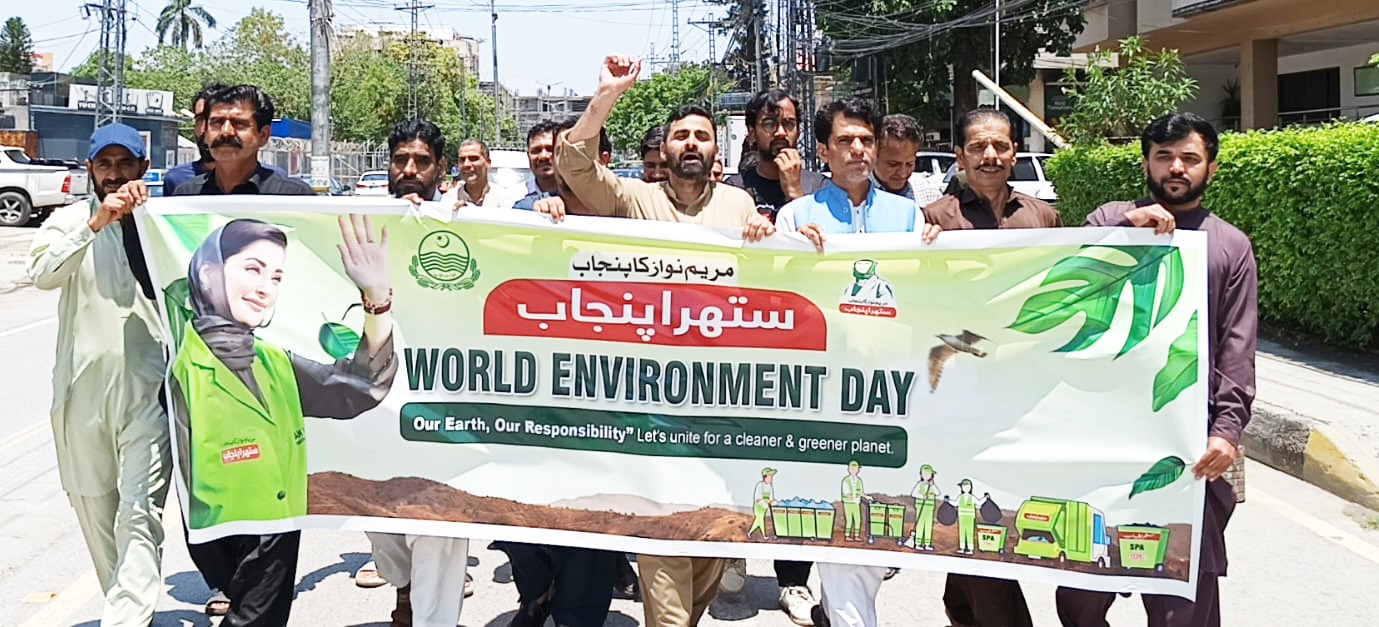
The new program aligns with Pakistan’s national development priorities and provides support to ongoing provincial programs including the Punjab Development Program and the Suthra Punjab Program.

It is the second phase of the World Bank-supported Pakistan Urban Water, Sanitation and Hygiene Services Multiphase Programmatic Approach.

NBP Exchange Rates

0
KARACHI, Dec 12 (APP):Treasury Management Division of National Bank of Pakistan (NBP) on Friday issued the following exchange rates.
CURRENCY                      SYMBOL                  TT Selling                           TT Buying
US DOLLAR                        USD                       280.75                               280.25
EURO                                 EUR                       329.46                               328.87
JAPANESE YEN                    JPY                        1.8033                               1.8001
BRITISH POUND                 GBP                         375.95                              375.28
SWISS FRANC                    CHF                         353.28                              352.65
CANADIAN DOLLAR            CAD                         203.83                               203.47
AUSTRALIAN DOLLAR         AUD                        187.14                                186.80
SWEDISH KRONA               SEK                          30.36                                30.31
NORWEGIAN KRONE            NOK                        27.90                                 27.85
DANISH KRONE                   DKK                       44.11                                  44.03
NEWZEALAND DOLLAR       * NZD                     163.17                                 162.88
SINGAPORE DOLLAR             SGD                     217.39                                 217.00
HONGKONG DOLLAR             HKD                      36.07                                   36.01
KOREAN WON                    *KRW                      0.1906                                 0.1903
CHINESE YUAN                    CNY                        39.81                                   39.74
ALAYSIAN RINGGIT             *MYR                       68.52                                  68.40
THAI BA0HT                       *THB                         8.87                                   8.85
U.A.EDIRHAM                       AED                       76.45                                  76.32
SAUDI RIYAL                        SAR                        74.82                                 74.69
QATAR RIYAL                     * QAR                         77.09                               76.95
KUWAITI DINAR                  *KWD                      915.45                                913.82
CONVERSION RATE FOR FROZEN FCY DEPOSITS
USD            280.3243
GBP             374.7655
EUR              328.0075
JPY               1.7972

KKESH and RC 2025 International Conference starts in Riyadh

0

Riyadh, Dec 12 (SPA/APP): The annual KKESH and RC 2025 International Conference of King Khaled Eye Specialist Hospital and Research Center began on Thursday at the JW Marriott Hotel Riyadh with the participation of a distinguished group of leading ophthalmology experts and specialists from within the Kingdom of Saudi Arabia and abroad. The conference will run until December 13.
It is considered one of the most prominent specialized medical gatherings in the region. This year, it hosts 96 Saudi speakers and at least 15 international speakers, including leading ophthalmologists and eye surgeons from around the world, to discuss the latest scientific and technological developments in the field.
The conference focuses on recent advances in ophthalmology and eye surgery, covering a wide range of subspecialties including the cornea, anterior segment, vitreoretinal surgery, medical retina, uveitis, glaucoma, pediatric ophthalmology, and oculoplastic surgery.
The scientific program features specialized lectures, training workshops, and in-depth discussions highlighting the latest therapeutic approaches and surgical techniques.

xAI, El Salvador announce world’s first nationwide AI education program

0

WASHINGTON, Dec 12 (AA/APP): US-based artificial intelligence firm xAI announced a partnership Thursday with the government of El Salvador to launch the world’s first nationwide AI-powered education program.

xAI said its Grok model will be deployed to more than 5,000 public schools to provide adaptive, curriculum-aligned tutoring for more than 1 million students and support thousands of teachers under the two-year initiative.

The company said the program aims to tailor learning to each student’s pace and needs while helping develop frameworks for the responsible use of AI in classrooms globally.

“El Salvador doesn’t just wait for the future to happen; we build it,” said President Nayib Bukele, calling the project an example of the country’s bid to “leapfrog” through innovation.

Elon Musk, founder of xAI, said the partnership would place “the most advanced AI directly in the hands of an entire generation” as the country integrates Grok into its public education system.

Turkish engineers develop tech to increase productivity in agriculture, livestock

0

ISTANBUL, Dec 12 (AA/APP): Achieving high yields with limited resource use in agriculture and livestock farming is one of humanity’s fundamental needs, the head of Türkiye’s Agricultural Technologies Cluster (TUME), Abdulkadir Karagoz, said on Friday, adding that Türkiye’s own engineers are developing these technologies indigenously.

Speaking at the Take Off Türkiye Startup Summit, Karagoz stressed that Türkiye’s journey over the last decade, which has developed capabilities in engineering, self-confidence, and human resources through the National Technology Move, is now beginning to have an impact on civilian technologies.

The two-day summit, which began on Wednesday and featured Anadolu as its global communications partner, was held at the Istanbul Expo Center by the Turkish Technology Team Foundation (T3 Foundation), the Industry and Technology Ministry, and the Investment and Finance Office.

“When you don’t produce defense or agricultural technologies, your dependency grows instead of your capabilities,” he said, noting that, therefore, Türkiye has been developing its technological capabilities over the past 10 years and has now reached the stage of expanding this into other areas.

“We have launched a section on agricultural technologies at TEKNOFEST (Türkiye’s major technology event) this year, and we invited our partners, various universities, and start-ups,” he pointed out.

These technologies are now being developed indigenously in Türkiye with local sources by Turkish people, he said, adding: “We are actually trying to bring together those who develop this technology under one cluster.”

Regarding new technologies in agriculture and livestock fields in Türkiye, he said that many farms across the country are now using autonomous technologies for a variety of tasks, such as monitoring or milking cows, and productivity is significantly increasing.

Karagoz went on to say that TUME is now looking for thousands of young people who want to work in agricultural and livestock production using new technologies, and that the organization will help them by training them and finding financial resources, such as investors.