Home Blog Page 15

Export of sport goods increases 15.86% to $179.334 mln

0
ISLAMABAD, Dec 31 (APP):The export of sport goods from the country witnessed an increase of 15.86 percent during the first five months of the current financial year (2025-26) as compared to the export of corresponding months of last year.
The country exported sport goods worth US$ 179.334 million during July-November (2025-26) as opposed to the export of US$ 154.791 million during July-November (2024-25), showing growth of 15.86 percent, according to the data released by the Pakistan Bureau of Statistics (PBS).
Among the sports products, the exports of footballs rose by 23.64 percent, surging from US$ 91.911 million last year to US$ 113.638 million during the current year.
The gloves export, however decreased by 10.34 percent, declining from US$ 27.220 million last year to US$ 24.406 million during the current year, the PBS data revealed.
Likewise, the exports of all other sports goods surged by 15.79 percent to US$ 41.290 million from US$ 35.660 million last year.
Meanwhile, on a year-on-year basis, the sports goods export witnessed an increase of 7.80 percent in November 2025 as opposed to the export same month last year.
The sports goods exports in November 2025 were recorded at US$ 31.652 million against exports of US$ 29.363 million in November 2024.
During the month, the export of footballs and all other sports products witnessed an increase of 10.62 and 19.25 percent respectively whereas the export of gloves decreased by 14.92 percent.
Meanwhile, on a month-on-month basis, the exports of sports goods witnessed a decrease of 13.83 percent during November 2025, in contrast to the exports of US$ 36.734 million in October 2025, the PBS data revealed.

National Vaccine Policy ready for PM’s approval

0
ISLAMABAD, Dec 31 (APP):In a significant step toward strengthening Pakistan’s health security and achieving industrial self-reliance, the National Vaccine Policy is now ready to be presented to Prime Minister Shehbaz Sharif for approval in the coming days.
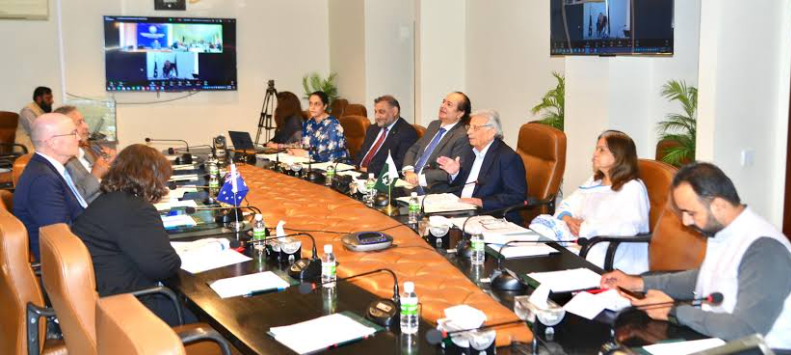
In this regard, a meeting co- chaired by Special Assistant to the Prime Minister (SAPM) on Industries and Production Haroon Akhtar Khan and Federal Minister for National Health Services, Regulations, and Coordination, Mustafa Kamal focused on the local manufacturing of vaccines, said a news release here on Wednesday.
The meeting was attended by the Federal Secretary, Ministry of National Health Services, and the Chairman, Drug Regulatory Authority of Pakistan (DRAP).
Detailed deliberations were held on the formulation and implementation framework of the vaccine policy, it added.
During the meeting, it was announced that the Policy has been finalized and is now set for submission to the Prime Minister. The policy aims to reduce Pakistan’s dependence on imported vaccines by encouraging the local production of essential vaccines.
Haroon Akhtar emphasized that the policy is in line with prime minister’s vision of making Pakistan self-reliant in vaccine manufacturing. “This policy will initiate local vaccine production, which will ensure sustainable capacity building in both the health and industrial sectors,” he added.
He further noted that the policy will guarantee local production of vaccines, reduce reliance on imports, and serve as a milestone for Pakistan’s public health system and pharmaceutical industry.
The policy, he added, will deliver long-term benefits for the public, including affordability, accessibility, and national preparedness against future health emergencies.
Mustafa Kamal termed the Policy a critical need of the time, stating that it will help end Pakistan’s dependence on external sources for essential vaccines.
He assured that vaccine manufacturing under this policy will be carried out in accordance with international standards and global best practices.
The meeting concluded with the announcement that the National Vaccine Policy will be presented to Prime Minister Shehbaz Sharif in the coming days for approval and onward implementation.

Rector NUML, Minister Khichi for collaboration in fields of language, culture

0
ISLAMABAD, Dec 31 (APP):Rector National University of Modern Languages (NUML), Major General (R) Shahid Mahmood Kayani called on Federal Minister for National Heritage and Culture Division, Aurangzeb Khan Khichi, on Wednesday to discuss matters of mutual interest and avenues for collaboration in the fields of language and culture.
During the meeting, both sides discussed and agreed on strengthening bilateral collaboration between the National Heritage and Culture Division and NUML in the areas of language promotion, cultural exchange, academic cooperation, and joint cultural initiatives.
The Rector briefed the Federal Minister on the academic and institutional functions of NUML and highlighted the university’s potential role in supporting national cultural policies through education, research, and outreach programmes.
Major General (R) Shahid Mahmood Kayani shared that NUML is exploring options to acquire land or rent a building in Gilgit-Baltistan to extend its educational services to the region. He further stated that currently around 9,000 students are receiving free education across NUML campuses.
The Rector emphasized that NUML operates as a welfare-oriented institution and generates its own funds to meet financial requirements. He also noted that the Chief of Defence Forces (CDF) is the Chairman of the Board of Governors (BOG) NUML, and in line with his vision recognizing languages as an integral part of culture the university plans to rename its Languages Department as “Languages & Culture” in the upcoming BOG meeting scheduled for the end of January 2026.
He added that NUML organizes an annual Summer Gala every April, where students showcase their native cultures. The objective of this initiative, he said, is to preserve and promote local cultures and languages across Pakistan.
The Rector expressed his desire to launch a cultural programme at NUML in collaboration with the National Heritage and Culture Division, aimed at introducing students to Pakistan’s diverse regional cultures and raising cultural awareness.
Federal Minister Aurangzeb Khan Khichi appreciated the initiative and suggested organizing a Cultural Event Week at NUML, similar to Lok Mela, to be held in April. He said that artisans, crafts, and cultural exhibits from across the country could be brought to the university to educate students about Pakistan’s rich cultural heritage, museums, arts, and traditional craftsmanship.
The Federal Minister also informed the Rector that the National Heritage and Culture Division had organized 31 programmes related to Marka-e-Haq during August.
Secretary National Heritage and Culture Division, Asad Rehman Gillani, was also present during the meeting.

KP Govt imposes section 144 for 60 days banning illegal gold mining

0
PESHAWAR, Dec 31 (APP):Khyber Pakhtunkhwa government on Wednesday took strict measures against illegal gold mining in the province by imposing section 144 for 60 days.
The gold mining and its excavation along the banks of the Indus and Kabul Rivers in the districts of Karak, Kohat, Nowshera, and Swabi were banned.
In this regard, a formal notification has been issued by the Home and Tribal Affairs Department.
The action was taken on reliable reports received from the relevant departments, district administration, and other institutions indicating that the likelihood of illegal and unregulated placer gold mining along the riverbanks in the said districts is increasing, which could pose serious threats to the environment, water resources, and public safety.
The notification said that illegal mining can cause severe damage to riverbanks, water pollution, destruction of the natural environment, and risks to human health.
 In addition, such activities may lead to disputes among local communities, unrest, illegal transportation, fuel smuggling, and a deterioration of the law-and-order situation.
The order further revealed that certain elements are involved in illegal mining in an organized manner with substantial financial resources, which not only poses a challenge to law enforcement agencies but can also endanger the safety of the public and government officials.
In light of the directives of the provincial cabinet, the department of mines has been tasked with conducting coordinated operations in cooperation with the district administration and police, and instructions have also been issued to deploy additional personnel to deal with any potential untoward situation.
Under the order issued by Additional Chief Secretary Home and Tribal Affairs Muhammad Abid Majeed, a complete ban will remain in place on all kinds of mining and illegal gold excavation along the banks of the Indus and Kabul rivers during the enforcement of Section 144.
In case of violation, the machinery, vehicles, equipment, and other materials used may be confiscated and seized in favor of the government.
Legal action will be taken against violators under Section 188 of the Pakistan Penal Code. This order will remain in force for 60 days from the date of its issuance.
The district administration and police have been directed to strictly ensure the implementation of the ban, while the public has also been urged to comply with the law, refrain from illegal activities, and inform the relevant authorities in case of any violations.

12,697 actions in 2025 as IFA fines 1,471 shops Rs 22.02 mln

0
ISLAMABAD, Dec 31 (APP):The Islamabad Food Authority (IFA) has released its annual performance report for 2025, reporting 12,697 enforcement actions, fines of Rs22,028,000 imposed on 1,471 shops, and the destruction of 248,703 kilograms of unsafe food.
According to the report, the Islamabad Food Authority conducted 12,697 actions during 2025. These actions included inspections, raids, sampling, sealing of premises, and imposition of fines. During the same period, 230 food samples were collected for laboratory testing to assess quality and safety.
The report stated that fines totaling Rs22.02 million were imposed on 1,471 shops for selling unsafe or non-compliant food items. These penalties were issued after inspections found violations related to food quality, storage conditions, labeling, and hygiene practices.
In addition to fines, the authority sealed 700 food points across Islamabad for violating hygiene rules. The report notes that these premises were closed following repeated or serious violations. Sealed outlets included eateries, shops, and food handling units operating without meeting required standards.
Licensing activity formed another part of the authority’s work during the year. According to the report, 4,786 food points were issued licenses in 2025. The authority stated that licensing helps regulate food businesses and allows regular monitoring of compliance with food safety rules.
The report also confirmed that 15 food points faced criminal cases due to major violations. These cases were registered where inspections found serious risks to public health. The authority stated that legal action was taken under applicable laws after completing required procedures.
During enforcement operations, a large quantity of unsafe food was removed from the supply chain. The report states that 248,703 kilograms of unsafe food were destroyed during the year. This included spoiled meat, expired products, and items found unfit for consumption after inspection and testing.
The Islamabad Food Authority stated that action against unsafe meat remained a focus area in 2025. Inspections were carried out at meat shops, storage facilities, and transport points. Products found unfit were seized and destroyed according to standard procedures.
Operations were also conducted against expired food items and gutka. The report notes that teams checked retail outlets and warehouses to identify banned or expired products. Items found in violation were confiscated and disposed of during operations.
Dairy products were another key area of enforcement. According to the report, checks were conducted on milk and other dairy items to ensure compliance with quality standards. Substandard products were removed, and responsible outlets faced penalties.
Director Food Authority stated that the authority remained committed to ensuring the availability of safe food in the city. He said inspections and enforcement actions are carried out to protect public health and to ensure compliance by food businesses.
The director added that licensing and regular inspections help maintain records of food points operating in Islamabad. He said licensed outlets are monitored through follow-up visits to ensure continued compliance with rules.
The report stated that public complaints and information also contributed to enforcement actions. The authority encouraged citizens to report unsafe food practices. According to officials, information provided by the public helps identify violations that may not be detected during routine inspections.
During the year, inspection teams operated across different sectors of Islamabad. The report does not specify locations but states that actions were taken in urban and commercial areas to cover a wide range of food businesses.
The Islamabad Food Authority reported that coordination with other departments was carried out when required, particularly during sealing operations and disposal of unsafe food. These steps were taken to ensure lawful and documented action.
According to the authority, future plans include continued inspections, expansion of licensing coverage, and strict action against repeat offenders. The focus will remain on removing unsafe food from markets and ensuring compliance with existing regulations.
The director appealed to citizens to support the authority’s efforts by identifying and reporting unsafe food. He said public participation is important to achieve the goal of a “Healthy Islamabad” through shared responsibility.

Naqvi announces major welfare reforms during visit to National Police Foundation

0
ISLAMABAD, Dec 31 (APP):Federal Interior Minister Mohsin Naqvi on Wednesday paid an official visit to the National Police Foundation (NPF) in Islamabad, where he chaired a high-level meeting and reviewed the institution’s ongoing welfare initiatives for police personnel. The visit marked a significant step toward expanding support programs for members of the police force across Pakistan.
During the briefing, Acting Managing Director of the National Police Foundation, Ali Nasir Rizvi, presented a detailed overview of the foundation’s overall performance, development projects, and welfare schemes aimed at improving the lives of police employees. He highlighted recent achievements and ongoing reforms that have helped strengthen the institution’s capacity and financial standing.
In a series of major announcements, Minister Naqvi unveiled new welfare measures designed to support police officers at all ranks. He approved a plan to provide residential plots on easy, low-installment plans to Assistant Superintendents of Police (ASPs) currently undergoing training at the National Police Academy. The initiative aims to provide young officers with long-term financial security early in their careers.
The Minister also announced that 10 Inspectors, Sub-Inspectors, and Assistant Sub-Inspectors (ASIs) from various regions of Pakistan will be sent abroad each year on fully funded scholarships to attend specialized courses focused on policing and security. This step is expected to enhance professional development and bring international best practices to the country’s police force.
In another key welfare measure, the National Police Foundation will cover the complete educational expenses of 15 sons or daughters of constables who secure admission to Pakistan’s top-ranking universities. This initiative seeks to provide equal academic opportunities to the children of lower-ranked police personnel.
Furthermore, Naqvi approved an annual scholarship program under which five SP and SSP-rank officers will be sent abroad to pursue advanced degrees in Artificial Intelligence (AI), a move aimed at modernizing policing methods and promoting the use of emerging technologies in law enforcement.
Calling for a comprehensive plan to further expand the foundation’s resources, the Interior Minister emphasized the need for sustainable financial growth. He commended the NPF management for successfully steering the institution out of deficit and generating a surplus, noting that this positive shift reflected the team’s dedication and effective governance.
“We want to transform the National Police Foundation into a highly active and dynamic institution focused entirely on the welfare of police employees,” Naqvi said while addressing the meeting.
The session was attended by all directors, deputy directors, and senior officials of the National Police Foundation, who briefed the Minister on future projects and ongoing reforms aimed at strengthening welfare programs for the police force.
The new initiatives announced by the Interior Minister are expected to bring significant improvements in the professional, educational, and personal welfare of police employees across Pakistan.

Facial recognition-biometric verification: NADRA’s new citizen facilitation initiative

0
ISLAMABAD, Dec 31 (APP):Due to age or certain medical conditions, the fingerprints of many citizens gradually fade over time. When such citizens approach banks, SIM card franchises, housing societies or seek services related to property transfer and other transactions where biometric verification through fingerprints is mandatory, they often face significant difficulties. Moreover, at many service points, biometric verification is also not possible due to the use of substandard or low-quality fingerprint readers. Although the State Bank of Pakistan and the Pakistan Telecommunication Authority have prescribed facilitative mechanisms for such citizens, in practice, individuals continue to face considerable challenges in availing these services.
To ensure an immediate and effective resolution of this issue, the Prime Minister of Pakistan and the Federal Minister for Interior and Narcotics Control have issued directives to NADRA. In compliance with these directives, NADRA has undertaken the following key measures.
First, on the recommendation of NADRA, the Federal Government has amended the National Identity Card Rules to expand the definition of biometrics. In addition to fingerprints, facial photographs and iris scans have now been legally recognised as valid biometric identifiers. This amendment provides a robust legal foundation for the implementation of a multi-biometric verification system in Pakistan.
Based on this legal framework, NADRA has introduced technical innovations enabling contactless fingerprint and facial recognition-based biometric verification. This system is currently available both at NADRA Registration Centres and on the Pak ID mobile application for services falling within NADRA’s jurisdiction. It is already being utilised for biometric verification in the transfer of Islamabad-registered vehicles and online passport applications. In the near future, proof-of-life certificates for Federal Government pensioners will also be issued under this system, while the scope of these digital services is being expanded in phases.
Insha Allah, with effect from 20 January 2026, NADRA will commence the issuance of facial recognition-based biometric verification certificates at all its registration centres for those citizens whose fingerprint-based verification is not possible. Wherever any institution requires such verification, citizens may obtain this certificate from any NADRA Registration Centre upon payment of a nominal fee of Rs 20.
Under this procedure, if fingerprint-based biometric verification fails at the service provider’s end, the citizen will visit the nearest NADRA Registration Centre to have a fresh photograph taken. This photograph will be matched with the image already available in NADRA’s records. Upon successful verification, NADRA will issue a certificate containing the purpose of verification, the citizen’s recent photograph alongside the photograph on record, CNIC number, name, father’s name, a unique tracking ID and a QR code. The certificate will be valid for seven days. The citizen will submit it to the relevant institution where biometric verification was required and the concerned institution will incorporate the certificate into its records and verify it online through NADRA.
In the future, facial image-based biometric verification certificates will also be available through NADRA’s e-Sahulat franchises. Following the formal launch of the Digital ID, this facility will be made available for all services through the Pak-ID application.
NADRA is fully prepared to implement this system. However, for its effective execution, NADRA has requested all regulators, relevant public institutions and private sector organisations to progressively upgrade their hardware and software in accordance with approved standards to enable the use of this biometric verification service. In the first phase, technical upgrades to institutional software applications will be required to allow the integration of facial recognition-based biometric verification certificates issued by NADRA. In the second phase, it will be necessary for institutions to install cameras at service counters or integrate cameras into existing KYC biometric machines, as without these upgrades, NADRA cannot provide this facility directly at such locations. If citizens encounter any issues regarding the availability of this service after 20 January 2026, they may lodge complaints with the relevant institution or department, as the service will be available from NADRA’s end.
To ensure the earliest possible operationalisation of this facility, NADRA has also requested the Ministry of Interior to issue appropriate instructions to all concerned institutions. It is envisaged that, following the rollout of this system, the difficulties faced by citizens due to faded fingerprints will be effectively resolved. Upon full implementation, citizens will be able to avail this facility directly at the relevant institution without the need to visit a NADRA Registration Centre. Following the formal launch of the Digital ID, citizens will also be able to access this facility independently through the Pak-ID application.
On the occasion of the New Year, NADRA reaffirms its commitment to further enhance its services through technological innovation while strengthening safeguards against identity fraud and misuse.

ICT Police, ITP finalise foolproof New Year’s Night security, traffic plan

0

ISLAMABAD, Dec 31 (APP): Islamabad Capital Territory (ICT) Police and Islamabad Traffic Police (ITP) on Wednesday finalised a foolproof security and traffic plan for New Year’s Night during a high-level meeting chaired by SSP Operations Qazi Ali Raza and Chief Traffic Officer (CTO) Hamza Humayun.

An official told APP that the meeting was attended by zonal SPs, SDPOs, SHOs and senior traffic officers, where comprehensive arrangements for security, traffic management and law and order during New Year’s celebrations were reviewed.

The SSP Qazi directed that strict checking would be ensured at entry and exit points of the city as well as within urban areas. He said zero tolerance would be shown against aerial firing, fireworks, hooliganism, one-wheeling and dangerous driving, adding that strict legal action would be taken against violators.

He said that more than 3,500 Islamabad Police officers and personnel would be deployed across the federal capital to ensure law and order, security of citizens and protection of public and private property during New Year’s Night.

The official added that additional police deployment had been planned at key locations, commercial centres and markets, while senior officers would remain present in the field to personally supervise duties. Citywide monitoring would be carried out through Safe City cameras and drone surveillance to promptly respond to any untoward situation.

CTO Hamza Humayun said that over 350 traffic officers would be deployed for traffic management, adding that special traffic teams had been formed to maintain smooth traffic flow throughout the night. He said traffic officers would work alongside operational police to facilitate citizens and ensure road safety during celebrations.

Both officers urged citizens to celebrate responsibly and strictly follow the law, stressing that reckless behaviour not only violates the law but also puts precious lives at risk. Police officers were also directed to maintain polite conduct with citizens during checking.

ICT Police reiterated that protection of life and property and maintenance of peace in the federal capital remain their top priorities, urging citizens to cooperate with police and welcome the New Year in a peaceful and safe manner.

Police prepare security plan for new year’s night arrangements

0
PESHAWAR, Dec 31 (APP):The police on Wednesday prepared a security plan regarding security arrangements for New Year’s night.
According to the spokesperson of the Capital City Police Peshawar, a total of approximately 500 police personnel will be deployed for security of new year celebrations.
 Six SPs and six DSPs will also perform supervisory duties. Six female constables will be deployed at sensitive and central locations of the city.
Police personnel will be stationed at Garrison Club, Saddar Road, University Town, Tehkal Payan Chowk, and Ring Road. Qila Balahisar, Hashtnagri Chowk, and various sections of GT Road have been declared sensitive from a security point of view.
The Bomb Disposal and K-9 Units have been assigned the duty of searching all important locations and routes.
Thirty-six Ababeel squads will also be deployed across the city, and their personnel to patrol main roads and sensitive areas.
City mobile patrolling units, police station mobiles, and special mobile patrolling units have been instructed to remain on high alert. A zero-tolerance policy has been decided against one-wheeling, aerial firing, and over-speeding.
Rescue 1122, the district administration, and traffic police have been assigned duties with full coordination under the plan.

Rupee gains 03 paisa against US Dollar

0

ISLAMABAD, Dec 31 (APP): The Rupee on Wednesday appreciated by 03 paisa against the US Dollar in interbank trading and closed at Rs 280.12 compared to the previous day’s closing at Rs 280.15.

According to the Forex Association of Pakistan (FAP), the buying and selling rates of the Dollar in the open market were recorded at Rs 281 and Rs 283, respectively.

The price of the Euro decreased by Rs0.79 to close at Rs 328.85 from the previous day’s close of Rs 329.64, according to the State Bank of Pakistan (SBP).

The Japanese Yen came down by 01 paisa and closed at Rs 1.78, whereas the exchange rate of the British Pound witnessed a decrease of Rs 1.27 and closed at Rs 377.17 compared to the previous day’s Rs 378.44.

The exchange rate of the Emirates Dirham came down by 01 paisa to close at Rs 76.27 and the Saudi Riyal remained stagnant at Rs 74.69.