Home Blog Page 13795

Rupee sheds Rs1.91against US Dollar

0

ISLAMABAD, Jul 10 (APP): Pakistani Rupee on Monday witnessed Rs1.91 devaluation against the US Dollar (USD) in the interbank trading and closed at Rs 279.80 against the previous working day’s value of Rs 277.89.

However, according to the Forex Association of Pakistan (FAP), the buying and selling rates of dollars in the open market stood at Rs 281 and Rs 284 respectively.

The price of the Euro increased by Rs 4.34 to close at Rs 306.58 against the last day’s closing of Rs 302.24, according to the State Bank of Pakistan (SBP).

The Japanese Yen gained 03 paisa to close at Rs1.96, whereas an increase of Rs 4.59 was witnessed in the exchange rate of the British Pound, which traded at Rs 358.51 as compared to its last day’s closing of Rs 353.92.

The exchange rates of the Emirates Dirham and the Saudi Riyal increased by 52 paisa and 51 paisa to close at Rs76.17 and Rs74.58, respectively.

Digital economy vital for sustainable development: Ahsan Iqbal

0
Digital economy vital for sustainable development: Ahsan Iqbal
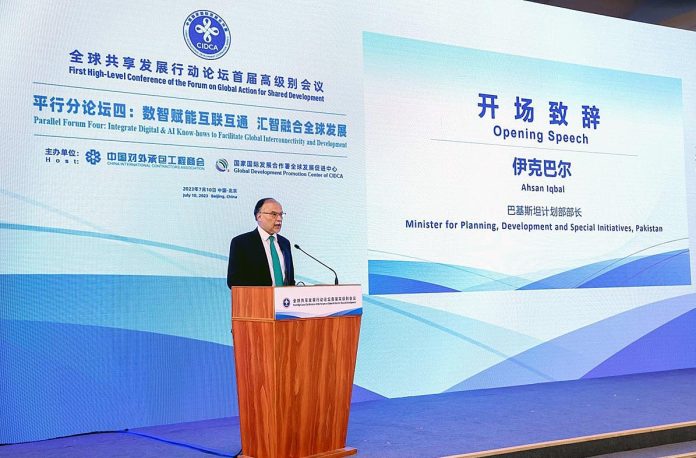
BEIJING: July 10 - Federal Minister for planning and Development Prof. Ahsan Iqbal addressing the Global panel for Industrialization and Digital–Era of Connectivity. APP

BEIJING, Jul 10 (APP): Federal Minister for Planning Development & Special Initiatives, Ahsan Iqbal on Monday shed light on the importance of growing the digital economy, termed digital economy is vital to ensure sustainable development of the country.

The minister made these remarks while speaking at the panel discussion titled: “Industrialization & Digital Era Connectivity,” organized by the China International Development Cooperation Agency (CIDCA) here.

It is noted that the Planning Minister Ahsan Iqbal is on a four-day official visit to China to attend a special commemorative 12th Joint Cooperation Committee (JCC) to be held on July 11(tomorrow) to mark the 10- year celebrations of China Pakistan Economic Corridor (CPEC).

The CPEC enters a significant milestone as it celebrates a decade of remarkable achievements in fostering economic growth, infrastructure development, and regional connectivity.

While highlighting the importance of “Industrialization & Digital Era Connectivity,” the planning minister said that industrialization and digital-era connectivity have transformed the world as both have brought unprecedented opportunities for progress, economic growth, and global connectivity.

However, he emphasized the harmonization in digital policies and standards by stronger collaboration through multilateral forums.

Ahsan Iqbal said that digital connectivity has revolutionized communication and collaboration in industrial sectors.

The E-commerce platforms and online marketplaces enable businesses to reach customers worldwide, expanding their customer base and opportunities for growth, explained the minister, while highlighting E-Pakistan, an important E of the 5Es framework which was launched recently by the Planning Ministry.

Furthermore, he highlighted that digital connectivity has provided businesses with the ability to access larger markets beyond their immediate geographical boundaries.

The digital era has generated massive amounts of data through various sources, including production processes, customer interactions and market trends, said the minister, who recently established a Steering Committee comprising experts from IT and private sector for the implementation of digital transformation and to increase digital exports in the country.

Similarly, the minister, said that the combination of industrialization and digital connectivity has opened up new avenues for innovation and entrepreneurship.

The startups and small businesses can leverage digital platforms and technologies to reach global markets and disrupt traditional industries, remarked the minister,while highlighting the key initiatives which was taken by the government which include establishment of National Centers in Artificial Intelligence, Cybersecurity, automation & Robotics, Big Data & Cloud Computing, Quantum Computing and Nanotechnology.

While highlighting the unremarkable contributions of China in the field of industrialization, the minister said that developing nations can draw several lessons from China’s experience with industrialization and digital-era connectivity.”China has undergone remarkable economic growth and technological advancements, making it a valuable example for developing countries,” he said.

It is noted that China’s industrialization journey was supported by substantial investment in infrastructure, including transportation networks, energy systems and telecommunications.
Pakistan is greatly benefiting from infrastructure development under CPEC to improve its connectivity within the country and facilitate industrial growth, he added.

Pakistan has vast investment opportunities in various sectors including IT: Amin

0
Federal IT Minister inaugurates Digital IT Laboratory

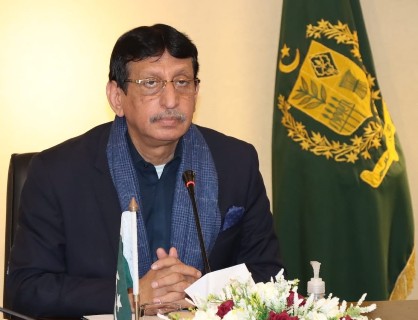
ISLAMABAD, Jul 10 (APP):Federal Minister for Information Technology and Telecommunication Syed Amin-ul-Haque has emphasized the abundant investment opportunities available in the country across multiple sectors, particularly in Information Technology (IT).

In a statement, he said that the Ministry of Information Technology and Telecommunication (MOITT) is committed to extending comprehensive support and facilities to businesses and investors in various domains, including Incubation Centers, Software Technology Parks, Mobile Manufacturing, and the Telecom sector.

The minister’s remarks highlight the government’s recognition of the potential for growth and development in Pakistan’s IT industry. With a skilled workforce, a growing digital infrastructure, and a conducive environment for technological innovation, Pakistan has become an attractive destination for investment in IT-related ventures.

The MOITT, under Syed Amin Ul Haque’s leadership, aimed to foster a favourable ecosystem for businesses and investors by providing necessary resources, infrastructure, and assistance.

This includes establishing Incubation Centers that offer support, mentoring, and resources to startups, facilitating the growth of emerging technology companies.

Additionally, Software Technology Parks will be established to create specialized zones equipped with state-of-the-art facilities, encouraging the growth of software development and IT-enabled services.

Furthermore, the government is keen on promoting mobile manufacturing in Pakistan, aiming to attract investment in this sector. By providing incentives and facilities, the MOITT aims to establish a robust mobile manufacturing industry that contributes to local employment, reduces imports, and strengthens the country’s self-sufficiency in technology.

The Telecom sector, a vital component of Pakistan’s digital transformation, also receives significant attention from the MOITT. The government aims to support and facilitate telecom companies, ensuring an enabling environment for their operations and promoting further investment in expanding and improving the country’s telecom infrastructure.

Syed Amin Ul Haque’s announcement reinforces the government’s commitment to promoting investment and fostering growth across multiple sectors, particularly in the realm of IT.
By offering comprehensive support and facilities, the MOITT aims to attract local and international investors, paving the way for technological advancement and economic progress in Pakistan.

Shavkat Mirziyoyev re-elected as Uzbekistan’s President

0
Shavkat Mirziyoyev re-elected as Uzbekistan's President

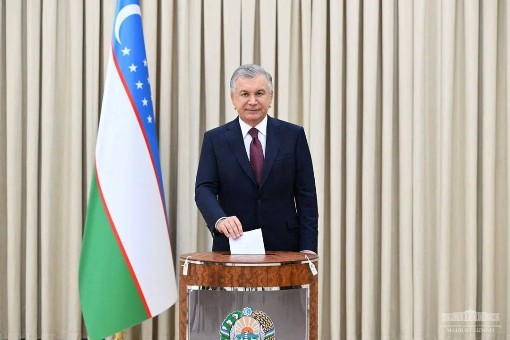
TASHKENT, Jul 10 (APP):President Shavkat Mirziyoyev has secured a landslide victory in the presidential election held on July 9, being re-elected as the President of Uzbekistan with an overwhelming 87.1% of the vote.

The Central Election Commission of Uzbekistan announced the preliminary results, revealing the extent of the president’s popular support.

A significant number of voters participated in the election, with 15.6 million citizens, accounting for 79.8% of registered voters, casting their votes. Among them 87.05% voted in the favour of Shavkat Mirziyoyev.

The preliminary results also indicate the performance of the other candidates in the election, with Ulugbek Inoyatov from the People’s Democratic Party securing 4.2% of the vote, Robakhon Mahmudova from the “Adolat” Social Democratic Party receiving 4.43%, and Abdushukur Hamzaev from the Eco Party gaining 3.74%.

The overwhelming re-election of President Mirziyoyev reflects the continued confidence placed in his leadership and vision for the country.

Mushahid lauds China Media Group for promotion of Pak-China friendship

0

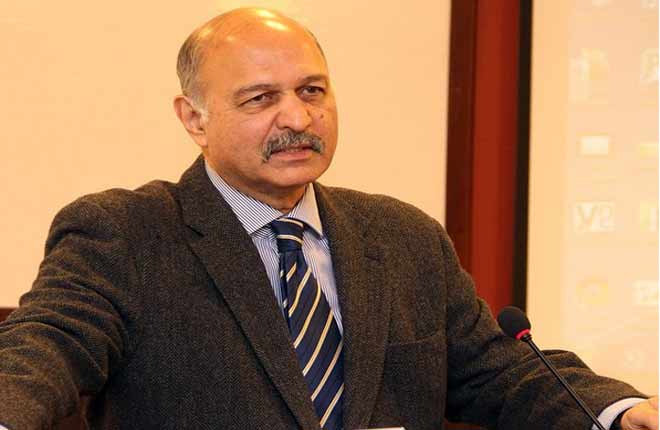
BEIJING, July 10 (APP):Chairman, Senate’s Defense Committee, Mushahid Hussain Syed has paid rich tributes to the China Media Group’s Urdu service for playing an important role in the promotion and development of China-Pakistan friendship.

“My first contact with China was also due to the Urdu service of Radio Peking.

Today, when there is a lot of news and information everywhere, China Media Group’s Urdu service is playing an important role in the development of relations between the two countries,” he said in an interview with China Media Group’s Urdu Service.

Mushahid Hussain Syed has recently led a high-level parliamentary delegation to China.

While talking about the important measures proposed by the President of China Xi Jinping, Belt and Road Initiative, Global Security Initiative, and the Global Civilization Initiative, he said that these initiatives will help mankind in the present era and provide sustainable solutions.

He said that the way China under the leadership of President Xi Jinping helped and guided the world, especially in the face of the Covid-19 pandemic, is admirable.

The changes that the world is witnessing today are the major changes that have occurred in the hundred years. They can be countered only through collaborative thinking, mutual benefit, and win-win cooperation. Unilateralism, protectionism, and factional politics have no place in today’s world.

He said that Pakistan’s great philosopher poet Allama Iqbal had predicted the leadership role of China in his poems a hundred years ago and today it is proving to be true under the leadership of President Xi Jinping.

Mushahid Hussain Syed said that President Xi Jinping has always talked about dialogue between civilizations, mutual respect and learning from each other.

The best way to deal with the challenges facing the world today is to respect each other, respect the development path chosen by all countries and abandon the Cold War mentality.

He said that the present century is the century of Asia and Asia is offering solutions to the problems faced by the world under the leadership of China.

China is promoting peace in the world and the Chinese diplomacy under the leadership of President Xi Jinping brought great news to the world at the beginning of the current year.

Diplomatic relations between Saudi Arabia and Iran have been restored through the mediation of China. The Arab League looks united once again. The President of Palestine has been invited to visit China and the voice of Palestine has been strengthened.

In addition, Chinese Foreign Minister visited Pakistan and started a new era of friendly neighbor diplomacy between China, Pakistan and Afghanistan and between China, Pakistan and Iran which will start a new era of development and stability in the region.

He said that today, it is a matter of happiness that the decisions of Asia are being made within Asia.
In this way, a successful meeting of Central Asian states was hosted under the leadership of China.

China is not only promoting peace and development in the region, but is also playing its role in solving the problems faced by other countries and regions of the world. China is also playing a positive role in Russia-Ukraine conflict resolution.

Mushahid Hussain Syed described the Chinese-style modernization as an excellent development model.

He said that in China’s development journey, all people are taken forward, the best example of which is China’s glorious victory in the war against poverty.

Mushahid Hussain Syed said that thanks to China-Pakistan Economic Corridor (CPEC), the flagship project of the Belt and Road Initiative, there has been remarkable progress in the fields of infrastructure, energy, employment, health and education in Pakistan in the last ten years.

Over Rs 58b disbursed under Benazir Kafaalat so far

0
Over Rs 58b disbursed under Benazir Kafaalat so far

ISLAMABAD, Jul 10 (APP):The Benazir Income Support Programme (BISP) has so far disbursed over Rs. 58 billion among more than 6.5 million beneficiary women across the country under the Benazir Kafaalat initiative.

According to an official source, the disbursement of the fourth quarterly tranche of Benazir Kafaalat for the Financial Year-2022-23 is continued successfully through banks’ retailers.

Under Benazir Kafaalat, nine million registered beneficiary families are entitled to a quarterly installment of Rs 9,000 per household.

The BISP has already released over Rs. 81 billion to its partner banks; Bank Alfalah and Habib Bank Limited (HBL) for disbursement among the beneficiaries through their retail distribution network.

Along with Benazir Kafaalat, Benazir educational scholarships are also being given out to the children of registered families, however, 70 percent attendance in the school is mandatory to receive educational scholarships.

In case of any complaint, the beneficiaries can approach the nearest BISP Tehsil Offices or call on toll-free helpline number 080026477 of Benazir Income Support Program.

The BISP messages are only sent from 8171 while messages from any other number should not be trusted.

48th INSC; Chairman PAEC inaugurates ‘scientific spring’

0

ISLAMABAD, Jul 10 (APP):The 48th International Nathiagali Summer College (INSC) on Physics and Contemporary Needs was inaugurated at National Center for Physics (NCP) Quaid-e-Azam University on Monday.

The INSC was inaugurated by the Chairman Pakistan Atomic Energy Commission (PAEC), Raja Ali Raza Anwar.

In the 48th International Nathiagali Summer College, a distinguished group of 30 experts from developed countries such as the United States, United Kingdom, China, Russia, Canada, France, Germany, Holland, Australia, Spain, Türkiye, Romania, and Chile has been invited to deliver lectures on crucial topics throughout the two-week event.

Out of a pool of over 1,200 applicants, approximately 250 researchers from universities and research organizations across Pakistan have been carefully selected to participate in the College.

This diverse gathering promises to facilitate meaningful exchanges and foster valuable connections among the participants, enriching the scientific community in Pakistan.

The scientific activities of the International Nathiagali Summer College (INSC) are designed to encompass a wide range of topics at the forefront of knowledge in Physics and related disciplines.

Each year, the College focuses on three to five subjects that are of current interest, emphasizing their applications and their relevance to the specific needs of developing countries. In the 48th college, the topics being covered include ‘Advances in Plasma Physics and Allied Technologies’, Semiconductor Materials and Devices, Quantum Optics and Devices, Advances in Pulsed Power Technology and its application and New Trends in High Energy Physics.

In his inaugural speech, Chairman PAEC, Dr. Raja Ali Raza Anwar underscored the significance of science and technology in the current era of rapidly expanding frontiers of knowledge.

He emphasized that for a nation to achieve genuine progress and prosperity, it must prioritize the acquisition and effective utilization of scientific advancements.

Dr. Raja Ali Raza Anwar highlighted that the assimilation and intelligent application of technology serve as the driving force behind a modern economy.

To commemorate the 75 years of science and technology in Pakistan since its independence, a series of special seminars were also arranged highlighting the development of four key technologies.
Eminent scientists of the country elaborated the development of these technologies to reflect on the progress made and show case the achievements over the years.

The keynote speakers included Dr. Ansar Pervez, former Chairman PAEC, who provided an extensive account of the progress and advancements in nuclear technology in Pakistan and Dr. N.M. Butt, former Director General, Pakistan Institute of Nuclear Science and Technology (PINSTECH), who offered detailed insights into the development of materials technology within the country.

The other keynote speakers included Dr. Manzoor Ikram, Director, National Institute of Lasers and Optronics (NILOP), who shed light on the advancements in laser and quantum technology in Pakistan; and Dr. Shahid Mehmood Baig, Chairman, Pakistan Science Foundation (PSF), who shared valuable information on the progress and breakthroughs in the field of biotechnology in Pakistan.

The two-week scientific discourse activity referred as ‘scientific spring’ will conclude on July 22.

The idea of holding the International Nathiagali Summer College on Physics and Contemporary Needs came from the distinguished Nobel Laureate, Professor Abdus Salam who emphasized the vital need of communication for transferring and sharing scientific knowledge among the scientific community.

INSC helps scientists to share knowledge and to learn from each other’s experiences.
PAEC has been regularly organizing the college every year since 1976. The venue of the college is the famous tourist spot of Nathiagali, which attracts a large number of participants from across the world.

This unique opportunity enables young scientists hailing from developing countries to establish and renew connections with globally renowned scientists.

Throughout its history, the INSC has attracted approximately 1,050 distinguished scientists and speakers, including 08 Nobel Laureates, from renowned universities, research centers, and industries in developed nations.
These eminent individuals have delivered lectures at the INSC, sharing their valuable knowledge and insights.

Their audience has comprised over 1,000 foreign scientists hailing from more than 75 developing countries, along with approximately 11,500 scientists from Pakistani research and development institutes and universities.
The INSC has served as a platform for global collaboration and knowledge exchange, fostering a rich and diverse scientific community.