
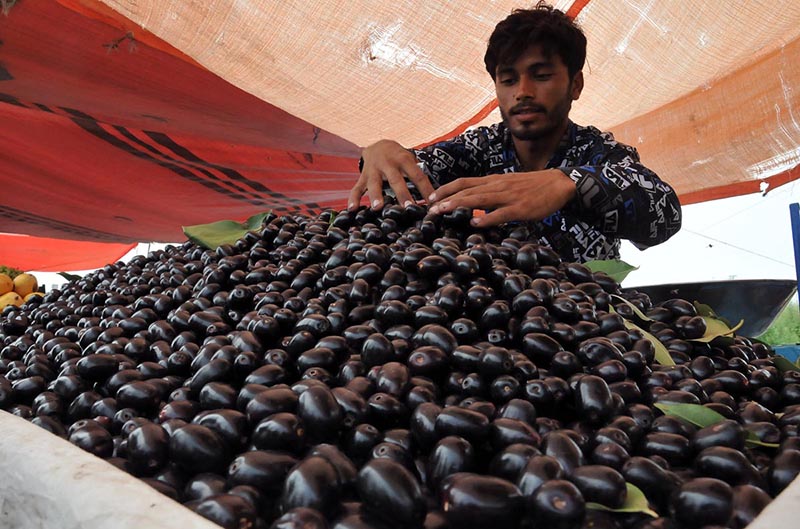
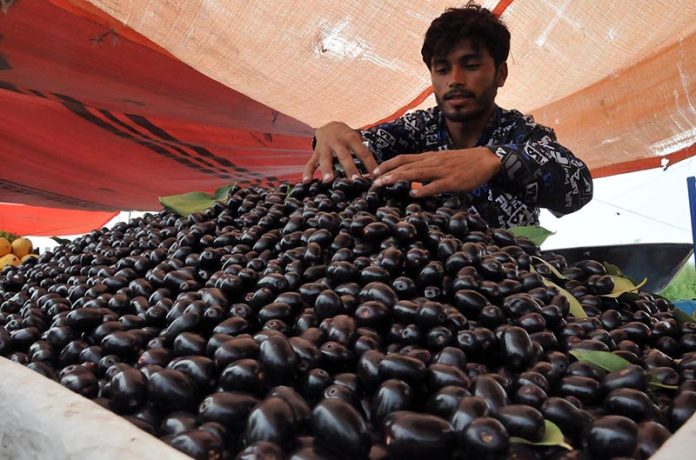
A young vendor selling Jambolan at his roadside setup in the Federal Capital
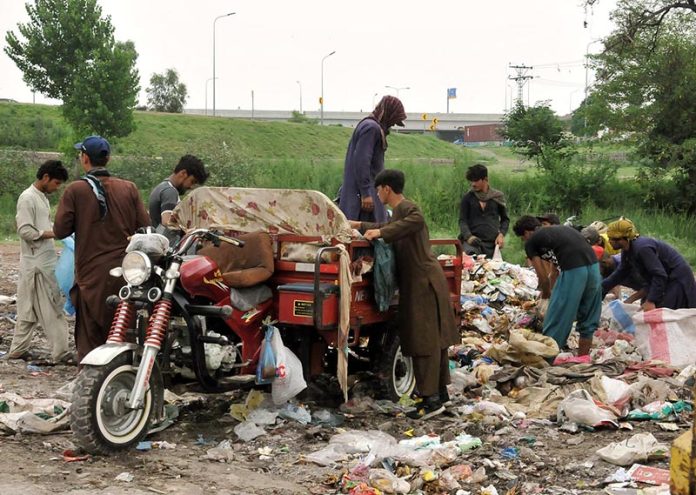
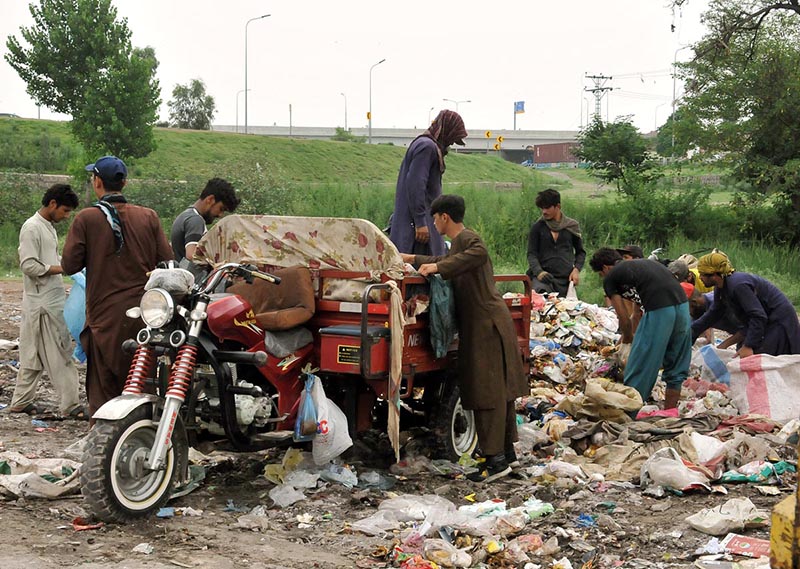
Gypsy boys searching valuables from garbage near Khanna Pul area in the Federal Capital
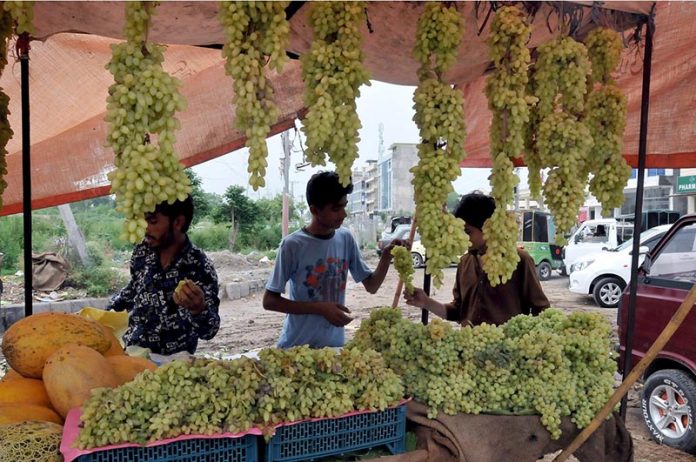
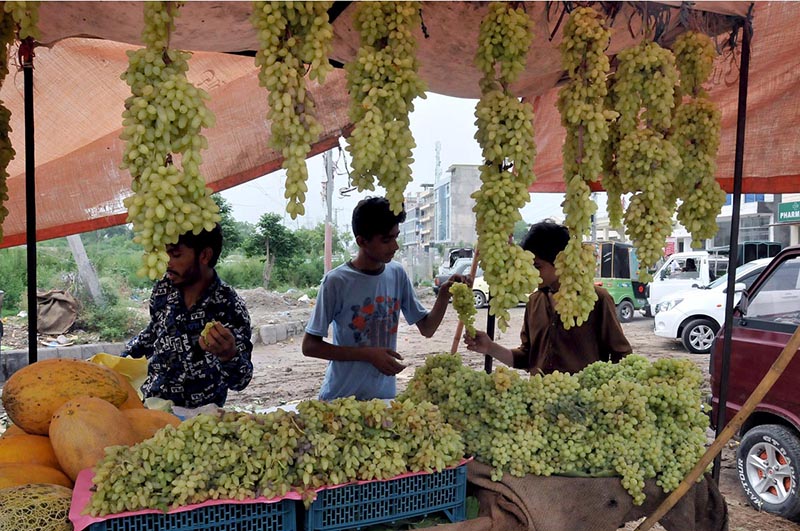
A young vendor selling grapes at his roadside setup in the Federal Capital
SFJ demands expulsion of Indian envoy for interfering with rights of Canadian Sikhs
ISLAMABAD, Jul 15 (APP): Sikhs For Justice (SFJ) has demanded the declaration of the Indian High Commissioner Sanjay Kumar Verma as ‘Persona Non-Grata’ due to their clear interference in Canada’s internal affairs, promoting hate and inciting violence against Pro Khalistan Canadian Sikhs.
Sikhs For Justice (“SFJ”), a registered human rights advocacy organization in Canada, is demanding the expulsion of the Indian envoy in Canada to avoid meddling in the upcoming July 16 Khalistan Referendum Voting.
SFJ is dedicated to peacefully advocating for the Khalistan Referendum to secure the rights of self-determination for Sikhs in the Punjab region, where they form the majority, and which is currently governed by India.
In an official communique dated July 13, 2023, High Commissioner Verma addressed the Government of Canada, stating that the Sikh for Justice’s illegal ‘referendum’ is an ineffective effort to undermine the Canada-India relationship.
Furthermore, he warned Canadian Sikhs, mentioning that millions of India’s supporters in Canada would counter the ill-intentioned Khalistan Referendum Voting scheduled for July 16th in the Greater Toronto Area (GTA).
In a letter to Prime Minister Trudeau, Minister Joly, and Minister Mendicino, SFJ criticized High Commissioner Verma for not only interfering in Canada’s internal affairs but also attempting to suppress the freedom of expression of Canadian Sikhs. They expressed concern that his remarks against the upcoming Khalistan Referendum voting were inciting violence and encouraging pro-India Canadians to harm Canadian Sikhs simply for peacefully expressing their political opinions on July 16th.
SFJ brought attention to Indian envoy Verma’s repeated interference in Canada’s internal affairs concerning the rights of Canadian Sikhs. They reminded the Ministers of SFJ’s December 2022 letter, which had been duly acknowledged, revealing Verma’s request to the Canadian Government to suppress and quash the Khalistan Referendum events held in Canada after witnessing a substantial turnout of Canadian Sikhs in September and November 2022.
Verma’s insistence on this matter was accompanied by a warning of potential strain on Canada-India relations if their demands were not met.
According to Article 9 of the Vienna Convention on Diplomatic Relations 1961, a state has the authority to declare any diplomatic staff member as persona non grata, without the obligation to provide an explanation for their decision. This action compels the respective government to recall the individual back to their home country.
SJF has emphasized that in light of Indian High Commissioner Verma’s repeated transgressions against Canadian Sikhs, it
is imperative for the government to take appropriate action by declaring Verma as “persona non grata” and “unacceptable.”
This declaration would compel the Indian Government to recall him. The conduct of diplomats and foreign officials is governed by the Vienna Convention on Diplomatic Relations, 1961. Article 41(1) of the Convention stipulates that foreign diplomats and consular officials are obligated to “respect the laws and regulations of the receiving State” and refrain from interfering in its internal affairs.
Wang Yi urges India to take actions to stabilize bilateral relations
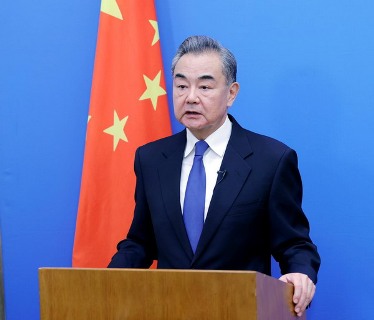
BEIJING, July 15 (APP):Wang Yi, director of the Office of the Central Commission for Foreign Affairs of China has urged India to take actions to stabilize bilateral relations.
Such a relationship is an important consensus between leaders of the two countries, Wang told Indian External Affairs Minister Subrahmanyam Jaishankar on the sidelines of a series of ASEAN foreign ministers’ meetings in Jakarta, Indonesia, CGTN reported on Saturday.
Wang said common development and prosperity between the two neighbors was a global example, calling for mutual support instead of suspicion.
China and India needed to work in the same direction to find a solution to border issues acceptable to both sides, Wang noted.
Expressing China’s concerns about India’s recent restrictions against Chinese companies, Wang underscored a fair, transparent and non-discriminatory business environment for Chinese companies.
Jaishankar said the normalization of India-China relations served the common interests of both sides, adding that India was willing to properly handle differences with an open mind and bring relations between the two countries back on the right track as soon as possible to create favorable conditions for next-stage high-level exchanges.
The two sides agreed to hold the next round of the China-India Corps Commander Level Meeting on border issues on an early date and reached a principled consensus on launching the process of BRICS membership expansion.
APP/asg
Third Hualong One unit to produce clean electricity: CNNC

BEIJING, July 14 (APP):Unit 5 in the Chashma Nuclear Power Plant would be the third one-million-kilowatt-class unit of Hualong One, China’s self-developed third-generation nuclear reactor, China National Nuclear Corporation (CNNC) said.
A groundbreaking ceremony for a unit of a nuclear power plant in Pakistan was held on Friday, CGTN reported on Saturday.
The new project will enhance Pakistan’s energy security, promote economic development and improve the well-being of the local people, the CNNC said.
It also has significant importance in building a closer China-Pakistan partnership with a shared future in the new era, its developer added.
The two countries have jointly built four 300,000-kilowatt nuclear power units at the Chashma Nuclear Power Plant and two one-million-kilowatt nuclear power units at the Karachi Nuclear Power Plant.
These units provide about 30 billion kilowatt-hours of clean electricity annually, equivalent to an annual energy saving of 9.38 million tonnes of standard coal and 24.48 million tonnes of carbon dioxide emissions.
At the ceremony, China and Pakistan reached a consensus on enhancing collaboration across the entire industrial chain and achieving mutual benefit and win-win results.
Militants not to be let hijack vision of peaceful, prosperous Balochistan: Speakers
QUETTA, Jul 15 (APP): People of Balochistan, who are patriotic and real owners of the province, will not let militants to hijack the vision of a peaceful and prosperous Balochistan.
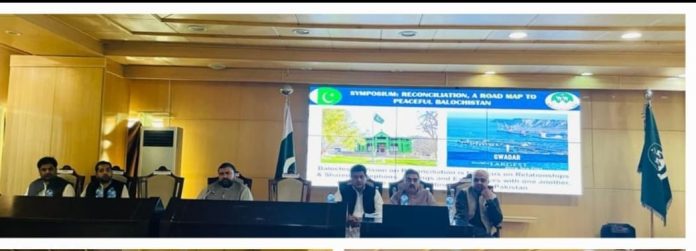
These views were expressed by speakers at a “Symposium: Reconciliation, A Roadmap To Peaceful Balochistan” held here at Jamali auditorium on Saturday.

Senator Anwaar ul Haq Kakar, Senator Sarfraz Bugti, Balochistan Home Minister Mir Ziaullah Langau, Provincial Minister Zahoor Ahmed Buledi and Dr. Mir Sadaat participated in the event, which was attended by over 100 civil society representatives, political leaders, religious scholars, lawyers and journalists.
Former Commander of the Baloch National Army Gulzar Imam Shambay, who has quit militancy, also attended the event aimed at highlighting the policy of Reconciliation in Balochistan and improving situation in the province.

The speakers stressed that the resolution of Balochistan issues was possible through table-talk.
They also welcomed as “good omen” the participation of Gulzar Imam Shambay in the event.
The participants further viewed that peace is the real game changer in Balochistan. The ultimate objective of reconciliation is a better and prosperous Balochistan, they added.
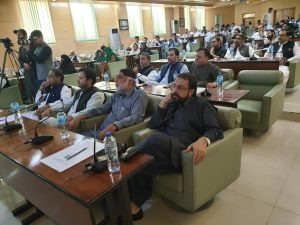
The participants said that giving priority to dialogue by the state reflected its motherly attitude. The militants by surrendering to the state will have to play their role for the progress and prosperity of Balochistan and its people, they stressed.
Senator Sarfraz Bugti in his remarks said that dialogue and reconciliation was the only way for peace in Balochistan.
Senator Anwaar ul Haq Kakar said that no militant can defeat the state. If the state is giving priority to dialogue, then the militants should also think for the betterment of Balochistan, he added.
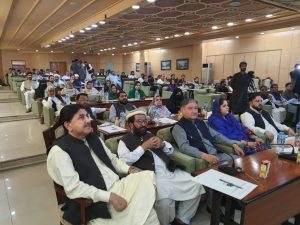
Home Minister Balochistan Ziaullah Langau on this occasion extended an offer of dialogue from the government to those willing to talk.
Zahoor Ahmed Buledi said that political parties and all stakeholders will have to their respective roles.
Gulzar Imam Shambay said that all of them should work for the prosperity of Balochistan as per their authority.
“I am the part of dialogue and also endorse it”, he added.
SFJ demands expulsion of Indian envoy for interfering with rights of Canadian Sikhs
ISLAMABAD, Jul 15 (APP):Sikhs For Justice (SFJ) has demanded the declaration of the Indian High Commissioner Sanjay Kumar Verma as ‘Persona Non-Grata’ due to their clear interference in Canada’s internal affairs, promoting hate and inciting violence against Pro Khalistan Canadian Sikhs.
Sikhs For Justice (“SFJ”), a registered human rights advocacy organization in Canada, is demanding the expulsion of the Indian envoy in Canada to avoid meddling in the upcoming July 16 Khalistan Referendum Voting.
SFJ is dedicated to peacefully advocating for the Khalistan Referendum to secure the rights of self-determination for Sikhs in the Punjab region, where they form the majority, and which is currently governed by India.
In an official communique dated July 13, 2023, High Commissioner Verma addressed the Government of Canada, stating that the Sikh for Justice’s illegal ‘referendum’ is an ineffective effort to undermine the Canada-India relationship.
Furthermore, he warned Canadian Sikhs, mentioning that millions of India’s supporters in Canada would counter the ill-intentioned Khalistan Referendum Voting scheduled for July 16th in the Greater Toronto Area (GTA).
In a letter to Prime Minister Trudeau, Minister Joly, and Minister Mendicino, SFJ criticized High Commissioner Verma for not only interfering in Canada’s internal affairs but also attempting to suppress the freedom of expression of Canadian Sikhs. They expressed concern that his remarks against the upcoming Khalistan Referendum voting were inciting violence and encouraging pro-India Canadians to harm Canadian Sikhs simply for peacefully expressing their political opinions on July 16th.
SFJ brought attention to Indian envoy Verma’s repeated interference in Canada’s internal affairs concerning the rights of Canadian Sikhs. They reminded the Ministers of SFJ’s December 2022 letter, which had been duly acknowledged, revealing Verma’s request to the Canadian Government to suppress and quash the Khalistan Referendum events held in Canada after witnessing a substantial turnout of Canadian Sikhs in September and November 2022.
Verma’s insistence on this matter was accompanied by a warning of potential strain on Canada-India relations if their demands were not met.
According to Article 9 of the Vienna Convention on Diplomatic Relations 1961, a state has the authority to declare any diplomatic staff member as persona non grata, without the obligation to provide an explanation for their decision. This action compels the respective government to recall the individual back to their home country.
SJF has emphasized that in light of Indian High Commissioner Verma’s repeated transgressions against Canadian Sikhs, it
is imperative for the government to take appropriate action by declaring Verma as “persona non grata” and “unacceptable.”
This declaration would compel the Indian Government to recall him. The conduct of diplomats and foreign officials is governed by the Vienna Convention on Diplomatic Relations, 1961. Article 41(1) of the Convention stipulates that foreign diplomats and consular officials are obligated to “respect the laws and regulations of the receiving State” and refrain from interfering in its internal affairs.
Alsuwaidi’s appointment to enhance Pak-UAE trade: Pak Businessman
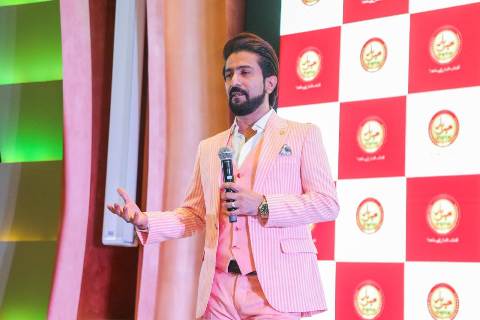
ISLAMABAD, Jul 15 (APP):Renowned Pakistani businessman Shakeel Ahmad Meer warmly welcomed the appointment of Mohammed Alsuwaidi as the new Minister of Investment in the UAE, praising him as a visionary economist who made significant contributions to the development of the United Arab Emirates.
In a statement, Dubai-based Pakistani businessman Shakeel Ahmad Meer said Mohammed Alsuwaidi possesses a remarkable vision that extends beyond the United Arab Emirates (UAE), encompassing Pakistan as well.
According to Shakeel Ahmad Meer, Mohammed Alsuwaidi has made significant efforts in the past to promote investment in Pakistan. As a result of his endeavours, numerous companies based in the UAE have made investments in both India and Pakistan in recent years.
He remarked that Mohammed Alsuwaidi, the Managing Director and Chief Executive of ADQ, an investment and holding company based in Abu Dhabi, has been selected to lead a newly established ministry with the objective of shaping the nation’s investment vision. This decision was made in recognition of Alsuwaidi’s visionary approach and dynamic outlook.
“The aim of the new ministry is to develop the country’s investment vision, stimulate the investment environment internally and continuously enhance the competitiveness of our procedures and legislation to ensure that the country remains a global destination for investment and a major player in the global investment movement,” Sheikh Mohammed wrote on Twitter after the appointment.
Shakeel Ahmad Meer mentioned that Dubai is prioritizing the improvement of the country’s economic status by creating an attractive environment for investment. They are also focusing on guiding companies to invest abroad, leading to profit generation and job growth.
Shakeel Ahmad Meer, said multiple companies based in Dubai have made significant investments in Pakistan recently. These investments have encompassed key areas such as the Karachi seaport and the real estate sector.
The businessman expressed his admiration for President Sheikh Mohamed and Sheikh Mohammed bin Rashid, Vice President and Ruler of Dubai, commending their wise choice in appointing Mohammed Alsuwaidi as the new Minister of Investment.
Anti-China melodrama toxic chicken soup for India: Global Times editorial
BEIJING, July 15 (APP):China on Saturday has strongly criticized a Bollywood movie and hoped that India can fully appreciate China’s goodwill and sincerity and remain cautious about the “anti-China melodramas” becoming a toxic influence in Indian society.
The Indian film Bharateeyans hit the screens on Friday. Some Indian media outlets and politicians have peddled and praised the film in an abnormal manner, calling it a must-watch patriotic film for all Indians.
Its biggest selling point is not the artistic level of the film or the attractiveness of the plot, but the highly provocative anti-China sentiment. Some serious Indian media outlets criticized the film from the perspective of art and technology, stating that it has few redeeming factors.
The main storyline of the film revolves around six young Indians who infiltrate Chinese territory on a “secret mission,” but the dialogue and scenes seem to deliberately highlight the backdrop of the Galwan Valley conflict.
The production team expressed dismay over the casualties of soldiers in the Galwan Valley clash and called for unity among citizens.
The film production company repeatedly hyped and sensationalized the conflict in Galwan Valley before the film’s release. It is evident that this is no longer a simple film, but more a piece of anti-China propaganda.
Some Indian media referred to it as a “patriotic film.” This must be corrected. It is by no means a patriotic film, but a film of narrow-minded nationalism that promotes hatred. This is something that no modern civilized country can tolerate and has crossed the bottom line of film and television works. China was portrayed as the “villain” and “enemy of India.” Because of this, and the hype made by the film’s production team and Indian public opinion, the final effect is like spreading ideological toxins in Indian society. The more people watch it, the larger the scope of contamination.
This is not an isolated case in India. Soon after the Galwan Valley conflict in 2020, some in India started producing “anti-China melodrama” about the event. There have been directors announcing their filming plans throughout this year. We don’t know the purpose behind making such films. It could be a quest for attention without considering the consequences, a result of the director and team’s misinterpretation and ill intentions toward China via films, or perhaps a way to exploit “anti-China” sentiment to sell the so-called “patriotism.” However, one thing is certain: this is definitely not about “loving” India. This is a desecration and misuse of the art of film.
This storyline is not just a clich, but harmful. It takes the backdrop of China-India relations but completely disregards the basic realities and facts of the bilateral relationship. The anti-China sentiment it incites will eventually manifest in some form, resulting in a “dammed lake” of irrational emotions for India. This not only affects China-India relations but will inevitably result in a more severe backlash on India itself. This is not a matter to be taken lightly, and such films should be boycotted.
Bollywood produces about 2,000 films annually. Some Indian films have often achieved both box office success and won public praise overseas. Movies with a strong Bollywood flavor have gained a substantial foreign fan base. However, in recent years, Bollywood has also produced more and more low-quality and toxic films like Bharateeyans. These films share common characteristics: distortion of facts, extreme exaggeration of the plot, portraying Indian characters as invincible while presenting Chinese characters as weak, and being filled with laughable notions of spiritual victory. India should be ashamed of making such films, and true intellectuals in India should be concerned and vigilant about it.
China does not harbor any malice or enmity toward India. We sincerely hope for a friendly coexistence between the two countries. It is true that China and India have experienced border conflicts, and some disputes remain.
However, China has shown great restraint in dealing with these issues and has consistently worked toward managing differences. China does not resort to speaking through strength like hegemonic powers do. We hope that India can fully appreciate China’s goodwill and sincerity and remain cautious about the “anti-China melodramas” becoming a toxic influence in Indian society. This is certainly not beneficial for China-India relations, nor is it good for India itself.
APP/asg