Home Blog Page 13669

FIA taking action against PTI’s chief for not returning cipher to concern department: Azam Nazeer

0
azam nazeer tarar-ecp
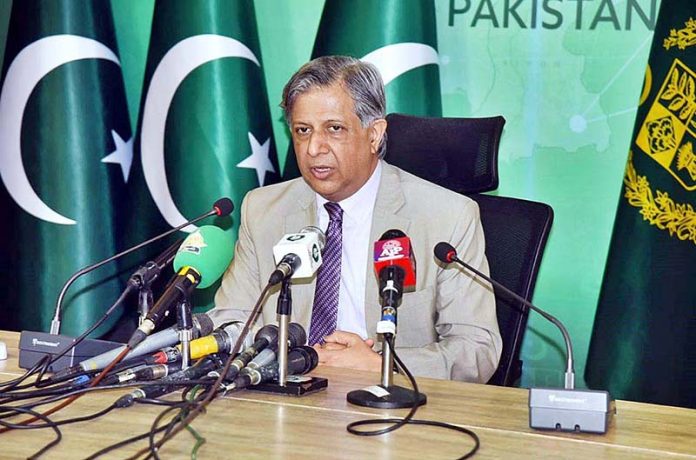
ISLAMABAD: July 20 – Federal Minister for Law and Justice, Senator Azam Nazir Tarar addressing an important press conference. APP

ISLAMABAD, Jul 20 (APP): Minister for Law and Justice Azam Nazeer Tarar on Thursday said that Chairman Pakistan Tehreek e Insaf (PTI) Imran Khan has damaged national security by recklessly using the cipher.
Chairman PTI has never returned the cipher to the relevant departments and now the FIA is handling the matter under the Official Secrets Act, he said.

Addressing a press conference, the law minister said that there was a lot of discussion on the issue of cipher, adding that several months ago the issue of cipher was came under discussion in the federal cabinet.
According to old minutes, the then prime minister Imran Khan took custody of the cipher and waved it in front of the public in a rally, after which the cipher was not returned to the concerned department, he said.

He said that these are classified documents and it couldn’t be made public or shared with anyone as this information was about the relations of two countries, so they are sent in coded language and then is decoded and accessed by concerned authorities.

Azam Nazeer said that these documents were used indiscriminately while compromising the national security, adding that this matter has been sent to FIA for inquiry as per law.
He said that the interior secretary had been given the authority who sent the matter to the Federal Investigation Agency (FIA) for action. He said that the FIA has summoned the former prime minister who challenged the notice before the Lahore High Court instead of giving his stance.

The LHC issued a stay order on this matter and FIA’s action was delayed for 6 months due to a stay, he said, however, adding that the injunction was lifted a few days ago on the request of the government.
He said that former principal secretary received the documents from the concerned department and handed them over to ex-prime minister. He said that Azam Khan told in his statement that for what purposes the then prime minister Imran Khan used these papers. It was waved in the rally and tried to built a narrative to avoid no confidence move, he said.

He said that the then Law Minister used this card in the House and the then speaker of the National Assembly did not hold discussion on it. The opposition, brought the no-confidence motion, was given an opportunity to speak in the National Assembly, he said.

He said that it had never happened before in the parliamentary history of Pakistan that the Deputy Speaker had turned down a motion of no confidence in one and a half minute without hearing the position of the members of the assembly. Imran Khan, taking advantage of this illegal ruling, advised President Arif Alvi to dissolve the National Assembly and within a few minutes, the largest House of the country was dissolved, he added.

He said that the movers of the opposition approached the Supreme Court against the violation of the constitution and the court declared the ruling of the Deputy Speaker unconstitutional and restored the National Assembly and the process of no confidence was adopted by the constitutional procedure.

The federal law minister said that the government has fulfilled its constitutional, legal and moral responsibility according to the law and the matter has been sent to the FIA which is under investigation.

He said that Imran Khan has been summoned by the FIA investigation team on May 25, adding that Azam Khan is an important witness in it and he has given a statement to the magistrate under Section 164. He said taking into account this statement and Imran Khan’s answer, the further action will be decided by the FIA under the relevant clauses and provisions of the Secret Act.

Tarar said that the relations with friendly country were damaged and it would take time to restore it at the global level, which had an impact on the economic situation of the country. He said that the government is determined to make the inquiry, investigation and investigation transparent, meritorious and in accordance with the law. This case has to be decided by the courts, he said.

To a question, he said that if the documents are damaged due to negligence, then the punishment can be up to two years. If there evidence is find that these documents were used for personal purposes and the national security is damaged, the punishment for this is 14 years jail or can be more.

He said that the issue of military courts is under hearing in the Supreme Court, adding that he was agree with the arguments of the Attorney General, there have been trials of civilians in military courts before.
He said that in 2015, the government of that time introduced legislation related to military courts in the context of APS tragedy and to control the increasing incidents of terrorism, because at that time civilians were the attackers.

He said that a 17 member bench of the top court had reviewed this amendment, adding that there is a right of appeal in the Army Act and the Army Chief can also hear the appeal himself.

He said that in the Rawalpindi Bar case, the 17-member bench declared that every deserving person has the right to appeal. The accused have all the rights in the current cases as well given by international laws, he said, adding that this is the internal matter of Pakistan.
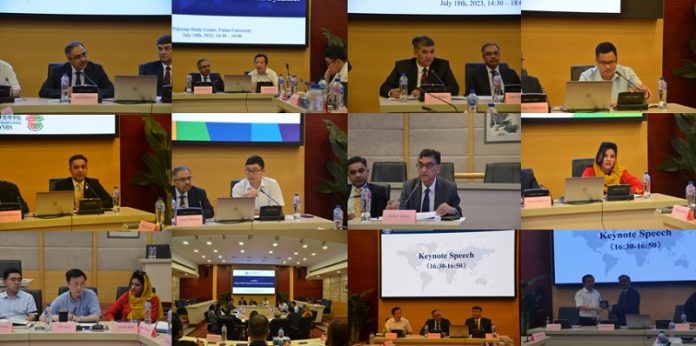
Seminar held on “China-Pakistan Relations in International Dynamics” at Fudan University

0

ISLAMABAD, Jul 20 (APP): The 15-member delegation visiting China participated in a seminar, titled “China-Pakistan Relations in International Dynamics,” organized by the Pakistan Study Centre, Fudan University, Shanghai.

The delegation, being led by Ambassador Sohail Mahmood, Director General ISSI includes diplomats, leading academics, researchers and media persons. The seminar was moderated by Dr. Talat Shabbir, Director China-Pakistan Study Centre (CPSC) and Dr. Zhang Jiegen, Associate Professor and Executive Director, Pakistan Study Centre, Fudan University.

DG ISSI Ambassador Sohail Mahmood was the keynote speaker of the seminar.

Dr. Zhang Jiegen, in his welcome remarks, gave a brief overview of the Fudan University and Pakistan Study Centre.

In his introductory remarks, Dr. Talat Shabbir stressed the peaceful rise of China for the good of humanity across the globe and highlighted that the Pakistan-China friendship has grown from strength to strength, where both countries enjoy a symbiotic relationship based on trust, goodwill, and close cooperation.

Addressing the seminar on “The Philosophy of Chinese Diplomacy: From Global Development Initiative, Global Security Initiative to Global Civilization Initiative,” Prof. Lin Minwang noted that President Xi Jinping’s three Initiatives were linked to the “Chinese dream for the world” which envisaged a shared future for all including both its immediate neighbors and the world community.

He said that China’s role in developing the Asian Infrastructure Investment Bank (AIIB), and its role in stabilizing the situation in Afghanistan was a testament to China’s commitment towards an international community where China is not a ‘free-rider’ but a responsible power.

During his remarks, Dr. Tahir Mumtaz Awan, dilated on the theme, “The Friendship Diplomacy and Emerging Chinese Initiatives for Global Good.”

He stated that China’s various Initiatives were complemented by its other projects aiming at South-South Cooperation, people-to-people exchanges, health projects, and efforts for enhanced environment cooperation indicating China’s expressed desire for shared prosperity across the globe.

Expressing his views on “Pakistan’s Development Model and the CPEC,” Prof. Zhang Jiadong underlined that Pakistan holds immense potential in terms of its labor dividend and infrastructural development. Pakistan’s unique geography and its good relations with major powers further position it to be a bridge between various parts of the world. In this milieu, CPEC and Pakistan’s pivot to geo-economics complement each other.

Dr. Ayesha Alam, in her remarks, discussed the theme “CPEC: A Gateway to Regional Connectivity.” She stressed that China’s development projects including six-major corridors in various parts of the world are a testament to China’s commitment to global development. She further highlighted that it is the collective responsibility of both Pakistan and China to counter anti-CPEC propaganda which usually emanates from India and the West.

Expressing his views on, “Regional Implications of China-US Strategic Rivalry,” Prof. Xin Qiang highlighted that the China-US rivalry is seen as a long-term, systematic, and global rivalry. He observed that it would manifest itself in all corners of the world and would likely affect various dimensions including economy, security, hi-tech, and even architecture.

Dr. Kausir Takrim spoke on the topic, “China-US Strategic Rivalry: Implications for Pakistan,” and contended that the broadening China-US rivalry, among other things, invites increasing competition between Pakistan and India.

Prof. Guo Xuetang spoke on the topic “India’s New Challenge to China-Pakistan Relations and the Regional Stability” and highlighted various dimensions of Pakistan-China relations in the context of increasing US-India ties. He, inter alia, stressed the importance of economic strength to deal with new challenges in an effective manner.

In his keynote address, Ambassador Sohail Mahmood highlighted the key features of the evolving global and regional environment and its implications.

Noting that the world was witnessing an intensification of geopolitics and traditional and non-traditional security threats, he highlighted deepening conflicts and multiple crises being simultaneously faced by the world including climate change; economic downturn; extreme poverty coupled with growing inequality; weaponization of trade, and accentuation of hate-speech and Islamophobia.

He stressed that these crises required peaceful coexistence and cooperation to be the main drivers of international relations; however, there was a growing drift away from multilateralism and towards ‘bloc confrontation’ and a ‘new cold war.’

He noted that in this challenging environment, China remained globally engaged and was making efforts to turn the situation away from confrontation and toward cooperation and win-win solutions.

Ambassador Mahmood further stressed that friendship with China has from the outset been the cornerstone of Pakistan’s foreign policy, where both countries have enjoyed a stable and growing relationship marked by strategic trust, adding, the all-weather strategic partnership has observed as a factor for stability in the region and beyond.

He added that CPEC is at the core of the relationship and, besides benefitting Pakistan and China, it holds huge benefits for the region in terms of shared prosperity. He concluded by underlining the importance of delineating ‘new frontiers’ of Pakistan-China relations in the dynamically changing global environment.

The speeches were followed by a question-and-answer session. The seminar concluded with a message of optimism for the world in general and Pakistan-China friendship in particular, where all the participants cherished the long-standing partnership of both countries and expressed a desire for deeper collaboration in diverse fields.

PM thankful to Allah over acquittal in “false” money laundering case

0

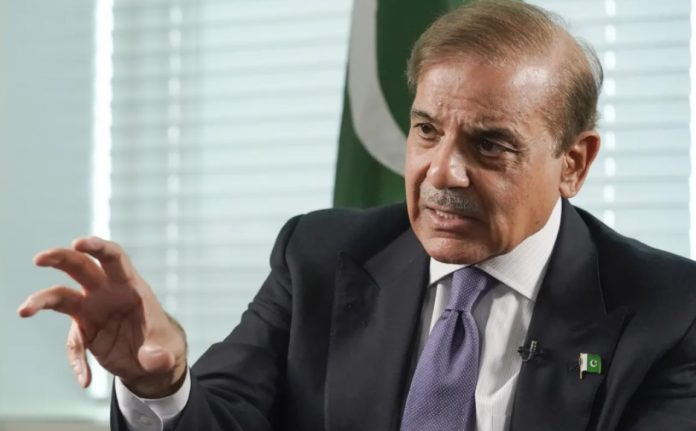
ISLAMABAD, July 20 (APP): Prime Minister Shehbaz Sharif on Thursday said that he was thankful to Allah Almighty as the Accountability Court of Lahore acquitted him and his son Hamza Shehbaz in a “false and baseless” case of money laundering based on political revenge.

He said that that was the same case in which the National Crime Agency of Britain with a global reputation, searched the 40-year record, collected from three countries, for two years and gave him clean chit after finding nothing.

The prime minister recalled that a news item was deliberately published in UK’s Daily Mail about the alleged embezzlement of DFID funds, but even in that, Allah vindicated him and the publication had to apologize.

“This was the same case in which I was wrongfully arrested twice, Hamza Shahbaz was kept in prison and Hamza was not even taken to a doctor despite being seriously ill during the Corona pandemic. He was not even allowed to meet his minor daughter,” Prime Minister Shehbaz recounted in a Tweet.

He questioned whether there could be any compensation for the “Whatsapp accountability”, the “worst” media trial, and imprisonment despite being innocent.

He said those who were indulged in political revenge had received an answer in the world, but they would have to give an account of that cruelty on the day of judgment.

The prime minister also thanked his benefactors, friends, lawyers and public for supporting him and his son, believing in their innocence and encouraging them everywhere in that period of victimisation.

PIA restructuring crucial to overcome deficit: Saad Rafique

0
Saad Rafique

ISLAMABAD, Jul 20 (APP): Minister for Aviation Khawaja Saad Rafique on Thursday underscored the pressing need to restructure Pakistan International Airlines (PIA) to tackle its staggering deficit which remained at Rs. 80 billion this year.

Speaking here at National Assembly after moving the Pakistan Airports Authority Bill, 2022, and the Pakistan Civil Aviation Bill, 2022, he said both aimed at fulfilling international requirements and PIA services will be restored to various countries including the United States, Europe, and Britain.

The primary focus of these bills is to ensure that the regulatory body and airport authority operate independently, thereby eliminating any concerns about layoffs within the Civil Aviation Authority (CAA).

He warned that if immediate reforms are not adopted, this deficit may escalate further in the coming days.

The minister adamantly rejected rumors of downsizing within the aviation department and clarified that no CAA employee will face unemployment due to the restructuring efforts.

He emphasized that these measures were intended to benefit overseas Pakistanis and their families, who often bear the burden of exorbitant fares on other airlines.

He said that a statement from the former federal minister created problems for PIA, assuring that all audits and tests have been successfully cleared, demonstrating their commitment to transparency and accountability.

Regarding the outsourcing of airports, the minister clarified that outsourcing does not equate to privatization.

Citing examples from other countries, including India, he stated that outsourcing aims to improve airport operations through the engagement of proficient operators.

Khawaja Saad Rafique pointed out that even Madina Airport has been successfully outsourced for enhanced services.

In a significant development, the House later passed the Pakistan Airports Authority Bill, 2022, and the Pakistan Civil Aviation Bill, 2022, after a thorough clause-by-clause reading and the incorporation of necessary amendments. The bills mark a crucial step towards revitalizing the national flag carrier and ensuring compliance with international standards.

Foreign Minister of Ukraine Dmytro Kuleba calls on Prime Minister Muhammad Shehbaz Sharif

0
Foreign Minister of Ukraine Dmytro Kuleba calls on Prime Minister Muhammad Shehbaz Sharif
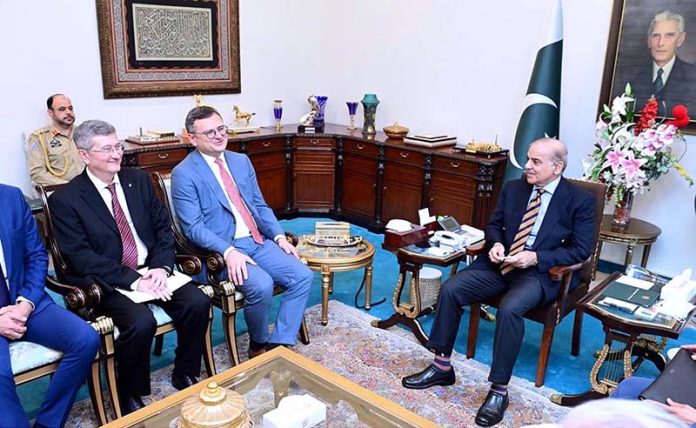
APP65-200723 ISLAMABAD: July 20 – Foreign Minister of Ukraine Dmytro Kuleba calls on Prime Minister Muhammad Shehbaz Sharif. APP/ABB
Foreign Minister of Ukraine Dmytro Kuleba calls on Prime Minister Muhammad Shehbaz Sharif
APP65-200723 ISLAMABAD:

Foreign Minister of Ukraine Dmytro Kuleba calls on Prime Minister Muhammad Shehbaz Sharif

0
Foreign Minister of Ukraine Dmytro Kuleba calls on Prime Minister Muhammad Shehbaz Sharif
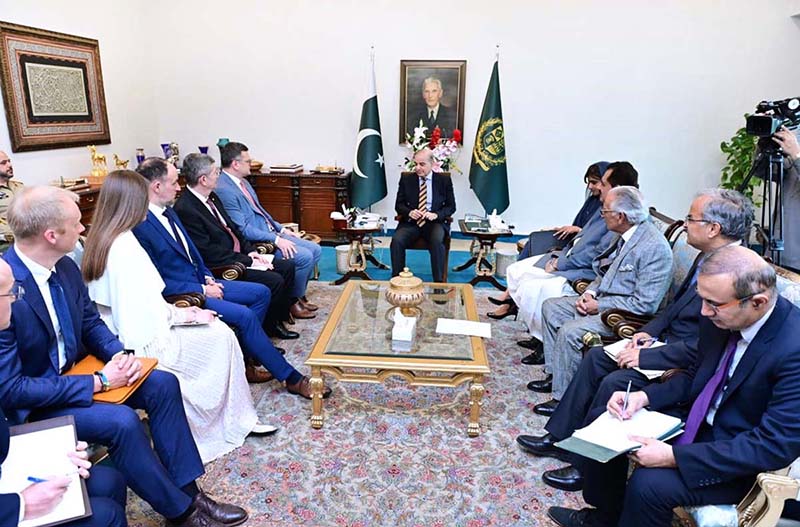
APP64-200723 ISLAMABAD: July 20 – Foreign Minister of Ukraine Dmytro Kuleba calls on Prime Minister Muhammad Shehbaz Sharif. APP/ABB
Foreign Minister of Ukraine Dmytro Kuleba calls on Prime Minister Muhammad Shehbaz Sharif
APP64-200723 ISLAMABAD:

Foreign Minister of Ukraine Dmytro Kuleba calls on Prime Minister Muhammad Shehbaz Sharif

0
Foreign Minister of Ukraine Dmytro Kuleba calls on Prime Minister Muhammad Shehbaz Sharif
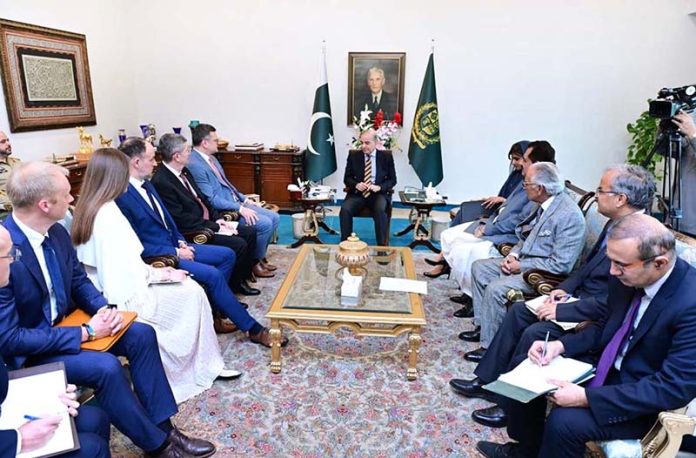
APP63-200723 ISLAMABAD: July 20 – Foreign Minister of Ukraine Dmytro Kuleba calls on Prime Minister Muhammad Shehbaz Sharif. APP/ABB
Foreign Minister of Ukraine Dmytro Kuleba calls on Prime Minister Muhammad Shehbaz Sharif
APP63-200723 ISLAMABAD:

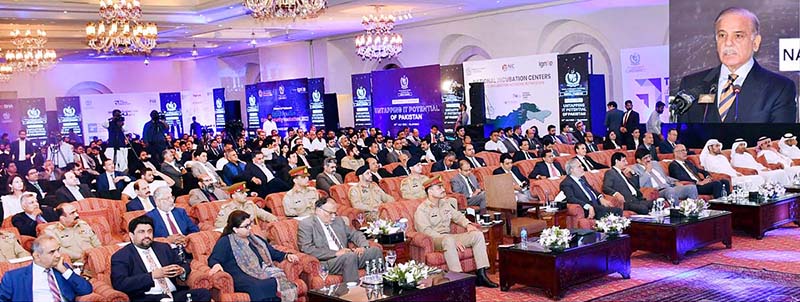
Prime Minister Muhammad Shehbaz Sharif addresses the National IT seminar. Chief of Army Staff General Syed Asim Munir attended the seminar as guest of honor

0
Prime Minister Muhammad Shehbaz Sharif addresses the National IT seminar. Chief of Army Staff General Syed Asim Munir attended the seminar as guest of honor
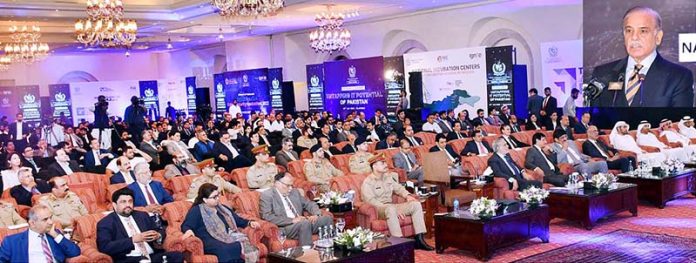
APP62-200723 ISLAMABAD: July 20 – Prime Minister Muhammad Shehbaz Sharif addresses the National IT seminar. Chief of Army Staff General Syed Asim Munir attended the seminar as guest of honor. APP/ABB
Prime Minister Muhammad Shehbaz Sharif addresses the National IT seminar. Chief of Army Staff General Syed Asim Munir attended the seminar as guest of honor
APP62-200723 ISLAMABAD:

Seminar held on “China-Pakistan Relations in International Dynamics” at Fudan Uni

0

ISLAMABAD, Jul 20 (APP): The 15-member delegation visiting China participated in a seminar, titled “China-Pakistan Relations in International Dynamics,” organized by the Pakistan Study Centre, Fudan University, Shanghai.

The delegation, being led by Ambassador Sohail Mahmood, Director General ISSI includes diplomats, leading academics, researchers and media persons. The seminar was moderated by Dr. Talat Shabbir, Director China-Pakistan Study Centre (CPSC) and Dr. Zhang Jiegen, Associate Professor and Executive Director, Pakistan Study Centre, Fudan University.
DG ISSI Ambassador Sohail Mahmood was the keynote speaker of the seminar.

Dr. Zhang Jiegen, in his welcome remarks, gave a brief overview of the Fudan University and Pakistan Study Centre.
In his introductory remarks, Dr. Talat Shabbir stressed the peaceful rise of China for the good of humanity across the globe and highlighted that the Pakistan-China friendship has grown from strength to strength, where both countries enjoy a symbiotic relationship based on trust, goodwill, and close cooperation.

Addressing the seminar on “The Philosophy of Chinese Diplomacy: From Global Development Initiative, Global Security Initiative to Global Civilization Initiative,” Prof. Lin Minwang noted that President Xi Jinping’s three Initiatives were linked to the “Chinese dream for the world” which envisaged a shared future for all including both its immediate neighbors and the world community.

He said that China’s role in developing the Asian Infrastructure Investment Bank (AIIB), and its role in stabilizing the situation in Afghanistan was a testament to China’s commitment towards an international community where China is not a ‘free-rider’ but a responsible power.

During his remarks, Dr. Tahir Mumtaz Awan, dilated on the theme, “The Friendship Diplomacy and Emerging Chinese Initiatives for Global Good.”

He stated that China’s various Initiatives were complemented by its other projects aiming at South-South Cooperation, people-to-people exchanges, health projects, and efforts for enhanced environment cooperation indicating China’s expressed desire for shared prosperity across the globe.

Expressing his views on “Pakistan’s Development Model and the CPEC,” Prof. Zhang Jiadong underlined that Pakistan holds immense potential in terms of its labor dividend and infrastructural development. Pakistan’s unique geography and its good relations with major powers further position it to be a bridge between various parts of the world. In this milieu, CPEC and Pakistan’s pivot to geo-economics complement each other.

Dr. Ayesha Alam, in her remarks, discussed the theme “CPEC: A Gateway to Regional Connectivity.” She stressed that China’s development projects including six-major corridors in various parts of the world are a testament to China’s commitment to global development. She further highlighted that it is the collective responsibility of both Pakistan and China to counter anti-CPEC propaganda which usually emanates from India and the West.

Expressing his views on, “Regional Implications of China-US Strategic Rivalry,” Prof. Xin Qiang highlighted that the China-US rivalry is seen as a long-term, systematic, and global rivalry. He observed that it would manifest itself in all corners of the world and would likely affect various dimensions including economy, security, hi-tech, and even architecture.

Dr. Kausir Takrim spoke on the topic, “China-US Strategic Rivalry: Implications for Pakistan,” and contended that the broadening China-US rivalry, among other things, invites increasing competition between Pakistan and India.

Prof. Guo Xuetang spoke on the topic “India’s New Challenge to China-Pakistan Relations and the Regional Stability” and highlighted various dimensions of Pakistan-China relations in the context of increasing US-India ties. He, inter alia, stressed the importance of economic strength to deal with new challenges in an effective manner.

In his keynote address, Ambassador Sohail Mahmood highlighted the key features of the evolving global and regional environment and its implications.
Noting that the world was witnessing an intensification of geopolitics and traditional and non-traditional security threats, he highlighted deepening conflicts and multiple crises being simultaneously faced by the world including climate change; economic downturn; extreme poverty coupled with growing inequality; weaponization of trade, and accentuation of hate-speech and Islamophobia.

He stressed that these crises required peaceful coexistence and cooperation to be the main drivers of international relations; however, there was a growing drift away from multilateralism and towards ‘bloc confrontation’ and a ‘new cold war.’

He noted that in this challenging environment, China remained globally engaged and was making efforts to turn the situation away from confrontation and toward cooperation and win-win solutions.

The speeches were followed by a question-and-answer session. The seminar concluded with a message of optimism for the world in general and Pakistan-China friendship in particular, where all the participants cherished the long-standing partnership of both countries and expressed a desire for deeper collaboration in diverse fields.

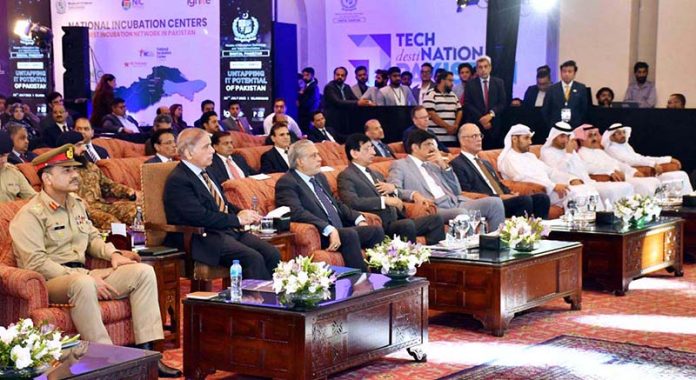
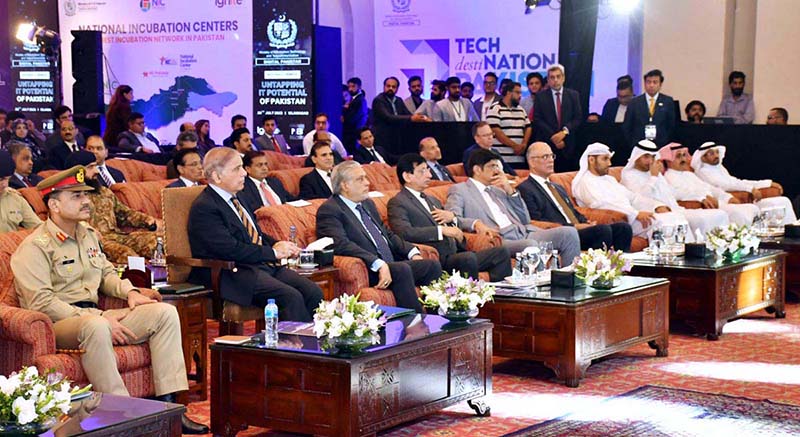
Prime Minister Muhammad Shehbaz Sharif attends the National IT seminar as Chief Guest. Chief of Army Staff General Syed Asim Munir attended the seminar as Guest Of Honor

0
Prime Minister Muhammad Shehbaz Sharif attends the National IT seminar as Chief Guest. Chief of Army Staff General Syed Asim Munir attended the seminar as Guest Of Honor
APP61-200723 ISLAMABAD: July 20 – Prime Minister Muhammad Shehbaz Sharif attends the National IT seminar as Chief Guest. Chief of Army Staff General Syed Asim Munir attended the seminar as Guest Of Honor. APP/ABB
Prime Minister Muhammad Shehbaz Sharif attends the National IT seminar as Chief Guest. Chief of Army Staff General Syed Asim Munir attended the seminar as Guest Of Honor
APP61-200723 ISLAMABAD: