Home Blog Page 13657

Hamza creates history, wins World Jr C’ship

0
Hamza World Jr C'ship

ISLAMABAD, Jul 23 (APP):Hamza Khan fought back to become Pakistan’s first WSF World Junior Squash champion at the 2023 WSF World Junior Squash Championships, since Jansher Khan in 1986.

In an incredible men’s final at Melbourne Sports Centres, 15-year-old Mohamed Zakaria – who would have become the youngest ever winner of the men’s event with a victory – made the better start, with his precise play helping him clinch the opening game 12-10.

The Egyptian made a flying start to the second game, racing into a 5-0 lead as Khan struggled.

The 17-year-old, however, then mounted a brilliant fightback, with his devastating attacking weaponry at its deadly best as he thrilled the crowd with the winner after winner, coming back from game ball down to level the match with a 14-12 victory in game two before storming into the lead with an 11-3 win in game three.

Khan kept up this momentum in game four, finding his attacks with increasing confidence as he ended Pakistan’s 37-year wait for a WSF World Junior Squash Championship with an 11-6 win before collapsing to the floor with emotion.

“First of all, I would like to thank Allah, and my thanks to my coaches, my managers, thanks to everybody. And thanks to my parents, who support me every single time. Thank you,” a still-emotional Khan said afterwards.

World Junior Individual Championship was held from August 18 to 23 in Melbourne, Australia. Hamza Khan and Air Commodore (R) Aftab Sadiq Qureshi (Contingent Manager) were nominated by Pakistan Squash Federation for participation in the championship.

The emerging Hamza displayed brilliant performance throughout the championship and created history by winning the world championship title after 37 years.

Earlier, Jansher Khan had won World Junior Individual Championship in 1986 in Australia. Chief of the Air Staff, Air Chief Marshal Zaheer Ahmad Babar, President PSF, Air Vice Marshal Kazim Hammad, Senior Vice President and the whole squash family and squash lovers have congratulated Hamza on regaining the World Junior Championship title after about four decades.

Result: WSF World Junior Squash Championships Men’s Final: Hamza Khan (PAK) beat Mohamed Zakaria (EGY) 3-1: 10-12, 14-12, 11-3, 11-6 (70m).

Planning Ministry to hold two-day “Pakistan Governance Forum- 2023” from Tuesday

0
Planning Ministry to

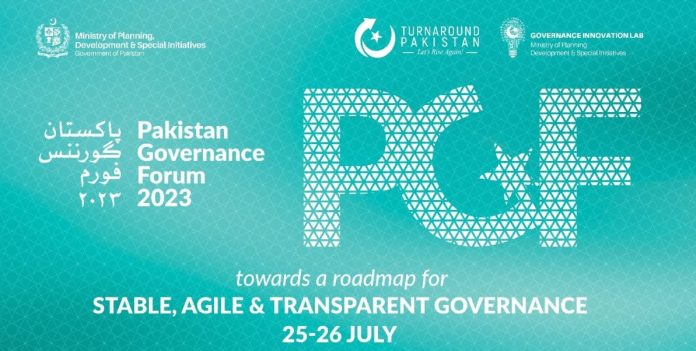
ISLAMABAD, Jul 23 (APP): The Ministry of Planning, Development and Special Initiatives is all set to organize a two-day forum from Tuesday to develop a roadmap for a stable, agile and transparent governance system in the country.

The event titled “Pakistan Governance Forum-2023” would assemble more than 300 participants including 60
distinguished speakers in a bid to foster a path toward a sustainable, vibrant and transparent governance mechanism.

The two-day event, being held under a landmark initiative of ‘Turnaround Pakistan’, is anticipated to serve as a pivotal platform for the exchange of ideas and the formulation of a comprehensive roadmap that will shape the future of governance in Pakistan.

Prominent figures from diverse sectors, political leaders, experts, and representatives from civil society will come together to deliberate on a wide range of crucial aspects of governance.

Among the key topics on the agenda for discussion are the trichotomy of power, civil-military relations, federal-provincial dynamics, civil service reforms, peace and security, gender equality, youth empowerment, innovation and economic development.

With a focus on stability, agility and transparency, the event promises to mark a new chapter in the nation’s journey towards progress and prosperity.

PM felicitates Hamza Khan on winning World Junior Squash Championship

0

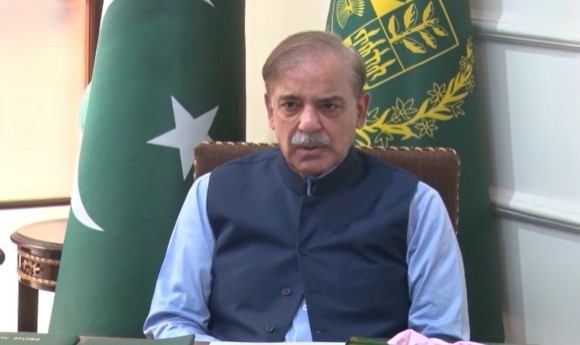
LAHORE, July 23 (APP) Prime Minister Muhammad Shehbaz Sharif on Sunday congratulated Hamza Khan on clinching the title of World Junior Squash Champion, 2023.

The prime minister thanked the new champion for winning the title for Pakistan after a gap of 37 years and observed that his win had reminded the triumph of Jansher Khan in 1986 World Squash championship, PM Office Media Wing said in a press release.

The prime minister also extended his congratulations to Hamza’s parents, coach, team mates and the nation on the historic achievement and said the entire nation felicitated Hamza Khan for raising the national flag high in the game of squash.

He expressed the hope that in future, Hamza Khan would once again make Pakistan as an invincible side in the game of squash.

During the last fifteen months, the national players had brought laurels to home in mountaineering, boxing, squash and other games, he added.

On Sunday, Hamza Khan won the World Junior Squash Championship 2023 after beating Egypt’s Mohamed Zakaria, and became Pakistan’s first champion since 1986.

Hamza beat Zakaria 3-1 during the final match of the tournament played in Melbourne, Australia.

Healthy diet campaign being launched to provide information about food ingredients to public: PM

0

ISLAMABAD, July 23 (APP) Prime Minister Muhammad Shehbaz Sharif on Sunday said that under his direction, a ‘Sehatmand Ghiza, Tandrusti Sadaa (Healthy diet, Health forever’ campaign was being launched all over Pakistan that would help consumers to get information about the food ingredients served to them.

On his Twitter handle, the prime minister said under the drive, every restaurant would inform the consumer about the total calories included in the food stuff.

The prime minister observed that public health was closely related to provision of clean and healthy diet.

It was their right to learn about the food ingredients with which they were served with so that they could chose food items on the basis of provision of better and clear information.

He said this extensive campaign was being carried out across Pakistan by the Strategic Reforms Unit in collaboration with food authorities in all provinces.

In addition to it, the prime minister in a tweet posted in Urdu language further said, a complete nutritional information under the recommendations of the World Health Organization (WHO) would be published on packaged food items.

Besides, trans-fat acids were being reduced to 2 percent to prevent heart and other related diseases, he added.

The prime minister further stressed that their sports fields should thrive, leaving the hospitals deserted and this campaign would be a harbinger for a healthy future.

Cotton Research: Pakistan needs a giant leap, big R&D money to secure cotton future

0
Cotton

By Iftikhar Ahmad

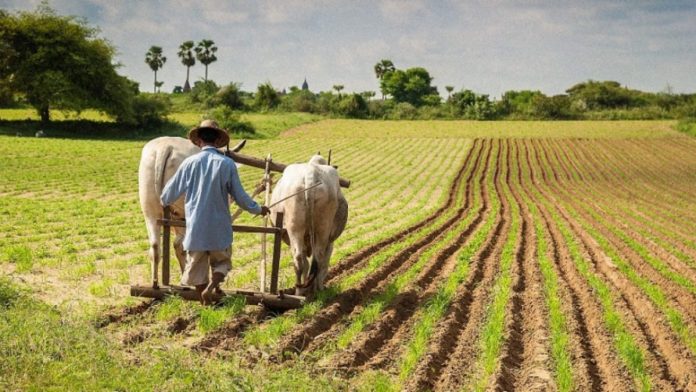
MULTAN, Jul 23 (APP): Clothing holds the significance of being the second most important component of life after food. Owing to its global relevance, cotton production countries thus enjoy special privileges worldwide – cotton export being their major source of income generation.

The cotton sector, therefore, is going through more advancement globally with more research providing ways to enhance yields.
Agriculture scientists are trying to develop numerous cotton varieties in Pakistan too since the day Quaid-e-Azam Muhammad Ali Jinnah laid the foundation of the Pakistan Central Cotton Committee (PCCC) back in 1948.

“Several cotton research institutions started working under the umbrella of PCCC and delivered 59 cotton varieties including 36 credited to Central Cotton Research Institute (CCRI) Multan alone,” says Sajid Mahmood, the technology transfer head of CCRI Multan, adding developing a traditional cotton variety takes almost 8-10 years.

Moreover, 72 varieties were developed by Cotton Research Institute (CRI) Multan which was working under the provincial government and operational well before the partition, said retired Director Cotton Punjab Dr. Sagheer Ahmad, nowadays heading Tara CropSciences’ Research and Development wing as chief scientist.

There are other prestigious research institutions like the Nuclear Institute of Agriculture Tandojam, National Institute of Biotechnology and Genetic Engineering (Nibge), Nuclear Institute for Agriculture and Biology (NIAB), Faisalabad, Centre of Excellence in Molecular Biology (CEMB) Punjab University Lahore.

A cotton saga in Pakistan remained greatly marred by pest attacks, poor management by small farmers owing to lack of knowledge or resources or both, fake fertilizers, pesticides, and sometimes due to climate change phenomenon.
“There are 150 reported cotton enemy pests in Pakistan, highest than any other cotton-producing country in the world,” said Sajid Mahmood.

“Traditional cotton varieties did wonders and there were occasions when Pakistan touched 14 million bales mark or remained just below, thanks to CCRI Multan variety CIM-496, Niab-78 by Nuclear Institute of Agriculture and Biology (NIAB), Faisalabad, MNH-93 and S-12 by CRI Multan and some others,” said Khawaja Shoaib, who added that Pakistan had the potential of producing at 18-20 million bales if the crop was managed properly.

In 1948-49, Pakistan’s lint per hectare (KG/HA) production was over 700 kilograms, higher than India, the largest cotton producer in the world of cotton.
According to statistics of last decade from 2009 to 2022, the country’s kg/ha was 707kg in 2009 and it gained 12.914 million bales production from 3.106 million hectares. It rose to 724kg per hectare in 2010 but production reduced to 11.4 million owing to area reduced to 2.689 million hectares.

However, come 2011-12, lint production blinked at 815 kilograms per hectare and production of 13.595 million bales from 2.835 million hectares strengthened the economy. During the next two years lint kg/ha was recorded at 769 and 773 kilograms and production remained above 13 million bales in 2012-13 and 12.769 million bales in 2013-14.

However, 2014-15 was a remarkable year when Pakistan again crossed 800-kilogram lint production per hectare and registered a record 13.983 million bales. In 2015, 2016 and 2017, the production declined to 10.074, 10.671 and 11.93 million bales respectively. Cotton area started decreasing in 2018-19 when it was 2.373 million hectares and the country gained 9.861 million bales at the rate of 707-kilogram lint per hectare.

In the next three years, production remained between 7 to 8 plus million bales. In 2021-22, cotton area was reduced to 1.937 million hectares only, however, a good 731-kilogram lint per hectare figure yielded a heart-consoling production of 8.328 million bales. However, the major shock came in 2022 when torrential rains triggered by climate change swept away standing crops across the cotton belt in Sindh and Punjab and though the area of 2.144 million hectares was slightly higher than last year, Pakistan ended up gaining only 4.9 million bales, the lowest in history with lint per hectares also reduced to country’s lowest, 472 kilograms.

When asked to comment on the cotton story over the years, Dr. Sagheer said, researchers had been doing a great job with the resources available to them.
While research on traditional varieties is still on, Pakistan has also experimented with hybrid varieties but the higher cost of production appeared discouraging. Then came Bt cotton varieties with resistance genetically incorporated against insect pests in seeds and Pakistan officially allowed its research and cultivation in 2012.

Pakistan recently witnessed an indigenous feat, thanks to scientists from the Centre of Excellence in Molecular Biology (CEMB) when they developed Transgenic Cotton, a triple gene that would turn local cotton varieties into triple gene varieties once the gene is injected and many public and private research institutions and seed companies have incorporated the gene in their own varieties undergoing field trials, a mandatory provision before it is available for commercial cultivation.

These varieties are trumpeted to have resistance against insect pests, high yielding, climate-smart and Glyphosate tolerant, something that addresses the weeds problem.
“Being one of the ancient homes of cotton and the fifth largest cotton producer of the world after India, China, USA and Brazil, Pakistan needs to invest big in cotton research,” says Dr. Tasawwur Hussain Malik, Director Research Pakistan Central Cotton Committee (PCCC).

APTMA leaders believe that when other countries of world cotton club can reach 1000-2000 kilogram lint per hectare, why cannot Pakistan?
According to a World Bank report, China has a lint per hectare production of 2027 kilogram, USA 943 kg/ha, Australia 1973 kg/ha, and Turkey 1793 kg/ha.

Dr. Muhammad Ali Talpur, the economic advisor to the Ministry of Planning and Development, when contacted, said, when Bt cotton was relatively a new phenomenon, some international seed firms had approached Pakistan around two decades back but they wanted Royalty on their Bt seed and demanded penalties on farmers under a regulatory system on sowing of their varieties sans Royalty payment.

Things did not work out then, however, recently, a proposal was discussed at a higher government level to introduce a regulatory system and a US$75 million fund be created to make penalty payments to international research companies in case of Royalty violation, Dr. Talpur said.

Officials believe that the recent Green Pakistan initiative by Prime Minister Shahbaz Sharif launching Special Investment Facilitation Council (SIFC) and envisioned to attract US$30-50 billion investment in the next few years was a step in the right direction and would bring vast tracts of land under cultivation of cash crops including cotton.

Unruly urban growth hampering provision of civic amenities

0
Unruly urban growth

By Naveed ul Haq

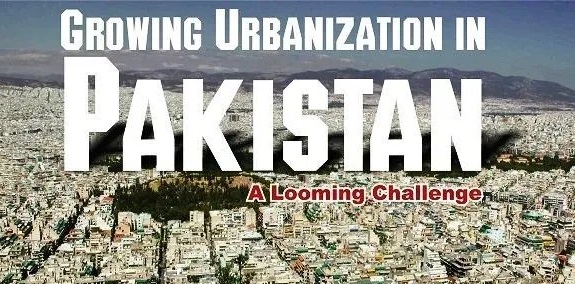
LAHORE, Jul 23 (APP): Unbridled population growth and urban development are continuously stressing our resources with the provision of basic amenities in mega cities becoming an uphill task for the city managers.

Whether it is Karachi, Lahore, Faisalabad or even Islamabad, the provision of basic facilities like water, sewerage, solid waste management, clean air, smooth mobility, and quality living always remains a challenge for them.

Taking the example of Lahore – a city hosting 13 million people with a 900-kilometer-long road network has presented the sorry state of affairs in draining rainwater, cleanliness and transportation during the current monsoon season.

One major reason for unmanaged urbanization is the lack of government policies to manage the growing population and control the sprawl of illegal housing societies on the boundaries of major cities.

These residential societies, no doubt, meet the housing needs of people, but in the long run, they turn to be messy.

Over the past couple of decades, Pakistan has experienced the highest urbanization rate in South Asia and according to United Nations Population Division, nearly 50 per cent of Pakistan’s population will be living in cities by 2025.

Therefore, civic departments like Water and Sanitation Authority, Solid Waste Management Company, Punjab Local Government and Community Development, Lahore Development Authority, Environment Protection Department and some others are often seen overburdened in dispensation of their duties.

“We are doing the utmost to facilitate residents. But, the unprecedented population influx to urban areas hampers our efforts. Therefore, we need resources in parity with urban expansion,” said Babar Sahib Din, Chief Executive Officer (CEO) of Lahore Waste Management Company (LWMC).

“Our staff is always on toes for providing cleanliness services as the LWMC is also endeavoring to apply the 3Rs (Reduce, Reuse and Recycle) strategy in the provincial capital,” he said.

“Zero waste initiative has been completed successfully. But, we still confront a challenge of changing behavior and making our people responsible citizens,” Sahib Din stated. “The residents should create less waste, use re-usable shopping bags, keep their surroundings clean, install trash cans at suitable places and educate their children to keep their homes, localities and schools clean.”

Despite these claims, five cities in Punjab including Lahore were listed among the 50 most polluted cities in the world. Particulate matter pollution in the city is often counted many times higher than the WHO-prescribed air quality standards.

“Exposure to polluted air and stinking sewage stagnant on roads and streets after rains causes health complications like asthma, lung damage, bronchial infections, strokes, heart problems and shortened life expectancy,” said a health expert Dr Tahir Mahmood.

“Although the concerned departments claim to be keeping busy in cleaning the city yet the situation on the ground speaks otherwise,” he stated.

In January and February this year, even after a heavy wet spell, Air Quality Index in Lahore was recorded at 150 level and the government departments, despite their claims, seemed to be helpless in keeping the city clean.

“Our machinery remains active during and after rains,” claimed Managing Director WASA Ghufran Ahmed, however stating, “plastic pollution is the major hurdle to drain rainwater timely and our manpower seem helpless especially at congested points of the city.”

“We alone are expected to do everybody’s bit. Keeping cities clean is a shared responsibility of civic bodies as well as the residents. Therefore, blaming us for others’ follies is unjust,” he said.

Ghufran informed that Digital Complaints Centers have been established at town level while complaint resolution time has also been reduced to 24 hours from 48 hours. “We are adopting the best service delivery approach to keep the city clean.”

During the last 15 years, Lahore has also lost a significant proportion of tree cover for building highways, underpasses and overpasses. Car sales in city are booming and many of the cars plying on the roads spew toxic emissions due to a lack of proper vehicular inspection and use of adulterated fuel.

Although, the Punjab Mass transit Authority tries its best to provide public transport facilities and millions of people are already seen travelling by Metro Bus, Orange Train and Speedo buses, yet there is no mechanism to discourage using private vehicles for short-distance travelling.

We have a common tendency of showing an air of magnificence and classes difference by frequently using privately owned vehicles instead of using mass transit facilities.

“Even being on the verge of default, we could not get rid of showing off. We are still plagued by class culture with the affluent least bothering to miseries they were inflicting poor,” said a middle class government servant, Zafar Mahmood.

“If the heads of the governments and ministers in rich and developed nations could travel by metro why our ministers and other officials need a convoy to move,” he said. “We direly need to promote a culture of austerity and cleanliness as a whole.”

Since politics plays a pivotal role in influencing the masses’ behaviors therefore our political elites must come for educating people in resource conservation and keeping our cities clean.

Therefore, devolution of power, the revival of local governments and making systematic and structural changes in institutions with technical, legal and regulatory support were need of the hour for appropriate urban planning and provision of basic amenities to people.


CPEC decade – A voyage to new development heights

0

By Muhammad Aslam

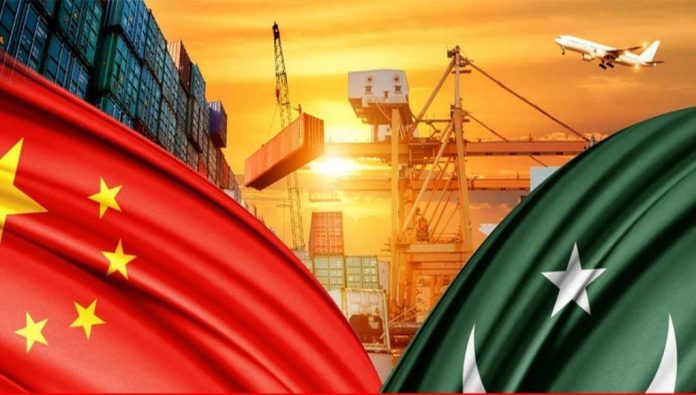
ISLAMABAD, Jul 23 (APP): Known as the ‘iron brothers,’ Pakistan and China resolutely reinforced their commitment to bolstering regional connectivity and economic prosperity through a decade-long struggle to elevate China Pakistan Economic Corridor (CPEC) to unprecedented levels.

It was ten years back, when two all-weather friends solidified their commitment by signing a multibillion-dollar CPEC Framework Agreement, marking a significant milestone in their collaborative efforts.

China boldly stepped forward, when other countries hesitated to invest in Pakistan, pledging an initial investment of US$46 billion that later expanded to a substantial sum of US$62 billion.

Now the two countries are celebrating 10 years of undeterred bilateral cooperation with a renewed pledge to move forward at a faster pace towards the CPEC’s ultimate destination of regional progress and prosperity.

On July 11, a meeting of the 12th (Special) Joint Cooperation Committee (JCC) was held in Beijing, co-chaired by Minister for Planning, Development and Special Initiatives, Professor Ahsan Iqbal and Vice Chairman, National Development and Reform Commission (NDRC) China, Cong Liang.

During the meeting, the minister said the CPEC was a remarkable endeavor that symbolized the deep-rooted ties between China and Pakistan.

“It has fostered connectivity, enhanced trade and opened up new avenues for shared prosperity,” Ahsan Iqbal said.

“CPEC is the topmost priority of Pakistan-China All-Weather Strategic Cooperative Partnership as these avenues provided an opportunity to consolidate successes and enhance future cooperation.”

He recalled that monumental event when visionary leaders President Xi and Prime Minister of Pakistan Muhammad Nawaz Sharif had launched this project aimed at transforming the region’s economic landscape.

According to a senior official of the Chinese Foreign Ministry, the CPEC projects, under the Belt and Road Initiative (BRI), were flourishing all across Pakistan and had attracted US$25.4 billion in direct investment from China during the last 10 years.

“After ten years of development, a “1+4″ cooperation layout has been formed, with the CPEC at the centre and Gwadar Port, transport infrastructure, energy and industrial cooperation being the four key areas,” the official said.

The CPEC framework has created 192,000 jobs, producing 6,000 megawatts of electric power, building 510 kilometers of highways and adding 886 kilometers to the core national transmission network, he added.

The CPEC has made a tangible contribution to Pakistan’s development and connectivity in the region. China and Pakistan have also explored new areas for cooperation under the CPEC framework by focusing areas like agriculture, science and technology, telecommunication and people’s well-being.

“China stands ready to work with Pakistan to build on the past achievements and follow the guidance of the important common understandings between leaders of the two countries on promoting high-quality development of CPEC to boost the development of China and Pakistan and the region and bring more benefits to people of all countries,” the official said.

Prime Minister Muhammad Shehbaz Sharif, during a recent meeting with Chinese Charge d’affaires Pang Chunxue has also reiterated that as ‘Iron Brothers’ and old friends, Pakistan and China always stood firm against all odds and enjoyed unflinching bilateral support on issues of mutual concern.

Noting the upward trajectory in Pakistan-China ties and economic and financial cooperation, the Prime Minister eulogized China’s support for Pakistan’s economic stability and expressed a firm commitment to further strengthen the relationship between the two countries under the rubric of the Global Development Initiative and CPEC.

“Implementing multi-billion-dollar development projects under the CPEC has brought socio-economic benefits to Pakistan and helped our country progress in the region and beyond,” the Prime Minister said addressing a ceremony to mark a decade of the signing of CPEC.

It is worth mentioning that during the last fiscal year, projects to supply gas to CPEC’s Special Economic Zones (SEZs) have been completed. Besides the financial year 2022-23, over 15 mega projects related to the development of Gwadar deep seaport, an ultimate destination of the CPEC, had been completed.

The completed mega projects include a 300 MW coal power plant, 2000 boat engines, Khuzdar to Panjgur transmission line, Gwadar International Airport, Pak-China Technology Institute, Gwadar Hospital, Smart Port and certain other projects. The construction of a modern hospital in Gwadar would ensure the best healthcare facilities for the local people.

The CPEC project made remarkable progress in its first phase (2015-2020), especially in the early harvest period (2013-18) whereby several mega projects have been completed including KKH Phase-II (Havelian-Thakot Section).

The second phase (2021-25) with a focus on industrialization, agriculture modernization, socio-economic development and cooperation in Science and Information Technologies (SITs) has already taken off aims at reaping the dividends of investment made in energy and transport infrastructure.

However, other avenues of cooperation defined in the CPEC-Long-Term Plan (2015-30) are being opened to progress tourism, mines and minerals and petroleum sectors in the second phase.

As the CPEC moves closer to fruition, its positive impact will extend beyond the borders of China and Pakistan. The project holds the potential to transform the entire region, fostering economic growth and creating new opportunities for Iran, Afghanistan, Central Asian Republics, and beyond.

The CPEC decade stands as a testament to the power of cooperation and the “iron brothers” determination to forge a path towards shared progress and prosperity.

Kisan Package — A way forward to revive ailing economy

0
Kisan Package

By Imran Nazir Abbasi

ISLAMABAD, Jul 23 (APP): With country’s major cash crops and raw materials coming from the agricultural sector, its efficient performance always bore pivotal importance to feed the populace and boosting industrial growth.

However, like many other sectors of economy, the agricultural sector also suffered a lot in the post-COVID economic recession globally and internal economic turmoil resulting in price hike of inputs and energy.

Therefore, the government had to introduce a multi-billion rupee Kissan Package to revive this sector and enhance the per-acre output of major and minor crops, aiming to achieve sustainable growth and economic development.

It was a much-needed package designed to breathe new life into the ailing agriculture sector, offering a range of remedies and support mechanisms for the agricultural industry and farmers.

Especially to address problems of small farmers, the Kissan Package provides tangible solutions, encompassing various components meant for enhancing agricultural productivity, alleviate financial burdens and promote sustainable practices.

“The farmers have started reaping benefits of this package as the government is disbursing an amount of Rs 6,769.5 million to subsidize the cost of cultivation for poor farmers in the form of interest-free loans in flood-affected areas,” said Imtiaz Ahmed Gopang, Food Security Commissioner at Ministry of National Food Security and Research.

“This amount has been disbursed among 30,362 borrowers by ensuring access to small landholders. The credit facility would help enhance their farm income and alleviate poverty from rural areas of the country,” he stated.

“These small farmers with land holding up to 5-12 acres comprise around 86 percent of the total land holdings and play a critical role in agriculture development,” Gopang said. “Therefore, the government is ensuring availability of all other inputs including high-yielding seeds, quality of pesticides and fertilizers on controlled rates to facilitate them.”

He said an amount of Rs1.48 billion has been sanctioned for waiver of markup on outstanding loans for subsistence farmers in flood-affected areas to revive their farming that was badly affected by flash floods.

To support farmers affected by floods, Prime Minister Shehbaz Sharif had announced a relief package worth Rs1.8 trillion in October 2022. This package was aimed to provide assistance to poor farmers, particularly those who suffered losses of their crops during devastating floods.

Economic Adviser to the Ministry of National Food Security and Research, Dr Haroon informed that by last month (June), the government under the Prime Minister Kissan Package had disbursed an amount of Rs1,567.9 billion to support farmers and stimulate the agricultural sector.

“Disbursement between July 2022 to June 2023, reached 86 percent of overall targets set. The agriculture lending banks disbursed Rs1,567.9 billion during the specified period, benefiting 30,362 borrowers to improve the per-acre output of crops and foster sustainable agricultural practices,” he remarked.

Additionally, he said the government disbursed Rs12,817 million under Prime Minister Youth Business and Agriculture Scheme to 23,857 farmers to provide financial assistance and support to young farmers in agriculture entrepreneurship.

Dr Haroon said that recognizing the importance of farm mechanization, the government also provided Rs1,056 million to 507 farmers under the markup and risk scheme.

Moreover, he said, the State Bank of Pakistan’s Refinancing Facility for Modernization of SMEs (RFMS) allocated Rs5.414 billion to include agro-SMEs in the SME modernization scheme. “Out of this amount, Rs2.953 billion has been availed by agro-based SMEs, leading to the overall development of the agricultural small and medium-sized enterprises.”

An analysis of the disbursement data reveals that out of a total of Rs1,567.9 billion disbursed so far, Rs 816.6 billion was allocated to farm sector and Rs751.4 billion to the non-farm sector from July 2022 to June 2023.

According to the Economic Survey of Pakistan 2022-23, despite the challenges posed by the floods in 2022, the Rabi season crops exhibited higher yields with the agricultural sector witnessing an overall growth of 1.55 percent.

Key crops like wheat, sugarcane and maize experienced positive growth percentages of 5.4, 2.8, and 6.9 respectively. Additionally, livestock activities gradually normalized, contributing to the sector’s stability.

Although some crops experienced a decline of 3.20 percent, other crops, primarily oilseeds, witnessed an increase of 0.23 percent, contributing 3.32 percent to Gross Domestic Product.

The disbursement of Rs1,567.9 billion under the Prime Minister Kissan Package and other related schemes highlights the government’s commitment to revive the agriculture sector and stimulate economic growth.

The financial assistance, interest-free loans, and support for mechanization definitely empowered farmers to enhance per-acre crop outputs and the relief package for flood-affected farmers paved the way to mitigating the impact of natural disasters and supporting vulnerable communities.

Despite numerous challenges, the positive growth in crop production is a testament to the resilience of the agricultural sector.

Therefore, continued investment and focused efforts will be vital to sustaining this positive trajectory and fostering long-term economic development.

In this scenario what is direly needed is continuity of policies and ensuring that the produce of farmers is purchased at prescribed rates and not leaving them at the mercy of market mafias and commission agents who often usurp their hard-earned money.

Over 6000 cops to guard 447 Muharram procession, 1925 Majalis

0
cops to Muharram

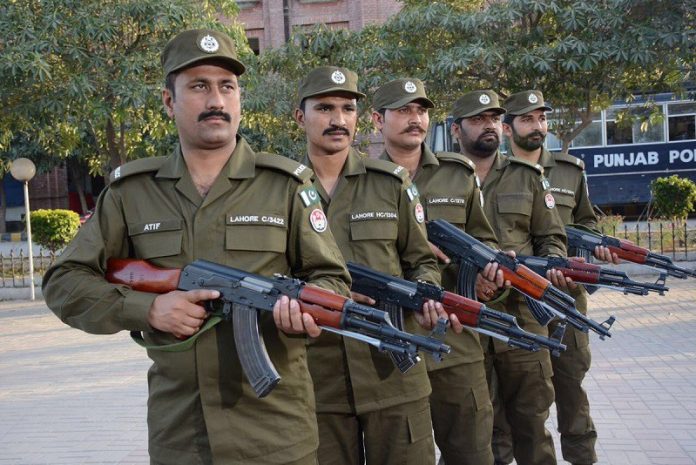
RAWALPINDI, Jul 23 (APP): Over 6000 cops have been deployed to guard 447 processions and 1925 Majalis of Rawalpindi district, said City Police Officer (CPO), Rawalpindi Syed Khalid Hamdani.
He informed that Rawalpindi District Police had finalized all the arrangements to ensure foolproof security arrangements for Muharram ul Haram.

The CPO said that over 6000 Police personnel were performing security duties while more than 1000 officers and personnel of traffic Police were also deployed to ensure traffic arrangements.
He informed that special security arrangements had also been made for 40 sensitive processions of the district.

The officers of district police, ladies police, Elite Force, Traffic Police and Dolphin Force would perform their duties while over 5000 volunteers would also be on security duty during Muharram.
The CPO informed that SSPs and Divisional SPs while reviewing routes of the processions were ensuring foolproof security arrangements. Special briefing sessions were also being organized for police personnel.

Before the start of the holy month, ‘Aman Carvan’ of police and leading scholars met with local scholars and administration in Taxila, Murree, Kahuta, Gujar Khan and Rawalpindi to ensure law and order during Muharram, he added.
Ban on display of weapons and use of loudspeakers would be implemented strictly, he said.

Rawalpindi Police control room was monitoring law and order situation 24/7 and special snipers would be deployed on the rooftop at the route of the processions, he said adding, no one would be allowed to join the processions and Majalis without body search.

All streets and link roads on the route of the Muharram processions would be sealed.
Special arrangements had also been made to monitor social media and strict action would be taken against those who post and spread religious and communal hatred.

He further said, Rawalpindi Police were utilizing all available resources to ensure foolproof security during Muharram.
The CPO said that the best possible arrangements were being made to ensure law and order and unity during Muharram with the help and cooperation of Ulemas, District Peace Committee and Anjuman-e-Tajran.

He informed that entry of 36 scholars had been banned in Rawalpindi district while speech of 26 others had also been banned and 51 persons were included in the 4th schedule.

Heavy rains in KP resulted death of four persons, another one injured

0

PESHAWAR, Jul 23 (APP): Heavy rains all across Khyber Pakhtunkhwa resulted in the death of four people while one person was injured, a report issued by Provincial Disaster Management said here Sunday.

According to reports so far, 67 houses were partially damaged and 7 houses were completely damaged due to floods and rains across the province with 39 houses in Lower Chitral while 19 in Upper Chitral were partially damaged due to flood.

On the instructions of the Relief Department, District Administration, PDMA, Rescue 1122, Civil Defence, and related institutions are on alert, a spokesman of the Relief Department said here.

Relief materials were provided to the affected families of Chitral Upper and a detailed assessment of the damage will be started as soon as the flood waters recede in Lower Chitral, spokesman of the Relief Department added.

Sensitive communities in Chitral Lower had already been shifted to safer places with food items (dry ration) being provided to the affected families and Dir Lower road has been cleared for traffic by the district administration.

The district administration mobilized heavy machinery for the speedy restoration of the roads and the road has been cleared for traffic at Koghuzi, the spokesman said. A one-way road has been opened by the district administration of Dir Upper.

The two-way rehabilitation of the road is in progress, he informed.
PDMA had issued a letter to all concerned institutions and district administration besides giving on-the-spot instructions to take precautionary measures regarding rains, flash floods, urban flooding, and flooding in rivers.

The Rescue 1122, Monsoon Mock Exercises, Preparation and Training in progress with Rescue 1122 is conducting evacuation training in boats to deal with the possible flood situation in monsoon, said Dr. Khateer Ahmed, Director General of Rescue 1122.

Rescue 1122 presented a practical model of exercises in the Kabul River in Nowshera, Dr. Khateer Ahmed said. People trapped in the Kabul River were also rescued by boats, the official of Rescue 1122 said.

DG 1122 said that Rescue 1122 also conducted a search by scuba diving and that Rescue 1122 is providing training to security agencies, civil defense, schools and colleges, and local people within the resources available across the province.