Home Blog Page 13642

PM Shehbaz Sharif leadership saves Pakistan from default : FTO Coordinator

0

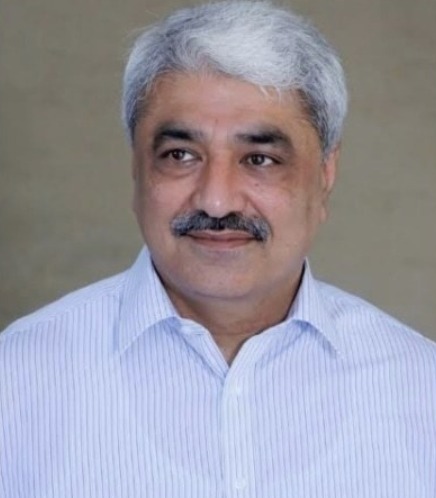
ISLAMABAD, Jul 16 (APP):Coordinator to Federal Tax Ombudsman (FTO) Meher Kashif Younis on Sunday said that Prime Minister Shehbaz Sharif’s leadership and decisive actions deserve commendation for successfully averting an imminent default by securing a substantial $3 billion International Monetary Fund (IMF) bailout package for Pakistan.

Talking to a delegation of industrialists led by Faran Shahid, he said premier’s dedication and strategic approach have put the country on the path towards achieving sustainable economic stability, said a press release issued here.

He said he would also like to recognize the efforts of Federal Finance Minister Ishaq Dar for his unwavering commitment to pursuing prudent economic policies.

“Through his astute decision-making and financial expertise, he has contributed significantly to the economic progress of Pakistan. His ability to navigate complex financial challenges and implement sound policies has been instrumental in fostering a favorable economic environment for the country”, he added.

He said both Prime Minister Shehbaz Sharif and Finance Minister Ishaq Dar have demonstrated their strong leadership and dedication to the well-being of Pakistan’s economy.

Their achievements in securing the IMF bailout package and implementing prudent economic policies have laid a solid foundation for sustainable growth and prosperity in the country,he adddd.

Meher Kashif Younis said now the confidence of foreign and local investors will be restored and inflow of foreign direct investment will also sail smoothly.

He said entire business community pinned high hopes that their all genuine grievance will be addressed to help ease of doing business with peace of mind.

He called for result oriented economic reforms and restructuring taxation system to accelerate the pace of economic activities across the country.

He said manufacturing industry, construction industry, steel sector and agro based industry needs special attention to boost exports besides meeting local demand.

He said “ Whole Business Community” have no words for exceptional services of Governor Punjab Eng Muhammad Baligh Ur Rehman for all the time help solving their problems on top priority and we are proud of Governor who is delivering to best of his ability,vision and wisdom.

Need stressed to unlock potential of regional economic cooperation: Iftikhar Malik

0

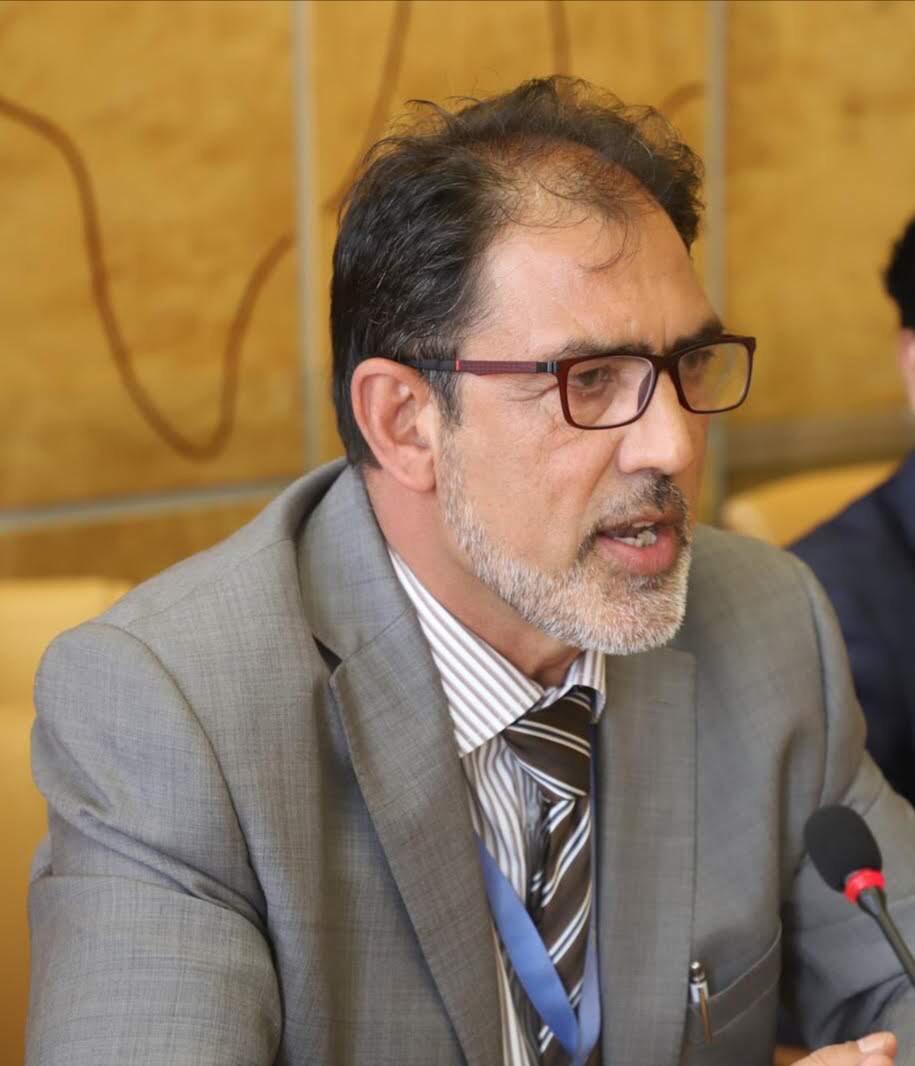
ISLAMABAD, Jul 16 (APP):SAARC Chambers of Commerce and Industry’s former President Iftikhar Ali Malik on Sunday stressed the urgent need of unlocking the potential of regional economic cooperation and integration to boost trade among SAARC member countries, especially with Afghanistan at this critical juncture.

Talking to a delegation of traders led by Muslim Khan Buneri, he said inter-regional trade in South Asia is less than one-third of its potential which indicates 67 percent of trade is not being fully exploited, said. News release.

He said the role of Afghanistan as a connector and as a land bridge between Central Asia, the Middle East and South Asia needs to be reviewed in the prevailing scenario to primarily focus on the promotion of trade and investment.

He said even today, Afghanistan is seen as a viable doorway to South Asian countries for direct access to oil and gas from the republics of Tajikistan, Turkmenistan, Kyrgyzstan, Uzbekistan and others.

He said better trade ties will help promote economic growth and to do away with abject poverty in the region especially in Afghanistan thus enhancing its cross-border and transit trade with neighbouring countries.

He said poor trade facilitation at borders and the prevalence of a variety of non-tariff barriers are major hurdles in further enhancing mutual trade manifolds with Afghanistan.

Iftikhar Ali Malik said at the moment what we need is total up gradation and strengthening of existing facilitation, handling and clearance of transport and trade at the Pak-Afghan land borders besides consolidation of initiatives taken by the new regime of Taliban.

He said Pakistan after Iran and China is the third largest trading partner of Afghanistan which exports cement, pharmaceuticals products, sulphur, stone, plaster, peel of citrus fruit, melon, vegetable fats, edible fruits and oil etc.

He said Afghanistan’s main exports are carpets and rugs 45 percent of the total exports dried fruits constitute 31 per cent, and medicinal plants 12 per cent.

He said the main export partner is Pakistan 48 percent, India 19 percent and Russia 9 percent other including Iran, Iraq and Turkey.

Tourists urged to follow traffic rules in Murree

0

RAWALPINDI, Jul 16 (APP):The tourists visiting Murree have been urged to strictly abide by the traffic rules to avoid traffic congestion and road mishaps at the hill station.

According to a City Traffic Police (CTP) spokesperson, the department had finalised all the arrangements for the summer season to ensure the security of the visitors.

He informed that the Rawalpindi City Traffic Officer Taimoor Khan had requested the tourists to observe traffic rules on the roads of Murree to avoid traffic mess and any untoward incidents during the summer season.

Special teams had been formed to facilitate the tourists and resolve their problems if any in Murree, he said adding that parking vehicles outside parking areas was prohibited.

“There was a complete ban on illegal parking on the roads in Murree particularly at exit and entry points besides restrictions on cooking at the roadside.”

The spokesperson informed that single and double parking was not being allowed on roads except at designated parking places.

Motorcyclists without safety helmets were not being allowed to enter Murree, he added.

Several roads including Bank Road, GPO Chowk to Kashmir Point, Hall Road, Lalazar to Kashmir Point, View Fourth Road, View Fourth Road to GPO Chowk, Guldana Road, GPO Chowk to Guldana Chowk, Dilkusha Road, Imtiaz Shaheed Road to Lari Adda via Dilkusha Hotel, Cecil Road, Imtiaz Shaheed Road to Cart Road via Cecil Apartments, and Pindi Point had been declared one-way roads to facilitate the motorists, he said.

According to a district administration spokesperson, a main control room had been set up at Jinnah Hall to monitor the provision of facilities to tourists.

He urged the tourists to cooperate with traffic police so that the traffic mess could be avoided.

Motorists should avoid wrong parking on roads which would help ensure the smooth flow of traffic, he said.
The beautiful climate of Murree during summer attracts a large number of tourists so motorists face severe traffic congestion, he said adding that traffic moves even slower due to heavy traffic load.

He said the DC had advised the tourists to avoid wrong parking, speeding, and taking selfies in the middle of the roads.

The spokesperson informed that foolproof security was being provided to the tourists in Murree.
He said all the security and traffic arrangements had been finalised to facilitate the tourists during the summer season.

Misery deepens for Sudanese civilians, as conflict hits 3-month mark, UN relief chief says

0
Misery deepens for Sudanese civilians, as conflict hits 3-month mark, UN relief chief says

UNITED NATIONS, Jul 16 (APP):The U.N. top humanitarian official has called on warring factions in Sudan to respect international law, protect civilians, and stop targeting relief and aid workers, as the conflict reached its three-month mark.

“For three months now, the people of Sudan have endured unspeakable suffering amid violence that is tearing their country apart,” Martin Griffiths, UN Under-Secretary-General for Humanitarian Affairs and Emergency Relief Coordinator, said in a statement released on Saturday.

“As the conflict enters its fourth month, the battle lines are hardening, making it ever more difficult to reach the millions of people who need urgent humanitarian assistance,” he added.

More than 3 million people have been displaced due to the conflict both within Sudan and across its borders; the fighting, which broke out in mid-April has reportedly claimed the lives of more than 1,100 people and injured over 12,000, according to the UN Office for Coordination of Humanitarian Affairs (OCHA).

Health workers and facilities have also been attacked, severely limiting access for those in need, and with the onset of the rainy season, there is an increased risk of outbreaks of water- and vector-borne diseases, compounded by challenges in waste management and shortages of supplies.

Children are among the worst affected, with an estimated 13.6 million – roughly half the number remaining in Sudan – in urgent need of assistance.

Describing Sudan as “one of the world’s most difficult places for humanitarian workers to operate,” Griffiths emphasized the collaborative efforts of local organizations and international aid groups in delivering life-saving supplies.

However, that work cannot be carried out when relief workers themselves, are at risk.

“But we cannot work under the barrel of a gun. We cannot replenish stores of food, water and medicine if brazen looting of these stocks continues. We cannot deliver if our staff are prevented from reaching people in need.”

He underlined that ultimately, the suffering of Sudanese people will end only when the fighting stops, and called on the parties to the conflict to abide by the Declaration of Commitments they signed in Jeddah to protect civilians and respect international humanitarian law.

Each day the fighting continues, the misery deepens for Sudanese civilians

Drawing attention to the recent discovery of mass graves in West Darfur, Mr. Griffiths highlighted the fear of resurgence of ethnic killings in the region.

“Each day the fighting continues, the misery deepens for Sudanese civilians […] We must all redouble our efforts to ensure that the conflict in Sudan does not spiral into a brutal and interminable civil war with grave consequences for the region,” the UN official stressed.

“The people of Sudan cannot afford to wait,” he added.

APP/ift

Rwp Safe City Project to prove highly effective in combating crime: Secretary HUDP

0
Rwp Safe City Project to prove highly effective in combating crime: Secretary HUDP

RAWALPINDI, Jul 16 (APP):Secretary, Housing and Urban Development Punjab, (HUDP) Sajid Zafar Dall has said that Safe City Project would prove to be highly effective in combating crime in Rawalpindi City.

According to a district administration spokesman, the secretary along with Commissioner Rawalpindi Division Liaquat Ali Chatta and Regional Police Officer (RPO) Rawalpindi Syed Khurram Ali here the other day visited different city areas including Kutchery Chowk, Peshawar Road, IGP Road, Pirwadhai and Liaquat Bagh and reviewed Safe City project.

The Secretary was briefed that the security situation of Rawalpindi city would be improved further through Safe City project.

The project would increase the sense of security among the citizens, he added.

The use of technology to improve security had become indispensable, the Commissioner said adding, the Safe City project was being launched in Rawalpindi and Murree.

The project would improve the law and order situation as it was a project to ensure public safety, the Commissioner said.
The administration was fully mobilized regarding the Safe City project and all available resources would be utilized for the safety and protection of the citizens, the Commissioner added.

PM to distribute cheques among youth under PM’s Youth Business and Agriculture Loan Scheme today: Marriyum

0

ISLAMABAD, Jul 16 (APP):Minister for Information and Broadcasting Marriyum Aurangzeb said on Sunday that Prime Minister Muhammad Shehbaz Sharif will distribute cheques among the successful youth under the Prime Minister’s Youth Business and Agriculture Loan Scheme in Lahore today (Sunday).

In a tweet, the minister said that Prime Minister’s Youth Business and Agriculture Loan Scheme would ensure the provision of low-interest loans on easy terms to talented youth to start their own businesses.

The minister said that a special quota had been allocated for women in the scheme to empower them.

Quality storage must to avert wheat losses

0

LAHORE, Jul 16 (APP):Being the fifth largest populated country with a population growth rate of around two per cent, Pakistan would be experiencing food security issues in coming decades as experts predict its populace to almost double within the next 30 years if continues to grow at its existing pace.

This situation needs serious consideration for enhancing agricultural produce by introducing modern techniques and bringing more land under cultivation besides ensuring proper storage of edibles and smooth supply to consumers at affordable rates.

A multi-pronged strategy based on short and long-term measures was direly needed to achieve food sufficiency goals with a prime focus on enhancing agricultural produce as well as grain procurement and their proper storage to avoid wastage.

Since wheat is a main staple food for our people with a per capita consumption of around 125kg annually, its cultivation on vast tracts of land with enhanced productivity and procurement had become imperative to feed the people at a bearable cost.

Wheat productivity has stagnated in recent years, with only a 10 per cent increase since the last decade. However, by achieving the 16.48 million acre wheat cultivation target in Punjab in 2022-23, the crop topped 27.5 million metric tons, the highest in the last 10 years.

Although increased yield is equally important, yet keeping in view the challenges of climatic changes, heavy rains and floods as happened last year, post-harvest management is more a resource-efficient way to improve food availability without additional agricultural inputs.

The wheat supply chain in the country is another important factor and can be safeguarded by an increase in average production as well as reducing post-harvest losses. Currently, the average yield of wheat is around three tonnes per hectare, substantially lower when compared to other countries.

“Wheat harvesting losses in our country are about 10-20pc because of an outdated mode of farming that cost us the loss of around two million tone wheat,” remarked Focal Person at the University of Agriculture, Faisalabad Irfan Afzan. “Combine wheat harvester is one of the factors and it is direly needed that Engineering Development Board provides registration and fitness certificates to these harvesters.”

Moreover, he noted that additional 10-15 per cent losses occur post-harvesting due to improper storage at granaries or storing crops in the open along with abstemious rainfall during monsoon season and subsequent flooding. “Therefore, around 50-60 per cent wheat is marketed as farmers hold the remaining for their own consumption.”

Irfan Afzan suggested, there is vast scope to reduce on-farm and off-farm losses through improved harvesting, bulk handling and storage in modern silos. “Construction and up gradation of storehouses are essential to minimize storage losses.”

He said elevated relative humidity, exacerbated by subsequent high temperatures during storage practices, is the primary catalyst for grain degradation, particularly in seeds.

According to experts wheat seed requires about 12 per cent moisture content and 65 per cent relative humidity for safe storage. The seed moisture content of greater than 14pc promotes mould attack resulting in aflatoxin contamination of stored products.

“Presence of aflatoxin in grain poses a major risk for humans, especially children, as it can have immunosuppressive, mutagenic and carcinogenic effects,” they believe.

Also arguing about measures to enhance yield, these experts recommend investment in research, use of efficient machinery for sowing, harvesting and threshing, use of certified seed and timely application of irrigation and balanced fertilizer.

“Sowing of recommended seed cultivars in a particular region is crucial because only that cultivar can produce optimum yield, keeping in view the elements of climate,” they pleaded.

Climatic shifts in Pakistani terrain have led agricultural think tanks to introduce cost-effective improved storage facilities in the form of hermetic bags and mini-hermetic drums, usually termed ‘Anaji drum’ developed by the University of Agriculture, Faisalabad (UAF).

One hermetic bag is sufficient to preserve the quality of 50kg wheat seed for one acre of land during seasonal storage. While the Anaji drum can store 3 to 4 maunds of wheat grains without fumigation and two drums are sufficient for five family members to utilize wheat grains for a year.

Hermetic storage prevents both moisture and oxygen as these enhanced storage technologies demonstrate cost-effectiveness and safeguard from climatic effects.

At harvest time, hermetic bags and drums were distributed among the farmers of flood-affected areas to preserve their seeds for the next growing season as this technology is already practiced in more than 80 countries.

This low-cost technology enables farmers to preserve seed and food commodities throughout the season without insect infestation.

According to Punjab Food Department, five types of storage are used for the preservation of wheat including house-type, steel silos, concrete silos, bins and open silos with the best among is steel silos which are used nowadays.

Now whatever be the claims of the government departments and the opinions of the experts, food security is a serious issue especially when we talk of post-harvest wastage of grains.

Therefore, the governments and allied departments must take it seriously by not only ensuring better inputs but also proper procurement and storage of crops to meet the daily needs of people and avert shortage of the most needed food grains.

Saving poor from cruel clutches of illegal profiteers

0

FAISALABAD, Jul 16 (APP):Weaker administration and poor enforcement of pricing mechanisms in any society leave wide space for illegal profiteers to fleece poor people of their hard-earned money thus widening the gap between the rich and the poor.
Especially when there is a volatile economic situation as we are passing through, the profiteering mafias become active to benefit from supply and demand gaps making the middle and lower middle class to suffer massively.
In such a situation, the poverty-stricken people are left with no option but to force the purchase of daily-use items at high rates particularly when their price-controlling authorities are inefficient.
This is also more than apathy that in agri-based countries like Pakistan, essential edibles are sold at desired rates by hoarders, wholesales and retailers only because the district administration falls short of dispensing its duties.
In many areas across the country especially small cities and towns, shopkeepers do not display rate lists and charge as per their will to utter neglect of the administration that enjoys a luxury life on taxpayers’ money but seldom secures their interests.
“It is really unbearable to come across enhanced prices of commodities even within days,” said Akram Khan, a retired employee of the Agricultural Department. “How come prices are raised so frequently when we indigenously produce many of the edibles.”
He mentioned milk, wheat, sugar, rice and a number of fruits produced locally and said, “not having a check on prices of these commodities apparently means weaker prices controlling mechanism and lethargy and inefficiency on part of the administration.”
Akram said last year he used to purchase milk at Rs 80 to 100 per litre which is now available at Rs 150 to 180. “Is it a commodity imported from abroad or has a dollar exchange rate effect? Do we import fodder or cattle feed items from abroad? If not, then why the milkmen are left free to charge as per their will.”
He said then there are quality issues as most milkmen and dairy farmers adulterate milk with unhealthy water as well as use other ingredients to produce substandard milk.
He also took exception of flour, sugar and rice prices – all indigenously produced commodities and said, “Is there anyone to check their prices? Will the Baboos exchanging pleasantries in air-conditioned rooms think of the heat a laborer bears to earn a few hundred rupees – of course not.”
Muhammad Ejaz Khan, an employee of a local industrial unit said although the government has fixed rates of daily use items yet the district administration fails to get implemented.”
“People are forced to purchase mutton at Rs 1600 to 2000 and beef from Rs 800 to 900 despite that the administration has fixed price for mutton at Rs.1300 to 1400 per kg and beef at Rs.650 to 700 per kg,” he said.
“And when I asked about the rate list of challenged the butchers to complain, they smiled saying complain wherever you desire, we shall sell on the same price,” Ejaz added. “I was helpless to listen to these bold assertions because we lacked proper implementation of the pricing mechanism.”
Then there is a strong nexus of hoarders and commission agents who create an artificial shortage of daily use items to charge desired rates.
“I am a vegetable grower. But when I approach the fruit and vegetable market to sell my products, the commission agents and market committees mafia force small growers like me to sell products at a lower rate,” said Usman Ali.
“Then there is another problem as if the growers refuse to sell their commodities at a lower rate, there is no space to store their perishable items and knowing this fact well, they are exploited by commission and market committees’ mafia,” he said.
He demanded the top government functionaries to push district administration to diligently do their duty and save the poor growers and buyers from exploitation by mafias.
The growers and consumers have also demanded strict implementation of consumer rights and price control laws and bring the violators within the traders’ community as well as functionaries of the government departments to book across the board.
Commenting on the situation, Asghar Ali, a spokesperson of local administration mentioned to a number of steps taken to bridle artificial price hikes. “The administration has activated price control magistrates besides fixing prices of daily use items and issuing daily rate lists.”
He said these magistrates pay surprise visits to mega stores, grocery and retail shops and inspect 35000 to 40000 shops per month in Faisalabad city. “The government has launched ‘Qeemat App’ for consumers to file their complaints regarding overcharging and profiteering.”
“Deputy Commissioner Faisalabad, Ali Anan Qamar, has directed Price Control Magistrates to improve their performance and conduct frequent visits to curb profiteering and overcharging,” he claimed.
However, his claims seem like old stereotyped rhetoric as our ears listened to them for decades but to no gain as profiteering mafias freely plunder the poor consumers and small growers.
Even if the claims of administration are accepted for a while, then why an impact on prices could not be seen in markets – is a question boggling the mind of every consumer whose interests are the last thing to be protected in our society.

APP/iah/maz (APP Feature Service)

Water scarcity – another cartel in the making

0
Water scarcity - another cartel in the making

ISLAMABAD, Jul 16 (APP):The growing population and subsequent growth of residential settlement had put the capital’s natural resources under severe stress with its wetlands, cleaner environment and water resource depleting gradually.

Once known for its serene evenings, open spaces, less congested population areas and healthy lifestyle, Islamabad in recent years, has gone through several transformations from road infrastructure to taller buildings and a large number of private housing societies developed in the suburbs.

Due to the ill planning of the city masters, the Islamabad Capital Territory witnessed a massive population influx during the last two decades or so showing a 150 percent increase in its populace during the period 2008-2018.

This phenomenon not only polluted Capital’s air and natural clean water streams but also exerted extreme pressure on groundwater with its table gone down from 80 to 100 feet two decades back to 250 to 300 feet presently.

As residents come across severe water shortages during summer, they are compelled to buy water from private operators through water tankers and these operators are now emerging as a cartel fleecing the citizens in the name of water provision in the absence of any declared tankers rates mechanism.

“It is an apathy that we regularly pay water bills to our societies but they fail to meet our water needs. Therefore, we have to buy it from tanker owners who charge us as per their desire,” said Adil Mahmood, a resident of Doctor’s Town.

“We fail to understand why the authorities do not gauge this situation while according to approval to the owners for developing a housing society,” he said. “It is unjust that on one side they charge for routine water supply and on the other sell us water in tankers.”

The tube wells installed to pump out groundwater are often choked due to depleting water tables leaving the residents particularly in summer leaving at the mercy of the water tanker mafia who charge Rs 2000 to 4000 for each tanker and sometimes more if water is required urgently.

Although the housing societies also provide cheaper water tankers yet they take 24 to 48 hours to reach one’s residence.

“Forget about society water tankers as they will arrive when you don’t need them anymore,” said Irshad Ahmed, a resident of the PWD colony.

“The management of these societies should seriously think about a mechanism for water supply otherwise the situation would worsen with each passing year.”

Many housing societies developed along Islamabad Expressway to cater for the needs of the populace migrating to the capital from other cities are facing serious challenges of water supply.

“We regularly supply water to our residents. Daily the water channels are opened in all sectors for a specific time,” said an official of the Pakistan Town Housing Society.

“But, since underground water resource is depleting, water supply could not be ensured for the whole day. Therefore, the residents have to use it prudently instead of wasting it in cars and floor washing,” he said.

He said even during summer when water consumption increases, “we try to meet the needs of our residents. As far as delay in tankers supply, it occurs only when demand rises.”

He further informed that at the time of developing society, the provision of all amenities is assessed as per the number of plots and future houses to be constructed.

“But, once houses are constructed on all plots, almost 70 to 80 percent of owners rent out a portion of their houses meaning thereby that it doubles the number of families. This tendency exerts extra pressure on the amenities provision system.”

There are multiple characters in this story. The District administration issues permission for hiring land to pump out water, and the owners install pumping stations and sell water to tanker owners who ferry it to residents. But what is lacking in this whole process is the pricing mechanism.

“We earn a nominal profit as we have to pay for water to the pumping station owner and for fuel and repair of our vehicles. If the fuel, vehicle parts and water price would increase, we would be helpless to charge more,” said Zahid Mahmood, a tanker owner.

“Blaming us as an emerging cartel is unjust. Why we are into this business only because that societies and city managers fell short of meeting residents’ water needs,” he said. “As far as rate is concerned, it is market-based as if prices of all commodities will go up, so would the price of water.”

The water pumping station owners have their own argument for increasing prices in view of rising power and fuel prices as well as every year’s revision of land rent.

Now whatever the arguments of the parties, the situation demands from the city masters to devise a comprehensive strategy for meeting the future water needs of the Islamabad Capital Territory residents.

If the water resource continues to deplete at the present pace, the days are not far off that capital residents are made to face a Karachi-like situation.

Therefore, the residents have demanded to ensure that in future no housing society is issued NoC until it submits alternate water provision plans like the construction of reservoirs and rainwater harvesting instead of pumping out more and more water.

Pakistan seeks Chinese investment to upgrade agriculture, IT, mining, housing sectors: Ahsan Iqbal

0
Pakistan seeks Chinese investment to upgrade agriculture, IT, mining, housing sectors: Ahsan Iqbal

BEIJING, July 16 (APP):Federal Minister for Planning, Development, and Special Initiatives, Prof. Ahsan Iqbal has said that Special Economic Zones (SEZs) will provide an opportunity for Chinese investments to take advantage of incentives that Pakistan offers to foreign investment with concessions.

“We are working on nine special economic zones.

The first Rashakai Special Economic Zone will be inaugurated later this month. Similarly, the other economic zones are also in the advanced stages, in Sindh, Punjab, and Baluchistan,” he told APP during his recent visit to China.

Pakistan, he said, also has a great advantage in low cost of labour. As in China, many industries are experiencing high costs of production due to increased levels of cost and are now moving to Vietnam, Cambodia and Laos. Pakistan also has a great advantage in terms of low cost of production.

The minister said, Pakistan has a very good infrastructure and then it has the China-Pakistan Economic Corridor (CPEC) framework. So, it becomes a very attractive destination for Chinese enterprises to relocate to these economic zones in Pakistan.

About specific Chinese companies who are looking forward to cooperating in this regard, he said, there are many Chinese companies which are coming. Many have invested in Gwadar free zone.

“But, we are now really looking forward to developing our agriculture sector based on new technologies. We are seeking cooperation to upgrade the quality of our seeds so those companies which have research and seed development can help us,” he added.

Ahsan Iqbal said Pakistan is also looking for new irrigation technologies to conserve water and bring efficiency to agriculture, adding, “We are also looking for a food processing industry that has a great opportunity.”

Regarding great opportunity in the mining sector, he said, Pakistan has huge marble deposits, which can be tapped with new technology and similarly, Pakistan has other mines like lithium and other material which is used in electric vehicles. “So, we can develop that.

He said Pakistan is also looking for joint cooperation and technology, particularly information technology. Pakistan has a young population with very good IT skills.

“Many Chinese technology companies are shifting to Pakistan to take advantage of the low cost of human resources and high skills that our young population has. So, I think agriculture, industry, mining, IT, energy sector all these areas are very promising for Chinese enterprises to invest in Pakistan,” he added.

The minister said big Chinese real estate companies can come and invest in the housing sector and added, “We have a huge shortage of housing so they can come and address urban housing issues with investments. We are offering very attractive terms for public-private partnership.”

Responding to a question about the security of CPEC projects, he said, the government of Pakistan is taking extra precautions for the security of the Chinese. We have provided four layers of security to CPEC projects. But, the CPEC is a very strategic project, and the enemies of China and Pakistan don’t want to see it succeed.

Therefore, it is very important that both Pakistan and China show their strong desire that they will not be deterred and they will not be stopped by any unpleasant incident, he added.

He stressed the need to work together and the only way to defeat such evil designs is to be not stopped by any unpleasant incident.

About the kind of measures that have been taken to protect the Chinese enterprise, he said, a special force of 10,000 personnel has been created which is totally dedicated to the security of CPEC projects.

“And, then we have integrated this force with our police, para-military forces and local security. These security personnel are deployed to provide the highest level of security,” he added.

To a question, he said, all the negative propaganda against CPEC has a political element and it has no reality. CPEC has actually done great service to Pakistan by helping it overcome the energy crisis, develop modern infrastructure and restore the country’s image as an investment destination.

After China invested $25 billion of investment in different projects under the CPEC framework, everyone started looking at Pakistan as an investment destination. Actually, CPEC became a global brand for Pakistan, he added.

Sharing his personal feelings about the CPEC project, he said, the beauty of CPEC is that this project was between those two countries, which enjoy a very unique relationship.

Normally countries come close when they need and they get farther away when they don’t need each other. But, in China and Pakistan’s case, it has been always spring. There has never been autumn in this relationship.

He said the relationship between Pakistan and China is based on mutual trust and iron brotherhood which makes CPEC also very unique. The leaders and officials from both countries worked with full devotion and passion to make it successful.

“I think, it is that passion that enabled us to achieve so much and just in 10 years,” he added.