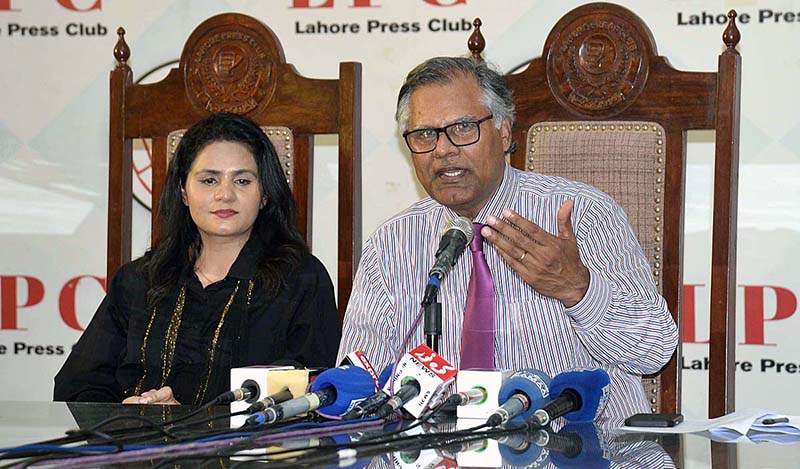
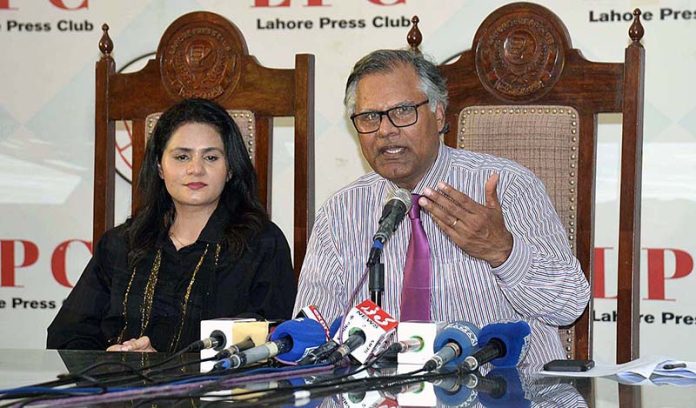
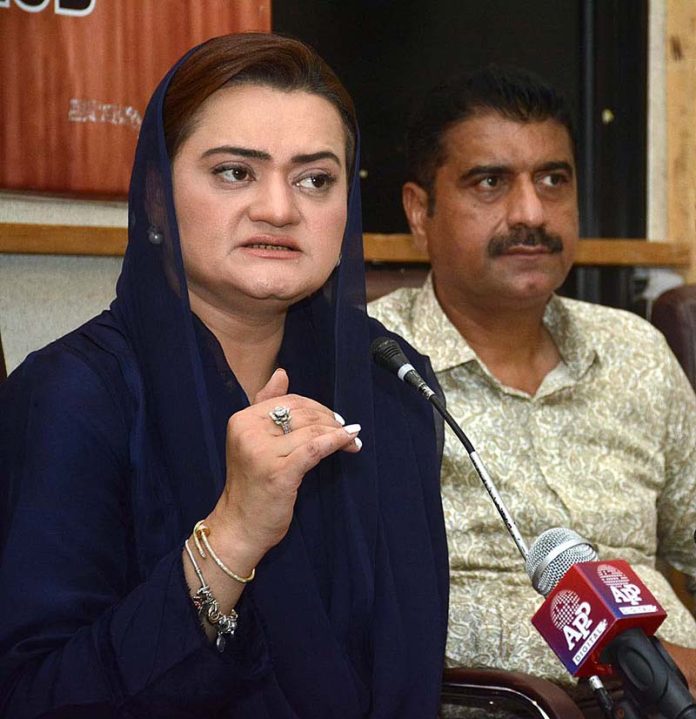
Head of corporate and governance Macquarie University Sydney, Australia, Dr. Rahat Munir along with Senior Country Manager (South Asia and Middle East) • Macquarie University Rumla Tahir told the future educational scholorship plans at the press club
Pakistan to achieve just, clean energy transition for future generations: Musadik
ISLAMABAD, Aug 06 (APP): “Pakistan will not just talk green but will achieve a just and clean energy transition; with or without rest of world for our future generations”, said Dr Musadik Malik, Minister of State for Petroleum Division here on Sunday.
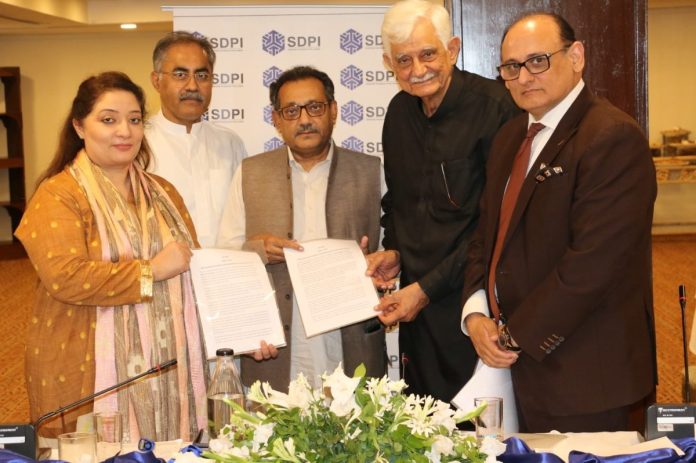
He was speaking at parliamentary consultation titled “ Towards a Sustainable Future: Inclusion of Just Energy Transition and Climate Action in Election Manifestos 2023”, jointly organized by Sustainable Development Policy Institute (SDPI) and Parliamentary Taskforce on SDGs, a news release said.
The State Minister said that Russia-Ukraine crisis caused un-proportional energy inflation for the developing countries, thwarting the clean energy transition and access.
Therefore, it is imperative that just and clean energy transition be supported with finance mobilization for developing countries to enable technology transfer and indigenous development, he said and stressed that accountability for clean energy transition should be extended equally across the table and not just on developing countries.
Dr. Musadik emphasized that Petroleum companies in Pakistan including Oil and Gas Development Company Limited (OGDCL), Pakistan Petroleum Limited (PPL), Pakistan State Oil (PSO) had been urged to transition into energy companies and were looking to invest in renewable energy.
Romina Khurshid Alam, Special Assistant to Prime Minister, emphasized that prioritizing climate action and renewable energy while designing party manifestos can exhibit the commitment to tackling climate change and can strengthen Pakistan’s position in international climate finance partnerships.
Clean energy solutions, just energy transition and climate action in election manifestos are not only crucial in addressing the climate crisis but demonstrate commitment to deliver social justice, economic growth and global leadership, she said. She also proposed a resolution to phase out fossil fuel in collaboration with SDPI.
Senator Taj Haider emphasized on addressing the policy inconsistency in energy sector of Pakistan to ensure a rapid off take of RE in Pakistan. He said that 3000MW electricity was generated from wind and solar at Jhimpir but poor transition infrastructure hindered supply to other areas and these issues were impeding foreign investor interest in wind and solar power plants.
He informed that the Senate had unanimously passed a resolution proposing that industrial areas must be equipped with solar parks. He further said that 50,000 houses had been reconstructed, 200,000 houses had been solarized and out of the 2000 700 reverse osmosis plants were solarized in Sindh after 2020 floods. He urged for improving transmission infrastructure and installing local grid systems to improve energy access in impoverished areas.
Dr Shafqat Munir, Deputy Executive Director, SDPI said that energy, water and agriculture were crucial contemporary issues exacerbated by climate change and SDPI was keen to support policymakers in developing policies for mitigation action and boosting the clean energy transition.
He also presented a motion urging the Parliament to address the action gap to ensure the smooth energy transition in favor of renewable energy sources, by advocating the establishment of “International Treaty to phase out fossil fuels”.
Dr Khalid Waleed, Research Fellow, SDPI, presented “Agenda for Energy Sector Reforms” which are structured around five key areas; Transition to Renewable Energy, Economic Recovery of Energy Sector, Electrification and Decarbonization of End-Use sectors, Rural Electrification, and Increased focus on Demand side management.
Dr Sebastian Paust, Head of Development Cooperation, German Embassy in Pakistan, stressed that Pakistan must couple international energy financing with indigenous funds mobilization to ensure clean energy transition is resilient to external shocks.
He stressed on simplifying regulatory frameworks and import polices for renewable energy to bolster investor trust, mobilize private finance, and develop indigenous production capacity through foreign direct investment partnerships.
Syed Aqeel Jafri, Director Policy at Alternative Energy Development Board, stressed on revamping transmission infrastructure, supporting indigenous manufacturing landscape of renewable energy technologies and active engagement by incentivizing private sector.
Badar Alam, Chief Executive Officer, Policy Research Institute for Equitable Development (PRIED) stressed that renewable energy policies must ensure climate and social justice by prioritizing the marginalized communities as an essential component of the just energy transition.
Asad Mahmood urged for anchoring production of renewable energy in industrial areas and installing renewable energy powered equipment in industries through legislative instruments and empowering local communities to run off-grid energy projects to promote energy access.
Dr Hassan Daud, Research Fellow, SDPI expressed that although public finances alone are insufficient, mobilizing indigenous finances and addressing regulatory framework gaps can fast-track the clean energy transition and build a strong business case to reinvigorate investor interest and trust.
The parliamentary consultation was also attended by senior experts from academia, CSOs, finance sector, development partners and diplomatic missions.
AJK Assembly strongly rejects abrogation of Article 370 by Indian govt
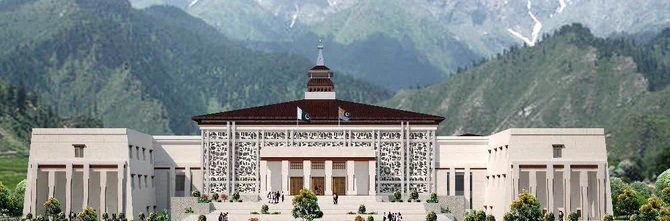
MIRPUR AJK, Aug 06 (APP): The Azad Jammu and Kashmir Legislative Assembly (AJK LA) in its meeting held here on Sunday, strongly rejected the abrogation of Article 370 by Indian government and termed it a dirty conspiracy against the state subjects and their democratic rights. They termed the sinister actions as an atrocious assault to alter the region’s demographics and erode Muslim majority Kashmir’s ancient political, cultural and religious identity.
According to details, the legislative body through a unanimously adopted resolution, presented by Leader of the House Prime Minister Chaudhry Anwar ul Haq on Saturday denounced the Indian move and termed it as a flagrant violation of the UNSC resolutions.
While presenting the resolution in the assembly, the AJK PM said that 5th August was another darkest day in the history of Kashmir.
He said that being a representative forum of the entire state of Jammu and Kashmir, the AJK legislative assembly represents the sentiments and feelings of the Kashmiri’s living on both sides of the Line of Control.
The august House, he said, rejects the India’s attempted annexation of the held territory of Jammu and Kashmir and considers all its actions as illegal and against the spirit of the UN resolutions and international law.
“The House considers changing the status of IIOJK and dividing it into two Union Territories as an attempt to push forward Hindutva agenda in the region and erode identity of Kashmiri’s.
The resolution condemned the India’s cultural aggression and distortion of the Kashmir’s history and its civilization.
He said that this house condemns in strong terms the Indian bid to reduce Kashmiri’s role in political decision making process, depriving them of the right to due representation through illegal, unjust and unconstitutional delimitation process.
The house, he said, was concerned about the illegal settlement of non-Kashmiris in IIOJK by India and issuing fake domicile certificates to non-state subjects during the last four years.
The PM said that this representative forum (AJK assembly) considers all these measures as a violation of the Kashmiri’s fundamental human rights and a conspiracy to render Kashmiri’s landless in their own homeland.
He said that over the past 34 years, 96225 civilians have been martyred, 22960 women widowed and 1, 07,923 children orphaned.
He pointed out that more than 8 thousand mass graves were discovered in IOK.
He said that 11259 women were humiliated whereas the number of half widows has swelled over 2,500. “Over 10,000 youths have been forcibly disappeared and thousands of Kashmiri’s have been forced to migrate during the years of turmoil”, he said.
“This House demands that the international community take notice of these serious violations of human rights in the region”, the PM said.
He said that this House expresses its grave concern over the threat to the health and lives of political and human rights activists including Yasin Malik, Mirwaiz Umar Farooq, Musrat Alam Butt, Shabir Shah, Asia Andrabi, Nahida Nasreen, Fahmida Sufi, Dr. Qasim Fakto and other activists who have been languishing in Indian jails for the past several years.
He said that the House considers India’s expansionist designs as a threat to region’s peace and security.
The house through a unanimous resolution denounced the threats of aggression against Azad Kashmir by the political and military leadership of India.
“This House sends a strong and clear cut message to India that the people of Azad Kashmir will not be intimidated by such threats”, the resolution said, adding that and any misadventure or attempt of infringing the AJK’s territory by India would be given a befitting response.
The House demanded the international community to play its role to prevent the Indian government from restoring to such tactics.
In a separate resolution, the house paid eulogizing tributes tribute to Kashmiri’s unwavering struggle, courage and perseverance in the face of India’s relentless and ruthless state repression.
“The House demands the Indian government to revoke all its illegal actions it had taken on and after August 05, 2019 and pave a way for peaceful settlement of the lingering dispute in line with the UNSC resolutions “, the PM said.
The PM also thanked the people and the Government of Pakistan for expressing solidarity with the Kashmiri people.
The PM said that today’s session also condemned the recent terrorist attacks in Pakistan and termed it as a conspiracy to destabilize Pakistan.
The House, he said, lauds the supreme sacrifices rendered by the Pakistan armed forces in defending the territorial integrity of the country
Senate clears HEC (Amendment) Bill, 2023 to strengthen higher education
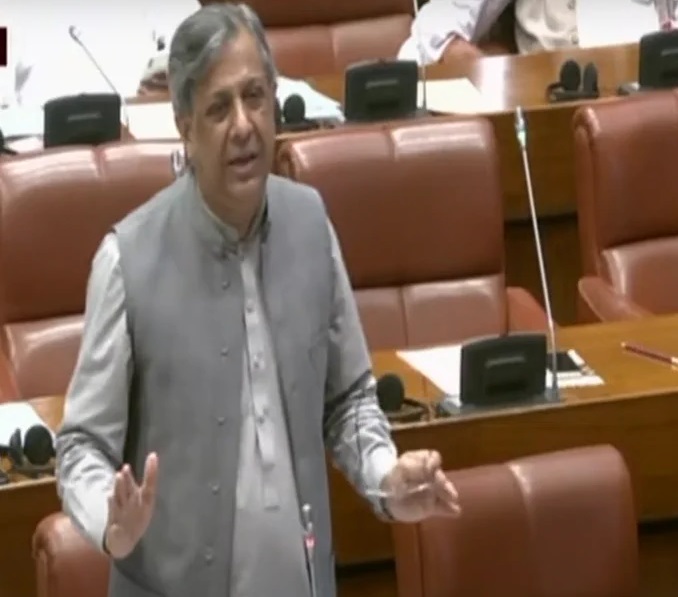
ISLAMABAD, Aug 06 (APP): Senate passed The HEC (Amendment) Bill, 2023 on Sunday with a majority vote, and the bill aims to strengthen and revitalize the Higher Education Commission (HEC).
The Bill was moved by Minister for Law and Justice Azam Nazeer Tarar was passed by the House with 23 votes in favour and 16 in opposition. The prime minister has been given the controlling authority of the Higher Education Commission. The primary goal of the bill was to strengthen the higher education sector in the country and guarantee access to quality education for everyone.
The term of appointment for the Chairman of HEC has been extended to four years from the previous three years. This change aims to promote stability and continuity in the commission’s leadership, leading to improved long-term planning and policy implementation.
The bill’s objective is to rectify discrepancies present in the existing HEC Ordinance 2002. The 18th constitutional amendment has diminished the regulatory authority of HEC, leading to inadequate legal power for enforcing standardization in the higher education sector.
Earlier, Senator Irfan Siddiqui, Chairman of the Standing Committee on Federal Education and Professional Training, presented the committee’s report on the bill to amend the Higher Education Commission (Amendment) Bill, 2023.
Irfan Siddiqui announced that the bill now includes all four amendments proposed by Senator Raza Rabbani. He emphasized that his lifelong commitment to promoting education drove him to protect the interests of the education sector. Notably, the HEC chairman’s tenure has been extended from three to four years. Additionally, on the recommendation of Senator Mushtaq Ahmed, clause 10-A has been removed from the bill.
Siddiqui stated that the committee dedicated 50 minutes to hear Raza Rabbani’s views. He urged Rabbani to identify any specific clause that might infringe on provincial autonomy. Siddiqui further emphasized that if the bill is not passed, the old bill will be reinstated.
Minister for Law and Justice Azam Nazeer Tarar said the HEC Amendment bill has resulted in a reduction of the powers of the Higher Education Commission (HEC) instead of enhancing them. While three provinces have established their Higher Education Commissions, one province is yet to do so. Nevertheless, the HEC has been strengthened and revitalized.
He emphasized that the government is resolute in conducting elections on schedule. Imran Khan has been convicted for concealing assets, and he is entitled to appeal the verdict in the High Court and Supreme Court of Pakistan. Similarly, Nawaz Sharif and Yousuf Raza Gillani were also convicted by the superior judiciary.
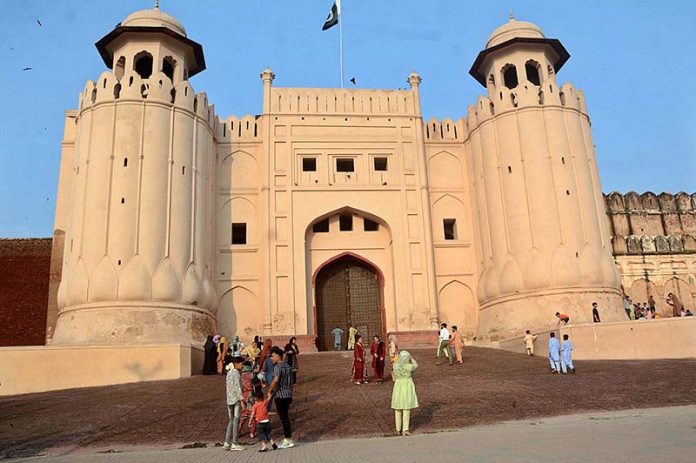
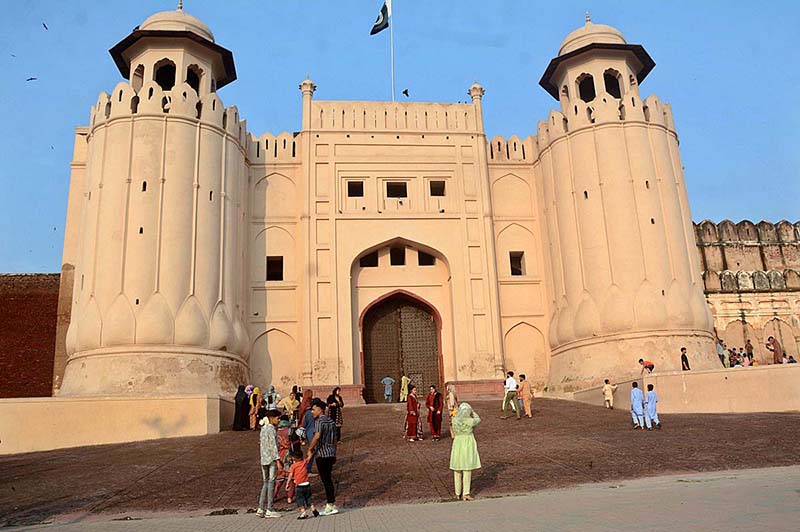
Families visiting Shahi Qilla during Sunday holiday in the Provincial Capital
President upholds penalty of PTV employees for creating hostile, offensive environment for female

ISLAMABAD, Aug 06 (APP): President Dr Arif Alvi has upheld the penalty of withholding the promotion for two years upon six PTV employees who were involved in creating a hostile and offensive work environment for a female cameraman (the complainant).
He also held that the complainant’s termination from service was being rendered as void ab initio as disciplinary proceedings were initiated against her without following the due process, in a slipshod and clumsy manner, and rude and degrading actions were taken against her, President Secretariat Press Wing said in a press release on Sunday.
The president gave this decision while rejecting the representations filed by PTV, Abdul Rashid, Zia-ur-Rehman, Maqbool Shah, Muhammad Munawar, and Kanwal Masood, in which the Federal Ombudsman for Protection against Harassment of Women at Workplace (FOSPAH) had imposed the minor penalty of withholding of promotion for two years and fine of Rs 100,000 upon Zia-ur-Rehman, Abdul Rashid, Maqbool Shah, Kanwal Masood, Saeed Ather, and Muhammad Munawar (the respondents) for issuing charge sheets, suspension orders, transfer orders and orders to ban the entry of the complainant into the premises of PTV in a slipshod manner.
He, however, set aside the penalty of fine imposed by FOSPAH, on 16.10.2017, upon the employees involved in the matter.
The complainant had filed a complaint before FOSPAH alleging that she had been assaulted by two employees at PTV premises and the respondents had supported them.
The charges of sexual harassment, however, could not be established against the accused, however, FOSPAH had decided to impose minor penalty upon the respondents for initiating acts which amounted to workplace harassment.
Earlier, the President of Pakistan on 05.01.2018 had reversed the decision of FOSPAH as the charges of sexual harassment were not proved in the case.
Later, the Supreme Court of Pakistan accepted civil review petitions filed by the complainant (female cameraman) and Attorney General for Pakistan, set aside the earlier judgments of the Supreme Court and Islamabad High Court passed in the matter and remanded the representation to the President for decision afresh.
The Supreme Court in its judgment, dated 06.06.2023, had interpreted the word ‘harassment’ by elaborating that harassment had two components, first pertained to sexual favors and the second was about creating a hostile or offensive working environment.
It further held that the facts of the case did not fall within the ambit of harassment of the nature of the sexual favors rather the available record and the proceedings initiated against the complainant in a slipshod manner fell within the ambit of hostile or offensive working environment.
Subsequently, the president held personal hearings of the case in June and July 2023, and decided the matter afresh in the light of the Supreme Court’s decision.
In his decision, he noted that workplace harassment was a global phenomenon, prevalent both in developed as well as developing countries, and it cut across religion, culture, race, caste, class and geographical boundaries.
He said that with improved access to education and employment, millions of Pakistani women were entering in employment and many faced workplace harassment on daily basis.
He emphasized that it was crucial that in a country like Pakistan, we should strive to eliminate workplace harassment since it was an affront to the fundamental rights contained in the Constitution of the Islamic Republic of Pakistan.
He said that Article 25 forbade any discrimination on the basis of sex and guaranteed equal protection of law and equality in all matters.
The president said that Article 34 mandated the state to ensure full participation of women in all affairs of national life and under Article 37(c), women had been given a special status in the matters of employment and conditions of work.
The president underlined that the aim and objective of promulgation of the Protection against Harassment of Women at Workplace Act, 2010 was to create a safe working environment for women which was free of harassment, abuse and intimidation with a view towards fulfillment of their right to work with dignity.
“An environment which is free of harassment enables higher productivity and a better performance and quality of living. Harassment is one of the biggest hurdles faced by working women who want to work and contribute to get themselves and their families out of poverty”, he remarked.
The president maintained that the term “harassment” as defined in the Protection against Harassment of Women at Workplace Act 2010 could not be examined in isolation but the other aspects of creating an intimidating, hostile or offensive work environment also needed to be examined. “Gender discrimination is a pervasive evil that potentially confronts women who enter in any job either in public or private sector. The element which poisons the workplace by creating hostile or offensive work environment even unrelated to sexual overtures is not tolerable”, he added.
The president also directed PTV to improve its harassment protocols and ensure that such situations do not arise in future. “Report on review and implementation of anti-harassment protocols be submitted. This order should be implemented by PTV within thirty days and the learned Ombudsman be informed accordingly along with report on protocols”, he said.
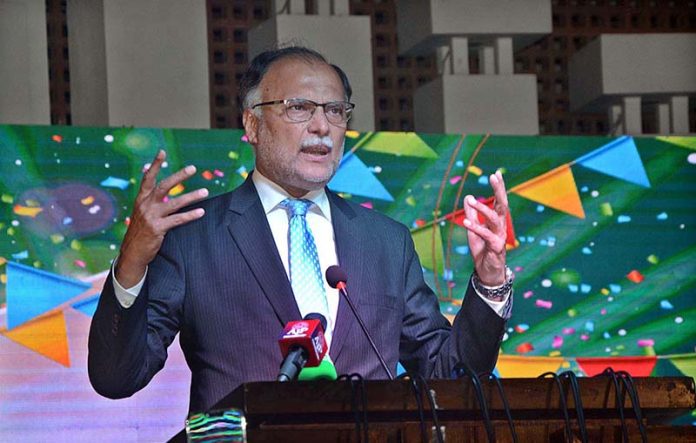
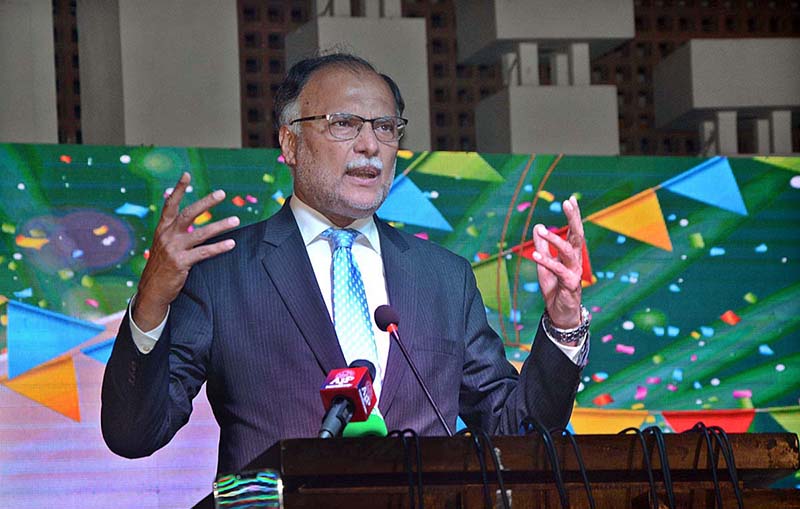
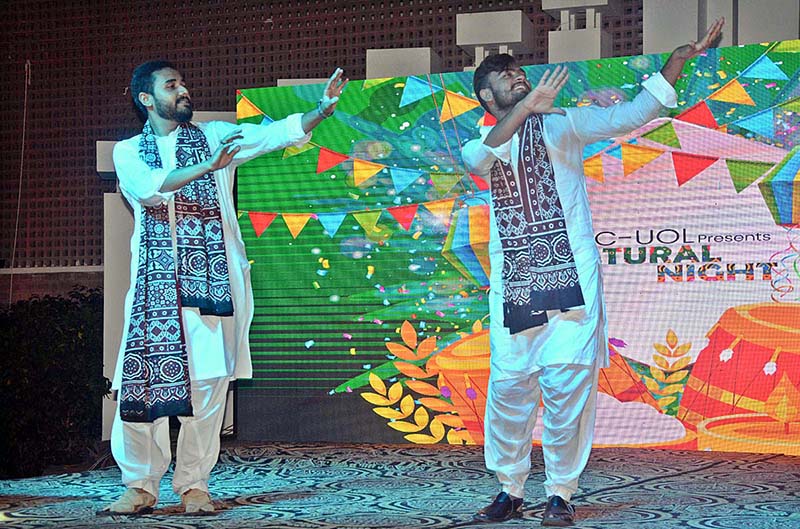
Federal minister for planning and development and special initiatives Professor Ahsan Iqbal addressing at a ceremony 4th policy making competition (PMC)
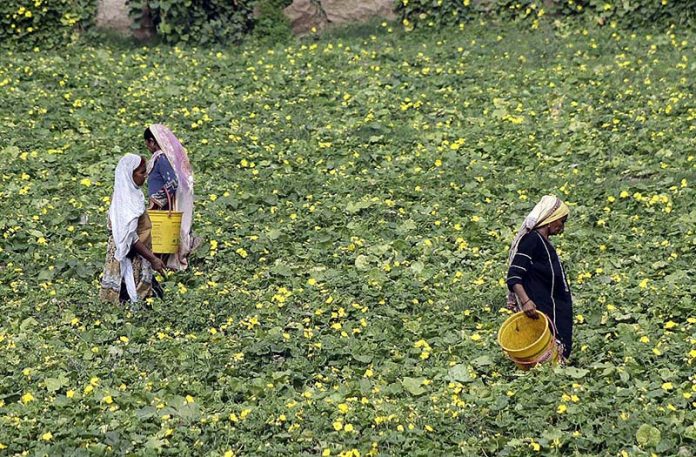
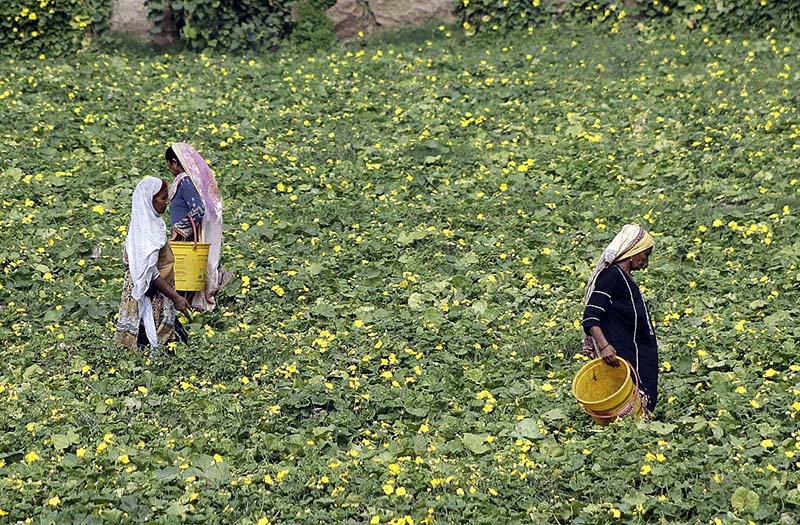
Women farmers are busy collecting vegetables from the farm field
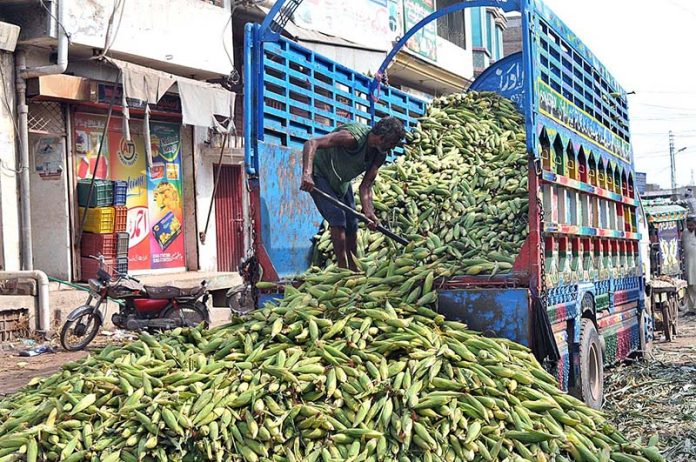
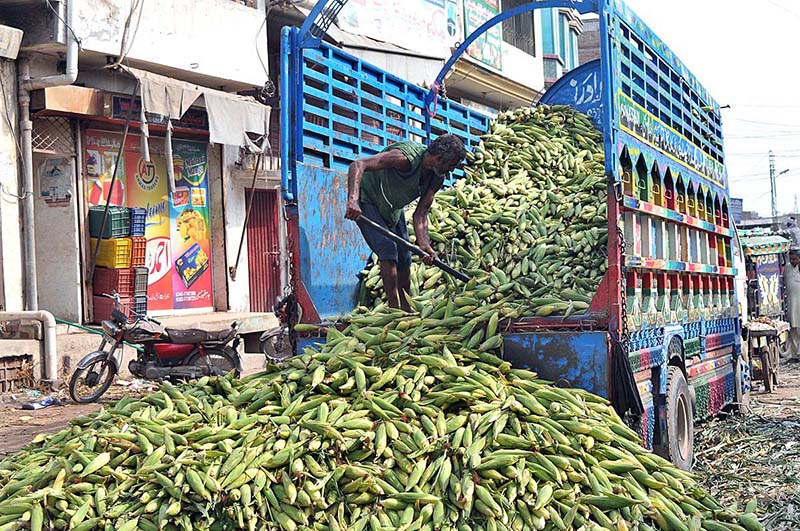
Labourer is busy unloading corn cobs from a delivery truck at the vegetable market